- Статьи
- World
- A fragile matter: the truce between the United States and Iran is in danger of collapse due to strikes on Lebanon

A fragile matter: the truce between the United States and Iran is in danger of collapse due to strikes on Lebanon

The truce announced by the United States and Iran has not led to a reduction in tensions in the Middle East. On the very first day, the parties continued to exchange blows, and Israel expanded its military operation in Lebanon, which, according to Iran, violated the agreements. More than 250 people were killed in Israeli strikes during the day alone. Tehran retaliated against Israel, and the speaker of the parliament said that three key points of the agreement with the United States had already been violated, so continuing the dialogue made no sense. Iran first unblocked and then closed the Strait of Hormuz. Vice President J.D. Vance threatened to withdraw the United States from the ceasefire. Experts interviewed by Izvestia warn that the conflict launched by Washington is getting out of control, and the chances of its peaceful conclusion remain minimal.
The Middle East is once again sliding towards escalation
The two-week truce announced by Washington and Tehran was already in danger of collapse on the first day. Despite statements by US President Donald Trump about the agreements reached, the region continues to plunge into a new wave of violence, and the conditions for de-escalation remain extremely fragile.
On the night of April 8, the American leader announced that a temporary ceasefire had been reached. Following this, Iranian Foreign Minister Abbas Araqchi announced his readiness to open the Strait of Hormuz, one of the key arteries of the global energy sector, through which about 20% of oil and gas supplies pass. However, over the next 24 hours it became obvious that the formal truce did not lead to a real reduction in tension.

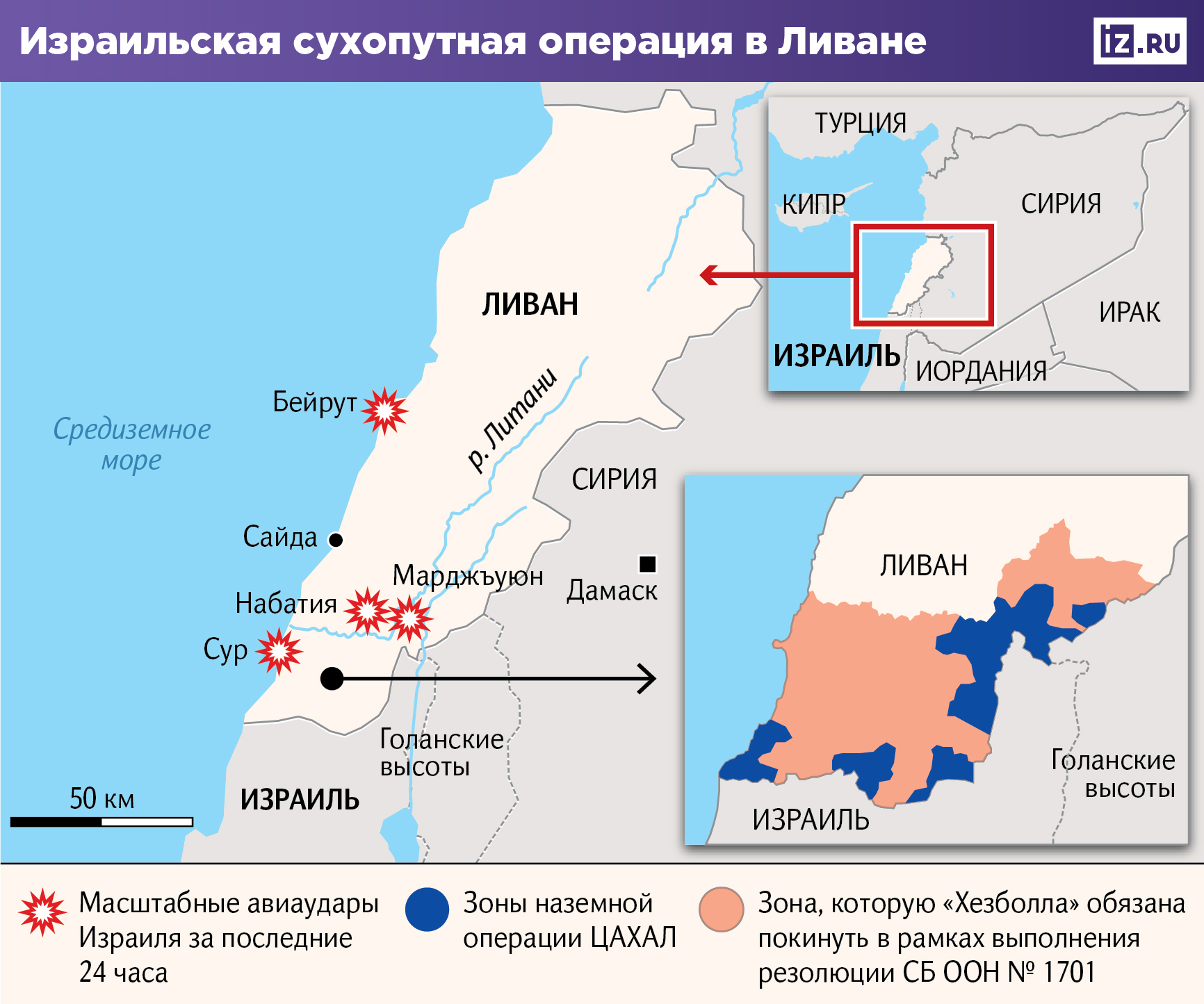
Israel has launched the largest strike on Lebanese territory since the beginning of the conflict, attacking the southern regions of the country, as well as Beirut. According to the Lebanese authorities, 254 people were killed. Among the targets were the facilities of the Shiite movement Hezbollah, including the alleged headquarters of its Secretary General Naim Qassem. At the same time, the strikes were carried out without prior warning, and some of the targets were in densely populated areas.
Immediately after the truce was signed, one of the mediators, Pakistani Prime Minister Shahbaz Sharif, said it would "take effect immediately" and would be respected "in Lebanon and everywhere." However, Israel refused to recognize this interpretation of the agreements.
"The cease-fire with Iran will not include Hezbollah. We continue to strike at Hezbollah," said Israeli Prime Minister Benjamin Netanyahu, quoted by Al Jazeera TV channel.

US Vice President Jay Dee Vance also said that there was a "misunderstanding" between the US and Iran on this issue and Washington did not give Tehran consent to include Lebanon in the truce.
In response to what is happening, Iran has intensified its military actions. After the announcement of the truce, Israel was subjected to new rocket attacks, attacks on infrastructure in the Persian Gulf countries were recorded. Attacks on targets in Kuwait and the United Arab Emirates were reported, as well as damage to an oil pipeline in Saudi Arabia. In Abu Dhabi, civilians were injured as a result of falling debris from intercepted targets.
Experts note that the situation around the Lebanese direction has become one of the key factors undermining the truce. Roman Yanushevsky, editor-in-chief of the website of the 9th Israeli TV channel, noted in an interview with Izvestia that the actions of the Israeli Air Force, which have inflicted one of the most powerful strikes on Hezbollah's infrastructure since the beginning of the war, demonstrate that West Jerusalem does not intend to make concessions under pressure and seeks to maintain the military initiative.

According to political analyst Anastasia Gavrilova, as the conflict drags on, the positions of Prime Minister Benjamin Netanyahu are noticeably weakening. The announcement of a two-week truce with Iran, in which Israel was effectively excluded from the negotiation process, provoked sharp criticism within the country. Moreover, discontent is evident not only from the opposition, but also among traditional hardliners, which indicates growing frustration with the government's ability to achieve its stated military goals, the expert believes.
The situation in the Strait of Hormuz
The situation around the Strait of Hormuz attracts special attention. Hundreds of vessels remain in the region, including 426 tankers, 34 vessels for the transportation of liquefied petroleum gas and 19 vessels for the transportation of liquefied natural gas; a significant number of them have actually been blocked due to traffic disruptions.
Unblocking the strait is considered a key condition for Washington, because without restoring stable transit of energy resources, any agreements lose their practical meaning, Roman Yanushevsky believes.
After the truce, reports surfaced that Iran had begun issuing permits for ships to pass through the strait. However, after the Israeli strikes on Lebanon, tanker traffic was suspended again, the Fars news agency reported.

After that, J.D. Vance said that the United States would not comply with its part of the ceasefire if Iran did not open the strait.
In general, what is happening, according to Yanushevsky, indicates the extremely crude nature of the agreements reached. The expert points out that the negotiating positions of the parties remain fundamentally incompatible, and the gap between them is so large that their rapprochement looks unrealistic. At the same time, neither side demonstrates a willingness to compromise, which makes the truce format itself extremely vulnerable.
At the same time, reports have appeared on the international agenda about the possible introduction by Iran in the near future of fees for the passage of ships through Hormuz. We are talking about the amount of one dollar per barrel of oil on board the tanker.
Such initiatives contradict the norms of international maritime law. The Strait of Hormuz is considered an international waterway with a free transit regime. Charging is only possible for specific services and may not be a prerequisite for passage. For comparison, the Suez Canal is in a fundamentally different position. It is an artificial structure, fully built and maintained by Egypt on its territory. After nationalization in 1956 (which caused the Suez crisis), the canal functions as a national infrastructure, similar to a toll road or gateway, and Egypt has the full sovereign right to set and charge fees for its use.

Moscow has already outlined its position. The Russian Foreign Ministry stressed the need to ensure freedom of navigation and pointed out that it is impossible to stabilize the situation in the Strait without ending pressure on Iran and taking into account its interests.
US-Iran meeting in Pakistan
In general, what is happening indicates that Washington's attempt to quickly "freeze" the conflict did not lead to the desired result. Moreover, the United States found itself in a position where the processes it had launched were out of control. Formally, as the initiator of the truce, the American side does not have sufficient mechanisms to ensure its observance by all participants.
The planned meeting of representatives of Iran and the United States in Islamabad this week also depends on the ceasefire in Lebanon. The negotiations, which, according to Donald Trump, may take place in Pakistan in the near future, remain largely uncertain both in terms of the composition of the delegations and the format. The American side will be represented by J. D. Vance, Special envoys Steve Witkoff and Jared Kushner. On the Iranian side, it was initially reported that the delegation could be headed by Parliament Speaker Mohammad Bagher Ghalibaf, but later the media clarified that the final decision had not yet been made in Tehran. The lack of agreed negotiators only highlights the fragility of the negotiation process.

Mohammad-Bagher Ghalibaf said that three key points of the proposed agreement between Tehran and Washington were violated even before the start of negotiations. According to him, we are talking about strikes on Lebanon, violations of Iran's airspace, as well as the refusal of the United States to recognize Tehran's right to enrich uranium. He noted that the continuation of the negotiation process in the current conditions makes no sense, since the basic agreements are not actually respected already at the initial stage.
Meanwhile, White House spokeswoman Carolyn Levitt claims that Iran has allegedly expressed its willingness to voluntarily give up its enriched uranium reserves as part of a peace deal with the United States.
— The Iranians see that the pseudo-peace agreements only lead to the fact that the enemy relocates its forces, and again resorts to armed force for the second or third time. They want to interrupt this kind of chain of events, strike, pseudo-negotiations, strike again. Tehran declares that it is ready to enter into negotiations with preliminary conditions, even if it is really about a serious agreement," Andrei Baklanov, Deputy chairman of the Association of Russian Diplomats and professor at the National Research University Higher School of Economics, told Izvestia.

Iran's demands, including the lifting of sanctions, possible compensation from the United States, increased control over the Strait of Hormuz and the preservation of the right to enrich uranium, are initially unacceptable to Washington and its allies, which makes the current agreement unviable, Roman Yanushevsky added. From this point of view, the probability that the White House will agree to such a settlement format is extremely low.
Anastasia Gavrilova stressed that Donald Trump's policy is becoming increasingly contradictory: on the one hand, he initiates escalation by making harsh statements, on the other hand, he promotes the idea of a peaceful settlement.
Trump, commenting on the negotiations, talks about a possible easing of the sanctions regime and a reduction in trade duties, and also claims that a significant part of the peace plan proposed by the United States has already been agreed. At the same time, he insists that Iran will abandon uranium enrichment, and the parties will jointly deal with the consequences of strikes on the nuclear infrastructure.

US President Donald Trump
According to Gavrilova, the American leader is actually trying on the role of a "firefighter" who is trying to extinguish a crisis that has arisen largely as a result of his own actions.
— It will not be possible to implement the scenario of a "quick victory over Iran". Trying to end the conflict quietly and without consequences, pretending that nothing significant has happened, will also fail. Reckless and self—confident decisions by politicians who are not used to losing will not play into their hands," the expert said in an interview with Izvestia.
The United States was forced to accept Iran's ten-point proposal as a basis for dialogue. The Iranian interpretation refers to Washington's agreement with key demands, including the lifting of sanctions, the lifting of international restrictive resolutions, the payment of compensation, the withdrawal of American troops from the Middle East, and recognition of Iran's right to continue enriching uranium.
Переведено сервисом «Яндекс Переводчик»
