- Статьи
- Science and technology
- Spectrum Device: Russian scientists have taken a step towards creating the first cure for autism

Spectrum Device: Russian scientists have taken a step towards creating the first cure for autism

Russian experts have found that the decreased learning ability in mice with autistic behavior is caused not by one, but by a whole range of reasons: from asymmetry of brain structures and impaired flow of cerebrospinal fluid to a malfunction in the "maturation" of one of the key proteins of the nervous system. This substance can potentially be considered as a molecular target for the treatment of autism spectrum disorders. The data obtained in the future will allow the development of drugs for the treatment of this condition in humans. However, experts emphasize that scientists have a lot of work to do, and the approach to "neuro differences" in modern medicine is changing.
Why do mice with autism have a reduced learning ability?
People with autism spectrum disorders (ASD) have learning and memory difficulties that are no less pronounced than communication disorders, but their biological nature remains largely poorly understood. To identify the causes, experts conduct laboratory tests on mice with impaired social behavior.
Scientists from the Institute of Cytology and Genetics of the Siberian Branch of the Russian Academy of Sciences (Novosibirsk) and the LIFT Research Center (Moscow) evaluated the cognitive abilities of mice with autistic-like behavior and compared them with molecular and anatomical changes in the brain. The researchers used individuals from the BTBR lineage, one of the most common models of autism. These mice lack a specific mutation, but their behavior and brain structure largely reproduce features similar to the human disorder. In the course of the work, experts compared their performance with healthy individuals.

The team of the laboratory involved in the work
The animals were placed in front of a panel with two holes. On the first day, the mouse had to stick its nose into a hole marked by a burning light bulb in order to receive a sweet pellet as a reward, and thus understand the connection between the light in the hole and the treat. On the second day, it was necessary to stick your nose into two illuminated holes in a certain order, that is, to memorize the sequence of two actions. On the third day, the holes were not highlighted, and the mouse had to remember the correct sequence on its own in order to receive a reward.

The mice with the autism model completed the first task, but were unable to learn the sequence and extract it from memory. Such animals were able to get about ten times fewer pellets on the second day than healthy rodents, and almost did not achieve them on the third. This confirmed that it was not the motivation of the mice, but the inability to flexibly adjust behavior.
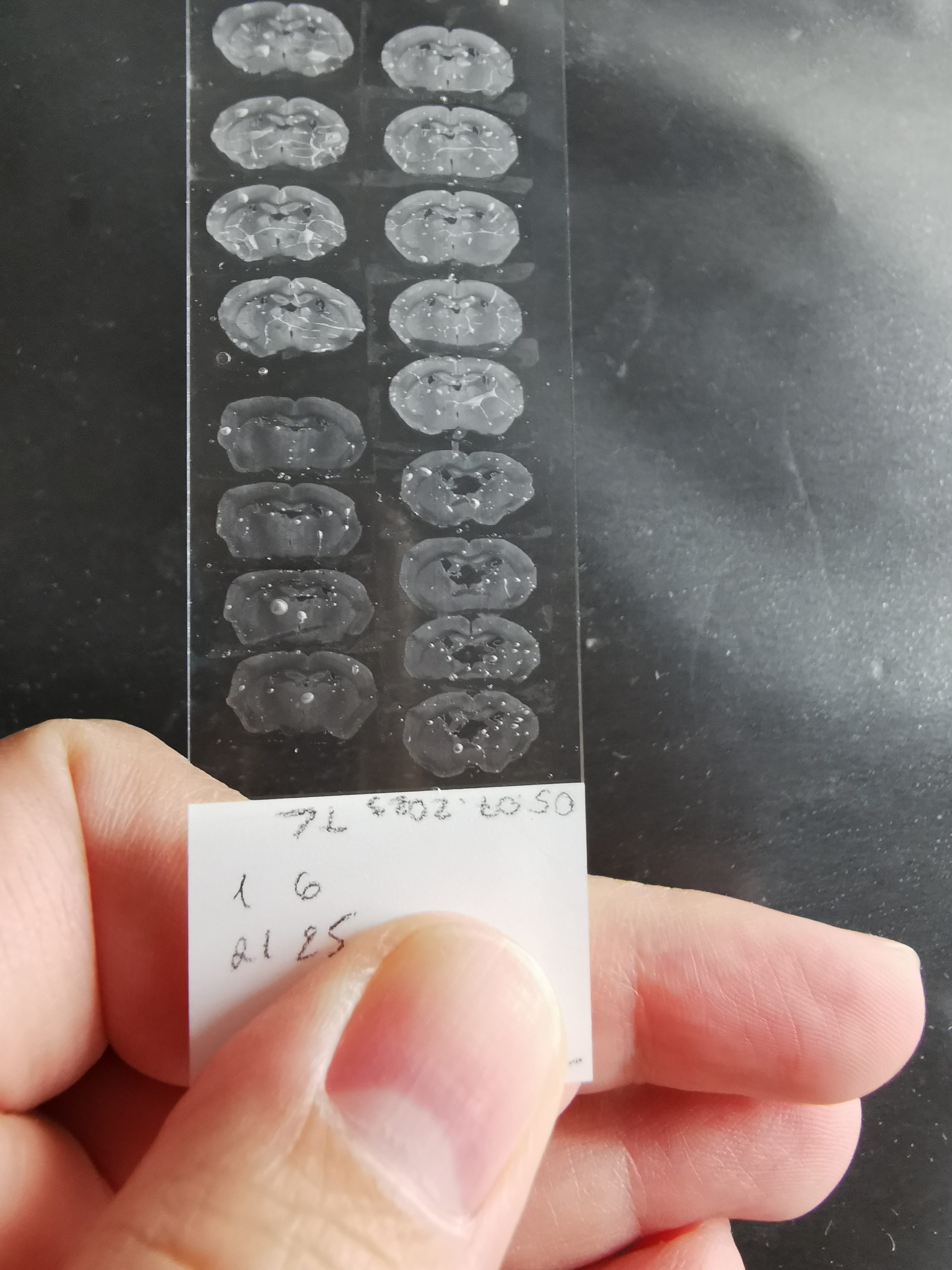
Then, using magnetic resonance imaging (MRI) and tissue analysis, the authors found a significant number of abnormalities in the brains of animals with a model of autism. First, the hippocampus, the part responsible for memory, was not only changed in volume, but also asymmetrical: its right region, which is crucial for learning, was reduced. In addition, the density of neurons was about three times lower than in healthy animals.

Secondly, the ventricles of the brain were "collapsed" in mice with autism, which indicated problems with the circulation of cerebrospinal fluid: its production and outflow were slowed down. With a poor outflow, the brain is worse cleansed of waste from the vital activity of cells. This mechanism is known in neurodegenerative diseases, but the authors described it in detail for the first time in relation to the autism model.
In addition, the researchers identified violations of the maturation of a key protein in the development of neurons — BDNF. In animals with autistic behavior, the level of its precursor, which contributes to the weakening of connections between nerve cells, was 1.5–2 times higher than in healthy mice. At the same time, the concentration of the mature, functionally active form of the protein did not increase.
— The data obtained indicate that the reduced cognitive abilities of animals with autism are associated with structural abnormalities and impaired synthesis of BDNF, which is important for the development of neurons. In this regard, this protein can potentially be considered as a molecular target for the treatment of ASD," said Tatyana Ilchibayeva, Candidate of Biological Sciences, senior researcher at the Laboratory of Behavioral Neurogenomics at the Institute of Cytology and Genetics of the Siberian Branch of the Russian Academy of Sciences.
In the future, scientists plan to establish a direct causal relationship between BDNF synthesis and autistic behavior, and then find ways to alleviate behavioral disorders.
Prospects for creating a cure for autism
Modern science does not yet have drugs that can affect the root causes of autism spectrum disorders. Existing pharmacotherapy, including the approved risperidone and aripiprazole, is mainly aimed at relieving concomitant symptoms such as irritability, aggression and sleep disorders, but not at correcting basic communication and social interaction disorders, said Alexander Zakharov, director of the Research Institute of Neuroscience at the SamSMU of the Russian Ministry of Health, Associate Professor.
— Given the extreme heterogeneity of races, when similar manifestations can be caused by different causes, a study showing a specific molecular and anatomical defect is an important step. The revealed BDNF protein maturation disorder and the related structural asymmetry of the hippocampus suggest a specific "target" for potential therapy, which looks more promising than attempts to address disparate symptoms, he told Izvestia.

Project Manager Tatiana Ilchibayeva
However, it would be premature to talk about the imminent appearance of a drug based on these data. It is important to understand that the significant anatomical changes found in mice (for example, "collapsed" ventricles of the brain) do not correspond to the picture of neuroimaging in children with ASD, in whom MRI in most cases does not reveal such a gross macrostructural pathology. Thus, this discovery is an important foundation for further research, but there is a long way to go to translate it into clinical practice, the specialist concluded.

The modern view is also revising the very formulation of the question: autism is moving from the category of diseases to the category of "the world of differences," said Evgeny Nikolin, market expert at NTI Neuronet and organizer of the Skolkovo project work.
— This is not a disease that can be cured, it is a different perception of reality and other ways of communication. Approximately 90% is a feature, not a pathology. However, people with autism may have concomitant abnormalities. For example, increased excitability, sensory features, and genetic drawdowns. In such cases, medications are acceptable not for "treating autism," but for correcting specific conditions, such as pressure or to make up for deficiencies, the specialist said.

In his opinion, research in this vein is promising, but only in the framework of quality of life support, and not an attempt to "cure" neurodifference.
The results of the study, supported by a grant from the Russian Science Foundation (RSF), are published in the journal Progress in Neuro-Psychopharmacology and Biological Psychiatry.
Переведено сервисом «Яндекс Переводчик»
