Key supply: who will send oil to Cuba after Russia

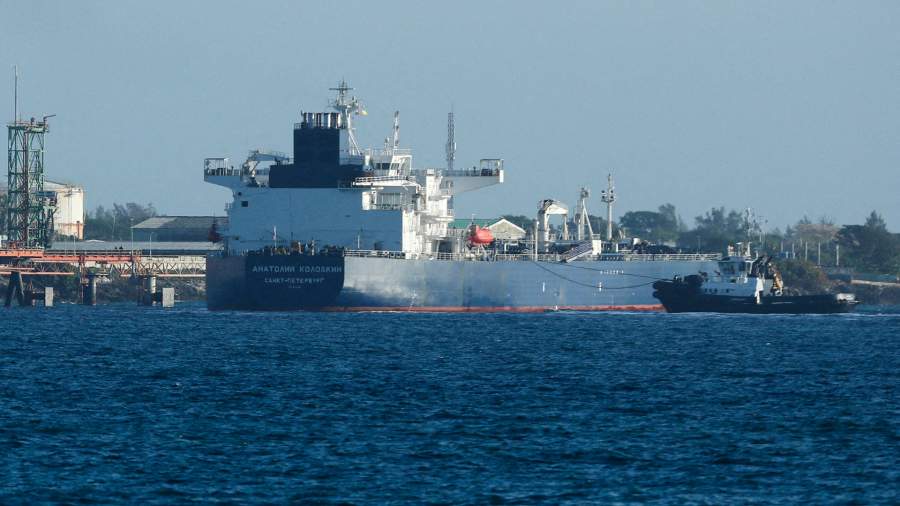
The dialogue between Russia and Cuba is underway at the working level, while a telephone conversation between the two leaders has not yet been scheduled, Kremlin spokesman Dmitry Peskov told Izvestia. Earlier, Russia was the first country to supply oil to the island after the tightening of the US blockade. This is pushing Mexico to resume oil exports to Cuba. According to experts, Colombia and Brazil are also able to support Havana. In the context of the protracted conflict in Iran, the United States may weaken its policy towards Cuba. At the same time, the countries are negotiating, but experts do not rule out that Washington will decide on a military scenario.
Who in Latin America can send oil to Cuba
Russia became the first country to deliver 100,000 tons of oil to Cuba as humanitarian aid after the tightening of the blockade by the United States in January this year. The State Duma previously stated that the issue of new supplies is currently being discussed, but the specific dates are still unknown. Moscow and Havana are in contact, while a telephone conversation between the leaders of the two countries, Vladimir Putin and Miguel Diaz-Canel, is not yet planned.
"There are no such plans yet, the dialogue is underway at the working level," Kremlin spokesman Dmitry Peskov told Izvestia.
On February 18, Vladimir Putin held a meeting in Moscow with Cuban Foreign Minister Bruno Rodriguez Parrilla. A delegation of the Republic is currently in St. Petersburg. On March 30, at the XXIII session of the Cuba–Russia intergovernmental commission, Alexander Beglov, Governor of the Northern Capital, received Oscar Perez, Deputy Prime Minister of the Republic‑An olive tree. Of course, energy is not the only topic on the agenda of the Russian-Cuban dialogue.
Nevertheless, this is the main issue, given the difficult situation in the republic. After the oil was supplied from the Russian Federation, Mexico showed willingness to help. The President of the Republic, Claudia Sheinbaum, said that this issue is currently being worked out.
A commercial energy supply contract has been in force between the Mexican oil and gas state-owned company Pemex and Cuba since 2023. It is indefinite, and exports are carried out depending on the needs of the island and the availability of the product in Mexico. The Republic is one of the main suppliers of oil to Cuba. In 2024, the volume of exports, according to media reports, amounted to about 1.14 million tons.
But in January 2026, after the military operation in Venezuela, Donald Trump announced that he would impose heavy duties on any countries that were going to send oil to Cuba. The threat worked. Claudia Sheinbaum has officially stated that she will not supply raw materials based on Mexico's security concerns. The trade turnover of the republic with the United States in 2025 amounted to $872.8 billion. According to Sheinbaum, the country is now actively trying to find a diplomatic solution to the issue.
"This should be understood as follows: we are negotiating with the United States so that they do not object to our supplies to Cuba," Viktor Kheifets, chief researcher at the ILA RAS, explained to Izvestia.

According to him, there is a lot of pressure on Sheinbaum inside the country. One group of politicians insists on the need to resume supplies due to solidarity. Another indicates that such a decision could lead to an aggravation of US-Mexican relations and to sanctions from the United States. If Mexico resumed supplies in at least half the volume, it would be a very important support for Cuba, said Heifetz. In February, Mexico sent only two humanitarian convoys to Cuba with food and basic necessities.
"One is humanitarian aid, and the other is the commercial agreements that we have with Cuba, and they are related to oil supplies," Sheinbaum stressed during a press conference.
The main question now is whether the country will be able to get guarantees from the United States that their tanker will not be arrested, said Egor Lidovskaya, director General of the Hugo Chavez Latin American Cultural Center. It is worth noting that Russia discussed in advance with the American side the issue of humanitarian oil supplies to Cuba, said Dmitry Peskov, the press secretary of the President of the Russian Federation. And therefore, Mexico can theoretically also come to an agreement with Washington, especially if the supplies are humanitarian rather than commercial in nature.
Cuba's dialogue with the United States
In addition to Mexico, Brazil and Colombia can supply oil to Cuba, which have the resources for this, Lidovskaya said. However, these countries have not shipped raw materials to the island in recent years. According to Heifetz, Colombia will not export hydrocarbons to Cuba in the near future. To do this, the republic's vessels need to pass through the Panama Canal. The United States may put pressure on Panama to prevent the Colombian ships from passing through. In addition, on the eve of the presidential elections to be held on May 31, the republic will not risk a serious aggravation of relations with Washington.
Given that Brazilian President Lula da Silva has a difficult relationship with Trump, it is not a fact that the country will decide to supply oil to Cuba in order not to escalate the conflict. Brazil previously shipped very small amounts of petroleum products to the island in 2024 and 2025.
At the same time, Venezuela has always been considered the main supplier of oil to Cuba, but this country is unlikely to resume supplies in the near future. Caracas stopped exporting to the island after the US military operation. And the current Delcy Rodriguez administration is actively making concessions to Washington. Caracas is not ready to risk aggravating relations with Washington over Cuba right now.
The United States' policy towards Havana has become softer. Due to the conflict in Iran, which clearly did not follow the Pentagon's scenario, Donald Trump does not have enough resources to fight on several fronts, said Mikhail Khachaturian, associate professor at the Department of Strategic and Innovative Development at the Financial University under the Government of the Russian Federation.
The United States could ease pressure on Cuba as a temporary respite, orientalist Leonid Tsukanov added in an interview with Izvestia. According to him, Trump will need a "winning streak", including to show Democrats and doubters among Republicans that the course towards strengthening US influence remains and bears fruit. A victory over Cuba will allow the United States to close a big page in its history, and Trump will be able to do what his predecessors failed to do, the expert concluded.

Meanwhile, the President of the Republic, Miguel Diaz-Canel, confirmed in early March that negotiations with the United States were underway. The parties are very stingy with specific information. The most sensitive issue in the negotiations is political. Cuba has publicly stated that its system and the term of office of the President are non-negotiable. Washington wants to achieve the departure of Diaz-Canel, the American media write.
The grandson of Raul Castro is allegedly involved in the dialogue. According to Axios, the United States has established direct contact with him, bypassing the Cuban government. The Trump administration considers 41-year-old Castro and his entourage to be representatives of the younger generation who are business-oriented. U.S. Secretary of State Marco Rubio, a Cuban by birth, is negotiating with him.
He is the initiator of the military operation on the island, says corresponding member of the Academy of Military Sciences Sergei Sudakov. According to him, Rubio has concentrated almost the entire rich Cuban diaspora around him in the United States of America, and Trump sees the Secretary of State as the "governor" of Cuba.
The US president has repeatedly stated that he is considering the possibility of conducting a military operation on the island. Donald Trump will not run for the next term — this frees his hands, Sudakov believes. Especially after the failure in Iran, even though the White House is trying to present the operation in the Middle East as a victory. Nevertheless, a potential invasion of Cuba will not be easy for the Pentagon due to the good training of the republic's armed forces. On the other hand, the United States may limit itself to a targeted operation, as was the case in Venezuela.
Переведено сервисом «Яндекс Переводчик»
