
Very Big: the country's main theater celebrates its 250th anniversary
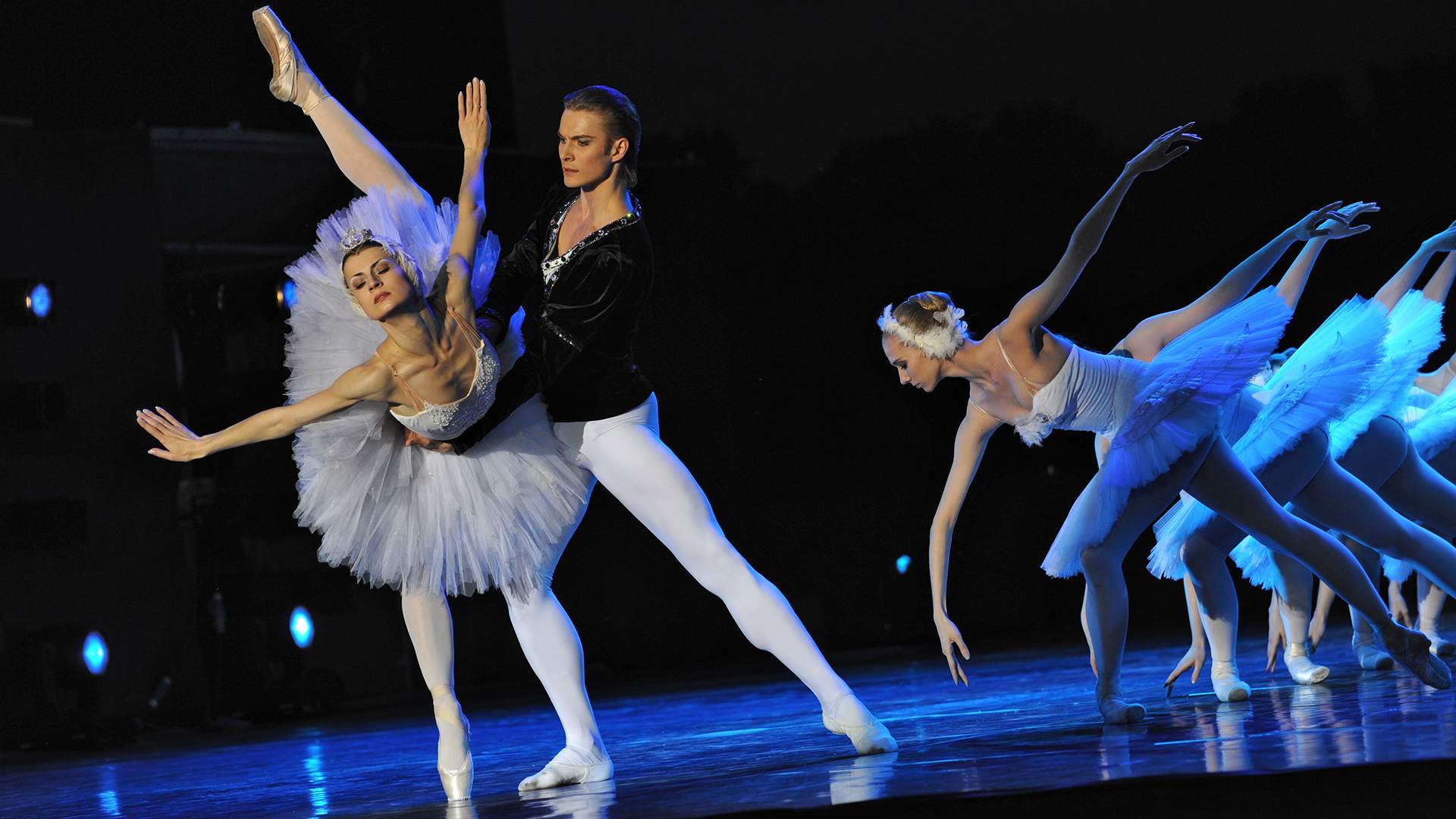
Two and a half centuries — and not a single quiet decade. The Bolshoi Theater celebrates its grand anniversary not just as a symbol of art, but as a surviving hero of its own dramatic history. He was born on the marshy shore of the Neglinka River, burned several times, survived the invasion of Napoleon's army, withstood the blows of Fascist bombs and rose again — despite time and disasters. On the occasion of the 250th anniversary of the Izvestia Theater, they recall its multifaceted history.
From an entreprise to a Beauvais masterpiece
The Bolshoi Theater began as a private enterprise of the provincial prosecutor Peter Urusov. On March 28, 1776, Empress Catherine II granted him the privilege of "being the keeper of all theatrical performances in Moscow" for a period of ten years and ordered him to build a stone building five years later. This date is considered the founding day of the Bolshoi Theater.

View of Petrovsky Theatre from Neglinnaya River
Urusov persuaded Mikhail (Michael) Medox, an English equilibrist and mechanic, to purchase a plot on Petrovka together. It was a low, dirty, swampy bank of the Neglinka River. So the future Bolshoi Theater got its first name — Petrovsky, after the place of "registration". It was a three-story brick building with white stone details, the facade of which faced the current Central Department Store.
During the construction of the Medical Facility, to which the bankrupt Urusov sold his share, he himself found himself in debt. To maintain the theater, he built a spacious dance hall nearby and organized paid balls. However, this did not save him. At the end of the 18th century, the theater changed hands, and in 1805 it completely burned down.

A reproduction of the drawing "Petrovsky Theater in Moscow", in 1805 the building burned down and a Bolshoi Theater was built in its place.
In that era, the halls were lit by candles, the heating was stove-mounted, so fires often broke out. According to historical evidence, flames and clouds of smoke were visible even in the village of Vsekhsvyatsky, the area of present—day Sokol and the Airport.
The building was somehow restored, but the architect Carlo Rossi rebuilt it from wood. Therefore, when on August 31, 1812, the French entered Moscow and began to set fire to the city, this building caught fire among the first. The fire destroyed about 80 percent of residential buildings.

The main foyer and grand staircase of the Bolshoi Theatre
After that, the restoration of the theater and a significant part of the city was entrusted to the architect Osip Bove, a Russian of Italian origin. He abandoned the shopping malls on the ground floor, turned the facade towards the Kremlin, reduced the height of the building and, most importantly, decorated the pediment with an Apollo quadriga. Moreover, Beauvais designed the entire Theater Square. According to his plan, merchant Vargin's house was rebuilt as a Maly Theater: it opened in 1824, and during the construction of the Bolshoi, operas and ballets were performed there.
The biggest and most fragile
The grand opening took place on Christmas Day, 1825. The admiring guests immediately nicknamed the theater "Bolshoy Petrovsky". To ensure that the impression of its scale and grandeur did not change over the years, Alexander I issued a decree prohibiting the construction of buildings on the Theater Square above the new theater.

The project of the Bolshoi Petrovsky Theater building. Architect Osip Bove
On March 11, 1853, a large fire broke out again. Only the rear facade, eight columns, a portico and cast-iron brackets holding the boxes have survived from Osip Beauvais' masterpiece. By that time, the architect was no longer alive, and the restoration was entrusted to Albert Kavos. He retained the basic idea of Beauvais, but increased the volume of the building and changed the decor. The theater was rebuilt in just 16 months — it became taller and even more majestic.

The fire of the Bolshoi Petrovsky Theater on March 11, 1853
— In 1883, a theatrical reform was carried out, associated with the name of Alexander Ostrovsky. By that time, there was no choreographer in the theater, the troupe was in decline, and they decided to abolish the ballet altogether," Lidia Kharina, head of the Bolshoi Theater Museum, told Izvestia. — The troupe was disbanded: some of the artists were retired, others were transferred to St. Petersburg. Those who remained tried to preserve the face of the theater: ballet performances were rare, but the school was not closed — and this, in fact, saved the tradition. At the same time, guest performers often performed on stage, sometimes almost permanent troupes. For example, an Italian troupe could play five days a week, while a Russian troupe was given only two.

Theater Square on the opening day of the Bolshoi Theater on August 20, 1856
In 1894, the haste with which Kavos restored the building affected. During the performance, the wall cracked, and the doors in the boxes on the right side jammed. The theater was closed again to repair cracks and renovate the walls. With a sagging foundation and partially rotten piles, the Bolshoi Theater met the revolution.
The main stage for the new country
When the government changed, the theater found itself in limbo. The huge building required heating, and the large staff required maintenance. The question arose: should the theater exist or not exist at all? Anatoly Vasilyevich Lunacharsky's position became decisive in this dispute.
— He insisted that the theater was necessary. And not just for the sake of performances. There was a diplomatic corps — it was necessary to receive guests somewhere. In addition, there were simply no other large buildings in Moscow for meetings, performances, or new celebrations. As a result, on December 30, 1922, a new country, the Soviet Union, was proclaimed from the stage of the Bolshoi Theater. The hall was full, but judging by the surviving photographs, the audience was unusual for these walls," said Harina.
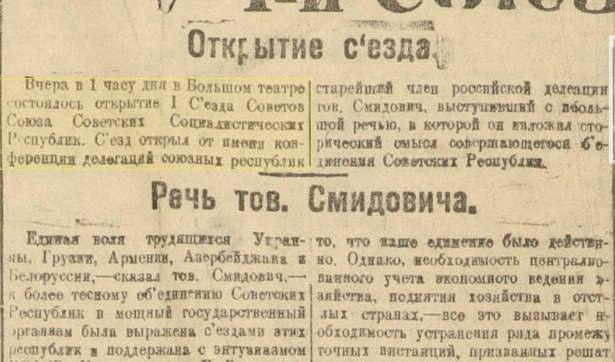
The very next day, December 31, an article appeared on the front page of the Izvestia newspaper: "Yesterday at 1 p.m. the opening of the First Congress of Soviets of the Union of Soviet Socialist Republics took place at the Bolshoi Theater. The Congress was opened on behalf of the conference of delegations of the Union republics by the oldest member of the Russian delegation, Comrade. Smidovich, who delivered a major speech in which he outlined the historical meaning of the ongoing unification of the Soviet Republics."
According to Kharina, it was during the Soviet period that the Bolshoi Theater achieved world greatness. This was facilitated by strong government support and active international tours.
— After Stalin's death, in 1954, the first tour took place in London. It was a huge success: no one expected such a level. Before that, individual soloists performed abroad, but large—scale theater tours with ballet and soloists have always been a difficult task. The orchestra and choir were often provided by the receiving party. But it was then that the first real takeoff took place," said the museum director.
A large cradle and a long-awaited renovation
During the difficult period of the Great Patriotic War for the whole country, the theater building was disguised as a residential building. The scenery from the opera "Prince Igor" was partially thrown over it, imitating the forest, and mock-ups were installed so that the theater looked like ordinary houses from the air. And on the square in front of the Big One, they painted a large rectangle that could look like the building itself from a height. The trick worked: On October 28, 1941, a 500-kilogram bomb fell on this particular "mock-up".

The Great Patriotic War of 1941-1945. The defense of Moscow. Air defense barrage balloon in front of the building of the Bolshoi Theater of the USSR on Revolution Square in Moscow
The building itself survived, but the shock wave was so strong that the theater rocked like a baby cradle. A huge hole was formed in the wall, windows flew out, the facade was damaged, marble stairs collapsed.
— The troupe was divided: part was evacuated to Kuibyshev, part remained in Moscow and continued to work on the stage of the branch. Front-line brigades operated: artists performed almost at the front line, sometimes concerts were interrupted due to fighting. They donated blood and raised funds — a squadron was built with the money of the theater staff. Everyone was working to win," explained Lidia Kharina.

A battle scene from Sergei Sergeevich Prokofiev's ballet "Lieutenant Kizhe" at the State Academic Bolshoi Theater of the USSR
During its long history, the theater burned several times, survived the invasion of the French and the German bombing. And in 2005, I waited for a grandiose scientific restoration, which lasted six years. According to the director of the museum, the specialists carefully studied the archival materials, restoring the historical appearance of the halls.
— For example, the so—called White Foyer was originally colored, but after the war it was simply whitewashed - there were not enough funds for a full restoration. The technical part has changed radically: the old stage mechanisms of the early 20th century have been replaced, computer systems have been introduced, and backstage spaces have been expanded. It's almost imperceptible to the audience, but it's a huge change for the theater. Although the artists, of course, even feel the changes in the dressing rooms," said Harina.

The Dance with pillows is a scene from the first act of Sergei Prokofiev's ballet "Romeo and Juliet" staged by the USSR State Academic Bolshoi Theater.
The renovated Historical Stage opened on October 28, 2011 with a gala concert featuring world art stars. And despite dozens of disasters over its 250-year history, everyone associated with the Bolshoi Theater agrees on one thing: it is only at the beginning of a new path that will inevitably lead it to even greater prosperity.
Переведено сервисом «Яндекс Переводчик»
