Spiral threads: radiation pills will increase the safety of space flights
- Статьи
- Science and technology
- Spiral threads: radiation pills will increase the safety of space flights


Preparations for DNA repair after radiation exposure, moss—based biomonitors for pollution analysis, and new orbital station skin are such projects being developed at the Institute for Joint Nuclear Research, said its director, Grigory Trubnikov. According to him, Russian chemists will soon synthesize a new element, the 119th element of the periodic table, and this year experiments with the detector will start at the NICA mega-plant. Read more about the developments of Russian scientists in the Izvestia report.
How to create protection from cosmic radiation
The Joint Institute for Nuclear Research (JINR) is developing a revolutionary drug that will help astronauts safely make long-term interplanetary flights, said Grigory Trubnikov, Director of the Institute, Academician of the Russian Academy of Sciences. He made the statement at a press conference after a meeting of the JINR Committee of Plenipotentiary Representatives of the Governments of the JINR member States, which was timed to coincide with the 70th anniversary of the scientific organization.
— The main harm of cosmic radiation is associated with the rupture of one or two "strands" of the DNA helix. Single—stranded breaks recover quickly, while double-stranded breaks lead to cell death. But it is possible to create pharmaceuticals that open a short time window to repair such damage. The drug will help to extinguish or compensate for the effects of cosmic radiation," the scientist told Izvestia.
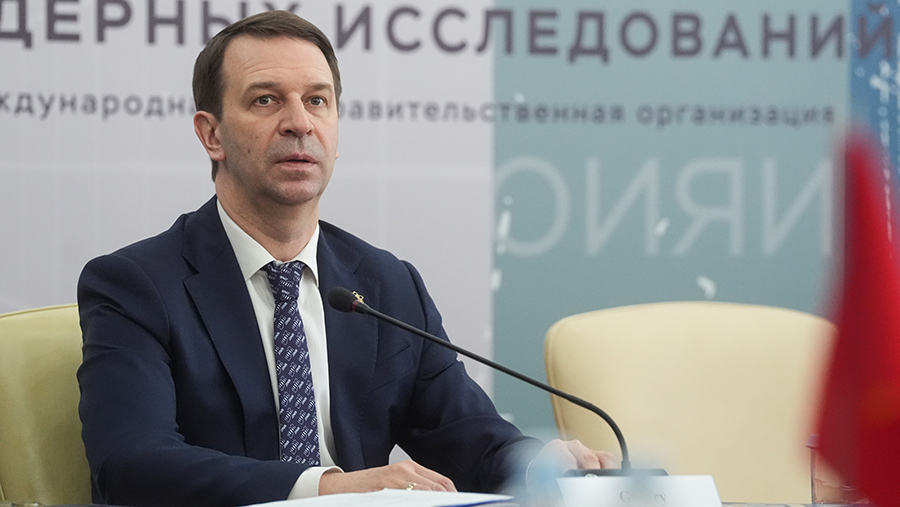
According to him, ionizing radiation affects not only the risk of cancer, but also higher nervous activity. JINR implements projects jointly with Russian scientific research organizations, as well as with the American, European and Japanese space agencies.
In addition, the institute is developing lightweight multilayer materials for radiation protection, designed to cover the living compartment of the future Russian orbital station ROS, said Grigory Trubnikov.
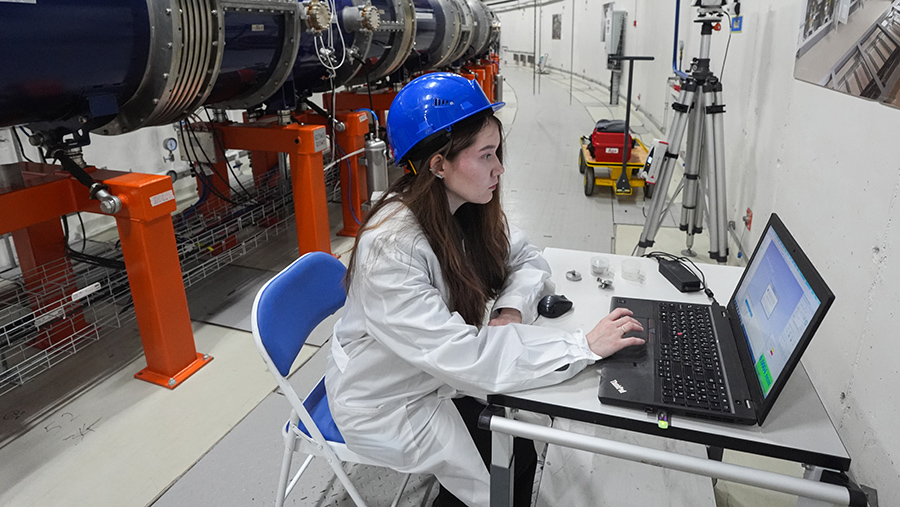
New technologies and materials will be presented at Space Week, which will be held in Russia for the first time from April 6 to 12. An extensive program of business, scientific and educational events is planned these days. The Russian Space Forum will be held on April 9, where advanced developments in the space industry will be demonstrated.
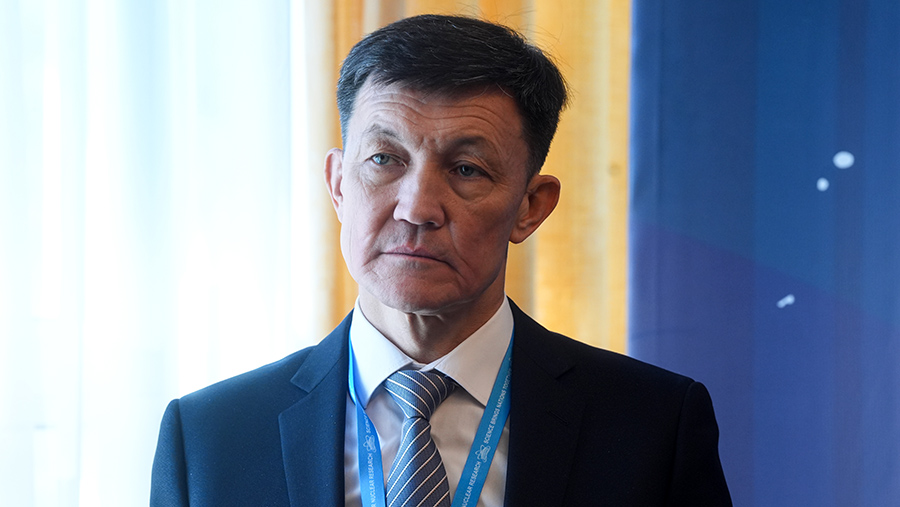
Sayabek Sakhiev, Director General of the Institute of Nuclear Physics of the Republic of Kazakhstan, noted JINR's success in creating radiation-resistant microelectronics for space technology.
— Our youth studied here and adopted technologies for testing microchips with metered radiation exposure. These developments have begun to be effectively applied in Kazakhstan," the scientist noted.
Otilia-Ana Kulikov, Head of the JINR Department of International Cooperation, spoke about the scientific projects of Russian researchers together with colleagues from other countries.
— One of these projects is the study of heavy metal pollution using biomonitors, which are mosses. These plants are good indicators because they have a high accumulation capacity and a large body surface. The project brought together researchers from more than 20 countries," the specialist said.
JINR, she added, has developed a technology for producing new track membranes for filtering water and blood. Unlike existing analogues, physicists create unique filters with preset properties, designed for specific tasks.

A new chemical element
At the meeting, Grigory Trubnikov spoke about the current projects of the Joint Institute for Nuclear Research.
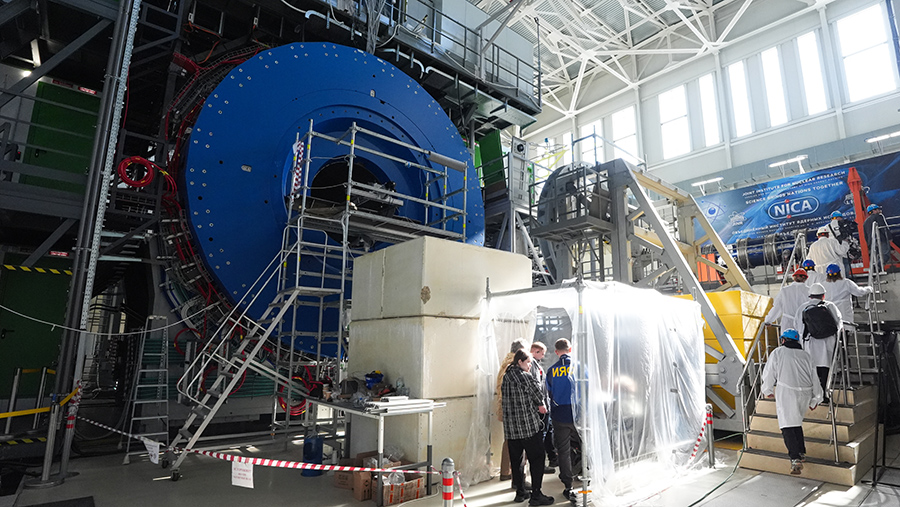
One of the most significant events is the commissioning of a multifunctional detector planned for the end of the year and the transition to full—fledged physical experiments at the NICA mega—facility, a superconducting proton and heavy ion accelerator.
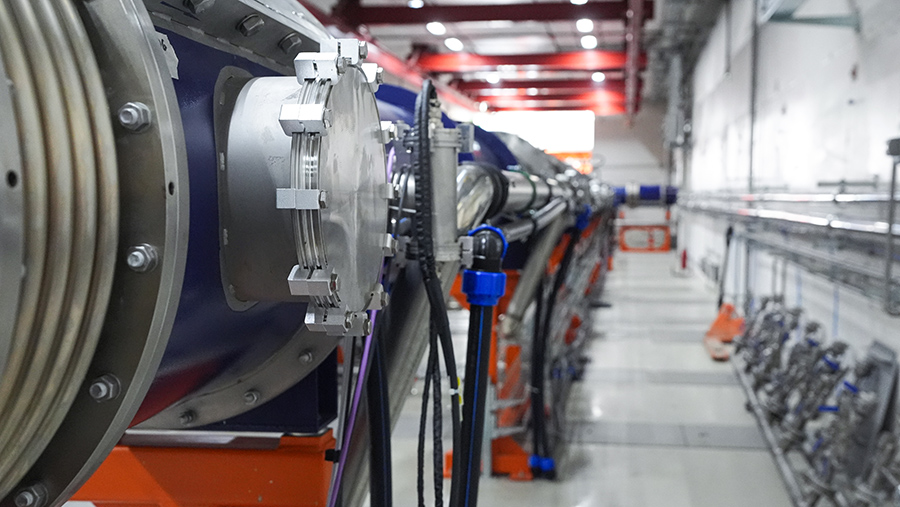
At this complex, scientists intend to study the extreme states of matter, including the phase transitions of the quark-gluon plasma that arose in the first moments after the Big Bang.
— In 2016, the construction of the NICA complex began. Ten years later, the collider was launched. In February 2026, specialists demonstrated at the mega-installation the stable circulation of two opposing beams of heavy ions and the alignment of their trajectories. The beams are circulating at a good intensity — about 2 million particles per clot," said Grigory Trubnikov.
JINR also plans to synthesize a new element, the 119th element of the periodic table, using berkelium and titanium nuclei. The experiment starts in mid-May, and the result is expected by September.
JINR is also developing compact accelerators for the production of radiopharmaceuticals, Grigory Trubnikov said. Another significant project is a new research neutron reactor. In terms of the intensity of particle flows, it will surpass all installations that exist or are being designed in the world.
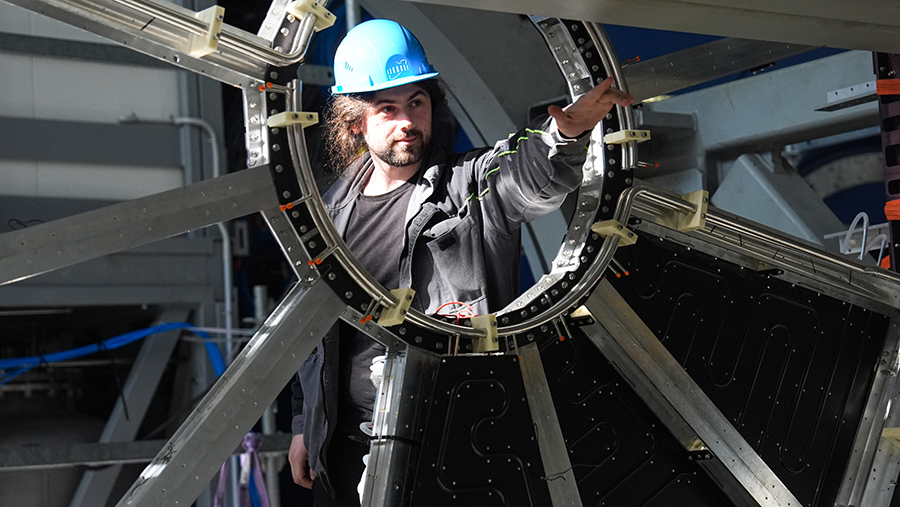
When choosing the parameters of the reactor, which will be launched around 2040, scientists are guided by the parameters that will be relevant by that time, the academician said.
Переведено сервисом «Яндекс Переводчик»
