Not all smoke: half of patients continue to smoke after heart surgery


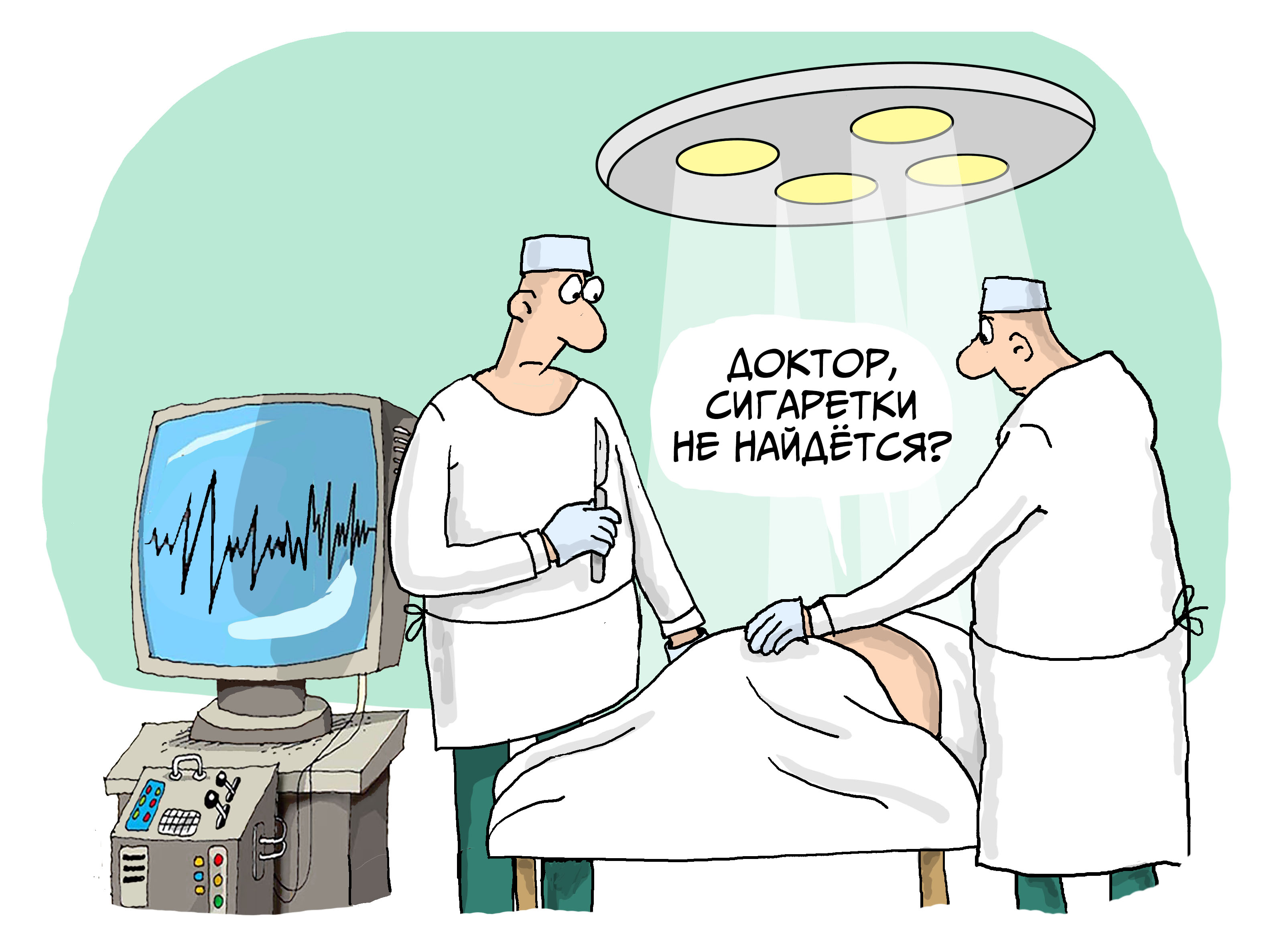
Almost half of patients after heart surgery ignore doctors' recommendations, according to Elena Golukhova, chief freelance arrhythmologist at the Ministry of Health. According to her, 48% of people who have been treated for cardiovascular diseases continue to smoke, and they also do not control their sugar levels and blood pressure. This dramatically increases the likelihood of recurring problems. Due to bad habits and an unhealthy lifestyle, the number of heart attacks is increasing, experts say. How to protect your heart is in the Izvestia article.
Patients continue to smoke after discharge
Almost half of patients with cardiovascular diseases who have undergone complex operations and received treatment continue to smoke after discharge, said Elena Golukhova, chief freelance arrhythmologist at the Ministry of Health, Director of the Bakulev National Medical Research Center for Cardiovascular Surgery. She added that many people do not monitor their blood sugar and blood pressure.
"It's even difficult to talk about these numbers," the doctor complained during the Healthy Society forum. — Less than 10% of patients monitor the level of LDL (low—density lipoproteins, or "bad" cholesterol), 48% continue to smoke, and a fourth suffer from such a metabolic disease as obesity.
Elena Golukhova reminded that in order to maintain cardiovascular health, it is necessary to get enough sleep, engage in physical activity, follow a diet, give up bad habits, and monitor metabolic parameters (markers reflecting the effectiveness of metabolism. — Ed.). For example, blood pressure, weight, blood glucose and cholesterol levels.
— According to the results of research in 2025, people who adhere to a healthy lifestyle improve their cardiovascular health and at the same time reduce mortality, even among patients with high risks. It's amazing. Mortality rates are also decreasing in patients with neoplasms. More than 11,000 people demonstrate that this is indeed the case," the doctor said.
During the forum, Yevgeny Shlyakhto, the chief freelance cardiologist at the Ministry of Health, reported a 30% reduction in mortality from heart attacks.
— These are tremendous results, but the number of risk factors is not decreasing — unfortunately, there are also more patients. Metabolic syndrome (complex metabolic disorder) is widespread. — Ed.). On average, it is a combination of: overweight, arterial hypertension (persistent increase in blood pressure. — Ed.) and insulin resistance. The problem is aggravated by the state of uncertainty and stress," the expert said.
The number of heart attacks in Russia is growing due to bad habits and an improper lifestyle, says Yuri Serebryansky, MD, cardiologist, Honored Doctor of the Russian Federation.
— A large number of patients do not monitor their weight and nutrition, and they abuse salt. Unfortunately, it is difficult to get rid of such bad habits as smoking and alcohol consumption. Many patients do nothing for this purpose. They used to smoke before a heart attack or coronary angiography (a method for diagnosing heart vascular pathology. — Ed.), and they continue to do so, rarely does anyone leave," he said in an interview with Izvestia.
Consequences of not following doctors' recommendations
There is a high probability of a recurrence of cardiovascular events if the patient continues to smoke and does not monitor his health after surgery or treatment, said Denis Sokolov, Candidate of Medical Sciences, cardiologist of the highest category of JSC "Medicine".
"Smoking negatively affects the cardiovascular system in both the short and long term," he warned. — This contributes to the rapid deterioration and aging of the system, as well as the occurrence of serious diseases, including coronary heart disease, atherosclerosis and sudden death. In addition, smoking increases the risk of blood clots, which is especially dangerous after surgery.
Cardiologist Yuri Serebryansky confirmed that patients with bad habits often have repeated heart attacks.
— As a doctor with more than 50 years of experience, I am offended by our work. Doctors are fighting over the patient, he is being transported by plane, cars, the staff spends sleepless nights in the hospital… We had bypass surgery (surgery to restore blood supply to the heart. — Ed.) two vessels to a man from the Moscow region. He smoked before the operation and continues to smoke. He recently called me and said that he had been assigned three more vessels to do," the expert shared.
According to him, cancer patients have similar problems: many of them cannot give up bad habits and are not examined on time.
"It's also difficult with older people: they take medications prescribed by a doctor as they please — they split the pills into several portions, then take them, then throw them away," the doctor admitted.

How to deal with bad habits
Non-compliance with doctors' recommendations is not always associated with irresponsibility and a superficial attitude to health, says Kristina Paul, a clinical psychologist and a specialist in the Alter psychological platform.
— Illness or surgery is a great stress for the whole body, including for the psyche. Smoking and overeating often become a way to cope with stress, they give the illusion of control and short-term relief, but do not lead to a real stabilization of the condition. In many cases, we are talking about addiction, a chronic condition associated with neurobiological processes. Therefore, quitting, for example, smoking "in one day" may be almost impossible for a person," she explained.
In addition, long-term consequences, such as the likelihood of a repeat operation, are often felt to be less significant than the current discomfort of restrictions. Therefore, without additional psychological support and motivation, it can be difficult for a person to adhere to restrictions, even realizing their importance.
Bad habits often require correction by various specialists — patients, for example, may seek help from a nutritionist, endocrinologist, or narcologist, says Yulia Savina, cardiologist at the Soft Medical Center clinic.
— Unfortunately, there is stigmatization in our society. Try telling a smoker to go to a narcologist, he'll just laugh. Therefore, repeated heart attacks, strokes and other cardiovascular disasters are not uncommon if a person does not do long-term work on their habits," the expert noted.
How to keep your heart healthy
Evgeny Shlyakhto, Chief freelance cardiologist at the Ministry of Health, noted that in recent years, Russia has been conducting not only primary prevention of cardiovascular diseases, but also prevention of the development of risk factors.
— According to WHO, 80% of circulatory diseases and 40% of cancers can be prevented. If people know about this, it will become an argument in favor of a healthy lifestyle. It is also necessary to move towards early diagnosis," he stressed.
According to cardiologist Denis Sokolov, the most common cardiovascular diseases in Russia include arterial hypertension, coronary artery disease (its acute form is myocardial infarction), arrhythmia and heart failure.
— Diseases of the cardiovascular system are more often manifested in a complex - one thing leads to another. Experts from the European Society of Cardiology note that the number of young people who have suffered a heart attack is growing every year in the world. This is due, among other things, to risk factors such as smoking, excessive alcohol and salty foods, chronic stress, sleep disorders and a sedentary lifestyle," the doctor said.
You should devote 60 minutes to physical activity three times a week, Yulia Savina added. Regular medical examinations are recommended for the prevention and early diagnosis of cardiovascular diseases. Risk factors that can be controlled should also be taken into account, advises Denis Sokolov.
— It is important to reduce the amount of salt, sugar and saturated fats, add more vegetables, fish, and whole grains to the diet. Regular physical activity improves the functioning of the heart, for example, walking outdoors, yoga or swimming, he recommended.
Breathing exercises, sports, and enough rest will help manage stress, the cardiologist pointed out.
Переведено сервисом «Яндекс Переводчик»
