They look foreign: why pop stars don't want to Russify pseudonyms


In March, a law came into force in Russia, according to which information for consumers, including posters, must be in Russian. The news sparked discussions in the music industry — for example, the artistic director of Ivanushek, Igor Matvienko, admitted the possibility of renaming the trio — without the "International" part. At the same time, the law provides for exceptions to the ban — Anglicisms can be used if they are registered brands. Izvestia found out whether the innovation would lead to a trend towards translating stage names into Cyrillic — whether SHAMAN could become a Shaman, and Beautiful Boys — "Beautiful Boys".
How "Ivanushki" almost lost the "International"
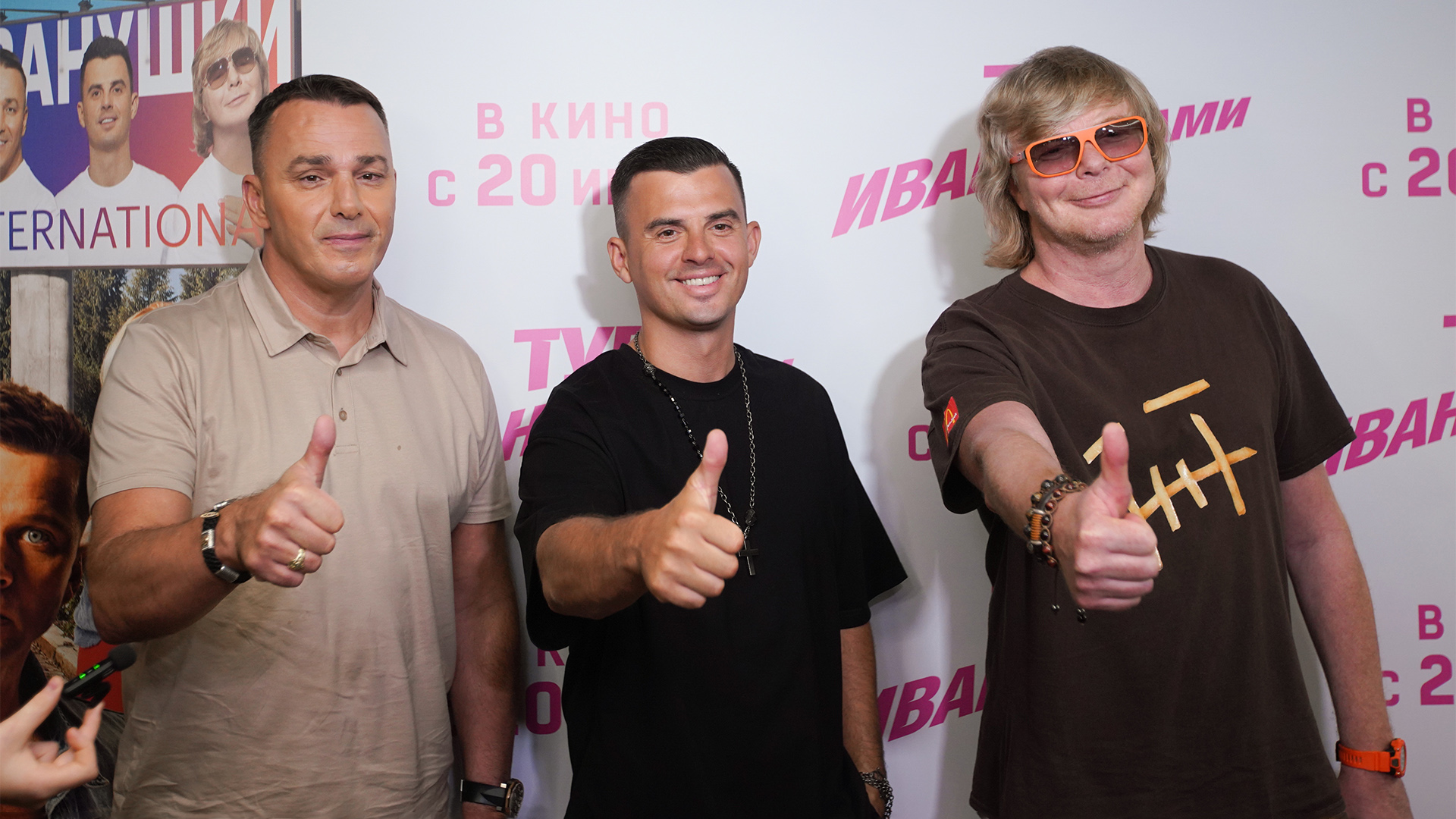
In early March, the media spread the news that the Ivanushki International group could lose its name, which it had worn for about 30 years. In an interview with journalists, this was admitted by the artistic director of the collective Igor Matvienko. The statement concerned only part of the name — the word "International". This happened following the entry into force on March 1 of amendments to the law "On Consumer Rights Protection" concerning the protection of the state language from excessive borrowings.
— The law on the prohibition of Anglicisms concerns a very specific category of information — information intended for public inspection by consumers. We are talking about, for example, the names of tariffs on the website ("Basic" and "Professional" will have to be translated as "Basic" and "Professional"), signage on the facade of the building ("Dentistry" or "Hairdresser"), signs to inform consumers ("No smoking", "Entrance across the street") and similar ones. Russian Russian inscriptions should now be written or translated, while the size and design of the text in Russian should be the same as that of a foreign text," Mikhail Bozhor, General director of the Afonin, Bozhor and Partners law firm, explained to Izvestia.
The expert added that the law does not apply to trademarks registered in Russia. Some representatives of show business have adopted this loophole.
— The ban also applies to artists, but only if the pseudonym or the name of the group is not registered as a trademark in Russia. Examples of registered trademarks with artist pseudonyms include, for example, SHAMAN (No.987104), Anna Asti (No.894956), Zivert (No. 904791). In other cases, public demonstration of a pseudonym in Latin may be considered a violation," the lawyer concluded.
Therefore, the stars of the Russian stage are in no hurry to translate their stage names and band names from Latin to Cyrillic, referring to this exception.
— We do not plan to Russify the name, as it is a registered trademark. So we remain within the framework of the new law. In any case, we also have the Russified name "Hatters" registered, and we can use it if we wish," Daniil Mustaev, producer of The Hatters, told Izvestia.
Representatives of rapper ST, singer Zivert, and the Beautiful Boys group referred to the trademark in an interview with Izvestia. Composer Mikhail Chertischev, the father of Betsy, the singer of the acclaimed hit Sigma Boy, said that it would not be difficult to translate his daughter's nickname into Russian if required by law. Artik & Asti group has the same position.

— When legislation changes, we will be able to indicate the name of the group in Cyrillic. This is not a problem for us," the team told Izvestia.
But producer and composer Maxim Fadeev wrote on his personal blog that he would not change the names of his projects.
"SEREBRO is a transliteration. It's the Russian word for "silver," simply written in Latin. MALFA is an abbreviation made up of my initials. These are not Anglicisms or foreign words," the message says.
Izvestia also sent a request to SHAMAN, who was made famous by the hit "I am Russian", whether he now plans to become a Shaman, despite having a trademark, but by the time of publication they had not received a response.

The trend towards Russification
The example of "Ivanushki" can launch a trend towards Russification of stage names, Milena Dorokhina, the creator of the FreeDoom Agency PR agency, noted in an interview with Izvestia. But in her opinion, it will not be massive. For established artists, such changes can be a blow to a brand that has been working on for years.
— Firstly, the music industry is always very sensitive to the cultural agenda and public sentiment. When major artists or producers demonstrate such solutions, it begins to be perceived as a signal to the market: what is considered right or relevant now. Secondly, some of the new projects may initially choose Russian—language names so as not to face potential restrictions in the future, especially if it comes to television, government platforms, or partnerships with brands, she believes.
Meanwhile, the filing of documents for trademark registration has become a trend among artists.
— Musicians began to promptly submit documents to Rospatent for registration of their nicknames as trademarks or adapt them in accordance with new requirements. This procedure alone can take from 4 to 12 months," Anastasia Stefurak, the artists' manager, told Izvestia. — To date, music venues have not yet made adjustments to ship new tracks. But we are already faced with the operation of the law. In the absence of documents confirming the registration of the artist's nickname in English as a trademark, the team has to coordinate the writing of the version in Russian, for example, in outdoor advertising and in music videos on the air.
Registration of a pseudonym as a trademark can serve as a certain protection, but even in this case, the law requires compliance with the rules on the state language when posting information intended for an unlimited number of people, explained Vladimir Kuznetsov, chairman of the All-Russian Trade Union of Mediators. Thus, the new law does not completely prohibit Anglicisms, but translates their use into a strictly regulated channel, giving absolute priority to the Russian language in public communications.
— The ban does not affect the sphere of artistic creation in its pure form. The performance of songs in foreign languages, the use of Anglicisms in the texts of works or in stage dialogues are not subject to these restrictions, as this relates to the exercise of the right to creative freedom. However, the line between creativity and commercial promotion is becoming clearer.: As soon as a foreign word appears on a concert hall sign or in a television commercial, the requirements for the priority of the state language come into force," Vladimir Kuznetsov pointed out.
Russian Russian text must be duplicated in accordance with the law, while the Russian text must be identical in content and not inferior to the foreign text in terms of technical characteristics (font size, color, brightness), the expert noted. Speaking about possible sanctions for neglecting the rules, he added that they depend on the qualification of the offense.
In case of non-compliance with the requirements in the field of advertising, Article 14.3 of the Administrative Code of the Russian Federation applies, which provides for fines for legal entities from 100 to 500 thousand rubles. If the violation concerns information for consumers (for example, on posters or tickets), liability may arise under Article 14.8 of the Administrative Code of the Russian Federation. Smaller but significant fines are provided for individual entrepreneurs and officials, and systematic violations may lead to orders to dismantle information structures.
Переведено сервисом «Яндекс Переводчик»
