- Статьи
- Society
- A pleistocene commodity: a relocant from Russia has turned Lithuania into a mammoth smuggling hub

A pleistocene commodity: a relocant from Russia has turned Lithuania into a mammoth smuggling hub

A major channel for the smuggling of mammoth tusks, woolly rhinoceros skulls and other fossil animals from Russia to Europe is controlled by Nikolai Ivanyushin, a Lithuanian relocator and former antique dealer from Primorye, Izvestia found out. We can talk about supplies worth millions of dollars a year. The newspaper managed to confirm his identity based on the materials of two criminal cases. The first one was introduced in Russia in 2022. Ivanyushin passed through it as an unidentified organizer of the smuggling channel and managed to emigrate. He continued his activities in Lithuania, and in February 2026, he was charged with two criminal counts there. How the Baltic States became a major smuggling hub on the way from Russia to Europe and where else dozens of tons of derivatives mined by black diggers in Yakutia are exported - in the investigation of Izvestia.
Business from the noughties
Lithuania has become the largest European channel for smuggling rare fossil derivatives from Russia — mammoth tusks, woolly rhinoceros skulls and other fossil animal remains, the Russian Federal Customs Service told Izvestia. More often than in this country, illegal exports in 2025 were carried out only to Mongolia and China, the agency noted. Izvestia, in the course of its investigation, identified the alleged organizer of this channel. Lithuania was probably made the main hub for transshipment of derivatives to Europe by Nikolai Ivanyushin, a former antique dealer from Primorsky Krai.

From the materials of the investigations, which were conducted independently in Russia and Lithuania, it follows that he hired teams of illegal derivatives miners in Yakutia, had warehouses in the Russian Federation and Lithuania, and forged accompanying documents for the cargo. He also attracted his wife, a Lithuanian citizen known for her anti-Russian political position, to his business.
Judging by open sources, Nikolai Ivanyushin started his business in the late noughties. He opened a website for the purchase of antiques with information about representative offices in Yakutia, Kemerovo and Novosibirsk regions, Moscow and St. Petersburg. In addition to quite ordinary rarities and jewelry, he offered to sell him meteorites and mammoth tusks.
In Yakutia, there is both legal and illegal extraction of mammoth fauna remains. The legal one is conducted under licenses from the local government (about 800 are issued per year). Those who have not received licenses are trying to extract derivatives illegally, and in a barbaric way — they use powerful motor pumps, which erode the soil and river banks.
The prosecutor's office of Yakutia informed Izvestia that in 2025, 20 violations related to the extraction of derivatives without licenses were detected in the republic. There is no direct responsibility for unauthorized collection of derivatives in the legislation. Violators can be charged under the Criminal Code of the Russian Federation for illegal entrepreneurship (up to six months of arrest) or under the Administrative Code for using mineral resources without a license (a fine of up to one million rubles).
The export of culturally valuable derivatives of fossil animals from Russia is prohibited and is possible only with the permission of the Ministry of Culture. Illegal export, if their value exceeds one million rubles, is subject to Article 226.1 of the Criminal Code "Smuggling of strategically important goods, resources and cultural values."
This area of his activity came to the attention of law enforcement agencies in 2022-2023 as part of the investigation of the smuggling case, which was launched by the FSB of Russia. The agency found that a certain person organized a criminal group whose members illegally exported the skulls of the woolly rhinoceros (an extinct species that disappeared about 14-8 thousand years ago). The cost of such a skull in Europe can reach up to € 30-40 thousand per unit, Izvestia determined after studying legal European platforms for trading derivatives. Members of the community also traded bison skulls, bears, teeth and mammoth tusks, according to the materials of the court that considered the case of this criminal group.
In 2023, Dmitry Troyanovsky, a resident of Moscow, was detained as part of this case. In November 2024, the Perovsky District Court of Moscow sentenced him to eight years and six months in a high-security penal colony.
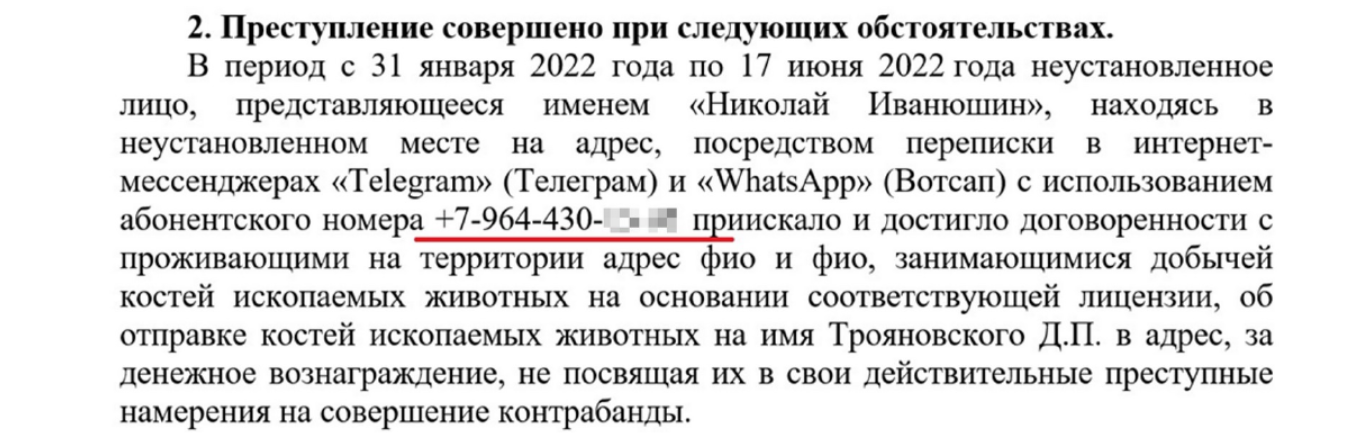
At the same time, "the person who created the organized criminal group" was described in the case file and in the verdict as "an unidentified person who introduced himself as "Nikolai Ivanyushin." He organized the transfer of cultural property across the border through messengers, and paid his accomplices with bank cards issued to citizens of Russia and China, the court materials reported.
As Izvestia found out, "Nikolai Ivanyushin," who was "unidentified" by the investigation, is not a pseudonym used by the organizers of the criminal scheme, but a real first and last name. However, during the investigation, this man was already living in Lithuania, where he moved in 2019.
— The practice when the investigation knows the identity of the accused, but in the indictment and sentence he passes as an unidentified person, is quite common, — lawyer Vladimir Seredin explained to Izvestia. — In this case, most likely, it happened because the investigation could not get the person involved in the case from Lithuania. It is possible that a request for legal assistance was sent, but now these mechanisms are not working against the background of their own. The petition was either not answered or was not considered at all.

The court's verdict indicates the phone number from which the organizer of the smuggling directed the shipment of valuables abroad. The same number is listed on the website of the antique shop of Nikolai Ivanyushin. The owner of the resource is "IP Ivanyushin".
According to the Unified State Register of Legal Entities, an individual entrepreneur with such details was registered in the name of Nikolai Evgenievich Ivanyushin in Primorsky Krai in 2009 and liquidated in 2021. The number also appears on the website of the Vostok-Import company from Nakhodka, which transports goods between Russia and China and provides customs services.
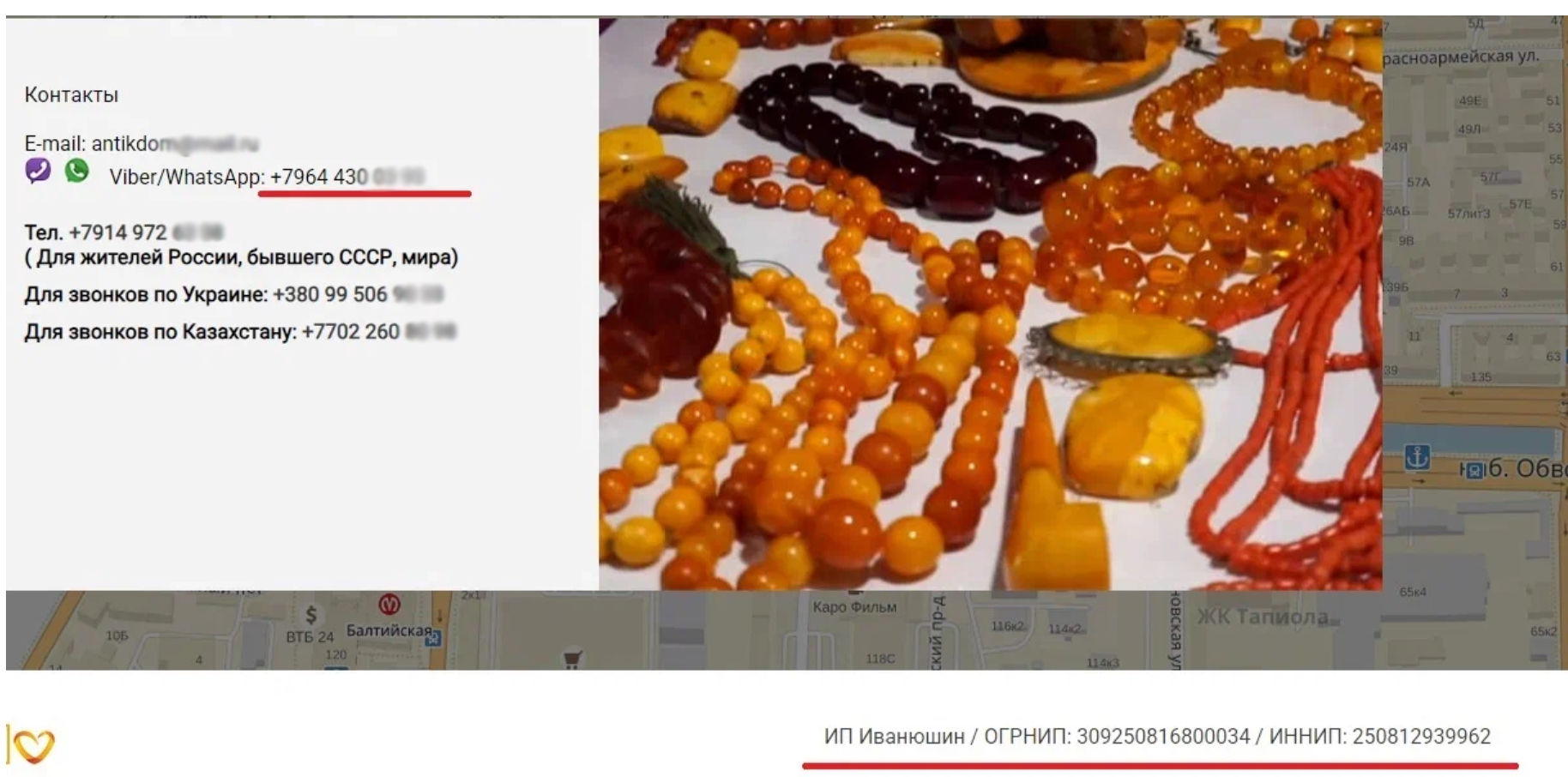
Postal addresses associated with Ivanushin are found on social networks in advertisements for the purchase of bones of fossil animals and meteorites, Izvestia found.
Heading for Lithuania
The materials of the Russian criminal case indicated that the main stream of contraband was heading to Lithuania, and Victoria Ivanyushina was the recipient of the cargo. At the trial, Troyanovsky stated that she was the wife of the organizer of the criminal group.
Izvestia has established that Ivanyushin's wife holds Lithuanian citizenship and has lived there since birth. She actively participated in the work of the nationalist youth association Pro Patria (lat. "For the Fatherland") is the organizer of the annual torchlight processions in Vilnius. In publications on the Pro Patria portal, he calls Russia "our sworn enemy." Judging by her Facebook account (owned by Meta Corporation, which is recognized as extremist and banned in Russia), Ivanyushina also teaches Lithuanian to relocants from Russia.

The accomplices used Telegram profile chats to hire bone miners from Yakutia, who sent the derivatives by mail to Moscow. In the capital, the smugglers rented a garage where they stored the finds, and then mailed them to Lithuania. During a search of the smugglers' garage, FSB officers found nine woolly rhino skulls, eight bison skulls, and more than 70 skeletal parts.
The following figures also indicate the scale of the group's activities: from June to October 2022 alone, customs officers seized 15 skulls and four lower jaws of a woolly rhinoceros in parcels sent by Troyanovsky. The value of the woolly rhino skulls seized at customs and in the garage, judging by their price on the European market, could exceed 700 thousand euros.
The smugglers used serious measures of secrecy, before sending the skulls of fossil animals were plastered, for this Troyanovsky hired a professional sculptor. The customs declarations for the cargo indicated souvenirs, office decor items, and sculptures.

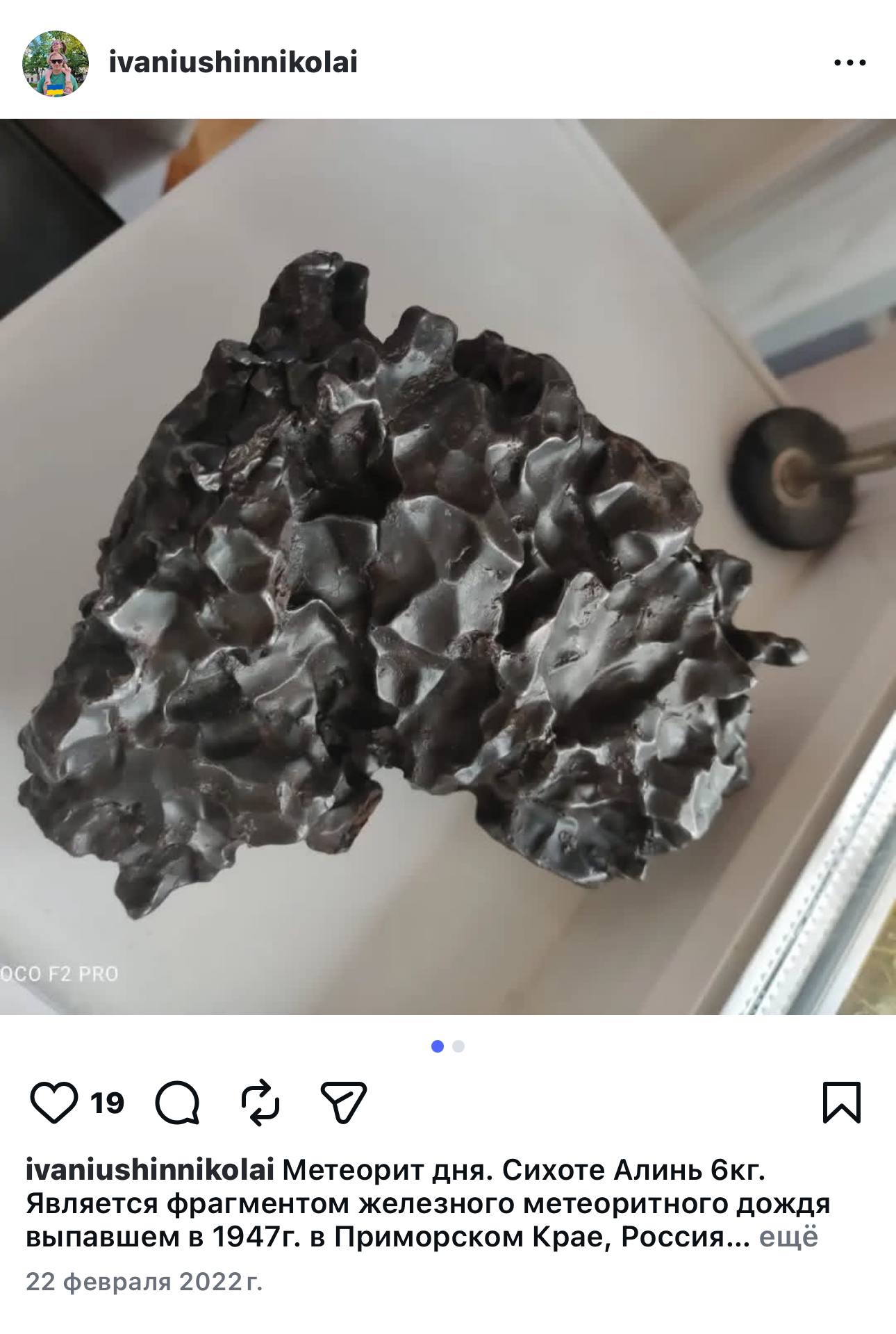
According to Izvestia, Ivanushin now lives in Vilnius. On his Instagram account (owned by Meta Corporation, which is recognized as extremist and banned in Russia), he offers meteorites for sale with delivery to any country in the world. He also has a website specializing in buying meteorites. There are several phone numbers listed on it — in addition to the Lithuanian one, there is also one registered in the Altai Territory.
The Fatal Tusk
Obviously, after moving to Lithuania, Ivanushin continued to earn money by smuggling derivatives from Russia. And he attracted the attention of Lithuanian law enforcement officers now. On February 25, 2026, the Kaunas District Court announced that a Russian citizen had been charged with smuggling and forgery of documents. In the press release, he is referred to as N.I. At the same time, there is information in the LITEKO electronic judicial system that the full name of the accused is Nikolajus Ivaniušinas.
Ivanushin got caught trying to export a mammoth tusk from Lithuania to Switzerland in April 2025. According to the court's materials, he declared a tusk worth €17,000 as a fragment of petrified wood worth €3,250, and submitted a fake expert opinion.

The first court hearing in the Ivanyushin case will be held on April 23. Judging by the activity on social media, Ivanyushin is at large — he is probably on his own recognizance. The Izvestia correspondent tried to contact Ivanyushin via social media, but he did not answer questions.
The fate of the valuables that Ivanushin and his accomplice exported to Lithuania from Russia is unknown. But, for example, the skulls of woolly rhinoceroses are openly sold by a number of European antique sites. This is, in particular, the German paleontological store Arctic Antiques, founded by Vladimir and Sergey Guralnikov from Moscow, located in the city of Estrich-Winkel. At the time of accessing the website, the store was offering two lots of rhino skulls with artificial horns for €26,900 and €19,900, another skull was sold earlier for €28,900. The description of the lots explicitly states that they were exported from Yakutia.
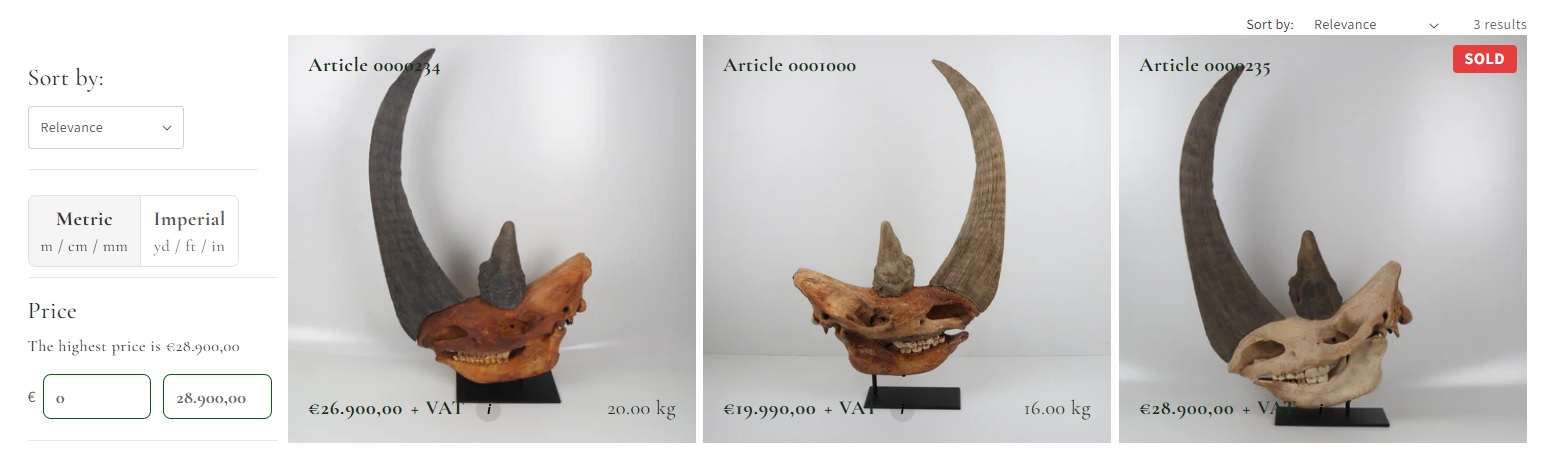
Izvestia sent a request to Sergey Guralnik with a request to tell about the origin of the valuables. No response had been received at the time of publication.
Ivanyushin bought valuables from Yakut diggers for extremely symbolic money compared to the final cost of the skulls. As one of the suppliers testified in court, for several woolly rhinoceros skulls he received only 120 thousand rubles, that is, about 1300 euros.
Directions of smuggling
The annual legal extraction of mammoth tusks in Yakutia, the main supplier of derivatives to the market, is estimated by the Rosselkhoznadzor at about 100 tons. According to the same data, the volume of illegal mining is twice as much, i.e. about 200 tons.

As the Ministry of Culture explained to Izvestia, the leaders in the legal import of paleontology items from Russia are China, the USA, the Netherlands, Hong Kong, and Denmark. Every year, from 90 to 110 permits are issued for their export. In 2025, 98 of them were issued.
Illegally, derivatives are exported mainly to China and Mongolia. Then there are Lithuania and the UAE, the FCS of Russia clarified. The largest shipment of contraband derivatives in 2025 was 939 kg of mammoth tusks, which were discovered at the Blagoveshchensk checkpoint on the border with China. Two foreigners tried to take them out in 15 suitcases, but were unable to show their permits, the customs service said.

The price of 1 kg of mammoth tusk in China is about $ 500, Izvestia determined after studying popular Chinese trading platforms. Thus, the cost of this batch alone was almost $500 thousand. The most expensive commodity is considered to be the horn of the woolly rhinoceros, which is used in Chinese traditional medicine. The price per gram of horn can reach up to $170-180.
As noted in the FCS, in 2025 there was an almost fivefold increase in the number of administrative cases related to the illegal export of fossil animal derivatives. 257 cases have been initiated into the smuggling of mammoth fauna remains, while 56 people were brought to justice in 2024.
Переведено сервисом «Яндекс Переводчик»
