Couple to work: new devices will evaluate anomalies of "breathing" of forests and swamps of Russia
- Статьи
- Science and technology
- Couple to work: new devices will evaluate anomalies of "breathing" of forests and swamps of Russia


Russian scientists have created the world's first compact analyzer that simultaneously measures the concentration of three greenhouse gases — carbon dioxide, methane and water vapor. The device can become the main tool for monitoring natural ecosystems in our country. It will replace the previous bulky and expensive imported devices that examined each substance individually. The development will make it possible to consolidate the observation network to study anomalies related to greenhouse gases.
One device instead of two
Russia has created the world's first compact laser analyzer capable of measuring the concentration of three greenhouse gases in the field — carbon dioxide, methane and water vapor. Previously, this required at least two separate devices. Specialists from the Space Research Institute of the Russian Academy of Sciences, the A.N. Severtsov Institute of Ecology and Evolution and the Moscow Institute of Physics and Technology participated in the development.
As the scientists explained, the introduction of the device will replace expensive imported equipment and help manage national natural resources more efficiently.
— The device is a system of two lasers: their radiation passes between the mirrors along an M-shaped trajectory. The total path of the rays is 135 cm. The operation of the spectrometer is based on the fact that molecules of different gases absorb light at strictly defined wavelengths. By measuring the degree of this absorption and processing the data with computational algorithms, it is possible to determine the concentration of gases at any given time," Vyacheslav Meshcherinov, one of the developers, an engineer at the Institute of Physics and Technology of the Russian Academy of Sciences, and a leading engineer at MIPT, told Izvestia.
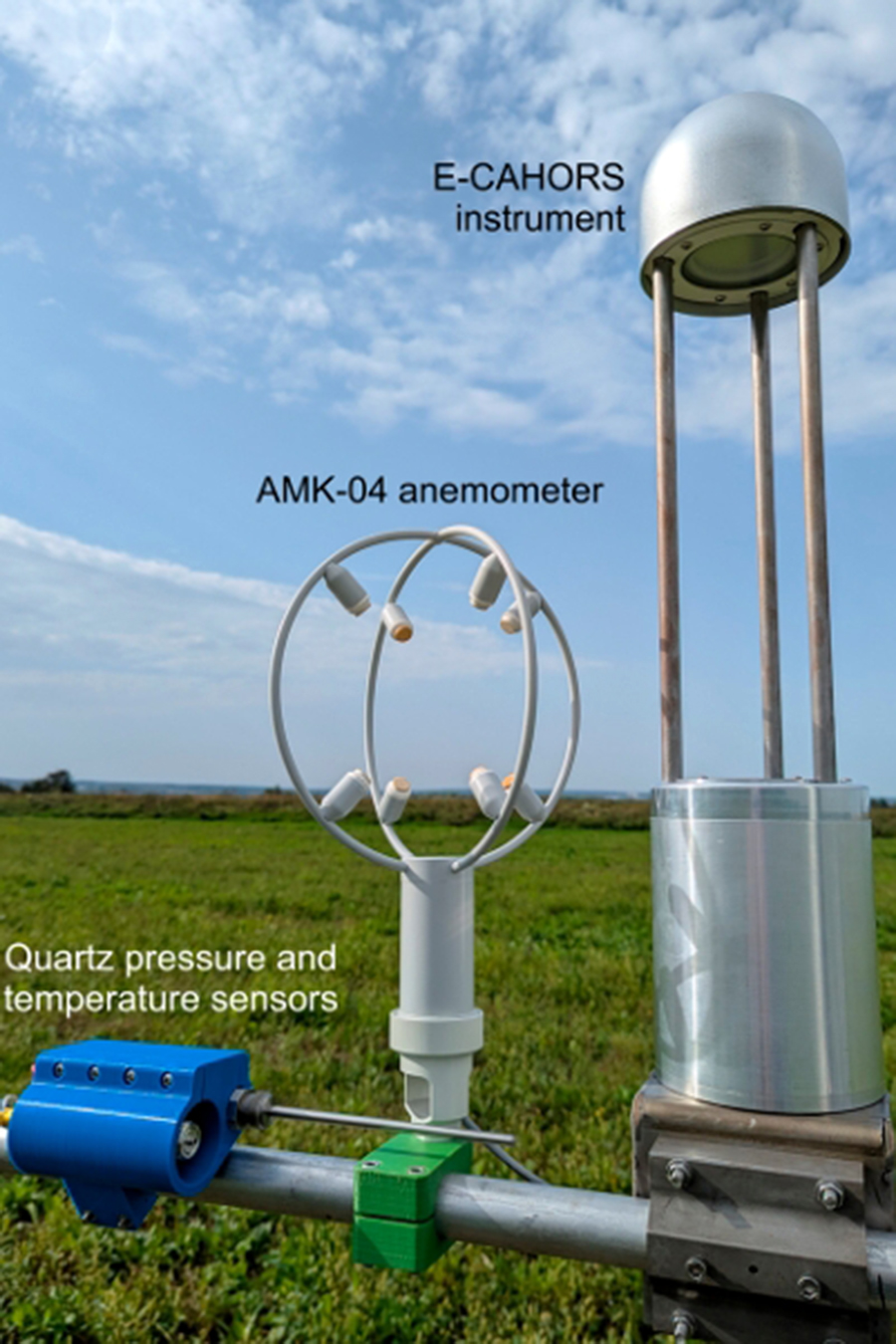
A special feature of the development is the use of longer waves compared to those commonly used in such systems. This made it possible to simplify the design of the device and increase its reliability, he explained. In addition, the device measures the concentration of gases directly in the environment. In most similar systems, air is first pumped through tubes and analyzed in a closed cell, which creates a time delay and requires additional data correction.
Due to the implemented solutions, the gas analyzer turned out to be compact: its weight is just over 4 kg. This simplifies the installation of the device, for example, on high masts, which are used for measurements over forests.
Why are greenhouse gases being investigated?
According to the developers, requests from academic institutions confirm the relevance of the device. In particular, to ensure the operation of carbon landfills — territories where greenhouse gases are monitored.
— Currently, there are about 35 observation stations in Russia, integrated into the RuFlux network. They work in forests, swamps, tundra and steppes. Until 2026, all gas analyzers were foreign. Their purchase costs a lot of money and is difficult under the conditions of sanctions," said Olga Kuricheva, co—author of the development, researcher at IPEE.
For example, to monitor three gases, it was necessary to install two separate American-made LI-COR Inc. gas analyzers with a total cost of 50 million rubles, she explained. New affordable and simple devices will reduce the cost of setting up surveillance stations and will make it possible to compact their network.

This will provide an opportunity to better study the state of national ecosystems and the human impact on them, as well as help improve the management of natural resources.
— The content of greenhouse gases in the air reflects the functioning of ecosystems in changing environmental conditions. A change in their concentration may indicate both the adaptation of plant communities to environmental conditions and disturbances within ecosystems. For example, about shifts in metabolism, fires and deforestation," explained Daria Polosukhina, a junior researcher at the V.N. Sukachev Institute of Forestry SB RAS.
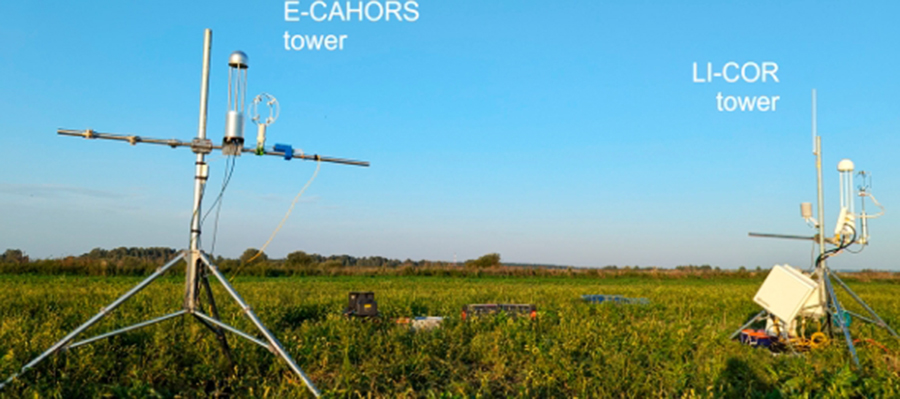
According to her, such observations will help to understand why nature behaves differently: for example, why trees absorb carbon dioxide more actively in some periods and less in others, and why swamps sometimes emit more methane. Understanding these processes makes it possible to make predictions about the state of ecosystems in the face of climate change.
— Greenhouse gas monitoring makes it possible to assess both natural and anthropogenic contributions to global climate processes. These data will help improve methods of protecting the environment from negative impacts," said Vladimir Pinaev, member of the Public Council of the Basic Organization of the CIS Member States for Environmental Education, Associate Professor at the Patrice Lumumba Institute of Ecology at the RUDN University and editor—in—chief of the online scientific journal Waste and Resources.
In the future, he added, with the development of the carbon market, such research will allow Russia to extract economic benefits by selling emission quotas.
How to combine ground-based and space-based observations
— To understand the global climate, we need a unified system of observations from the crown of the tree to the stratosphere. The presented development is the first level. Such devices only see a local area," said Nicholas Oxman, CEO of the Stratolink startup.
The second level of the system is balloons, which at an altitude of up to 1 km can collect data within a radius of about 100 km and build vertical profiles of gases in the atmosphere. The third level is stratospheric pseudo—satellites like the Russian advanced Argus complex. These are unmanned vehicles that can patrol for weeks at an altitude of about 20 km. Their radio horizon is up to 600 km, which makes it possible to track the regional background of gases.
The uppermost level is the orbiting satellites with hyperspectrometers. Now, for example, a similar technique is being tested on HyperView-1G and Colibri-S cubesats developed by Samara University named after S.P. Korolev. They were launched in November 2024.
These devices record methane and carbon dioxide emissions. Their successful operation will pave the way for the creation of groups of inexpensive satellites that will monitor greenhouse gases in real time throughout the country.
In general, integrated systems that combine ground-based, atmospheric and spacecraft will provide a more reliable picture, said Nicholas Oxman.
— New domestic devices are relevant due to the high cost of foreign equipment and difficulties with import. In addition, many countries need high—quality equipment to monitor the state of ecosystems," added Sergey Verkhovets, climatologist and Vice-rector for Advanced Projects at Siberian Federal University.
If our scientists manage to refine and bring their developments to the market, this will be another step to strengthen the position of Russian science in the world, the expert concluded.
Переведено сервисом «Яндекс Переводчик»
