Young assistants


Today marks 53 years since the first detachments of young traffic inspectors (YID) appeared in our country. For more than half a century, this movement has become not just an interest group, but a powerful tool in reducing accidents. Izvestia found out how UID helps to improve road safety.
"Do you remember how it all started..."
On March 6, 1973, a joint resolution was adopted by the secretariat of the Komsomol Central Committee, the collegiums of the Ministry of Internal Affairs and the Ministry of Education "On the creation of detachments of young traffic inspectors." It is from this date that the history of one of the most massive children's and youth organizations begins, both in the USSR and in modern Russia.
Of course, at first YID was not a mass phenomenon — it was separate clubs in schools, pioneer homes and cultural centers. However, very quickly, more and more children and teenagers joined the detachments of young inspectors. Moreover, the groundwork for this was laid much earlier: long before the official appearance of the UID, there were groups of young vigilantes, young friends of the militia, young friends of the traffic police, etc. Retired police Lieutenant Colonel Larisa Nikolaevna Ovcharenko was able to unite them under a "common flag", of course, not without the help of police Lieutenant General Valery Vitalievich Lukyanov, the head of the GUGAI of the USSR Ministry of Internal Affairs at that time. Her authority, popularity among children and teenagers, and pedagogical talent, coupled with the powerful support provided by the Ministry of Internal Affairs and the Ministry of Education of the USSR, made it possible in a short time to gather thousands of children not only from the Soviet Union, but also from other countries under the wing of the UID.
Special attention is paid to UID issues at the highest state level, according to the State Traffic Inspectorate of the Ministry of Internal Affairs of Russia. Several points of the decree signed last fall by Russian President Vladimir Putin "On approval of the Strategy for improving Road Safety in the Russian Federation for the period up to 2030 and for the future up to 2036" are devoted to the activities of young traffic inspectors, the department recalls.
Keeping up with the times
Now the All-Russian public children's and youth organization for the promotion of road safety "Young Traffic Inspectors" consists of more than 36 thousand detachments, whose members include more than half a million children and adolescents from all regions of the Russian Federation, including from new regions, its chairman Valentina Kulbitskaya told Izvestia. The main task of the UID is to educate responsible and law—abiding road users — pedestrians and future drivers, she noted.
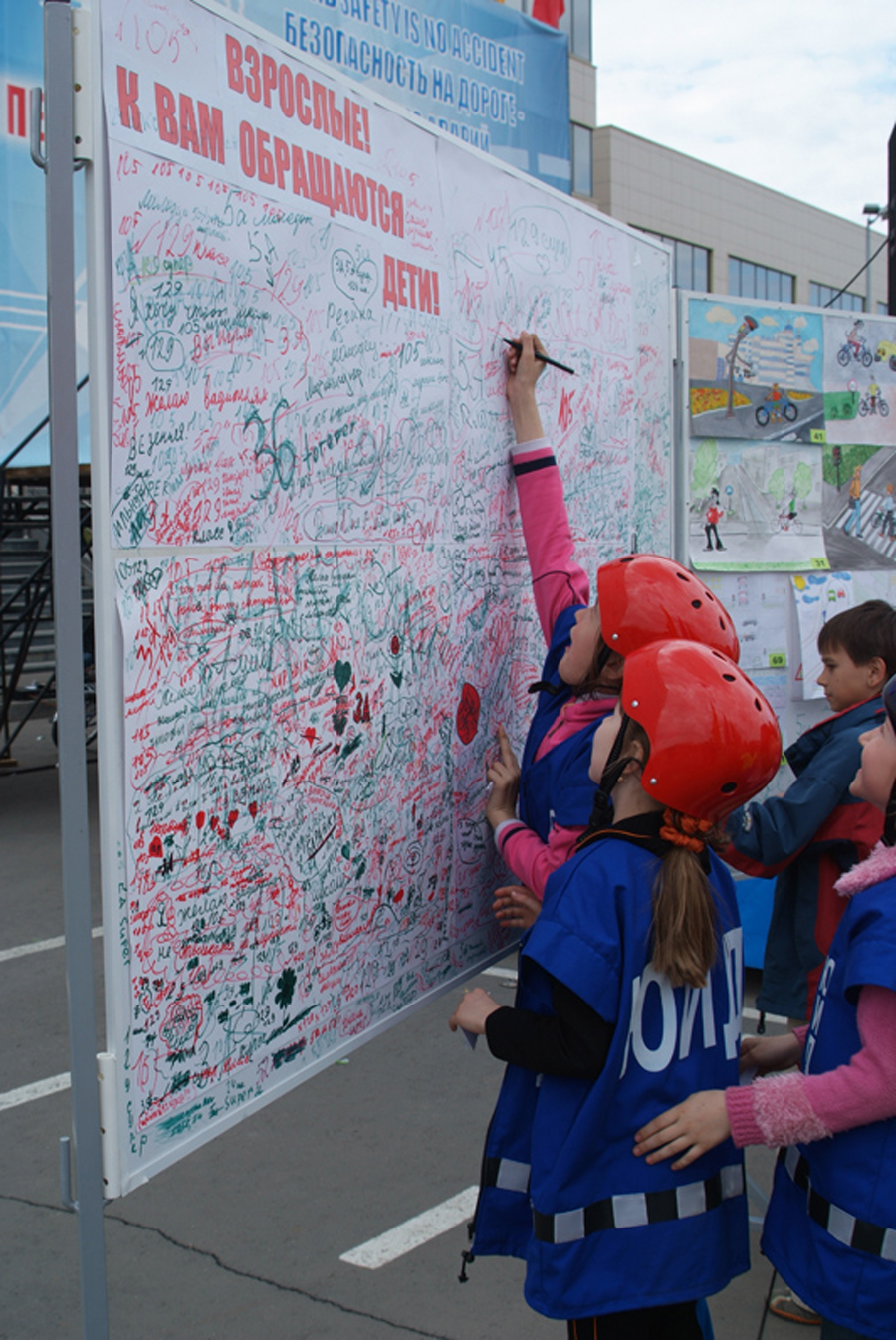
An extremely important component of interaction with the members of the UID is their involvement and interest in the work aimed at improving road safety, emphasized Valentina Kulbitskaya. This requires an individual approach, taking into account the psychological characteristics of the child, depending on his age, she emphasizes.
— If we talk about the youngest members of the UID, then for them, first of all, the game forms of obtaining new information and knowledge are relevant. The more senior members of the detachments are interested in the applied nature, the possibility of self-realization in solving some tasks, and awareness of their personal contribution to improving road safety," said the chairman of the UID.
At the same time, the educational and training process in the UID units does not stand still and keeps pace with the times, emphasized Valentina Kulbitskaya. New forms of mentoring, popular social networks among children and teenagers, are being actively used, and elements of artificial intelligence and other modern digital technologies are being introduced. This ensures that the young traffic inspectors are more interested, and additionally motivates the youth workers, she notes.
New challenges
The rapid development of transport, the mass appearance on the streets of personal mobility equipment (SIM) and gadgets among children and teenagers are reflected in the UID units, said Valentina Kulbitskaya. Moreover, the UID has prepared in advance for these and other new challenges that force us to look at safety issues in the transport environment from a different angle, she stressed.
— Take, for example, the same SIM. It was obvious that they would definitely infiltrate the teenage environment. Therefore, long before the requirements for this technique appeared in the traffic regulations, we began to actively work in this direction — to tell and clearly show the dangers of SIMS, both for those who operate them and for pedestrians, what to pay attention to, — said the chairman of the UID.

Invaluable help
According to official statistics, according to the results of last year, the main accident rates on Russian roads continued to decrease. A positive trend is observed with children's road traffic injuries. In particular, the number of such accidents decreased by 2.1% last year, the number of young road users killed in them decreased by 2%, and the number of injured minors decreased by 1.7%.
The fact that accidents on our roads have been decreasing over the past few years is undoubtedly due to the young inspectors. Numerous participants in this all-Russian movement show their peers by their example how to behave correctly and safely on the road. Moreover, it is often the UID members who force adults to think about their behavior, to abandon certain illegal actions on the road," said Police Colonel Sergey Hrantskevich, head of the Department for road Safety Promotion and prevention of child traffic injuries at the State Traffic Inspectorate of the Ministry of Internal Affairs of Russia.
Nevertheless, despite the general decrease in accidents in general and positive trends regarding accidents involving minors in particular, the situation with child injuries on the roads remains difficult, the State Traffic Inspectorate notes. The department is particularly concerned about incidents in which children and teenagers are involved as drivers of cars, motorcycles, pit bikes and other vehicles. Despite the fact that the total number of such accidents decreased by 16% last year, 68 minors died in them.
— Work on the prevention and suppression of the facts of driving by underage drivers who do not have a driver's license or a license of the appropriate category is carried out on an ongoing basis. Moreover, not only by employees of the State Traffic Inspectorate, but also by other police units — juvenile inspectors, district police officers, etc. The participants of the UID provide invaluable assistance and support here — they play one of the key roles in this matter,— said Sergey Hrantskevich.
He explained that it is often the advice of peers and their stories about the serious consequences of driving a pit bike, motorcycle or car without a license, as well as without appropriate skills and experience, that force children and teenagers to eventually abandon a dangerous trip.
— There are examples when youth workers, who for one reason or another failed to convince their peers, report to the State Traffic Inspectorate about the alleged "events". This allows us to quickly take the necessary measures to prevent a tragedy," said Sergey Hrantskevich.
The head of the Department of Road Safety Promotion and Prevention of Child Traffic Injuries of the State Traffic Inspectorate of the Ministry of Internal Affairs of Russia congratulated the UID on its birthday and wished the movement and all its participants and teachers further development and prosperity for the benefit of improving road safety.
The material was created as part of the implementation of the federal project "Road Safety" of the national project "Infrastructure for Life".
Переведено сервисом «Яндекс Переводчик»
