- Статьи
- Economy
- The day is over: the conflict in the Middle East has inflated the prices of gold and oil in 24 hours

The day is over: the conflict in the Middle East has inflated the prices of gold and oil in 24 hours

Precious metals and shares of Russian commodity companies will increase in price in the coming days amid a new round of conflict in the Middle East, experts interviewed by Izvestia believe. The markets have already reacted to the escalation: the day after the conflict began, gold futures rose by 2.3% and silver futures by 4.8%. Shares of Russian oil companies added 2.9–3.2% at the weekend auction of the Moscow Stock Exchange. According to analysts, central banks from different countries will continue to increase purchases of precious metals as a protective asset, and the scale of the economic consequences will largely depend on the development of the situation in the Strait of Hormuz. If it is completely blocked, the prices of raw materials may rise by at least 30%. How this will affect the ruble exchange rate and the Russian stock market is described in the Izvestia article.
How markets react to the conflict in the Middle East
The price of precious metals futures and shares of Russian oil companies may rise against the background of the military conflict in the Middle East. If the confrontation drags on for at least a few weeks, the ruble will have the potential to strengthen, but not immediately: by the end of March, the exchange rate may drop to 80-81 rubles per dollar, experts interviewed by Izvestia believe.
On February 28, the United States and Israel launched strikes against Iran. In response, the Islamic Republic attacked both Israeli territory and American military installations throughout the Middle East — in Bahrain, Qatar, the United Arab Emirates, Kuwait, Saudi Arabia, Jordan and Iraq. Moreover, the Iranian authorities have stated that they consider the assets of American companies in the region as legitimate targets.

Quotes for precious metals and raw materials have already reacted to the situation. For example, gold futures gained 2.3% on the first day, while silver futures gained 4.8%. Shares of oil and gold mining companies were among the leaders at the weekend auctions of the Moscow Stock Exchange. Bashneft's securities increased by 3.2% (to 1,521.5 rubles), Gazprom Neft — by 3.1% (to 522 rubles), LUKOIL, Tatneft and Seligdar — by almost 3% (to 5,376, 599.5 and 59.2, respectively), and Rosneft andPoles" — by 2.9% (to 405.8 and 2579.6 rubles).
Such a reaction can be described as an escape from risks — investors instantly transfer capital from unsafe assets to protective ones, said Oleg Abelev, head of the analytical department at the Rikom-Trust investment company. According to him, the simultaneous growth of oil and gold suggests that the market is pricing in not just a local conflict, but a full-fledged military campaign involving Iran as a major player that threatens the supply infrastructure.
Some investors made a lot of money from the invasion of Iran. For example, a Polymarket user with the nickname Magamyman has bet $87,000 that the United States will strike Iran. He made his first bet 71 minutes before the attack became known, and earned $515 thousand. In total, at least six accounts on the platform got rich — they earned a total of $ 1.2 million.

However, some users, on the contrary, suffered significant losses. One of the traders earned about $2 million over the previous months by betting against the outbreak of hostilities, but lost $6.5 million just a day after the attack. In total, the trade turnover in the forecast market for a possible military conflict between the United States and Iran has exceeded $529 million since December.
Ruble exchange rate, gold and oil quotes: forecast
It is difficult to predict the situation now, as the situation in the Middle East is changing hourly. For example, on the evening of February 28, the Islamic Revolutionary Guard Corps (IRGC) suspended navigation in the Strait of Hormuz, which is used for the passage of oil tankers.
— Iran's export volumes are not as important for global trade as the safety and stability of transportation through the Strait of Hormuz. In addition to the Islamic Republic, seven other Persian Gulf countries use this transport artery.: About 20% of the world's liquid hydrocarbon supplies and about 10% of gas, including 22% of the world's LNG, pass through it," Kirill Bakhtin, head of the BCS World Investments Russian Stock Analysis center, recalled.
On March 1, it became known that the strait had been opened to tankers "until further notice." If the artery is completely blocked for a long time, it will cause an increase in the price of oil by at least 30%, according to the financial adviser and founder of Rodin.Capital Alexey Rodin. The price of Brent on February 28 was $72.65 per barrel. In the first days of March, the cost may reach $75-78 per barrel, says Natalia Milchakova, a leading analyst at Freedom Finance Global.

Kirill Bakhtin is confident that the price increase is at least a short—term positive for the shares of the Russian oil and gas sector, as well as for the index as a whole. Among large-cap companies, the securities of Rosneft, LUKOIL and Surgutneftegaz demonstrate the greatest sensitivity to the rise in oil prices. According to him, NOVATEK stands out in the gas segment.
In addition, Russia remains one of the largest exporters of raw materials. The higher world oil prices are against the background of shortages and panic, the more foreign exchange earnings flow to the budget, said Olga Gogaladze, an economist and expert on financial markets.
Rising oil prices can also cause ruble volatility, experts interviewed by Izvestia believe. If the Russian Urals brand exceeds the cut-off price ($59 per barrel), according to the budget rule, the surplus will be sent to the NWF for the purchase of foreign currency, mainly yuan. With the active acquisition of foreign currency, the ruble may weaken.

At the same time, the high oil price remains a significant support for the national currency, and the flow of export earnings will not allow the ruble to collapse, Olga Gogaladze noted. Therefore, there will be no strong growth in the exchange rate — by the end of March it will be in the range of 80-81 rubles per dollar. At the beginning of the month, the US currency will be in the range of 75-78 rubles, and the euro — 89-92 rubles, Natalia Milchakova believes.
Against the background of military uncertainty, demand for gold and other precious metals is traditionally growing, as they act as a cost-saving tool, Ekaterina Kosareva, Managing Partner of VMT Consult, emphasized. Further dynamics will depend on the behavior of the dollar and expectations for interest rates in the United States: increased geopolitical tensions can further support precious metals quotes. In her opinion, gold in early March may cost up to $ 5,300 per ounce, silver — $ 98-100 per ounce.
What will happen to the global economy
— What is happening is a possible trigger for the revision of macro—financial expectations. If the escalation escalates, markets will begin to price in a scenario of longer-term instability in the Middle East, which will lead to a steady increase in the risk premium in commodity assets. In this case, oil can gain a foothold at higher levels, and volatility on stock markets will persist longer than usual, Ekaterina Kosareva believes.

However, a rise in the price of raw materials may lead to a new round of global inflation. This means that the central banks of different countries will not be able to quickly reduce interest rates, Olga Gogaladze recalled. For companies in the non—resource sector, this situation creates risks - their shares may sink.
In addition, the current military conflict is seen as another attempt by Donald Trump to put pressure on China. Beijing buys about 90% of Iran's raw material exports, including oil and condensate. Such control provides a powerful lever of influence on the Chinese economy, in fact, limiting the country's industry, she believes.
At the same time, according to financial adviser Alexei Rodin, the economic consequences for the global economy will largely depend on what happens in the Strait of Hormuz and whether it will be permanently blocked.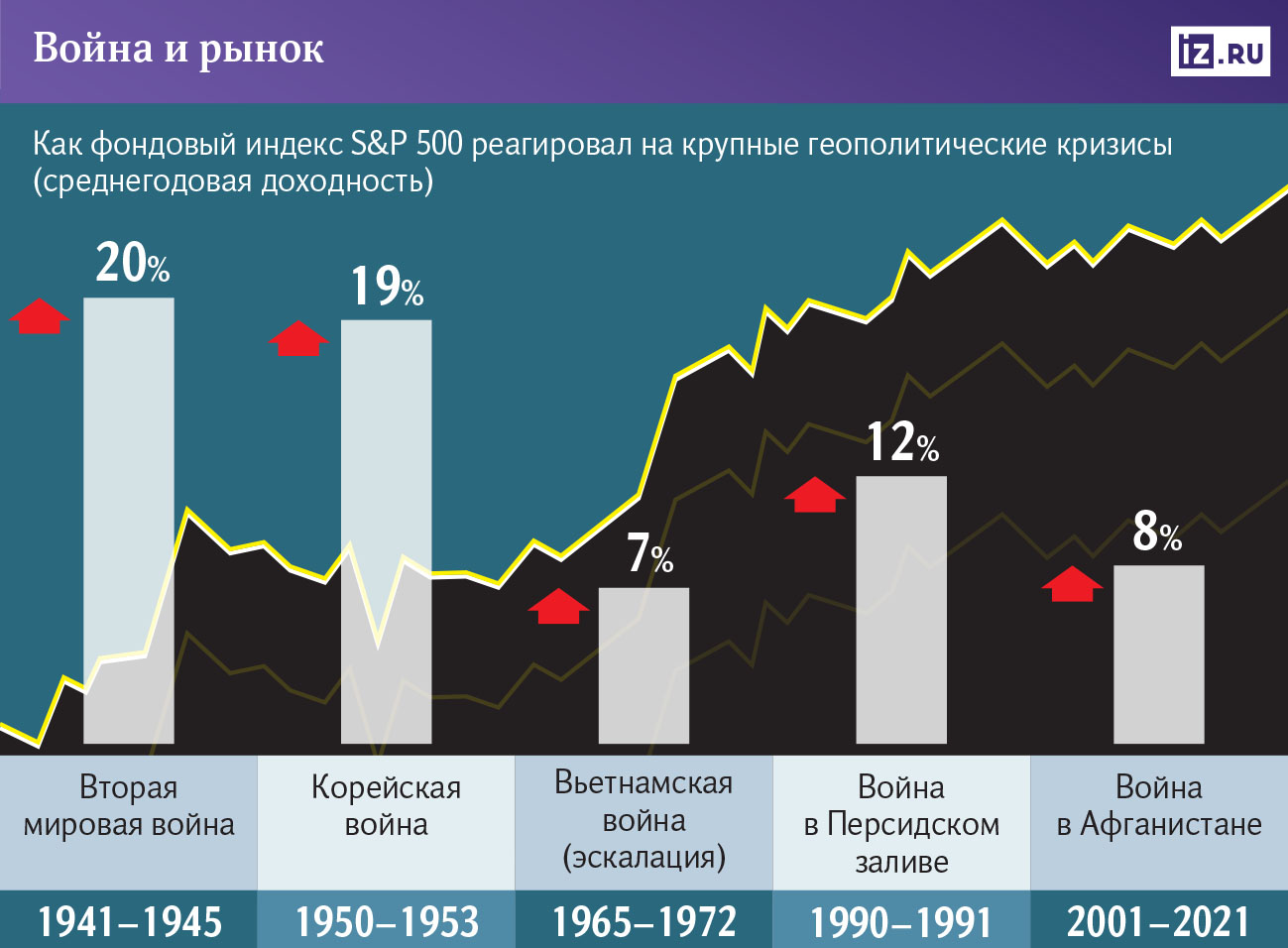
Переведено сервисом «Яндекс Переводчик»
