
Barrel blow: War in Iran could accelerate oil prices to $150 per barrel

The price of oil is expected to rise significantly in the coming days, even though the "eight" OPEC+ member countries decided on March 1 to increase production by 206 thousand barrels per day. This opinion was expressed by most industry experts when assessing the situation in the Middle East. In response to the bombing by the United States and Israel, Iran attacked American military bases and declared U.S. energy companies a "legitimate military target." In the event of an escalation of the conflict, experts do not rule out an increase in prices to $ 150 per barrel. What to expect from the global oil market next is in the Izvestia article.
The oil market and the OPEC+ decision
Against the background of the military confrontation in the Middle East, eight OPEC+ countries decided to increase oil production quotas for April by only 206 thousand barrels per day "due to the stable global prospects for the global economy and healthy market indicators reflected in low reserves of raw materials." This is stated in a press release from the Organization of Petroleum Exporting Countries.
"The countries will continue to closely monitor and evaluate the market situation. As part of their ongoing efforts to support market stability, they reaffirmed the importance of a cautious approach and remaining flexible to continue suspending or canceling additional voluntary production adjustments," the alliance said in a statement.

Having started to return to the market the previously accepted limits of 1.65 million barrels per day in October 2025, the parties to the deal increased quotas by 137 thousand barrels per day, but for the first quarter of 2026, a pause was taken in the build-up due to a seasonal decrease in demand.
Back on February 27, industry experts expected that the cartel members would increase production due to the rise in prices of raw materials. Dmitry Scriabin, portfolio manager at Alfa Capital Management Company, told Izvestia that the increase in oil prices by about 17% since the beginning of the year amid tensions around Iran has created "a comfortable price window for OPEC+ countries." In addition, "the approach of the summer season, which is traditionally characterized by higher demand for oil and petroleum products," could have an impact.
However, the escalation of the Middle East conflict has become another argument. If before that, according to Western media, citing sources, OPEC+ intended to increase production by 137 thousand barrels, then on February 28, agency sources reported that the quota could be increased by 400 thousand barrels.

According to Ekaterina Kosareva, Managing partner of VMT Consult, the cartel made a restrained decision for evaluation.
— The countries participating in the oil agreement will assess the situation in the coming month and make their own adjustments if necessary. They did not maximize the quota in order to maintain price quotations against the background of the conflict," the Izvestia interlocutor said.
According to Yuri Stankevich, Deputy chairman of the State Duma Committee on Energy, "high prices are beneficial for some of the alliance's members, but too sudden a jump carries the risk of disrupting demand and increasing pressure from consumer countries."
The impact of the military conflict on the market
Oil prices began to play out the situation in the Middle East on the eve of the weekend. As Ekaterina Kosareva noted, on February 27, the growth of quotations accelerated sharply: April Brent futures rose in price on the London ICE Futures exchange by 2.5% to $72.52 per barrel.
— Investors reacted to the information about the outcome of the US-Iranian negotiations. Some Western media reported that the American delegation left Geneva disappointed. In addition, the State Department authorized the departure of part of the diplomatic mission in Israel and their family members amid threats to their safety," she stressed.

On February 28, the US and Israel launched a military operation against Iran, which did not have to wait long for a response. Tehran hit US military bases located in the region, and in the late afternoon, Israeli media reported the closure of the Strait of Hormuz, through which up to 20% of the world's oil flows.
Against the background of the expansion of the geography of attacks on Iranian territory, the authorities of the Islamic Republic warned: from now on, any assets of American companies in the region will be considered as legitimate military targets.
On March 1, the ex-commander of the IRGC and secretary of the Council for Determining Political Expediency, General Mohsen Rezai, announced that the Strait of Hormuz was open to ships "until further notice." On the same day, it became known that a tanker with raw materials under the flag of the island state of Palau came under fire in the territorial waters of Oman, near the strait. The media also reported that Tehran had attacked oil facilities in Saudi Arabia.

Tamara Safonova, CEO of the Independent Analytical Agency for the Oil and Gas Sector, believes that the key factor that will affect pricing is damage to the region's oil infrastructure and routing disruptions.
"Due to threats of attacks and interference in navigation, some of the oil cargo is already being redirected to bypass the Strait of Hormuz, the Persian and Omani Gulfs," the expert noted.
What will happen to the market and oil prices
Experts agree that the movement of price quotations will depend on the duration and intensity of the conflict. According to Alexander Frolov, Deputy Director General of the Institute of National Energy, given the exchange of blows, it is unlikely that the confrontation "will end in the coming days."
— Damage to the export infrastructure will create problems for the global market, but the problems are short-term and generally solvable. And the closure of the Strait of Hormuz is an unsolvable problem. At least within a reasonable timeframe. This state of affairs will create an alarming impact on energy markets and boost prices," the expert said.

Yuri Stankevich also believes that a complete blockade for a long time is unlikely, as this will cause an immediate international military reaction and will hit Iran itself.
— However, even partial disruptions or attacks on tankers can raise oil prices to levels of $100-120 per barrel in the short term. The expansion of the conflict to the infrastructure of the Gulf countries is the toughest scenario. In this case, the market will face real falling volumes, and prices may rise significantly above $120," the deputy told Izvestia.
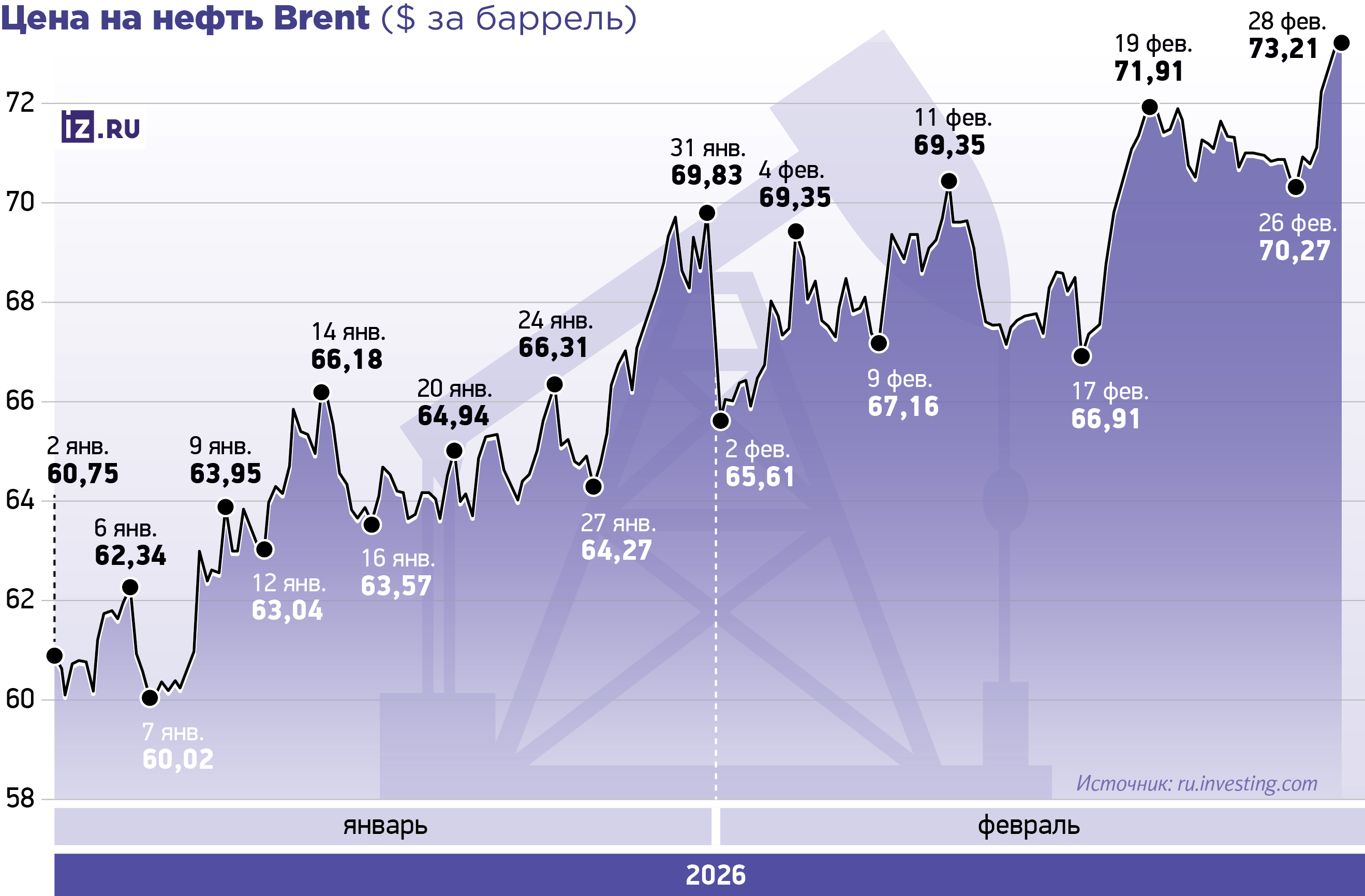
According to Valery Andrianov, an associate professor at the Financial University under the Government, the market will soon see oil prices at $150 per barrel. If the conflict becomes protracted, accompanied by attempts to provoke unrest in Iran, and so on, then its impact on the price environment may be longer and significant. The extreme scenario is the closure of the Strait of Hormuz, which would lead to an increase in prices to $ 100-120 per barrel, and possibly up to $150 at some points, he believes.
— Such a scenario cannot be discounted. If the United States is raising the stakes by trying to destroy Iran's top leadership and key military installations, then Tehran has no other options left to respond than to block the flow of hydrocarbons from the Persian Gulf," the expert noted.

According to him, such actions may strike not so much at the United States, but at key buyers of oil and LNG in the Asia-Pacific region, including China and India. But for Iran, Valery Andrianov concluded, this will be a way to demonstrate to the world the harmful consequences of the escalation in the Middle East, to draw as many countries into the conflict orbit as possible and thereby increase their interest in ending the attacks as soon as possible.
Переведено сервисом «Яндекс Переводчик»
