In the center with attention: detailed photos of the Milky Way and pacemaker cells
- Статьи
- Science and technology
- In the center with attention: detailed photos of the Milky Way and pacemaker cells


Tests of the world's first vaccine against birch pollen allergy are continuing in Russia, an autonomous navigation system for drones without satellite signal has been created, and data has been obtained that brings the appearance of biological pacemakers closer. Meanwhile, climatologists warn of a rapid decline in the population of emperor penguins, and astronomers have shown the most detailed image of the center of the Milky Way. Izvestia — about the main scientific events of the week.
Trials of the first allergy vaccine in Russia
The third phase of clinical trials of the world's first Allergard birch pollen allergy vaccine is taking place in accordance with the protocol approved by the Ministry of Health of the Russian Federation, the Institute of Immunology of the Russian FMBA told Izvestia. All patients participating in the study have already received subcutaneous injections of the drug, and some have completed a full course of five injections. There are no severe side effects.

Previous studies have shown that the majority of patients who received allergovaccine had significantly reduced symptoms, while 25% had no symptoms at all, RAS academician Musa Khaitov, director of the institute, told Izvestia. According to him, the flowering season was easier for many participants, despite the fact that in 2025 the concentration of pollen exceeded the usual level by more than five times. The vaccine is also recognized as safe with a five-fold subcutaneous injection.

— Unlike commercially available analogues on the market, which contain a whole extract of the major allergen of birch, the Allergarda recombinant vaccine contains only immunodominant antigen sites of the main allergen of birch and apple pollen. These epitopes in a linear non-allergenic form induce the production of protective IgG antibodies (responsible for the protective functions of the immune system) in the body of vaccinated patients. These antibodies block the interaction of IgE antibodies (responsible for the formation of an allergic reaction) with the allergen," he said.
New navigation system without satellite signal
Russia has developed a complex of autonomous navigation of unmanned aerial systems (UAS), which can be used in the complete absence of satellite data. The main feature of the modular Alternative navigation System (MANS) solution was its initial focus on lightweight drones and affordable computing platforms. Thanks to deep optimization of the program code, it is able to work even on low-power single-board computers based on the ARM architecture. This reduces the load on the UAV's battery and allows you to keep flight time at the level of satellite navigation devices, the developers said.
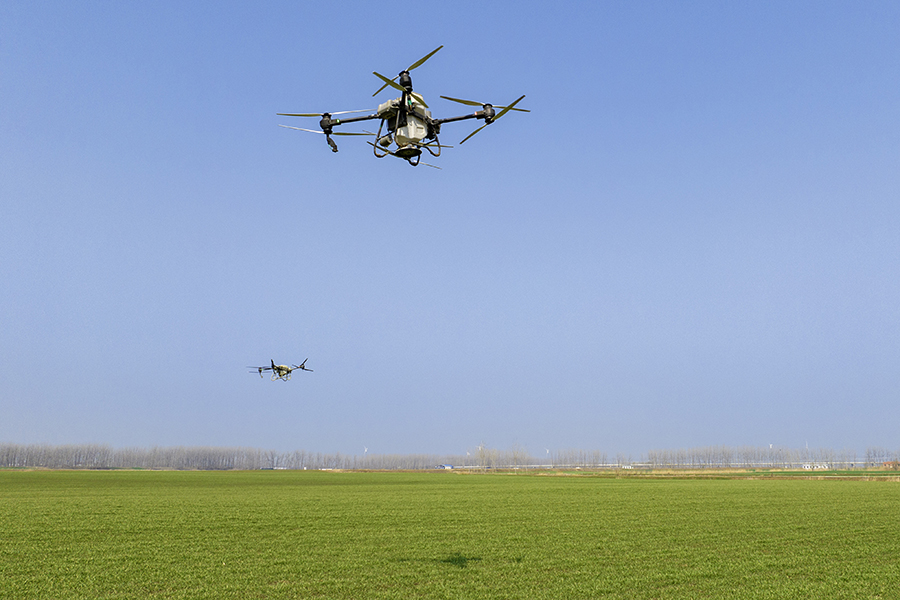
The device is positioned by combining the data of two modules: optical and inertial. Such a solution can work both on the basis of microelectromechanical systems (MEMS) sensors and using a mechanical gyro module developed by the project engineers. Additionally, data from the on-board camera is used, which is compared with images of the area or analyzed without reference to specific objects.
The system uses high-speed image processing algorithms that do not require recognition of landmarks or individual objects. This speeds up calculations and reduces computing power requirements. The approach makes it possible to use compact and inexpensive computing platforms, which makes the technology promising for mass use on light drones.
Cellular pacemakers
Specialists from the Moscow Institute of Physics and Technology, the NMIC named after Academician E.N. Meshalkin and the NMIC named after V.I. Shumakov were the first in the world to study how electrical connections are formed between transplanted and native heart muscle cells.
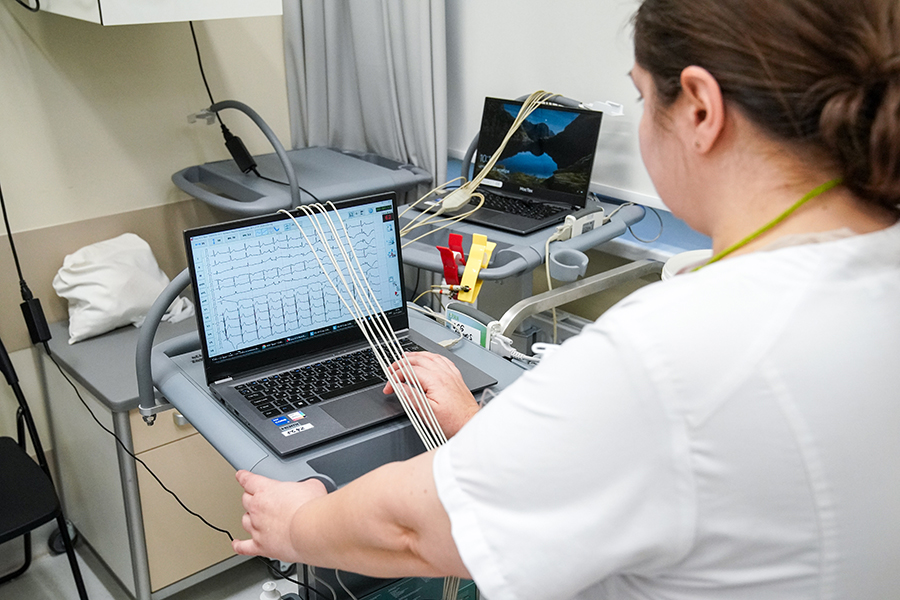
The development will help create biological pacemakers — fragments of living tissue grown from the patient's own stem cells that can replace damaged areas of the heart.
— The study is a measurement of functional deficiency in the first moments after graft integration. This is fundamentally new information for modeling the risks of arrhythmias in cell therapy. Now we know that there is a window of several hours when the transplanted tissue is electrically vulnerable, and this vulnerability can and should be taken into account," Valeria Tsvelaya, one of the developers and head of the Laboratory of Experimental and Cellular Medicine at MIPT, told Izvestia.

The obtained data, the researchers believe, will become the basis for the creation of new safe methods of cellular therapy of the heart. For example, biostimulators that will set the right rhythm. They can be made in the form of patches (a kind of patches) or injections with a suspension of grown cells.
A threat to the survival of the Emperor penguins
Climate change accelerating the melting of ice threatens the survival of the Emperor penguin population in Antarctica, according to a study by the British Antarctic Survey.
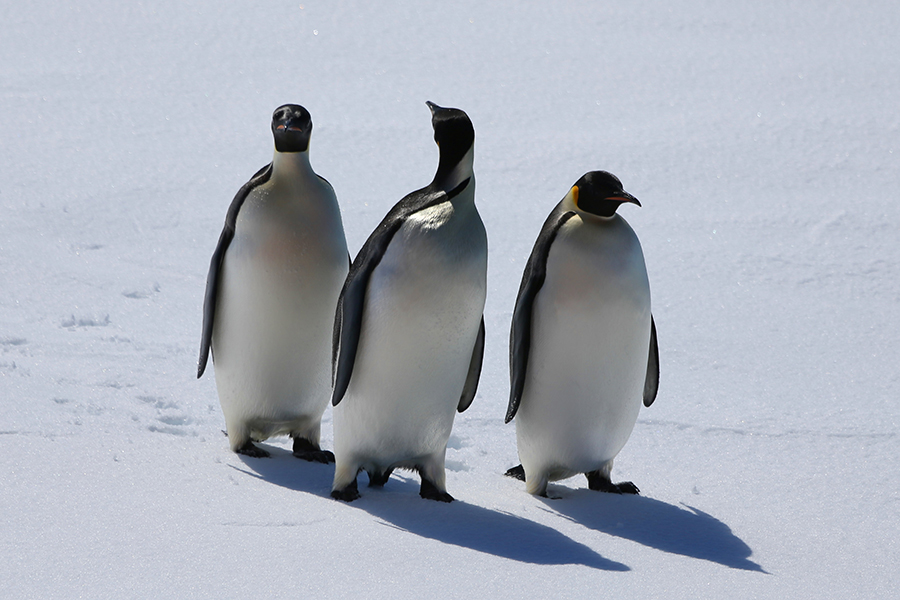
The researchers analyzed satellite images taken over seven years of observations and revealed a sharp decline in the number of emperor penguin colonies. In 2025, only 25 small groups were visible on satellite images, while in 2022, more than 100 were seen in the same region, the publication says.
"We don't know what happened to these penguins. <...> Perhaps many of them died after entering the Southern Ocean before they had time to restore their waterproof plumage," explained mapping expert Peter Fretwell.
The most detailed image of the Milky Way
An international team of astronomers has obtained the most detailed image to date of the central region of the Milky Way. This is reported on the website of the European Southern Observatory (ESO).
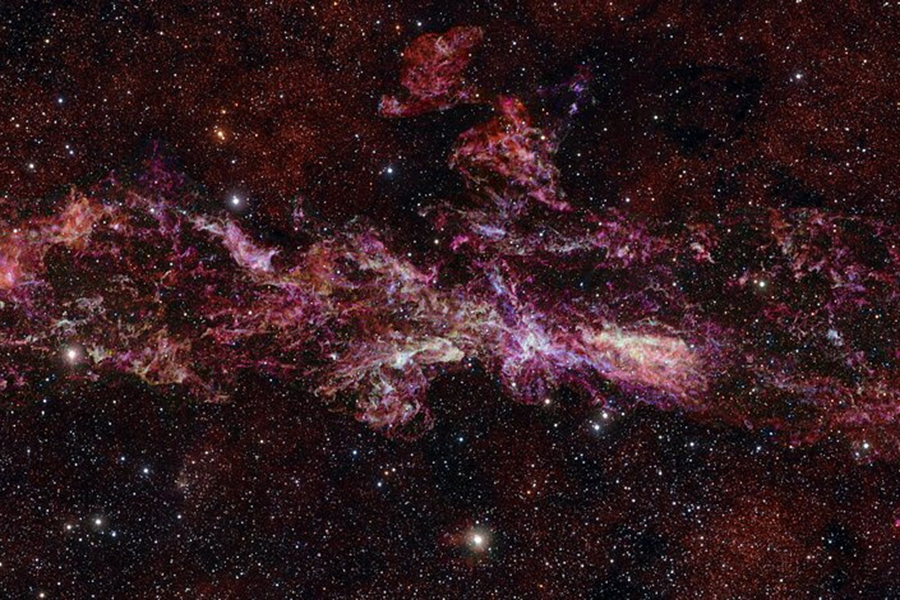
The observations were performed using the Atacama Large Millimeter/submillimeter Array (ALMA) radio telescope. The image shows the Central Molecular Zone, a region with a radius of more than 650 light-years around Sagittarius A*. Dense clouds of cold molecular gas are concentrated here, from which new stars are formed.
The panoramic image is assembled from a large number of individual frames and has become the largest mosaic ever created by the observatory. In terms of angular dimensions, it is comparable to the three disks of the full moon, lined up in one line. "When developing the survey, we expected a high level of detail, but we were genuinely surprised by the complexity and richness displayed in the final mosaic," the researchers note.
For the first time, scientists have been able to trace the distribution of cold gas throughout the Central Molecular Zone with such high resolution — from giant structures stretching tens of light-years to compact clouds around individual stars. Spectroscopic analysis revealed dozens of molecules, ranging from relatively simple ones such as silicon monoxide to more complex organic compounds, including methanol, acetone, and ethanol.
The study is of key importance for understanding the mechanisms of star formation in an extreme environment.
Переведено сервисом «Яндекс Переводчик»
