"It would be useful for politicians to learn the basics of directing"


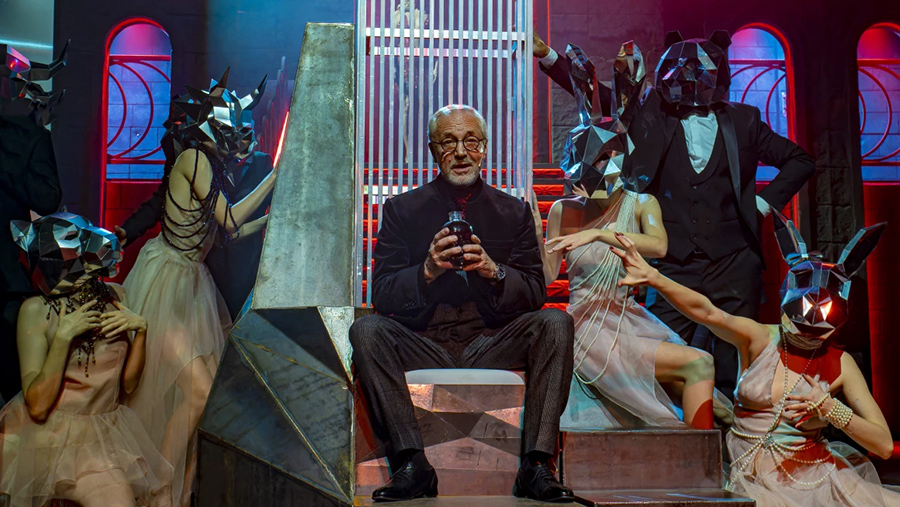
In theater, as in sports, there are no accidental victories, so discipline plays a key role, says Evgeny Gerasimov, People's Artist of Russia, artistic director of the Satire Theater. For many years now, he's been getting up at six in the morning, doing 100 push—ups and starting his main duties, whether it's working in the Moscow City Duma or on stage. On the eve of his 75th birthday, the director told Izvestia about the renovation of Armen Dzhigarkhanyan's Progress Stage, the payback of performances at the Satire Theater and the introduction of a dress code in cultural institutions.
"I can do push-ups 100 times, spin the wheel"
— Watching your activities, it is impossible not to notice that you are incredibly active. Although the 75th anniversary is approaching. Where do you get your energy from?
— I've always worked hard. In this sense, I am a happy person, because I do almost exclusively what I consider important and necessary right now. I want to do a lot of things, so I have the strength and reserves. I did a lot of sports when I was a kid, and I started acting in movies early. That's when I realized what work is, and I learned a simple truth: you can't easily pull a fish out of a pond.
— You practiced karate. Do you have a black belt, if I'm not mistaken?
— Yes, I have a black belt in karate, sixth dan. I am a master of sports in athletics, a candidate master in equestrian and rally racing.
— You know perfectly well what discipline is. How does this affect teamwork? How demanding are you of your employees?
— I really like order. Unfortunately, my assistants are not always as punctual as I am. But it is impossible to work in the theater without discipline. Of course, artists, rehearsals, and performances are an irregular working day, and everyone gets tired. But without organizing work, nothing works, especially in the movies.
When I became the head of the First creative association at Gorky Film Studio, Stanislav Ivanovich Rostotsky handed it over to me as artistic director — he was leaving to shoot a picture. And when I'm filming or filming myself, I need a very clear order. This, in principle, is what directing teaches: when you start working, you have to imagine every frame and understand why you are doing it and what result you are going for. It's very disciplining. I think it would be useful for many politicians to learn the basics of directing, too.
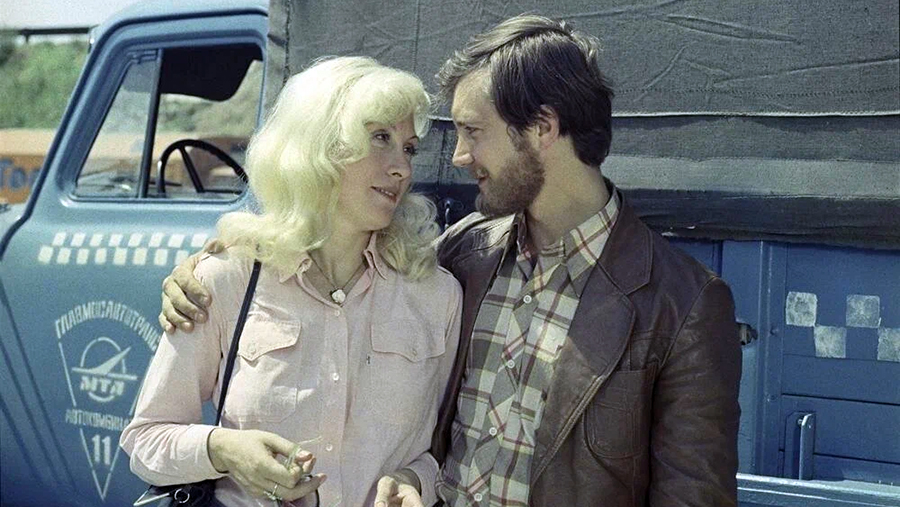
I've been organized since I was a kid. In sixth, seventh, and eighth grades, I had two films shot. After that, I'd come home and sit at my desk. My parents and sister went to bed, and I turned on the lamp and started studying. They brought me tasks that needed to be completed. I went to school mostly on Saturdays, so I had to do everything I was told by that day. That's how I learned to practice on my own and I still use this skill.
And sports, of course, hardens a person, teaches them to discipline and strive for results. Now I get up every day at six in the morning, no matter what time I went to bed. The training is not so intense anymore, even though I am the president of the Moscow Association of Martial Arts in all-round karate. We have 32 sections in Moscow, including a section in the Presidential Administration. I do exercises every day, even if it's small: I can do push-ups 100 times, spin the wheel.
— Do full-fledged workouts also remain on your schedule?
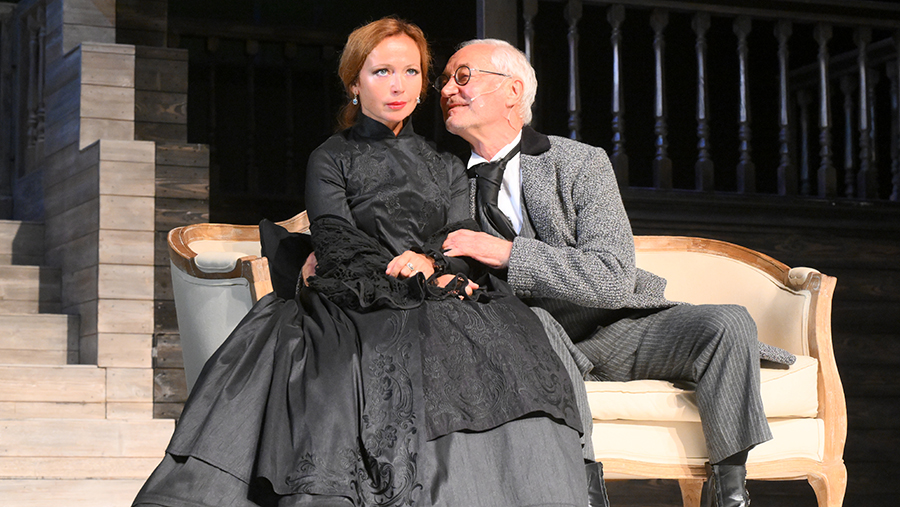
— Not always. Now I spend more time on my main job, and that's natural. I am a deputy of the Moscow City Duma, chairman of the Commission on Culture and Mass Communications. We have many public receptions, round tables, and meetings. I really love this job and consider it my main one, and creativity is more of a hobby.
— How do you rest?
— Sometimes it works. In the past, I always tried to spend Saturday and Sunday with my family. In winter — skiing, skiing with grandchildren, snowmobiling, winter fishing. I really love the countryside. In summer, swimming, mushroom picking, fishing, and sometimes hunting.

"Before my arrival, the pipes burst, and the theater actually stood up"
— You have been heading the Satire Theater for less than two years. How was the lapping process with the troupe? Have you managed to achieve the goals that you set at the beginning?
— The main task was to build up the repertoire. There were few performances that went to full houses. Everyone knows that the theater must earn its own money for the awards and for the artists' lives. Difficulties also arose due to the unification of the Satire Theater with Armen Dzhigarkhanyan's Progress Stage. The troupe has become large, and the Progress Stage itself is currently under renovation. Unfortunately, in recent years there have been three performances a month, which has been unprofitable. Our Attic was also unprofitable, in other words, a Small stage.
The Satire Theater has two venues: a large stage with almost 1,200 seats and an attic with 100-140 seats. Most of the Attic's performances hadn't paid off before, and the troupe was living off the main stage. It is very difficult to make sure that everyone plays, gets the desired roles and decent salaries. Therefore, we have made a large number of premieres, which are now sold out. There were 12 performances last season, and more than six this year.
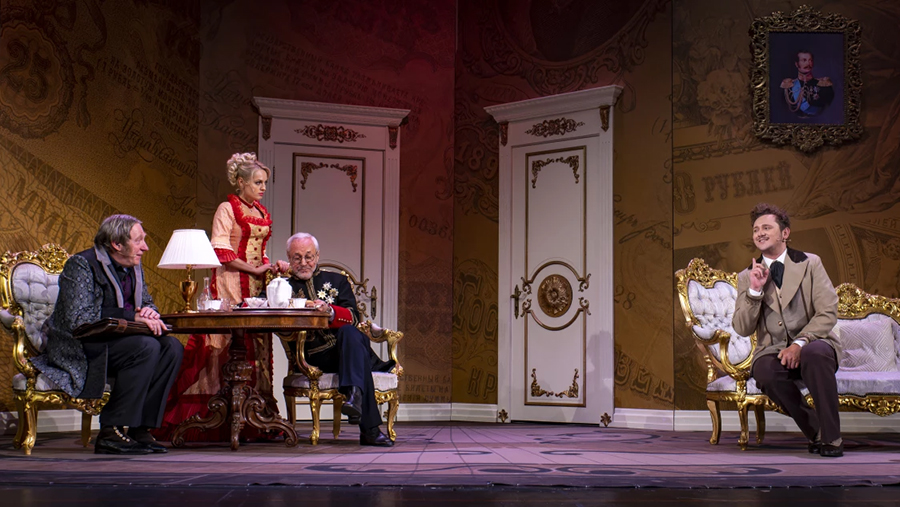
Now, however, my anniversary has intervened. I'm getting ready: one premiere has already taken place — "In a lively place," however, without me. There I play in a double with a wonderful artist Igor Lagutin. We are still working on "Innocent" — Igor Mirkurbanov brought the play, we are rehearsing and will play on February 25 and 26.
The roles are large, and there is a lot of text. On February 20, I played "Profitable Place", on the 21st - "The Master and Margarita", on the 22nd — "Wolves and Sheep", on the 23rd - the premiere of "In a lively place", on the 24th — the run of "Innocent". And I will celebrate the anniversary on February 28 with the performance "Krechinsky's Wedding" — a bright production that is sold out.
— Speaking of "Innocent": did you invite Igor Mirkurbanov to the theater yourself or was it his initiative?
"He came and told me: "I want to suggest that you put on this play for your anniversary." There is a very vivid event in the story, I won't reveal which one. It will be a detective story with humor. Igor has a very expressive direction, and I think the performance will be an unexpected and notable event in theatrical life.
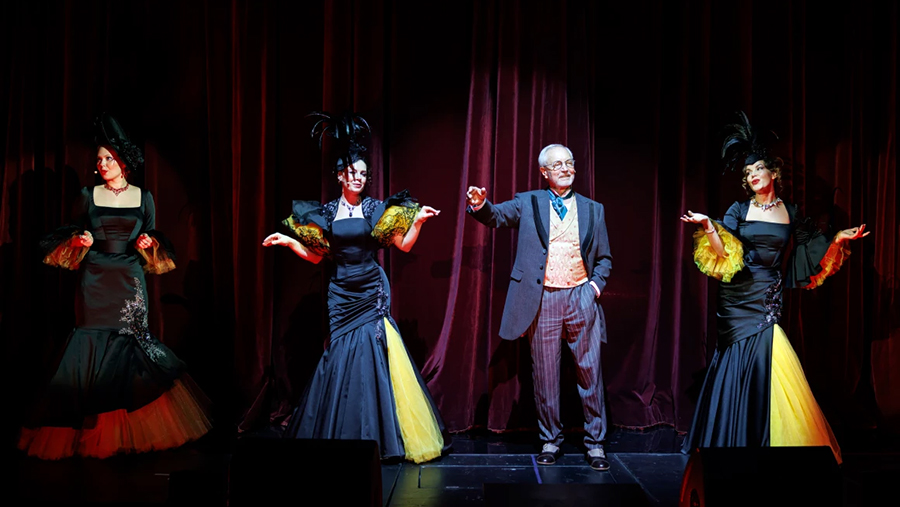
— Isn't he not only the director, but also the composer of the play?
— Yes, he is a very versatile person, well-educated musically. I'm sure the musical accompaniment will also make a strong impression.
— You have already mentioned Armen Dzhigarkhanyan's Progress Scene. What is its current condition and when will it open?
— Most likely, not earlier than 2028. It is currently undergoing major repairs. The renovation of the stage itself is still ahead — practically nothing has been done there for more than 20 years.
— Right up to the replacement of pipes?
- yes. Heating went through the theater to nearby houses. Before my arrival, the pipes burst, and the theater actually stood up. Then we fixed them.
— When the previous head, Sergey Gazarov, renamed the Armen Dzhigarkhanyan Theater the Progress Stage, it caused a mixed reaction. Have you ever thought about changing the name or making a branch of the Satire Theater?
— The name still sounds like Armen Dzhigarkhanyan's Progress Stage. It retains both the connection with the former cinema and the memory of Armen Borisovich. So far.
"Think about it, do you really need it?"
— Another hot topic is the situation around the Moscow Art Theater Studio School. Who do you see as the rector?
— Stanislavsky (laughs). This is a special cuisine. When I was a student, there was rivalry between the schools, but now everything is mixed up. Alexander Kalyagin, for example, graduated from the Shchukin College, and worked at the Moscow Art Theater. There are many such examples. Konstantin Raikin studied at Shchukinsky and taught at the Moscow Art Theater Studio School.
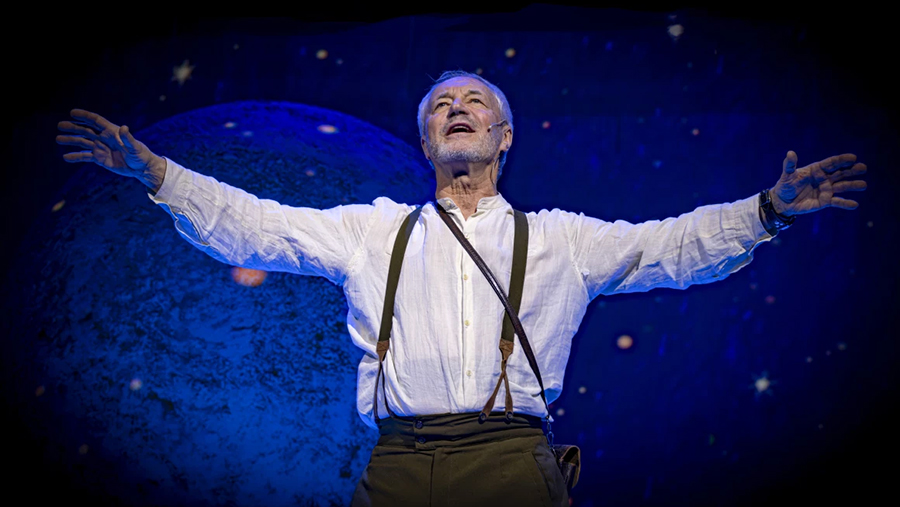
Personality is important here. I don't want to advise anyone on anything — there are people who are responsible for this, and they will find a worthy candidate. In general, art and theater are a special atmosphere. It's not easy to create a good one. Therefore, they will find a rector, and he will certainly be an interesting and talented person. And if not, society will fix it.
— There is an opinion that the level of acting education now leaves much to be desired. At the same time, several hundred new artists graduate from different universities every year. What do you think about this?
— There is no need for graduation. Talented young people always appear. In the Satire Theater, for example, many graduates of the Shchukin College are excellent artists. Although, indeed, now a huge number of universities train actors, although they did not do this before.
You don't have to become a star. It is important that a person is educated, knows Dostoevsky and Turgenev, knows how to speak, move, behave. Some will go to television, others to another field. When I enrolled, we had 16 people on the course, and there was only one course.
When I watch graduation performances, I see a lot of talented guys. I often visit VGIK — there are interesting graduation papers there. I'm teaching now myself. At one time, Joseph Kobzon tried to persuade me to teach at his university, but I didn't have the time. After he left, Nelly's wife asked me to try it anyway. I don't spend much time on this, but I keep an eye on the exams and the process. I invited teachers from Shchukin College — they are laying the foundation.
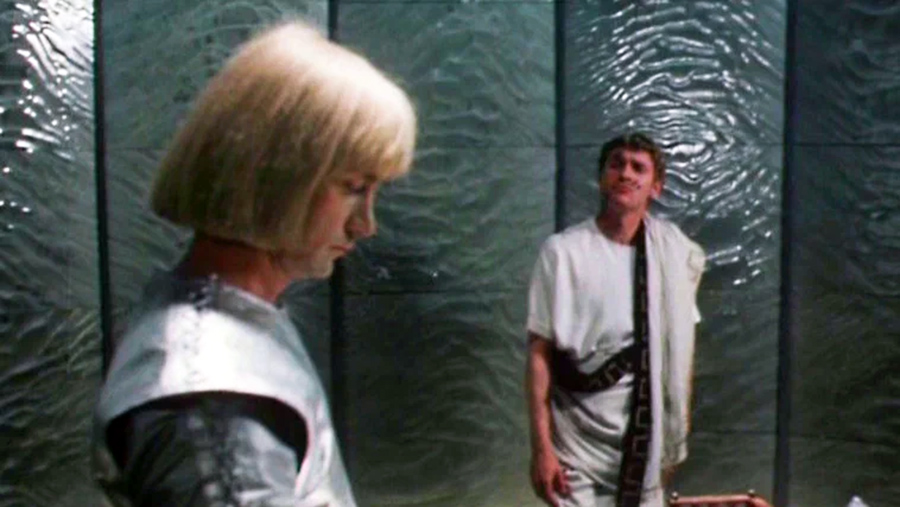
I always tell students in exams, "Think about it, do you really need it?" There is a huge flow of TV series and films now, young people look at the screen and think: "Why am I worse?" There are successful productions, but more often the roles are the same, the artists do not grow, they use the same stamp.
You're not going into acting to get rich, are you? And it's not a fact that you'll have a decent salary. This should also be understood. It takes a lot of work. I worked on the radio, dubbed cartoons, played in the theater, and starred in all the studios in the country. My day started at 8:00 a.m. at Gorky Studio. I was living in Chertanovo at the time, making transfers, running from car to car to get on the escalator faster. After dubbing, I went to a rehearsal at the Mayakovsky Theater, then to the radio, and in the evening there was another performance. And then a train to St. Petersburg or Minsk for filming. This is also the ability to organize your day.
"We will definitely not introduce a dress code"
— How do you feel about the dress code in the theater?
— In all this time at the Satire Theater, I have not seen an audience in flip-flops. The theater itself is disciplining. If the actors come on stage in jeans and sneakers, why can't the audience come as well? But I didn't see any sloppily dressed people or downright careless ones. We will definitely not introduce a dress code. Perhaps it would be appropriate in the Bolshoi Theater. We'll wait and see.
First of all, it's a matter of internal culture. People of all ages come to us, including the elderly. Not everyone can afford a dress code. The main thing is neatness and neatness. Not everyone is able to buy expensive tickets. If someone sells them for 35-50 or 100 thousand rubles, they can prescribe a dress code - this is their right.
— Speaking of prices. Tickets for the "Cabal of Saints" go up to 45 thousand rubles, for "Without witnesses" — up to 93 thousand from resellers. How to deal with it? It seems that the passport system has already been introduced in Moscow institutions, even in some federal theaters.
— We have a fairly flexible pricing policy. I believe that the theater should be accessible. We have expensive tickets, but it's 5-6 thousand rubles. If the performance is expensive, the price can reach up to 10-12 thousand rubles. In the Attic, on the Small Stage, which has become very popular, sometimes we raise the price to 12-14 thousand. There are few places, but they are being bought. Before my arrival, the maximum price there was 3 thousand rubles. This indicates an interest. The attic began to make a profit. As an artistic director, I have to think about it.
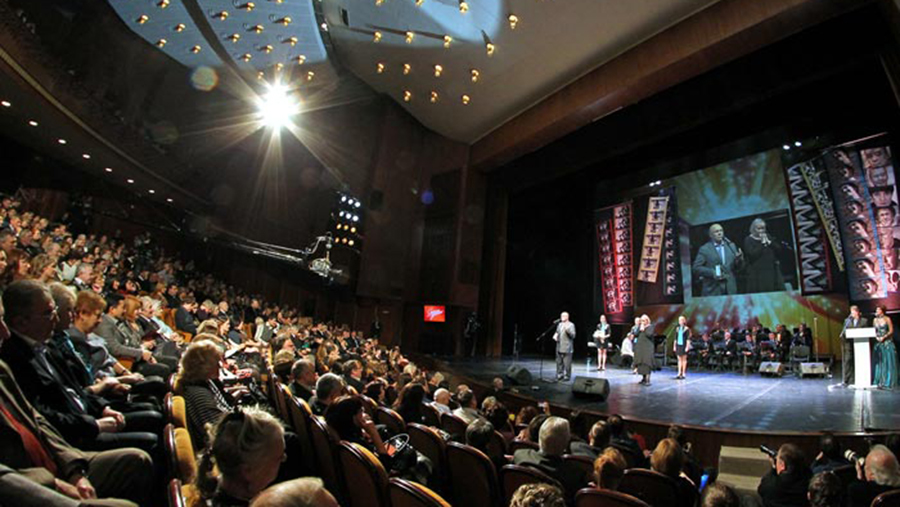
We have a hall with 1,200 seats, so viewers with different abilities can choose tickets at different prices. On February 28, we have "Krechinsky's Wedding" — the performance has long paid off and, in my opinion, earned about 46 million. This is important in order to pay artists salaries and bonuses.
— You have a lot of classics in your repertoire, both Russian and foreign. According to your observations, what does the audience want more now: to laugh, cry, reflect?
— Coming to the theater, the audience wants to have fun. Performances with humor, of course, are very attractive. It is important for people to empathize with the artists, to live out their destinies and situations with them, but to leave the theater in a good mood.
Переведено сервисом «Яндекс Переводчик»
