Streets of the broken: what surprises awaited our fighters in liberated Dimitrov


Dimitrov, released in the last days of December, was one of the most important defense nodes of the Armed Forces of Ukraine in the so-called Red Army pocket. It was here that scattered enemy groups retreated from Krasnoarmeysk, hoping to break out of the encirclement. Together with the participants in the storming and cleansing of the city — soldiers of the 5th brigade of the 51st army of the Center group - the Izvestia correspondent walked through the streets of the liberated city, saw cemeteries of Western equipment and talked with people who were hiding from the "cannibals" from the shopping mall waiting for Russian troops.
What does Dimitrov look like after his release
We arrive in Dimitrov at dawn, after waiting for dense fog and fine, slanting rain. In the frontline zone, such weather is the best ally. It "lands" enemy unmanned aircraft and gives a short respite from the ubiquitous "eyes" in the sky. However, you can not relax: the UAV detector in your pocket does not stop. A distinctive buzzing sound is constantly heard in the gray sky, and invisible air surveillance posts and individual moving groups periodically open fire.
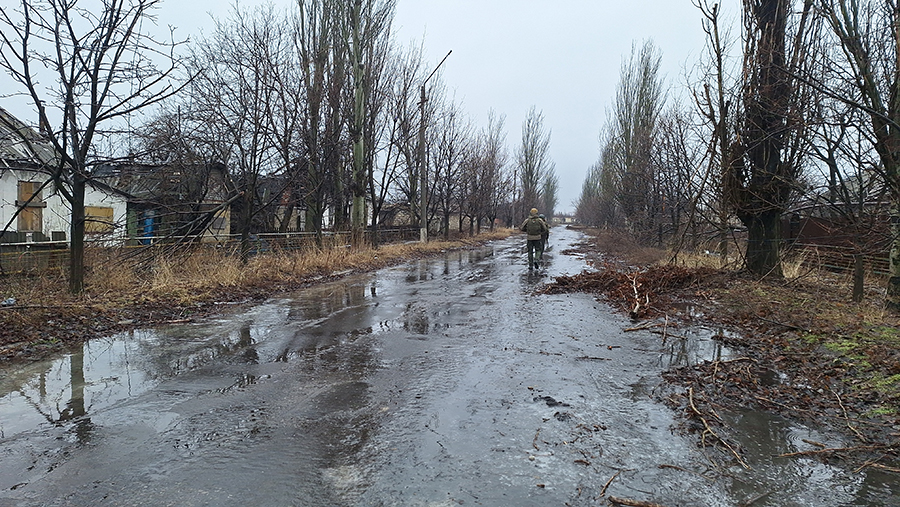
The roads, covered with a layer of ice that has melted from above, are almost empty. Only occasionally will a couple of tray group fighters with heavy backpacks or signalmen pulling their endless veins of communications flash by.
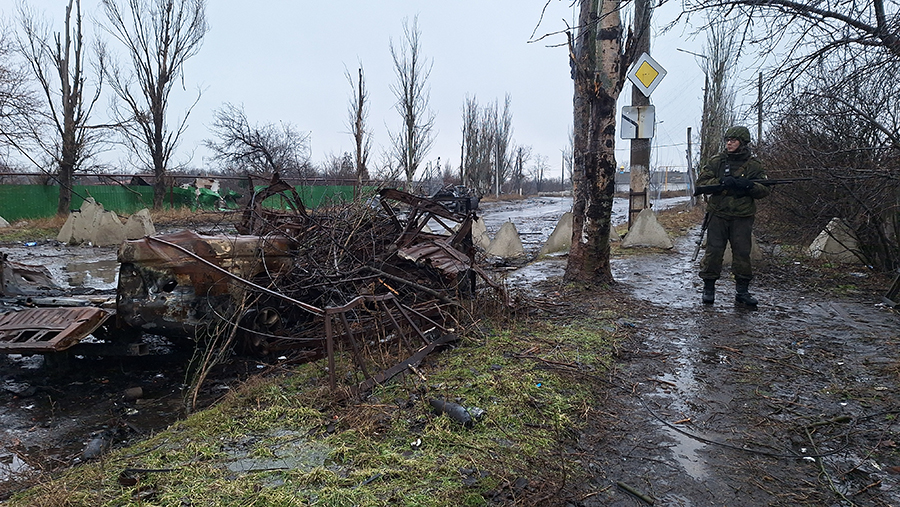
There are almost no fragments and shell parts underfoot on the asphalt, characteristic of cities, the battles for which were fought with the massive use of artillery. But everywhere — on tree branches, lampposts, houses, shops — there are scraps of thin optical fiber. The ground is littered with propellers, batteries, and charred kamikaze drone boards. All this is frozen into the ice in layers.
A masquerade on the ruins of decommunization
Two burnt-out pickups of the Armed Forces of Ukraine froze at the central intersection. There are mortar mines in and around the bodies — the jewelry strike of our drone overtook the crew or the delivery team. The explosion threw a black door with a characteristic tactical sign, a white cross of arrows in a square, to the side of the road.
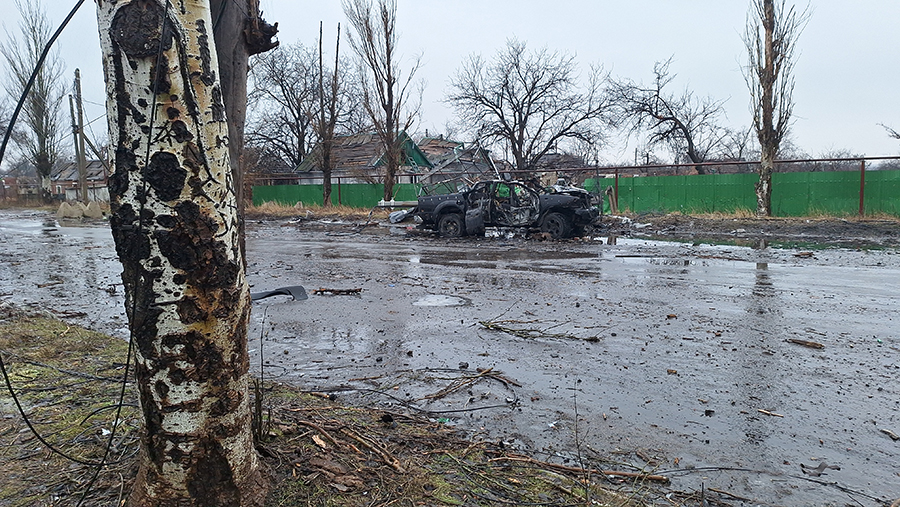
Dimitrov's roadsides have become an exhibition of the achievements of the Western military-industrial complex. There are either heavy machinery on the streets that is difficult to get off the road, or such vehicles with dangerous cargo. In addition to the usual jeeps, the exotic catches the eye — the Swedish two-link Arctic all-terrain vehicles, which were supplied to Ukraine before the battles of 2023.
At a large intersection, a surreal picture opens up: an unfinished anti-tank moat running along the square, a damaged Turkish armored car next to it, and a monument to Taras Shevchenko, who half-turns to look at it with a stern look from under his furrowed brows.
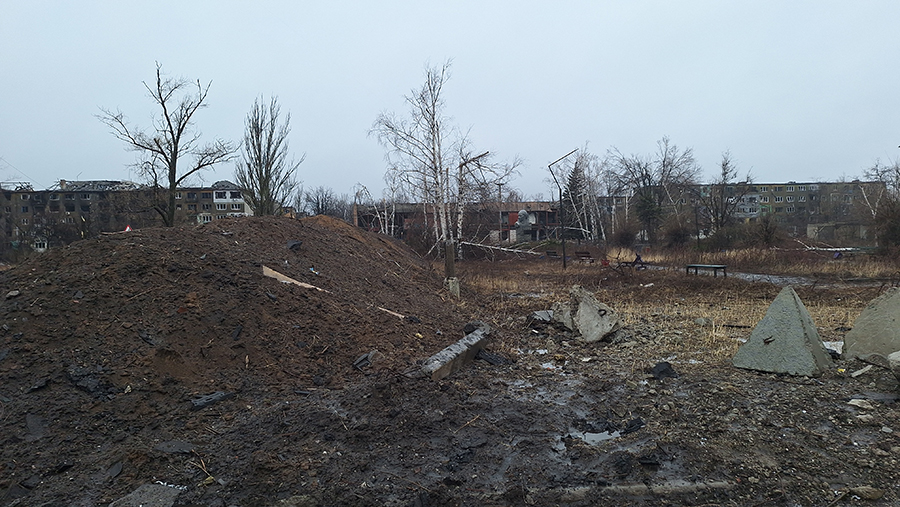
Until 2016, there was a monument to the leader of socialist Bulgaria, Georgy Dimitrov, at this place. It was dismantled as part of the decommunization and a new one was installed — Shevchenko. But judging by the similarity of the busts, the Bulgarian politician's hair was simply removed, his moustache was lengthened, and he was returned to his old place as a Ukrainian poet.
Friends against friends
Running over, hugging the walls, we get to the control room. We are greeted by the company commander with the call sign Gromozeka. Oleg is a veteran of the first wave of the militia, in the ranks since March 2014. For him, this battle has been going on for the twelfth year.
— Dimitrov is completely under our control, the city has been completely cleared, the buildings and basements have been checked. Local residents provided all possible assistance, identifying disguised militants. One such "masker" in a women's hat and a red jacket was caught in the cellars. But for the last week we have not taken out prisoners, but only two or three people a day," the officer told Izvestia.
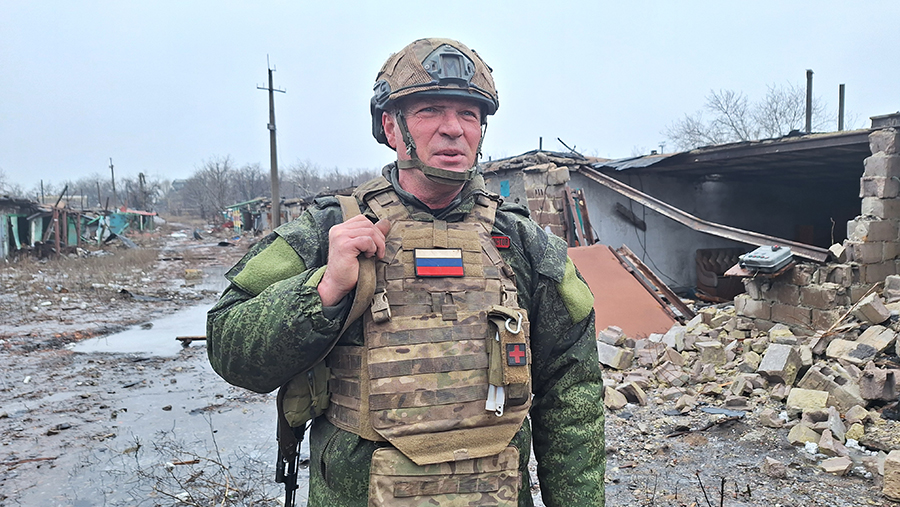
Gromezeka notes: During the battles for the city, there were many prisoners, many of them refused to fight — they threw down their weapons, changed into civilian clothes and holed up in basements.
— The most bitter thing is that there are many of our countrymen from Kramatorsk and Druzhkovka among them. They say that they were beaten in the Armed Forces of Ukraine after forced mobilization. The bodies are still blue from the beatings. Kiev is just plugging holes in the defense, exposing our own people against us," the officer explained.
The Ukrainian 79th airmobile brigade, which the Russian soldiers of the 5th brigade of the 51st Army "ground" back in Marinka, as well as the 38th separate mechanized brigade of the enemy, in the words of our soldiers, "are also creatures," operates on this section of the line of contact.
— These formations are destroying the civilian population. Our evacuation group was removing the bodies of civilians who had been shot right in the garages," our interlocutor said.
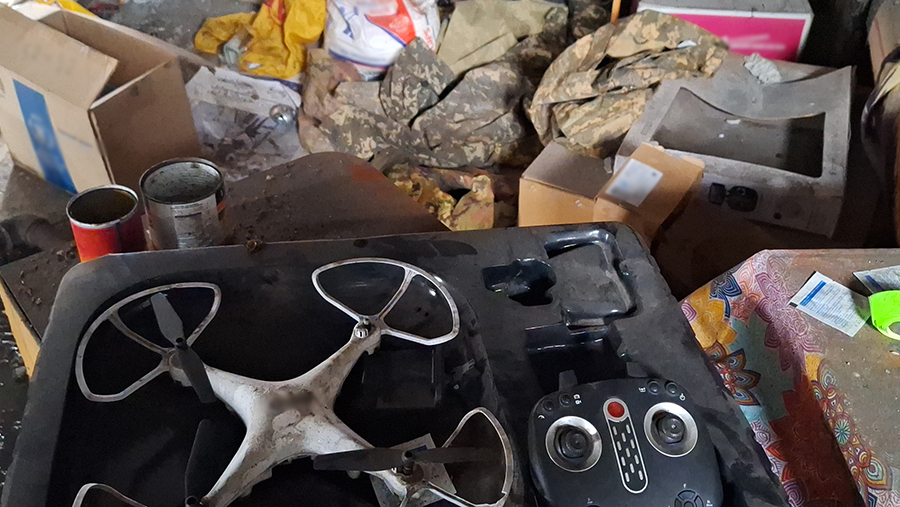
Next, Gromozeka leads us to a former service station. There is an abandoned garrison life of the enemy: dirty Ukrainian and Western military uniforms, caps with symbols. There are dishes from the last breakfast and empty bottles of elite alcohol on the table. When leaving, the enemy apparently took only the property looted from civilians, leaving even their own banners and weapons.
Underground residents
Peaceful people live among garages. We meet two young men of military age with similar fates who are happy to welcome a Russian officer. They look like characters from a post-apocalyptic game. They managed to take their families to Russia through third countries in a roundabout way, while they themselves hid from the Ukrainian "cannibals" because they could not cross the border and did not want to fight against their own people.
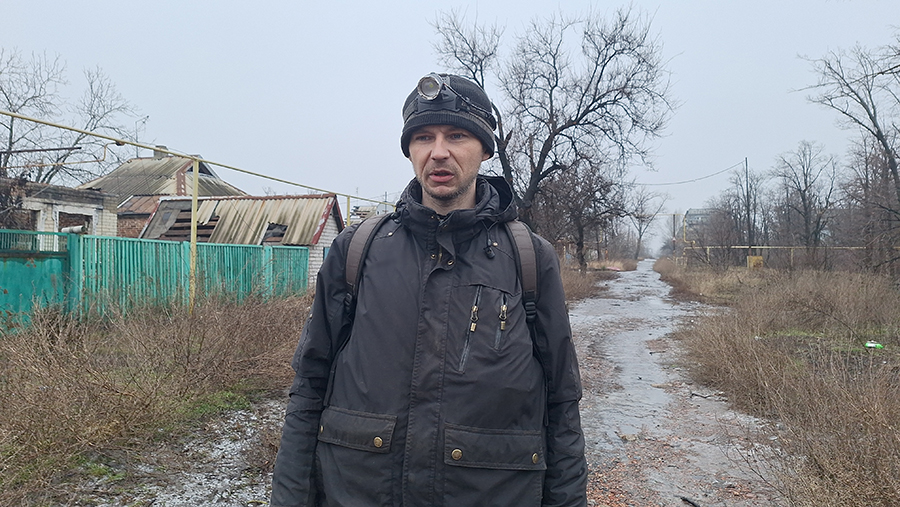
"I've lived here all my life," one of them says, squinting against the unaccustomed daylight. — I didn't see any future in Ukraine, either for myself or for my children. We secretly celebrated on May 9th, and taught them Russian at home. Now the guys from the brigade are helping with groceries, and you can finally leave the shelter without fear of being twisted and thrown into a trench.
Dmitry looks like a stalker — in loose-fitting clothes and protective gloves with a headlamp on top of his hat. Now he dreams of one thing — to get a Russian passport and reunite with his family. He is sure that life will get better soon, as it is already happening in Mariupol or Avdiivka.
Our conversation is interrupted by the sharp beep of a drone detector. The "bird" is somewhere nearby. The group immediately disperses to their shelters. It is impossible to stand in one place for so long, especially crowded. So far, the streets of the city are not the best place for conversations, but the offensive of the Center group is taking the sounds of explosions further and further to the west, leaving room for peaceful silence.
Переведено сервисом «Яндекс Переводчик»
