By massifs and by foothills: how do our stormtroopers get to the Bags


Assault "carousels" — to prevent the enemy from exhaling. Detour marches that take a day or two to take up positions unnoticed. Moving through forest plantings without any possibility of getting on a "postcard" — from tree to tree, foot to foot. In the Sumy region, the 1443rd Motorized Rifle Regiment is advancing in one of the directions. The task is to access a large forest area, which opens a direct route to Sumy from the northeast. About the capture of prisoners, the long—range attacks on the line of combat contact and the price of the Order of Courage - in the Izvestia report.
A few kilometers
— We mainly walk along the forest belts. Tactics — from tree to tree, step by step. Slowly, carefully probing each square. Hence the relatively low rate of progress. But there's no other way," says the non-commander of the 3rd battalion with the call sign Valdai.
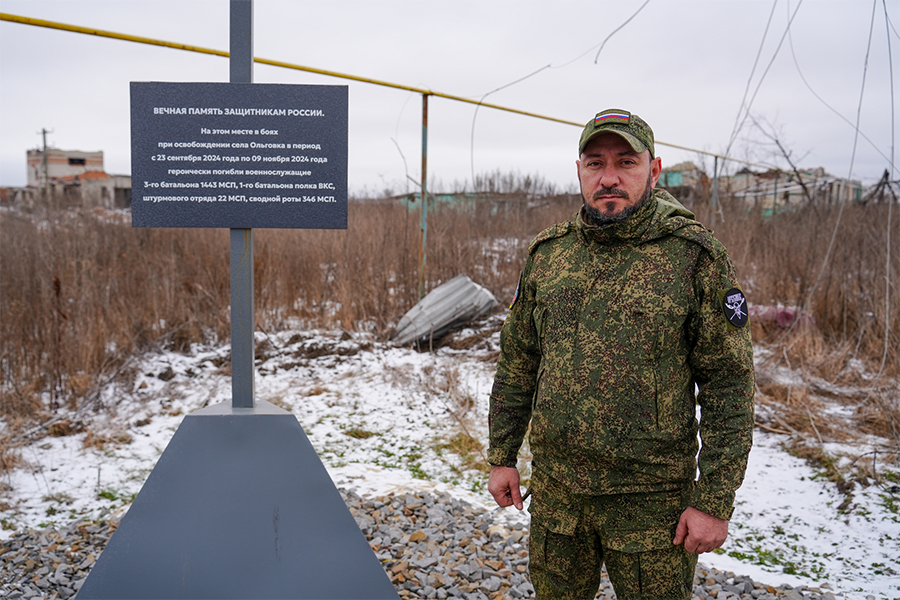
We have known each other since the end of 2024, when his unit liberated first Olgovka in the Korenevsky district, and later Malaya Loknya in Sudzhansky. Then he served in the 150th regiment, which performed well in the Kursk region and reached the very border. Later it was merged with the 1443rd motorized Rifle regiment, and now the guys in this combat unit are moving through the Sumy region.
The narrow corridors of the "forest belt" (as the forest belts in the open area are called in the SVO zone) are the passages in which the main confrontation is conducted, explains Valdai. Appearing in an open area, even for a few seconds, is like death: if you are spotted from the air, you will not be left alone until you are found and killed.
Hence the tactic — preliminary reconnaissance by combat, when small — up to five people — detachments go forward, identifying the firing points of the Armed Forces of Ukraine. Stormtroopers come after them, most often in threes. Next comes the "rigging" — ammunition supply groups: the attack aircraft must be mobile, "volatile", with only a machine gun, grenades, and a maximum of 12-14 magazines — for 5-10 minutes of combat. After that, the first group of stormtroopers is replaced by another, and so on — according to the principle of a carousel. The goal is not to let the opponent come to his senses.
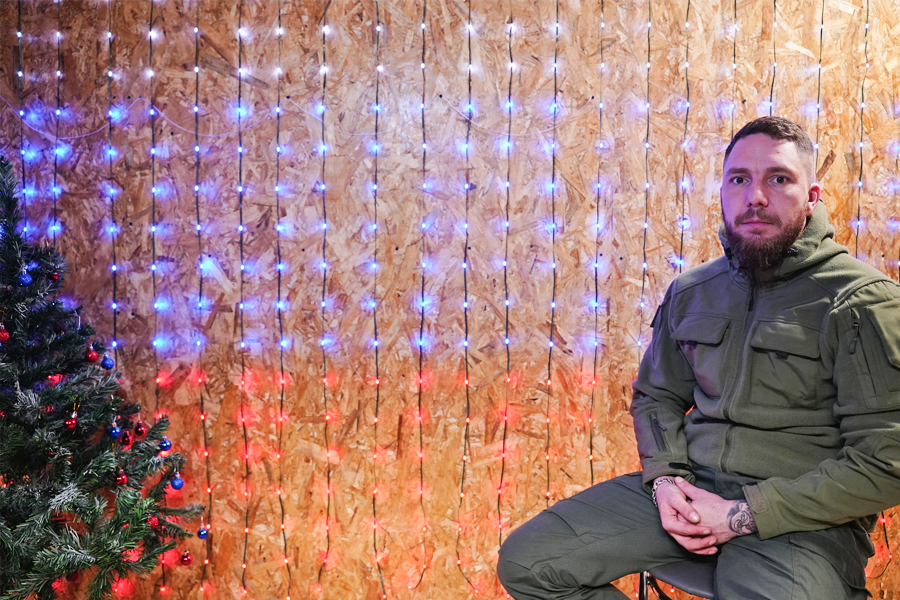
— There are only a few kilometers left to the vast forest area, — says the battalion commander. — The confrontation there will begin, as we say, a man's one, without the unconditional dictate of drones, when you cannot raise your head and take a step to the side.
Through the sky, by radio, by detours
The peculiarity of the current fighting is "long—range" approaches, when you can spend a week or two in positions, or even a month or two, without the possibility of an early exit, the officers explain. The reason is round—the-clock surveillance from above by reconnaissance trucks and the threat of FPV drones. Food and water are supplied via an air bridge. Moral support is provided by radio. And the exit (as well as the entrance) is by hooks, including an additional 10-15 km of detours. The price of such "maneuvers" is safety.
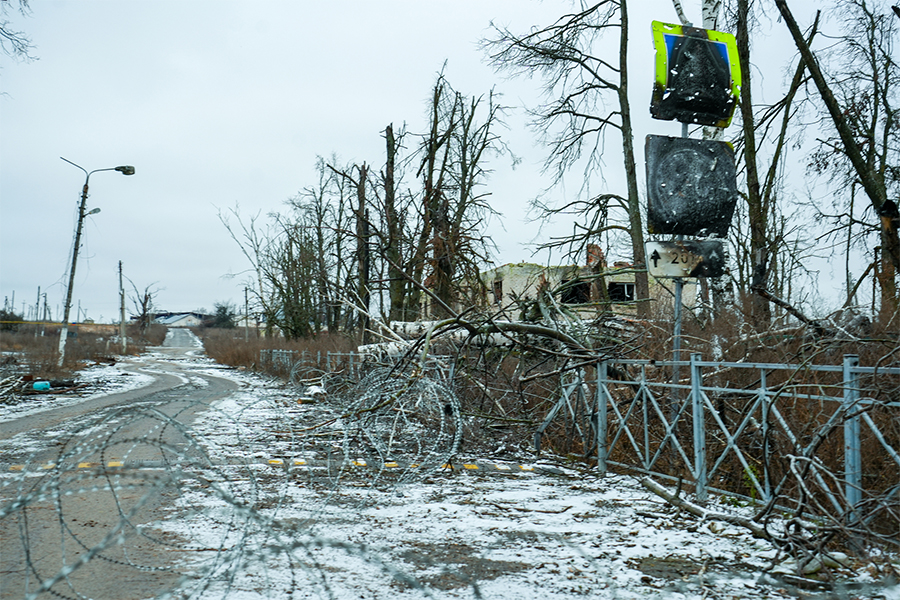
Not so long ago, the soldiers of the unit captured five soldiers of the Armed Forces of Ukraine.
"Our group was conducting a sweep, the senior was a Rostov guy with the call sign Orekh," Chigrid, the battalion commander's assistant for fire training, tells me. — We got close to their dugout and offered to surrender. In response, fire. The shooter was destroyed. The others came out with their hands up. Then another SS man suddenly appeared in the trenches, brought provisions, did not know that the position had been captured. "Well, come on in. Thanks for the water!" was all that could be said to our guys.
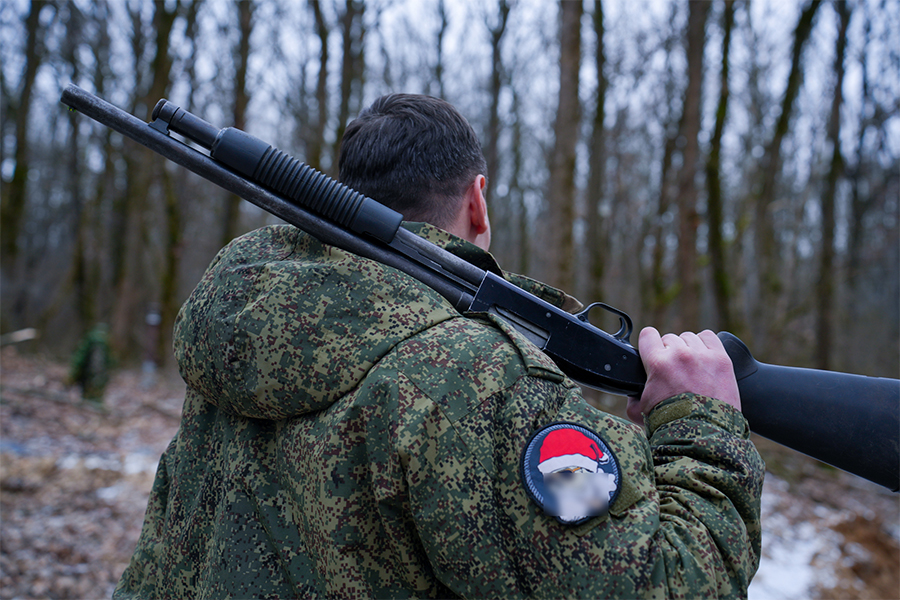
Among those who surrendered, according to the commanders, for the first time they met a man who bluntly admitted that he "also shot," without denying or pretending to be a "cook," which caused surprise and even something like respect: age over 40, an ordinary man. Another one was terribly scared and expected the worst — obviously, he had been thoroughly psychologically treated before being sent to the positions. When the prisoners were being taken out, the Ukrainian artillery and drones hit them mercilessly. They came out whole, both their own and others'.

The last rounds
Sergey, call sign Yakubovich, is among those who spent more than two months in the positions. He used to wear a mustache, but after the trenches he also grew a beard. When I joined the unit, I weighed 130 kg, now I weigh 90 kg. "A healthy diet on LBS," my interlocutor can only joke. He is 57 years old and has been at the front for three years. At the end of 2025, he was awarded the Order of Courage.
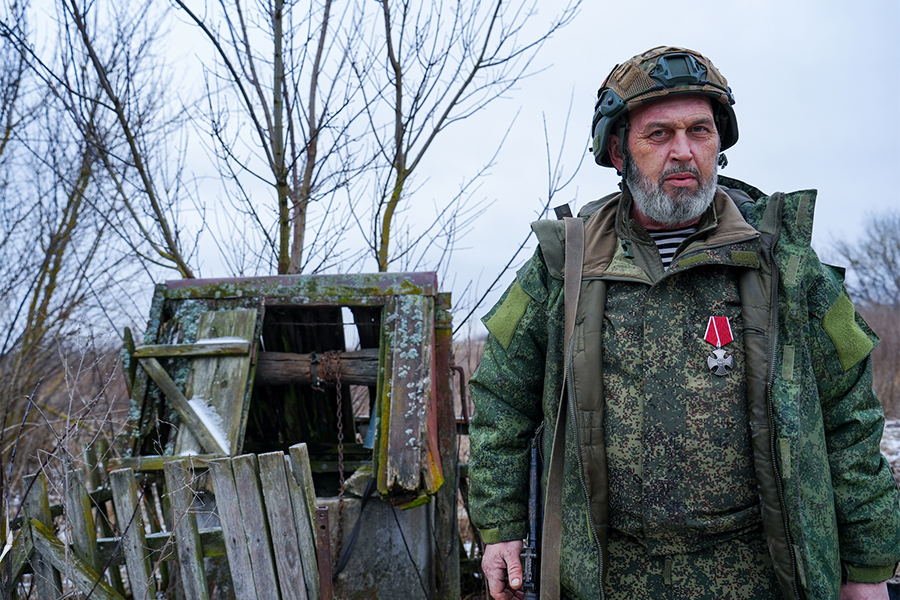
— I'm from Kuban, — says Sergey. — I am a driver by profession. When he volunteered for his job, he told his son: do what you want, and by the time you leave, you and your wife will have a grandson, the successor of the family name! And so it turned out. After that, I said to myself, "Well, now nothing is scary at all." He served for a year in Sevastopol in the rembat — evacuated damaged equipment from the Kherson region and from Zaporozhye on the Ural. Then they transferred to the Kursk motorized infantry. He was a loader on a ZU-23 anti-aircraft gun, an attack aircraft and in a group of "fixers".
That morning, Yakubovich, as usual, was holding the line at a site in the Sumy region — he was sitting in a fox hole. The enemy suddenly appeared out of the fog and opened fire. Sergei began to hit back. Eliminated the first one, followed by the second one. As our "birders" would later say, the balance of power was one to seven against Yakubovich. When he had the last three or four rounds left in the magazine, he radioed his men: "I'll shoot back to the last." "Hold on, we'll help you now! The commanders informed him, "If anything happens, correct us on the spot," and they began sending kamikazes into the air one after another.
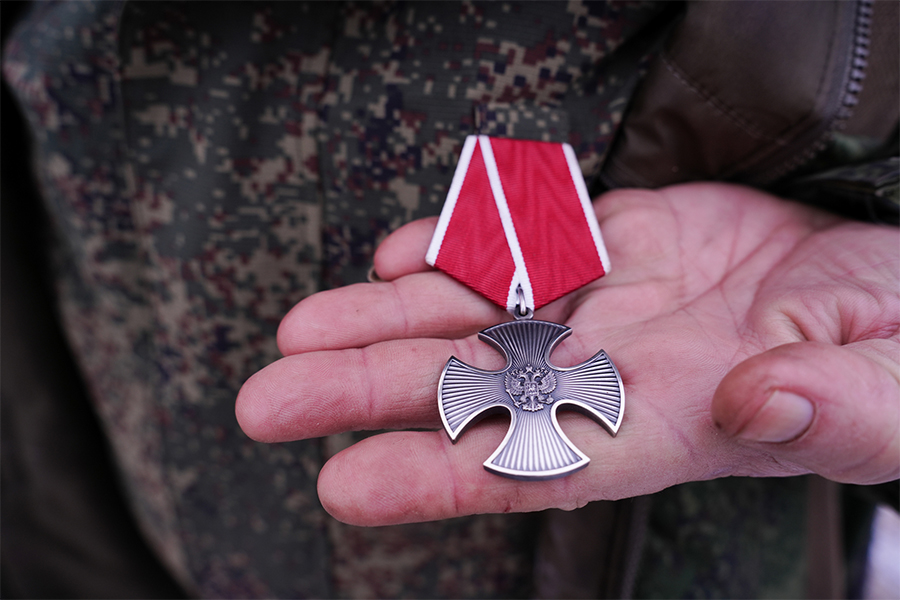
The battle lasted about half an hour, and Yakubovich and the unmanned aircraft emerged victorious. When the Baba Yaga arrived to finish off the shooter, our operators destroyed it as well.
After this episode, Sergey spent about a month in the position.
An example of patience and perseverance
At the same time, another soldier, Andrei, call sign Nachprod, was defending 300 m from Yakubovich. An example of perseverance, unpretentiousness and patience, as they say about him now in the regiment. The guy defended his position the longest in the unit. Short, thin, collected, his face is dotted with wrinkles, despite his rather "young" 45 years. He looks a bit like a boy. And also the partisan Ivan Lokotkov from the film "Road Check" performed by Roland Bykov, who personified the image of a Russian soldier — unpretentious and selfless, helping everyone's neighbor and last of all thinking about himself.
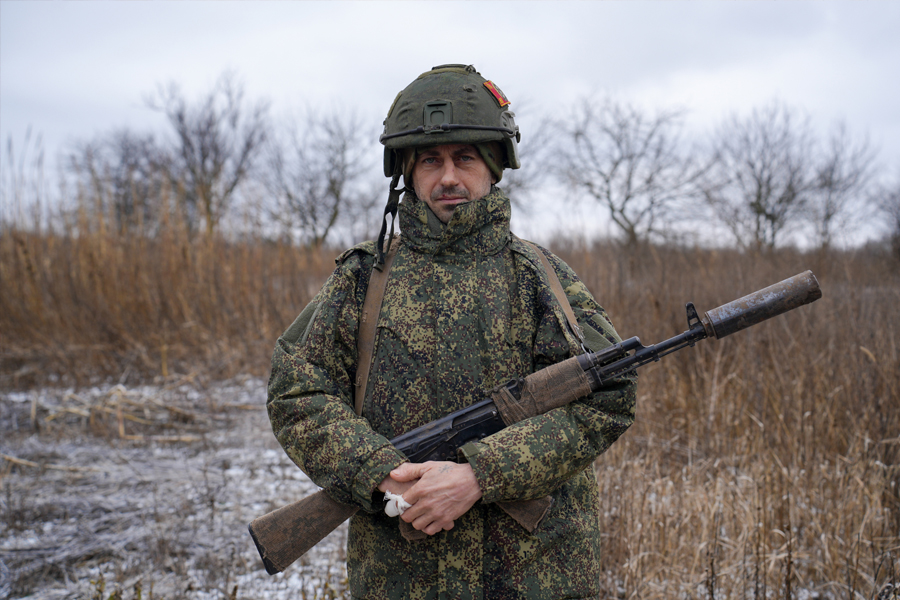
His position was in the "forest field" by default. One day, an AFU detachment attacked from two sides. "Gunfire, smoke, explosions," the fighter recalls. I managed to fight back, I was left alone. He got a concussion and temporarily passed out. Before that, he took a grenade in his hand, pulled out the pin, pressed the fuse with his finger so that it would not explode. When he came to, the grenade was still in his fist, his fingers blackened from exertion, and he was still unconscious.

— They started attacking from above, — says Andrey. — Kamikazes, Vampire drones, lighters — they beat for several hours. Everything was on fire. I managed to survive. Then I continued to hold my point. The enemy came close to me once more, and I destroyed him.
Andrey himself is from the Stavropol Territory. Rustic. Mobilized. Before entering the Kursk-Sumy area, he also proved himself worthy. At first he served in intelligence, fought on the right bank of the Dnieper. There he received his first wound — a fragment of a Polish mine took out the fibula from the heel to the knee, and with it half of the muscles. The fighter was sent to hospitals, he reached the medical center in Moscow.
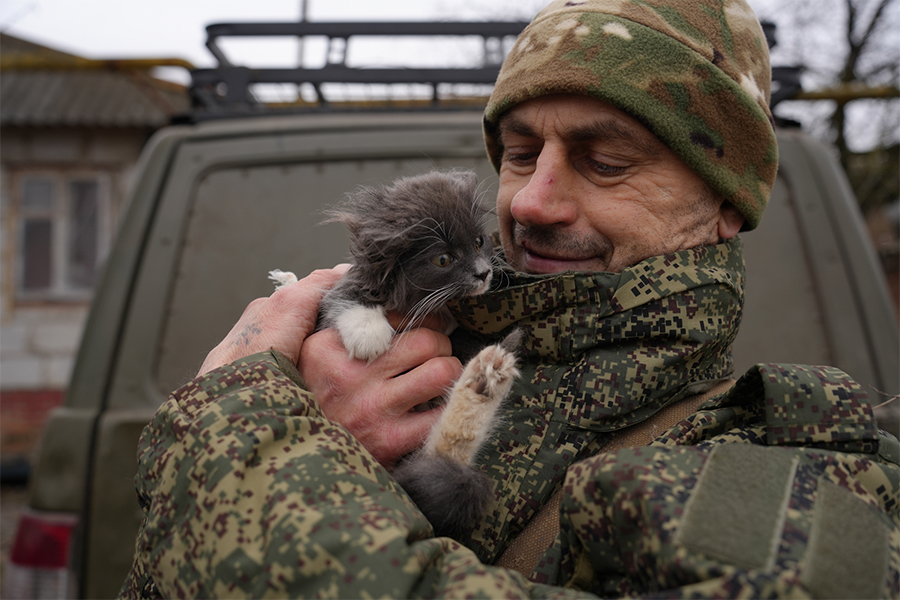
One young surgeon said, "I'll try to save my leg." And I saved it—I put it on the operating table a dozen times. The result is that the head of the Department walks on his own two feet. The guy was transferred to a new unit, transferred to the Kursk front, where he and his comrades marched all the way to the border, liberating landings, fields, villages.
Currently, the regiment's command has submitted documents for awarding Andrei a high state award.
Переведено сервисом «Яндекс Переводчик»
