- Статьи
- Science and technology
- Mouse from here: the secret of bat immunity will help protect against new pandemics

Mouse from here: the secret of bat immunity will help protect against new pandemics

Scientists have come closer to solving the mystery of the immunity of bats carrying various viruses, including coronaviruses, among which there are closely related pathogens that caused the COVID-19 pandemic. Researchers have found out how bats remain resistant to infections even during hibernation, when the immune system in most mammals is weakened. Understanding the role of the microbiome in protecting against stress and disease will allow for a more accurate assessment of the mechanisms of resistance of these animals and the risks of transmission of dangerous infections from animals to humans. The information about which virus can cause the next pandemic is in the Izvestia article.
What helps bats protect their DNA from damage
Russian scientists as part of an international team have found that in bats, during hibernation, intestinal bacteria are more active than during wakefulness, producing substances that protect the host's DNA from damage. The data obtained will help to better understand how bats — carriers of some viral infections — maintain immunity even during the inactive period of life and what role their own microbes play in this.
As the scientists explained, bats are carriers of various viruses, including coronaviruses, among which there are closely related pathogens that caused the COVID-19 pandemic. Their diversity in these animals is related to their ability to fly, their long lifespan compared to other mammals of similar size, and their habit of gathering in large flocks. However, most often the animal does not develop an infection, and it simply transmits the virus to other species that may be sensitive to the pathogen and become ill.

The staff of the Bat rehabilitation center under the leadership of Alexey Mikhailovich Ermakov
Scientists at the Don State Technical University (Rostov-on-Don) and colleagues have found out that bacteria living in the intestines of the bat Nyctalus noctula (red-headed vespers) secrete biologically active substances with different properties depending on the season and the condition of the host.

The authors isolated bacteria from the intestines of bats during deep hibernation and active life, and then assessed the biological activity of metabolites (metabolic products) produced by the detected microorganisms. To do this, scientists used other bacteria — they glow when a certain substance appears nearby. The living sensors reacted to molecules that damage DNA and destroy animal cells through oxidation, harming the body.
— It turned out that bacteria from the intestines of sleeping mice were more active in producing substances that protect DNA strands from damage, such as breaks in them. This means that during hibernation, the microorganisms helped the animal's cells avoid damage to the genetic material. The most effective "defenders" were the bacteria Citrobacter freundii and Lactococcus garvieae," said Alexey Ermakov, project manager, Doctor of Biological Sciences, Professor, Director of the Institute of Living Systems at DSTU.

Fattening a bat in a rehabilitation center
At the same time, in sleeping and awake bats, intestinal microorganisms released almost the same amount of substances that destroy cells due to oxidation and, conversely, protect them. This suggests that such cell damage in the body of these animals does not depend on the season.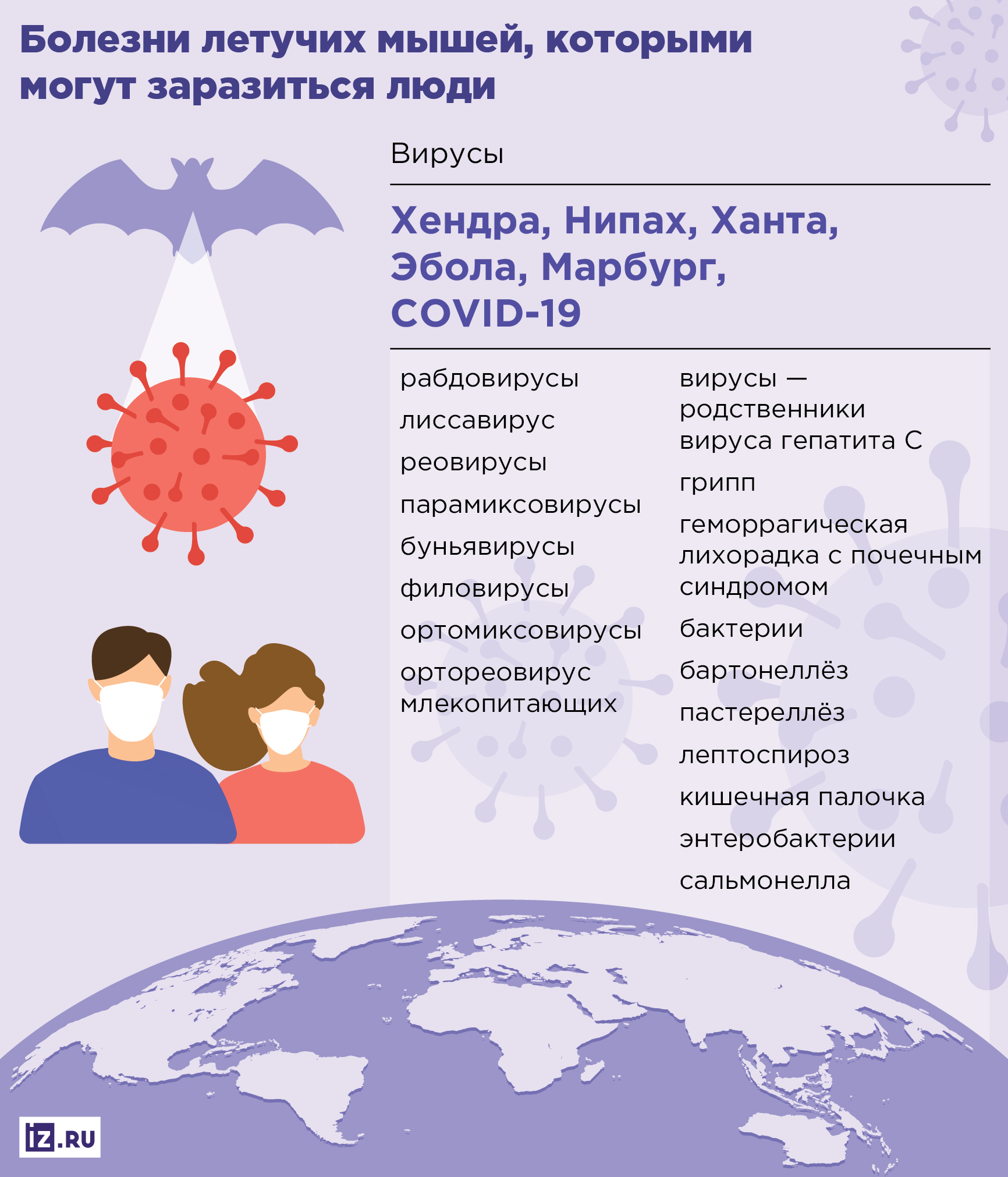
The findings are important for biomedicine and public health because bats are natural reservoirs of a number of infections. Knowing how a community of microorganisms affects stress resistance will allow us to better understand the mechanisms of protection of these mammals from certain diseases and more accurately assess the risks of spreading infections transmitted from animals to humans.
Where could the next pandemic come from
In the future, scientists plan to study in more depth the relationship in the host–microbiota system and how intestinal microorganisms are related to the work of the bat immune system in different physiological periods.
— In addition, the data obtained can become the scientific basis for more balanced measures to ensure the biosafety of urban ecosystems, where bats most often come into contact with humans and pets. The DSTU Bat Rehabilitation Center, whose staff preserves populations, monitors these animals and conducts laboratory immunobiological analyses, can become a key platform for comprehensive research at the intersection of microbiology, immunology and ecology of the city," said Igor Popov, project executor, PhD, researcher at DSTU.

Igor Popov, the first author of the study, with a rehabilitated bat
Bats are the only flying mammals. During flight, oxygen consumption increases 15-20 times, which leads to explosive oxidative stress, and there are many reactive oxygen species in the mitochondria, Mikhail Bolkov, a researcher at the Institute for the Study of Aging at the Russian Gerontological Research and Clinical Center at Pirogov University, PhD, told Izvestia. In other animals, this caused DNA damage, followed by severe inflammation. In bats, the immune system is adapted so as not to react to this. This also protects them from reacting to viral infections.
— The antiviral mechanisms in mammals are very similar, but bats have their own peculiarities. They have consistently higher levels of interferons and temperatures. It's like a constant "antiviral duty." At the same time, the further cascade of inflammation — reactions to damaged cells and DNA, infectious inflammation — is suppressed in them. As a result, the viruses in them multiply weakly, and the immune system does not attack them and does not cause inflammation. At the same time, they have a powerful defense system against tumors, which, with such a mild immune response, would be easier for, for example, humans. As a result, these are carriers of a huge number of viruses," the scientist noted.

Experts are just beginning to study the relationship between bats and the multitude of viruses they carry, as well as the causes and consequences of periodic catastrophic viral mutations that are transmitted to our species, said the head of the Smart Supply Chain segment of the FoodNet working group NTI Sergey Kosogor. Bat diseases that humans can become infected with: rhabdoviruses, lissavirus, paramyxoviruses, reoviruses, bunyaviruses, mammalian orthorheovirus, Hendra virus, Nipah virus, Hunt virus, Ebola virus, Marburg virus and more.

Bats in controlled hibernation at the Bat rehabilitation center
— Studies show that the bats' immune system fights viral pathogens in two key ways: first, bats attack the virus quickly but selectively, preventing it from multiplying uncontrollably. Secondly, they reduce the activity of immune cells, which otherwise could cause a large-scale inflammatory reaction that is more harmful than the virus itself. Bats have a well-developed immune response that suppresses virus replication, which protects them. They have practically no immune response, which is not the most useful, inflammation," the expert said.

As for viruses that could potentially cause the next global pandemic, the most likely candidate for the role of the causative agent of the next pandemic remains the highly pathogenic avian influenza of the H5N1 subtype, says Maxim Kolyasnikov, associate professor at the UrFU Institute of Economics and Management and the Department of Future Technologies at MIPT. According to him, the virus is already widespread among wild and domestic birds and dairy cattle, and recent studies have shown that just one mutation can provide it with sustained human-to-human transmission.
— The Nipah virus, despite its extremely high mortality rate, remains a local phenomenon for now. Monkey pox, in turn, shows a downward trend after the 2022 wave, although it is causing concern. Little—studied pathogens, the influenza D virus and the canine coronavirus HuPn-2018, deserve special attention, for which neither diagnostic tests nor vaccines exist yet," the scientist said.

Vladislav Gorobets, co-author of the study, with a rehabilitated bat
The study involved researchers from Rostov-on-Don, Rostov Research Institute of Microbiology and Parasitology (Rostov-on-Don), Rutgers University (USA) and the University of Sao Paulo (Brazil).
The results of the study, supported by a grant from the Russian Science Foundation (RSF), are published in the journal Current Microbiology.
Переведено сервисом «Яндекс Переводчик»
