Tire field: how old tires will reduce the cost of cast iron production in Russia
- Статьи
- Science and technology
- Tire field: how old tires will reduce the cost of cast iron production in Russia


Russian scientists have developed and patented a technology for using old car tires as a carbon additive in the smelting of synthetic cast iron. The essence of the method is that the waste material is crushed to a certain size and loaded into a melting furnace along with scrap metal to carburize the melt. The implementation of the solution will allow replacing expensive and scarce materials such as graphite and coke in the production of cast iron. The development will also help solve the problem of hazardous waste disposal. The effectiveness of the invention was confirmed by experimental smelting.
How used tires are made into raw materials for synthetic cast iron
Specialists from the Nizhny Novgorod State Technical University named after R.E. Alekseev have figured out how to turn old car tires into an ingredient for the production of high-quality synthetic cast iron. The development increases the efficiency of smelting and solves the problem of disposal of hazardous industrial waste. A patent of the Russian Federation has been obtained for the invention.
Cast iron is an alloy of iron and carbon, and synthetic is considered to be a material that is obtained by carbon enrichment of a steel melt, the researchers explained. It is resistant to heavy loads, friction and heat. Therefore, it is used for the most critical parts, for example, as part of the pads of railway wagons and internal combustion engines.
— Scrap steel is used to produce synthetic cast iron. Coke or graphite is used to saturate the alloy with carbon. However, they are expensive and scarce. Therefore, metallurgists are looking for affordable alternatives. The proposed option is used car tires, which contain up to 60-70% carbon," said Igor Leushin, one of the authors of the project, Head of the Department of Metallurgical Technologies and Equipment at NSTU.
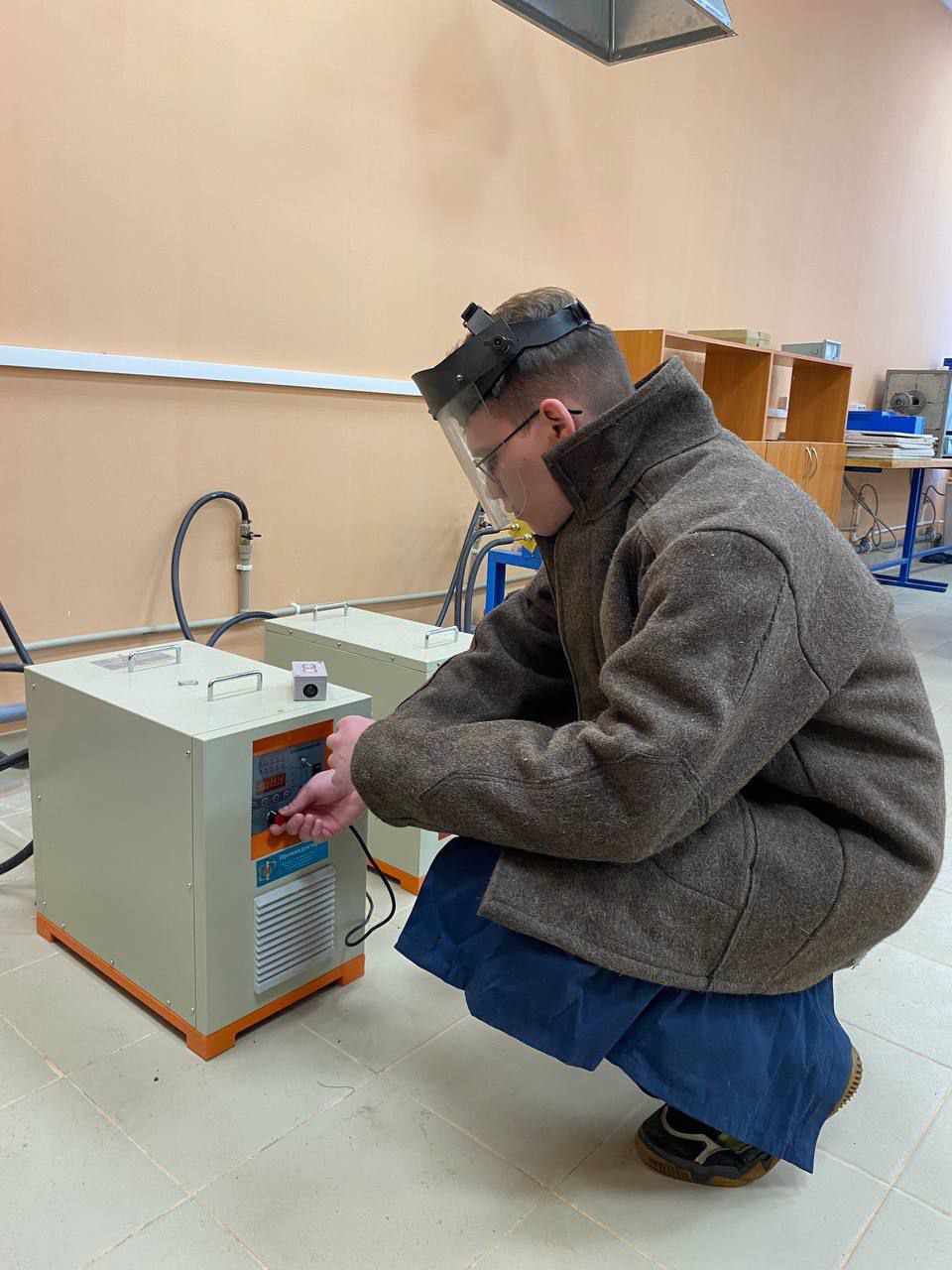
Previously, during the preparation process, it is necessary to separate tires from textile elements and steel wire, which is used as a reinforcing material, he explained. Then the tires are cut into pieces from 5 to 50 cm in size. This is important because smaller fragments provoke a decrease in the degree of carbon uptake, slag formation and smoke release. And too large pieces do not have time to fully dissolve and evenly distribute in the liquid melt. Instead, they are caked or clumped together.
During the experiments, the butchered pieces of tires were loaded into the working capacity of the furnace and filled with a steel fraction. Cast iron modification was carried out at a temperature of +1450 degrees. As a result, an alloy was obtained that is not inferior in properties to synthetic cast iron produced using traditional carbon sources, the scientist said.
— The effectiveness of the development has been confirmed by a series of experimental smelts of synthetic cast iron grade SCH25 in the IST-016 induction furnace. At the same time, it was found that the use of tire fragments provides a higher degree of carbon absorption and lower carburetor consumption compared to the prototype, while maintaining the standard sulfur content in the metal," explained Igor Leushin.
In the future, in order to implement the technology on an industrial scale, it is necessary to continue research aimed at reducing the degree of smoke and ensuring safe working conditions. Work is also underway to adapt the technology to furnaces of various types and large capacities, he noted.

How to implement tire recycling technology
— The tire recycling practice has been developing since the late 1990s. Its volume in our country is measured in hundreds of thousands of tons. According to Russian legislation, worn tires are classified as waste of hazard classes 4-5. Their burial and export to container sites are prohibited," Igor Mishin, an expert at the National Technology Initiative (NTI) Avtonet, told Izvestia.
Therefore, it is important to develop new recycling methods, especially those that will allow us to obtain more recyclables and create a second life for waste, he said.
—The development of NSTU is an example of how combined fundamental and engineering knowledge can simultaneously solve two important tasks — to increase the efficiency of industrial production and reduce the environmental burden," explained Alexander Kvashnin, head of the laboratory of industrial—oriented materials search at the Skoltech Materials Technology Center. — It is fundamentally important that the technology is already ready for implementation in the foundries of automotive components. This indicates a high level of its technological maturity.
At the same time, Galina Okolnikova, Associate Professor of the Department of Construction Technologies and Structural Materials at the P. Lumumba Peoples' Friendship University of Russia, noted that components that are not involved in the proposed method can also be recycled. For example, RUDN University has developed concrete mixes for 3D printing using fiber from the steel cord of automobile tires.
Marianna Malkova, Professor of the Department of Mechanical Engineering Technologies at the Engineering Academy of the same educational institution, noted that, despite the promise and relevance of the idea, for its implementation it is necessary to work out ways that will prevent the ingress of organic substances contained in tires into the cast iron melt. Especially sulfur, which degrades the mechanical properties of alloys.
— Reducing the dependence of metallurgy on depleted fossil resources is consistent with the overall strategy of greening the industry. At the same time, the proposed approaches do not make the technology completely carbon—free: carbon dioxide is not fully involved in the metal recovery process, which leads to its partial emissions into the atmosphere," said Yaroslav Lebedev, senior lecturer at the Department of Environmental Management at the RUDN University Institute of Ecology.
Nevertheless, synthetic cast iron is widely used in engine building, power engineering and other industries. Therefore, reducing the cost of materials will increase the competitiveness of high-grade products, he added. However, in order to achieve the desired effect, a set of measures is required, including the location of processing plants near consumers (for example, automobile plants), the development of a tire collection network and the establishment of their delivery. Given the energy potential of our country, domestic enterprises can process similar waste from neighboring countries.
However, environmental risks should also be taken into account. The production of cast iron using worn tires generates emissions of not only carbon dioxide, but also other compounds of hazard classes I–II, in particular hydrogen cyanide, benzapyrene, sulfur oxides, carcinogenic soot and a number of other substances. This means that the operation of such facilities requires the introduction of expensive emission purification systems, which in the future can significantly reduce the economic effect of the technology, the expert concluded.
Переведено сервисом «Яндекс Переводчик»
