
Fly petal: 80% of flowers in Russia are supplied from abroad, despite duties

Almost 80% of cut flowers in Russia are imported from other countries, with about a third of shipments coming from the Netherlands. The increase in duties on the import of flower products from unfriendly states to 20% in 2024 proved ineffective: suppliers were able to change logistics and import flowers into the country through the EAEU at a base duty of 5%. Insufficient state support measures for the industry hinder the growth of the share of domestic products in the market, experts say. Izvestia investigated why Russia is still dependent on Dutch flowers.
Why don't flowers grow in Russia
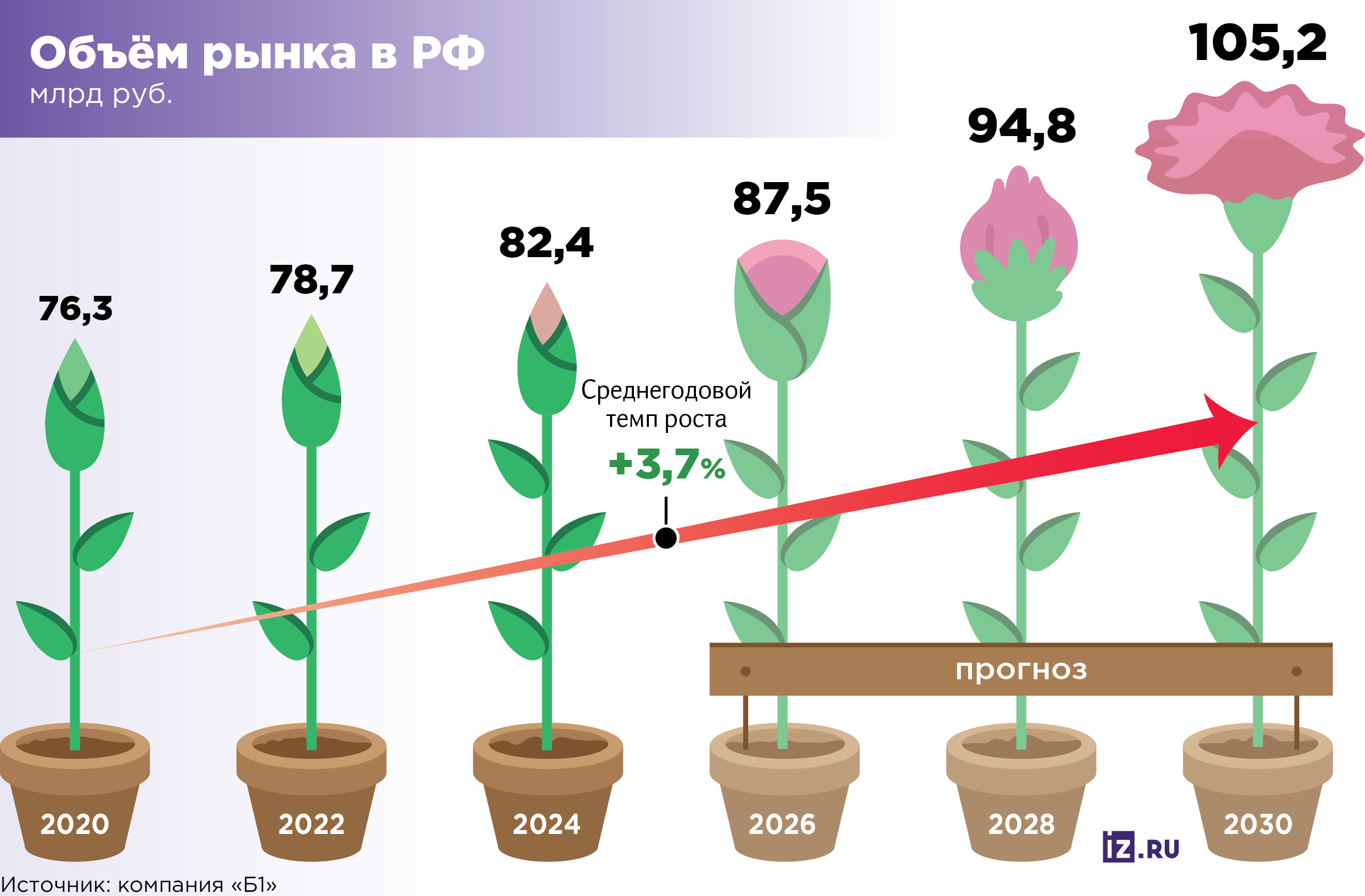
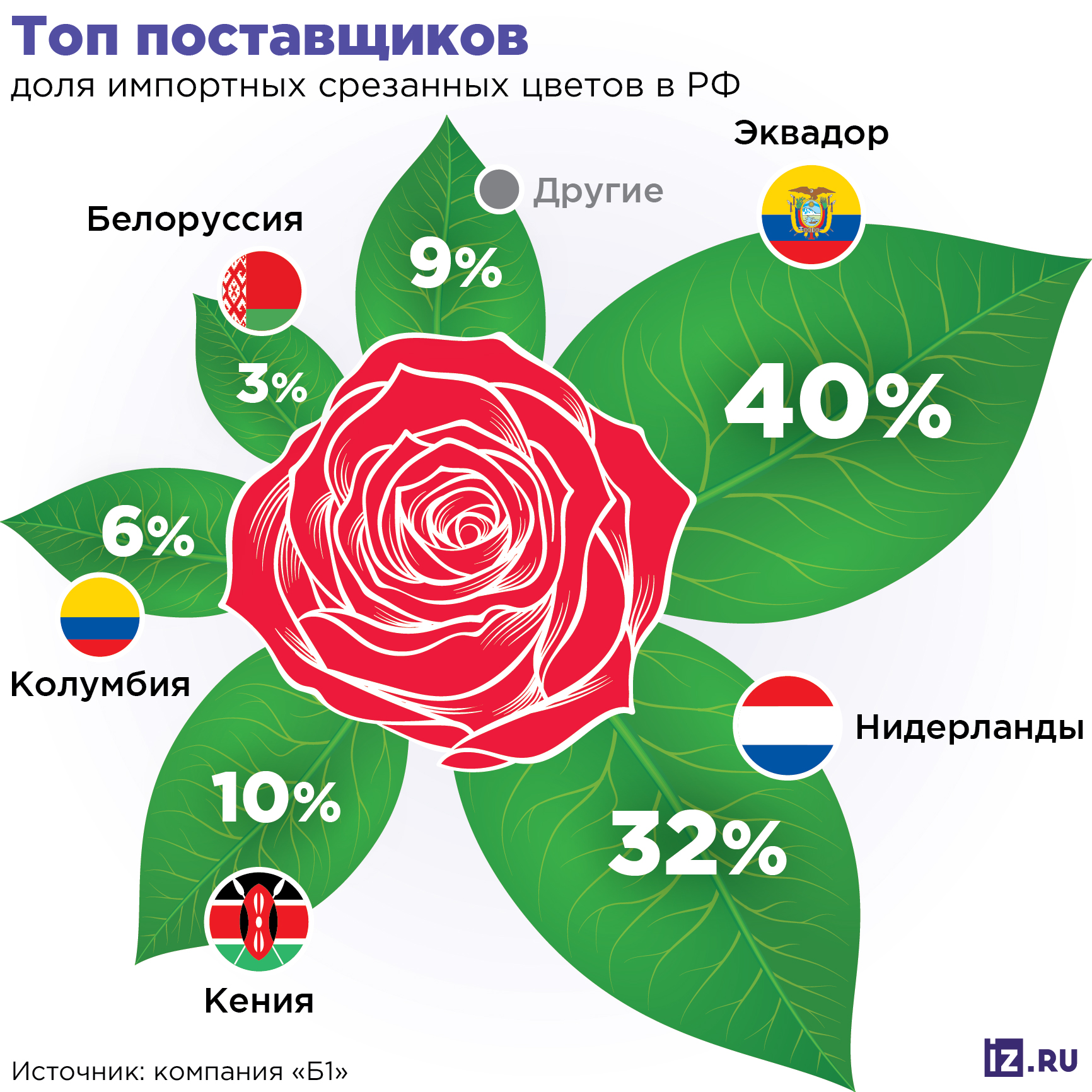
By the end of 2025, 78% of cut flowers on the Russian market are of imported origin, with about a third of shipments coming from the Netherlands. Such conclusions are contained in a study by the consulting company B1 (formerly Ernst & Young). In monetary terms, the market volume reached $1.1 billion, which is 2.9% higher than in 2024.

The share of domestic production increased from 12% in 2018 to 22% in the first half of 2025, B1 analysts said. This is due to the reconstruction of old and mothballed greenhouses, explains Victoria Krylova, Executive Director of the National Association of Flower Growers (NAC). According to her, since 2020, only 16 hectares of new complexes have been commissioned in Russia, whereas, for comparison, 24 hectares of greenhouses have appeared in Armenia over the past three years.

The difficulty of switching from imported flowers to products from local manufacturers lies in the capital intensity of production, said Alexander Vennikov, Business Development Manager at Flowwow marketplace. According to him, cut flowers (especially roses, chrysanthemums, alstroemeria) require year-round greenhouses equipped with light, heat and high energy consumption.
By the end of 2025, 454.8 million pieces of cut flowers and buds were harvested in Russia, which is 4% more than in 2024, a representative of the Ministry of Agriculture told Izvestia. At the same time, the growth rate was 11% a year earlier, according to the agency. Today, there are 133 companies in Russia that grow flowers in protected soil on a total area of 333 hectares, said the representative of the department. According to him, six greenhouse complexes with a total projected area of 34.1 hectares and a planned production volume of 35.6 million units per year are currently being built to increase production. By 2030, it is planned to build 16 more facilities in 113.6 hectares and a production volume of 187.6 million units, the representative of the ministry said.

Why has the increase in duties proved ineffective
In the summer of 2024, the government increased duties on flower imports from unfriendly countries from 5% to 20%. However, according to Victoria Krylova, this proved ineffective, as suppliers changed their delivery routes, including through the countries of the Eurasian Economic Union (EAEU). Since 2020, many Dutch flower companies have moved some of their greenhouses to Ecuador and Kenya, where the climate is more favorable and production costs are significantly lower. According to B1, these countries accounted for about 50% of Russia's cut flower imports in 2025.
The duty depends on the country of origin of the goods, and not just on the country of import, but in practice it does happen to re-export and complicate routes, Alexander Vennikov confirmed. This, he said, reduces the effect of restrictive measures and makes imports more sustainable. The increase in fee rates does not solve the problem of personnel, planting materials and conditions for their cultivation, the Izvestia interlocutor added. This measure provokes sellers to refocus on other countries and logistics chains, he believes.

The lack of government support for the flower industry is forcing companies to increasingly repurpose their greenhouse complexes for growing vegetables, Victoria Krylova added. According to her, the Ministry of Agriculture is ready to support only the flower breeding measure. However, for plants that are in a pre-bankruptcy state, this measure will be ineffective, she noted. The industry proposed extending preferential loan rates from 8 to 15 years, as well as considering import restrictions and duty increases not only from unfriendly countries, but also from the EAEU, the executive director of the National Bank of Ukraine said. The business also asked for a reduction in the VAT rate: today it is 10% for vegetable growers and 22% for flower growers, she said.
However, due to the "limited amount of federal budget funds, large commitments made to subsidize previously concluded preferential loans, as well as the high key rate of the Central Bank," the Ministry of Agriculture did not support the business proposal, follows from a letter from Galina Fomina, director of the Department of Economics and State Support of the Agro-industrial Complex department, to the association of flower growers (Izvestia has).

In the meantime, the Russian market remains small on a global scale — its share is only 0.5–0.7%, estimates B1. At the same time, the average cost of Russians for flowers is 3.4 times lower than in the EAEU countries, and demand is still concentrated around "festive" consumption - weddings, anniversaries and official dates, the study says. Traditionally, the peak of sales falls on March 8, said the representative of Magnit. The habit of regularly buying flowers from consumers has not yet been formed, the representative of Lenta agrees.

For comparison, in the Netherlands (the world's largest market for ornamental plants) This is a part of everyday culture, where there are about 10 times more flowers per person than in Russia, according to the B1 study. The average retail price per stem in both countries differs slightly — 251 rubles per rose in the Russian Federation (September 2025) versus 235 rubles in the Netherlands.

The increase in flower production was facilitated by an increase in the pace of greenhouse construction, said Konstantin Vlasov, project manager of the Consumer Sector and Agroindustrial Complex practice at Strategy Partners. According to him, in order to completely replace the import of roses alone, which account for about half of the market, it is necessary to build more than 300 hectares of complexes, that is, double the existing capacity for their cultivation. At the same time, the Russian market makes it possible to achieve a fairly high profitability, he noted. According to B1, the margin of domestic flower producers may be higher than 50%, although, for example, this figure is only 10-15% for Dutch competitors. Such conditions in the future, with a reduction in the key rate, can stimulate investment in the industry in the country, the expert noted.
Переведено сервисом «Яндекс Переводчик»
