Right to pump: Venezuela aims for top 3 countries in gas production


Venezuela intends to enter the top three world leaders in natural gas production, the republic's ambassador to Russia, Jesus Rafael Salazar Velazquez, told Izvestia. The country has always been an oil and gas power, but US sanctions have slowed down the development of the industry — Washington has not lifted them from Caracas even after the capture of Nicolas Maduro. Venezuela now has great potential for the development of the energy sector. But experts say that this can only be done with the help of the United States, which she is unlikely to receive.
Oil and gas production in Venezuela
Venezuela has huge reserves of hydrocarbons. In many ways, this is why all the world's attention in early 2026 was focused on the situation in the republic, when Donald Trump decided to establish control over its oil industry. According to OPEC data for 2024, Venezuela's proven oil reserves amount to about 303 billion barrels (about 17% of the global total), more than Saudi Arabia's. And this is not the only wealth of the Bolivarian Republic.
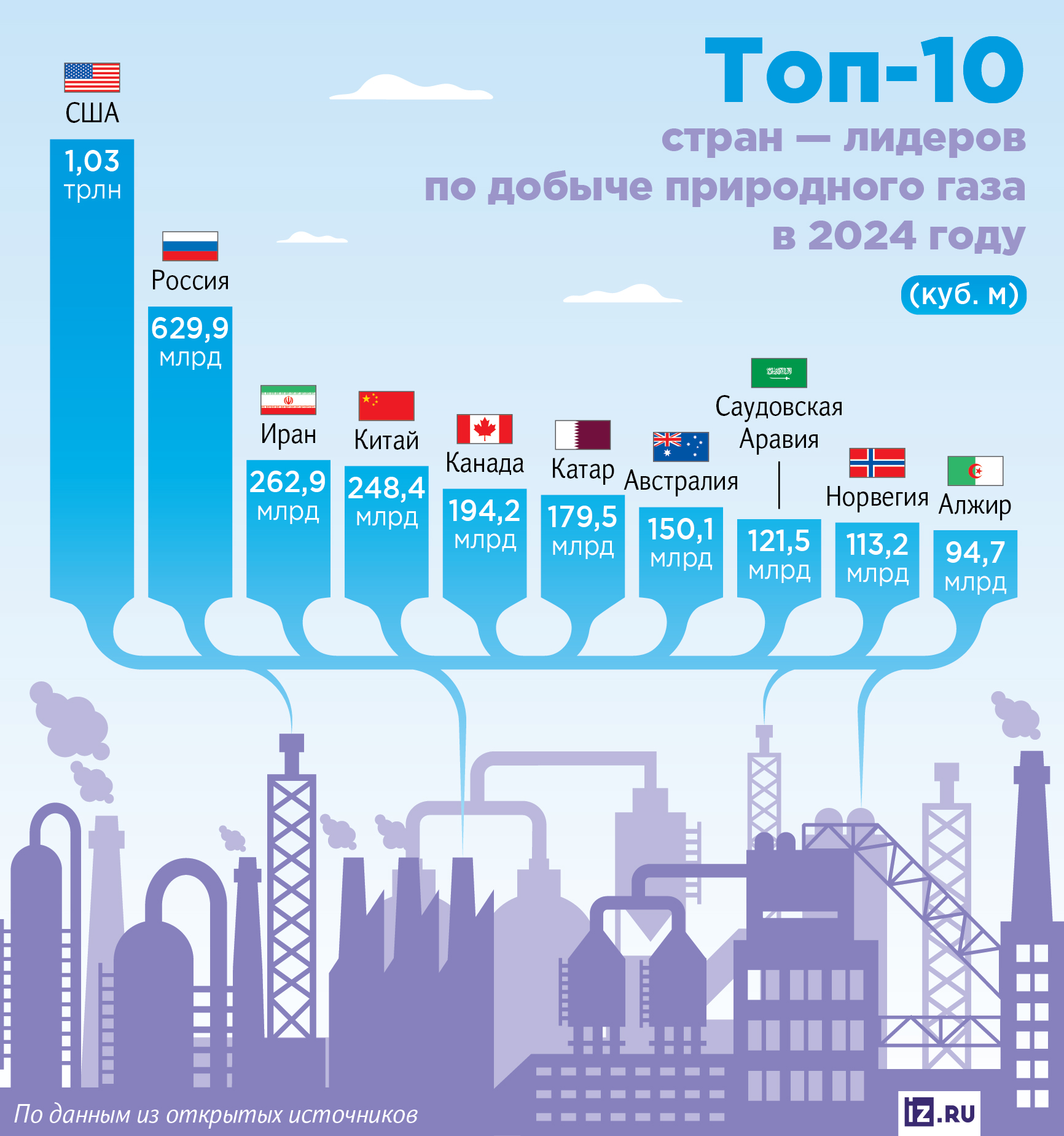
Venezuela ranks 8th in the world in terms of proven natural gas reserves (5.6 trillion cubic meters). The republic is convinced of its great potential and has set a course to enter the top 3 in terms of this type of fuel.
—We believe that the real reserves may be much larger and the country is able to enter the top three or four world powers in this indicator," Venezuelan Ambassador to Russia Jesus Rafael Salazar Velazquez told Izvestia. — The plan of our acting president is for us to become an oil and gas power again, as it was before the absurd blockades imposed against our oil industry.

Venezuela gained its status as the world's leading fuel exporter in 1928. In the late 1930s, the country was second only to the Soviet Union and the United States in terms of oil production. Now Washington has played a crucial role in weakening Caracas in the oil and gas market. The US sanctions that Trump began to impose during his first term as president have become a measure of economic pressure, the main purpose of which is to overthrow the government of Nicolas Maduro, depriving it of a key source of income — the export of hydrocarbons.
Restrictions were imposed on the activities of the republic's state oil company PDVSA, which controls oil and gas production. At that time, the United States banned the import of Venezuelan energy resources, and Washington froze PDVSA's assets worth about $7 billion.
As a result, negotiations on the development of the Manakin-Cocuina gas field, which Venezuela shares with Trinidad and Tobago, were suspended in 2019. During his second presidency, Trump increased sanctions: in 2025, the United States revoked licenses issued to Shell, BP and NGC, which also led to the postponement of the development of the large Dragon gas field.
Right now, Caracas is taking small steps to realize the country's enormous energy potential. On February 3, for the first time in its history, Venezuela sent a shipment of liquefied petroleum gas to the foreign market. LPG is a by—product produced during oil extraction and refining. Venezuela can produce it on its own.
However, without the restoration, production and refining of oil, large-scale exports of liquefied petroleum gas will still not be established, Igor Yushkov, a leading analyst at the National Energy Security Fund and an expert at the Financial University under the Government of the Russian Federation, told Izvestia.
As for the extraction of natural gas and its subsequent sale, everything is much more complicated here. In the case of Venezuela, we are talking about the production and supply of LNG.
Potential for export
Venezuela is primarily an oil country. Serious investments are needed for the large-scale development of gas projects, most likely from the United States. The Americans have all the necessary capacities for this. Major oil companies, as Trump stated, have already started exploring new fields in Venezuela.
—However, it is premature to say that Venezuela will become a gas exporter, because this is a separate major project," Igor Yushkov said. — The Americans will not want to contribute to it, because many LNG plants are being built in their country. Why would they create a competitor at their side?
If Venezuela starts LNG production in the country, it has the potential to export, said Sergey Kaufman, an analyst at Finam. According to him, the simplest options would be supplies to Colombia or Trinidad and Tobago, which may soon run out of its own LNG production.
To get into the top three in gas production, Venezuela needs to increase its proven reserves by almost four times, said Andrey Smirnov, an expert on the stock market at BCS World Investments. According to him, it is necessary to find two deposits comparable in volume to Urengoyskoye (one of the largest in Russia, with reserves reaching 10 trillion cubic meters). That is, the chances are frankly slim, the expert concluded.
In addition, it is difficult and expensive to build a large LNG plant. Tens of billions of dollars could be spent on just one facility, Igor Yushkov said. Venezuela will not be able to build such an enterprise on its own, because only a few companies in the world have a license for these works. American investors, at least for now, are more likely to be interested in the oil component than the gas one.

But we should not expect a sharp recovery in oil production in the country either. According to Andrey Smirnov, a country with minimal investments can quickly return only to the figures before the American naval blockade. It will not be possible to reach the level of at least the 1990s without external help. For the full restoration of Venezuelan capacities, an investment amount of up to $ 60 billion is needed, the expert noted.
So far, the priority for Venezuela is to get US permission to export oil. Sergey Kaufman considers cooperation between the country's authorities and Washington to be a necessary condition for production growth. Despite Maduro's capture, U.S. sanctions and the naval blockade remain in effect.
At the same time, the Venezuelan side claims that Caracas is independent of the United States in its foreign policy.
"The United States does not dictate Venezuela's foreign policy, it is determined by our constitution and our authorities," Jesus Rafael Salazar Velazquez told Izvestia. — Acting President Delcy Rodriguez has repeatedly stressed that Venezuela is not subordinate to any foreign power and we have the right to maintain relations with those countries with whom we deem necessary.
Until recently, Cuba was one of Venezuela's main partners, where in 2025 the republic supplied about 26.5 thousand barrels of oil per day, which covered up to half of the island's energy needs. In January 2026, Donald Trump announced that the flow of oil and money from Venezuela to Cuba would stop. After that, not a single oil cargo was sent there from the ports of the republic.
Переведено сервисом «Яндекс Переводчик»
