- Статьи
- Society
- Free cash register: who handles fees for the opposition and payments for illegal casinos

Free cash register: who handles fees for the opposition and payments for illegal casinos

The donation collection platform DonatePay, as well as the large payment service FreeKassa, through which illegal online casinos make their payments, may belong to Andrey Grekov, an entrepreneur from Kaliningrad, Izvestia has established. It was through DonatePay that representatives of the non-systemic opposition who had left Russia repeatedly collected donations. FreeKassa directly services the financial flows of gambling sites, whose activities are prohibited in Russia. The details are in the Izvestia investigation.
A builder from Kaliningrad
The large payment service FreeKassa, which was blocked by Roskomnadzor but continues to serve the financial flows of illegal online casinos, is linked to Andrey Grekov, a developer and IT entrepreneur from Kaliningrad, Izvestia found out. In addition, he probably owns the DonatePay donation service, which is regularly used by representatives of the non-systemic Russian opposition to collect donations.
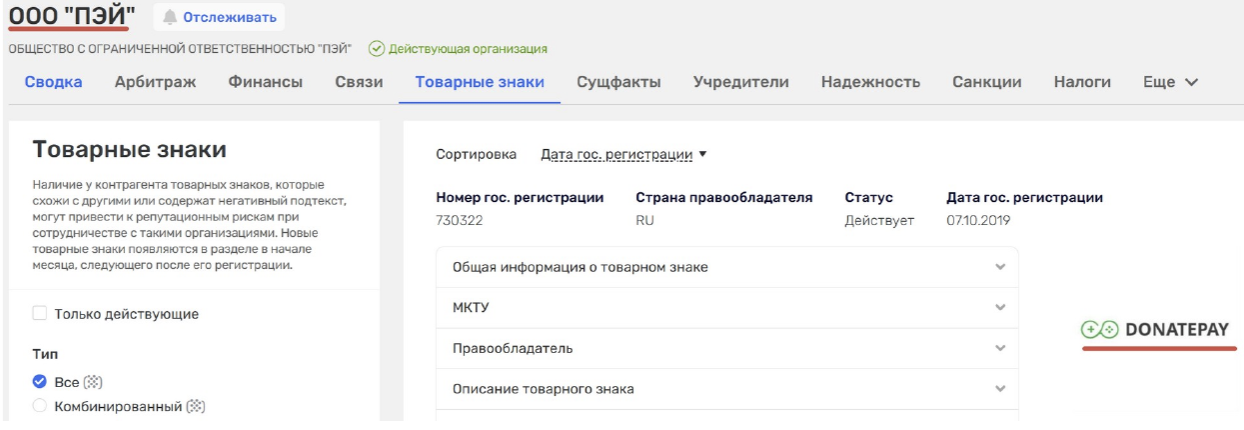
According to the Unified State Register of Legal Entities, Andrey Grekov is listed as the founder and CEO of the housing reservation service Zhilybli, several companies related to construction and real estate in Kaliningrad (holding LLC KSK). He also owns Pay LLC, which owns the DonatePay donation service. This fact is confirmed by the fact that the trademark "DonatePay" used by the service is registered on Pay.
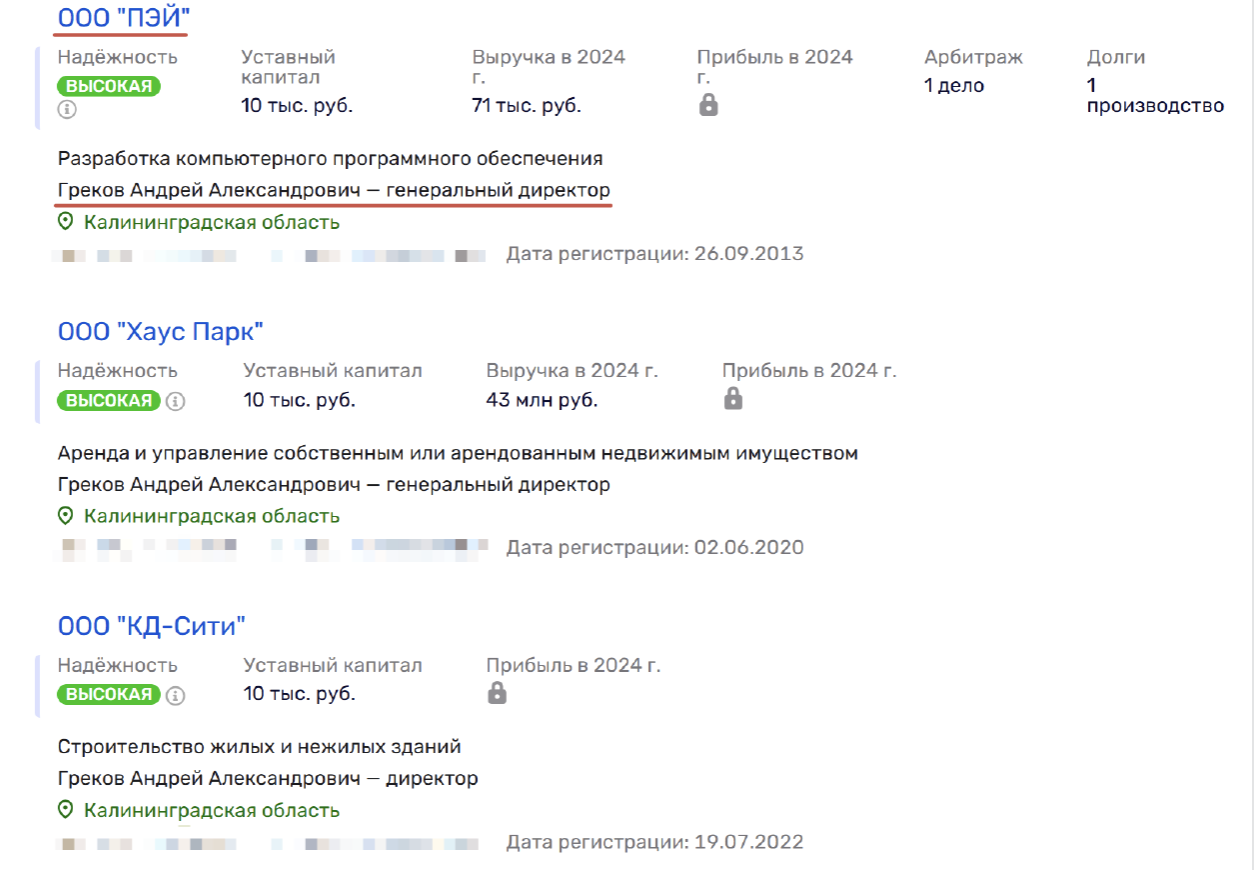
Grekov's IT projects (Pei and Zhilybli) are listed as unprofitable or bring very little profit (according to official reports, Pei's revenue in 2024 amounted to only 71 thousand rubles). As a developer, he won the bidding for the right to build housing on 1.7 hectares on Oktyabrsky Island in Kaliningrad, and also acted as the developer (through House Park LLC) of the six-story Berry Hotel with the Tern restaurant in the center of the resort town of Svetlogorsk.
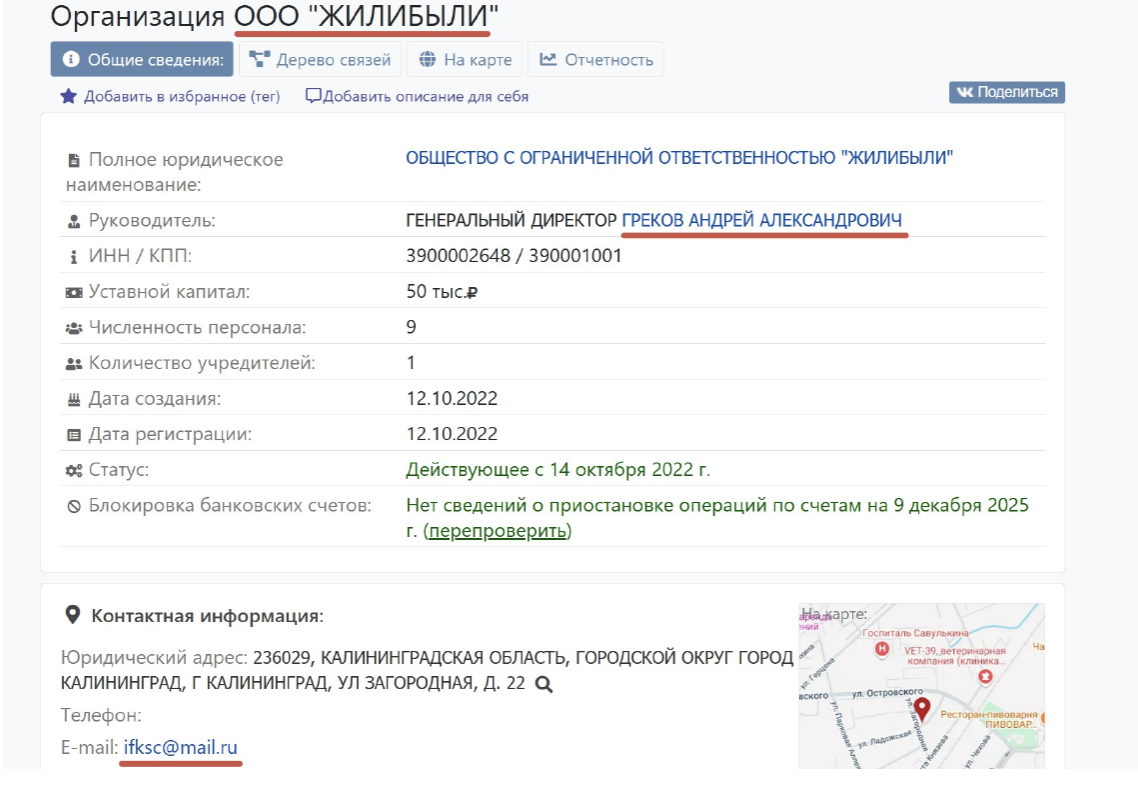
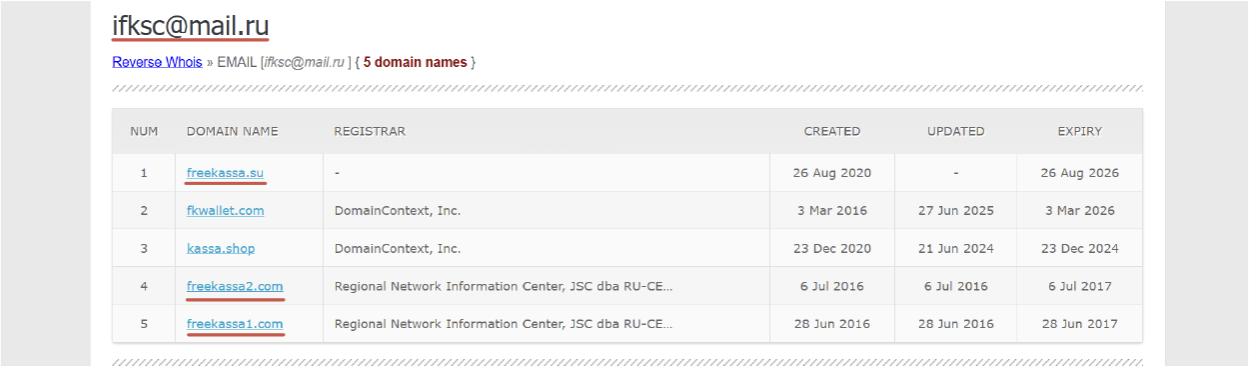
The DonatePay and FreeKassa apps have the same developer for Android, IFKSC. It most likely also belongs to Grekov: mail address ifksc@mail.ru it is specified in the output data of the Zhilybli service in the Unified State Register of Legal Entities.
Top bloggers and streamers earn millions of rubles from donations and advertising, and they often receive a significant portion of their fees from illegal casinos and bookmakers, Izvestia wrote. The intermediaries in this are the FreeKassa and DonatePay services.
Izvestia contacted Andrey Grekov for comment via his Telegram account, but he did not respond to the correspondent's message.
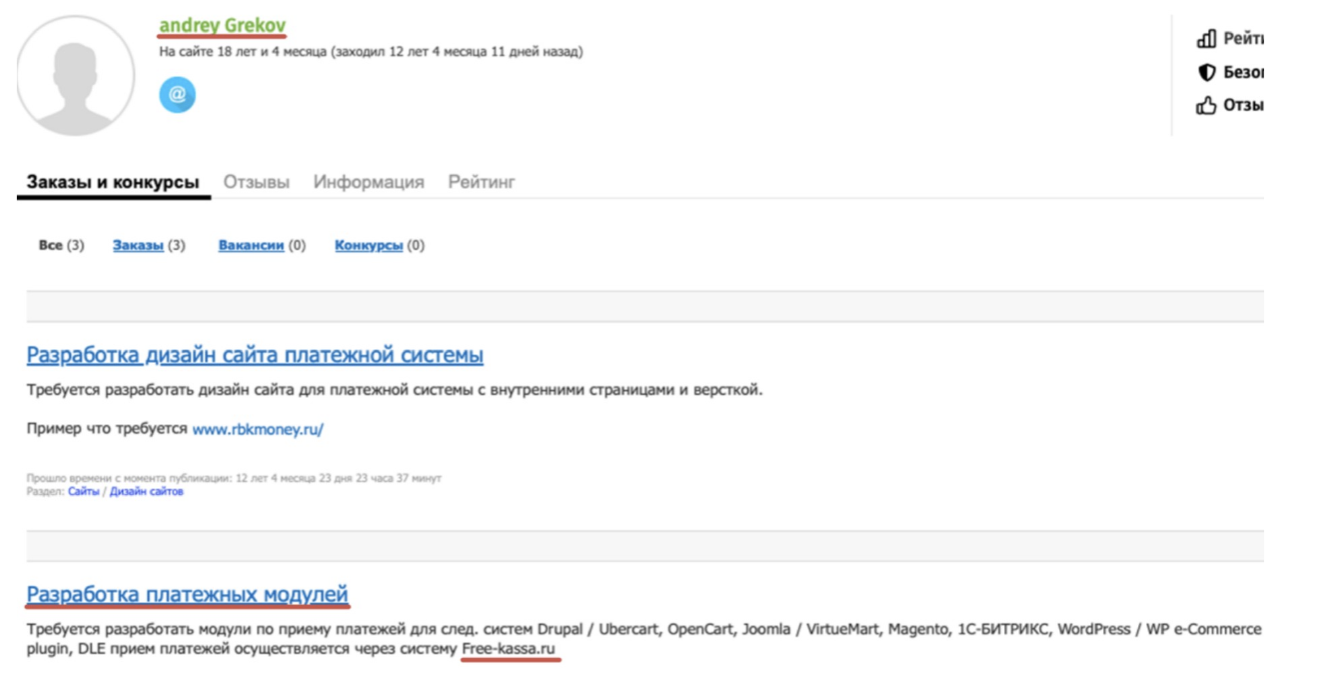
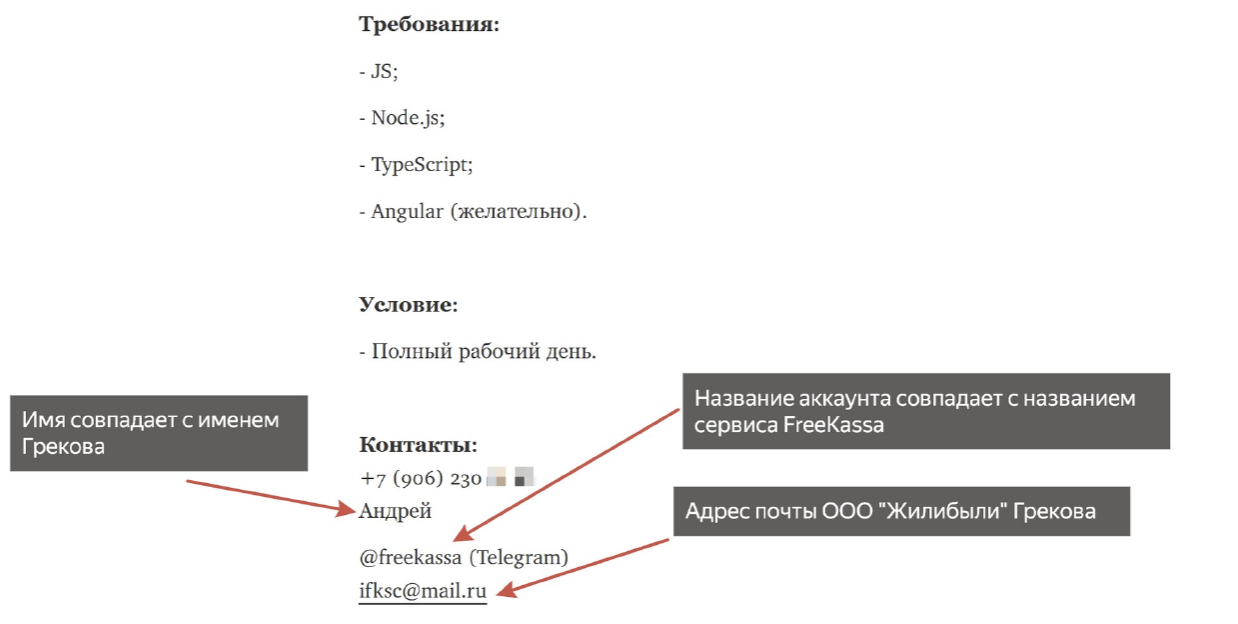
Grekov's involvement in the creation of payment services can also be confirmed by his old digital footprints, which the publication studied. For example, he was looking for IT specialists to create a payment service and mentioned its name in the ad - FreeKassa.
There are a dozen and a half resources listed on the same IP address with its sites, mainly related to online payments: chmoney.ru , exchange4you.ru , lendcredit.org , mykassa.info , office4exchange.com and others. All of them are currently out of service.
Grekov also turned out to be quite closely associated with Sergey Maizus, the creator of another payment service, Payeer (Izvestia also wrote about him earlier), which is used by illegal online casinos and their clients. In particular, a domain was registered to Grekov's email address. okpay.info . The British company OkPay Ltd, which owns it, belongs to Sergey Maizus and his wife Anna.
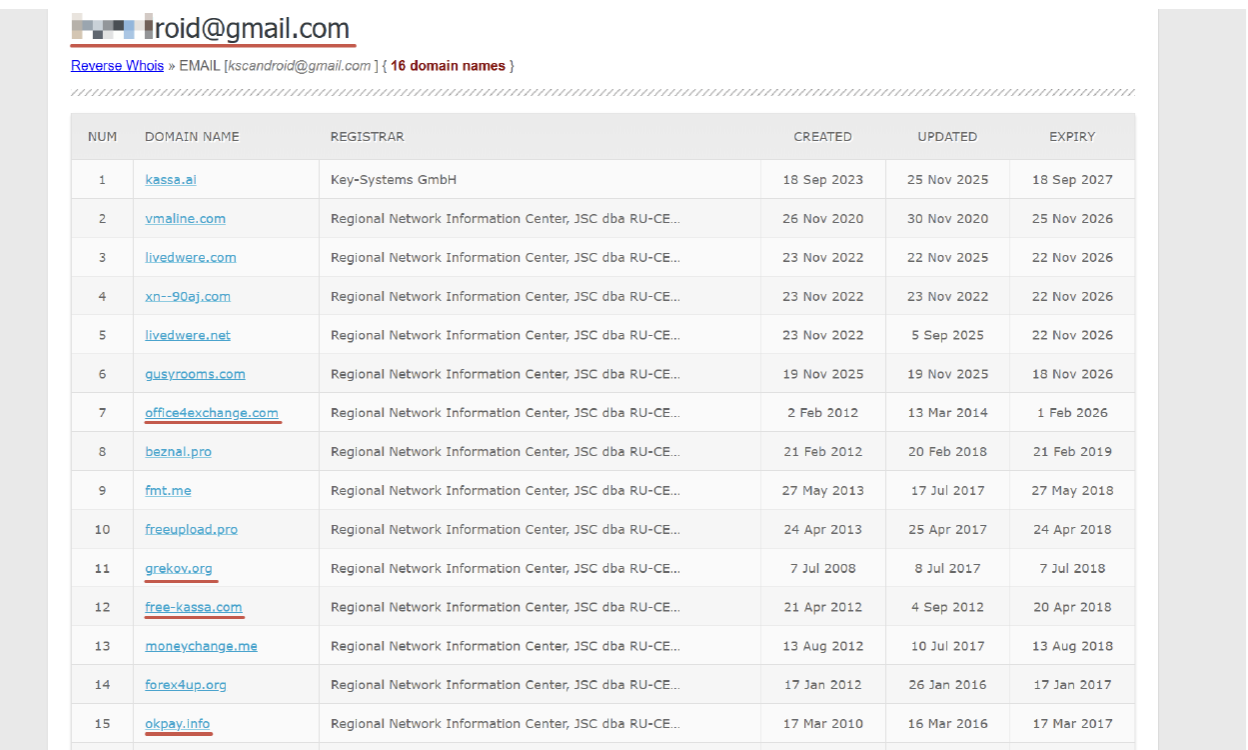
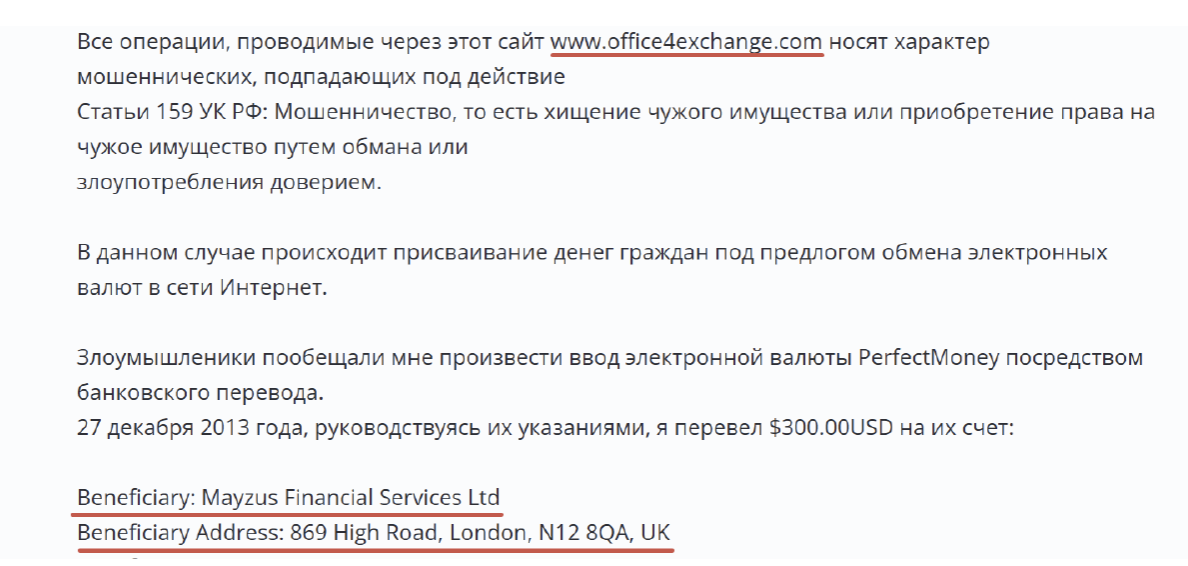
In complaints about the operation of the office4exchange portal, one of the users shared the upload of data on it, and they included not only Grekov's name and email address on Gmail, but also information about opening an account with Mayzus Financial Services Ltd.
Grekov is related not only to FreeKassa, but also to a dozen similar projects in the past, Izvestia's sources explained. All of them differ not only in their low reputation, but also in the absence of any legal grounds for working with online payments.
Donations for extremists
On June 12, 2023, the opposition, led by the FBK Foundation (recognized as an extremist and terrorist organization, a foreign agent and banned in the Russian Federation), held an online marathon, collecting donations to help people they called political prisoners. A large number of people who were recognized in Russia as foreign agents, people involved in extremism or terrorism participated in the campaign. Fundraising was conducted mainly through DonatePay and a number of other foreign payment channels. According to the organizers, the amount of donations exceeded several tens of millions of rubles. At the same time, transparent reporting on the final recipients of funds was not provided, which raised questions even among a loyal audience.
When Russian journalists contacted DonatePay for comment, they were informed that they did not know about such a fundraiser and blocked it.

However, this did not prevent DonatePay from remaining almost the main fundraising tool for the opposition for many years. For example, in 2019, journalist Michael Naki (included in the register of foreign agents by the Ministry of Justice of the Russian Federation) conducted a stream with Alexei Navalny (listed as a terrorist and extremist in the Russian Federation), collecting donations through DonatePay.
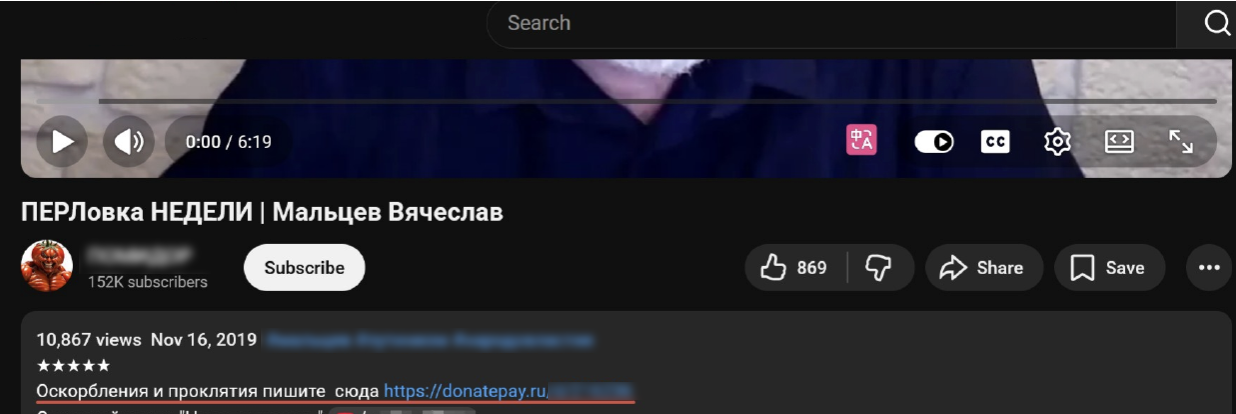
In the same year, Vyacheslav Maltsev, an opposition politician and former deputy of the Saratov Regional Duma (included in the register of foreign agents by the Ministry of Justice of the Russian Federation), also collected donations through Grekov's platform. On one of his YouTube broadcasts, he posted a corresponding link for viewers.
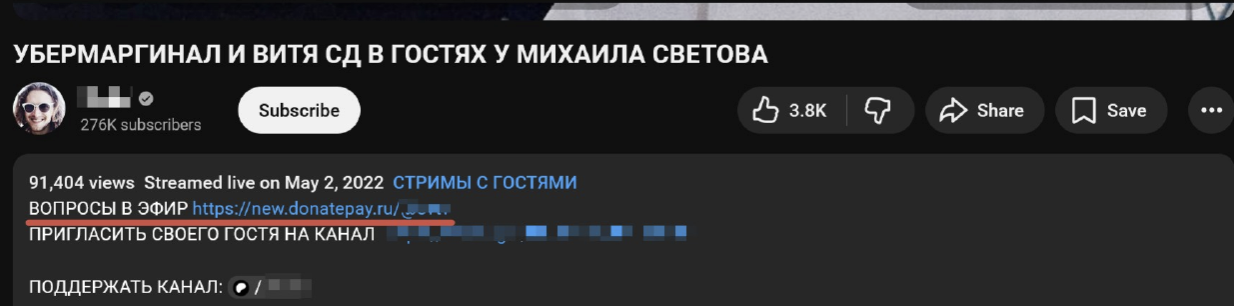
Since 2022, donations from viewers have been collected by "libertarian" Mikhail Svetov (included in the register of foreign agents by the Ministry of Justice of the Russian Federation, also posting relevant links on his YouTube channel.
Among other representatives of the opposition, DonatePay was used for personal needs: Alexander Sotnik (included in the register of terrorists and extremists), Matvey Ganapolsky (included in the register of foreign agents by the Ministry of Justice of the Russian Federation), Alexander Plushev (included in the register of foreign agents by the Ministry of Justice of the Russian Federation), Ksenia Larina (also known as Oksana Barsheva — included in the register of foreign agents by the Ministry of Justice of the Russian Federation, declared wanted list) and a number of others.
Online Casino Help
The FreeKassa payment service does not provide any information about itself, except for a feedback email and a support bot. The platform has identity verification, but it is not required for operations. The service does not have any licenses to work with cryptocurrencies, and there is also no Russian legal entity with an INN assigned to it.
As Izvestia has established, the FreeKassa website is on the domain.net was owned by Ilya Krukover, a well-known domain investor, until 2022, but in a conversation with a correspondent of the publication, he could not remember to whom he sold it. Sites on the .com and .ru domains appeared in 2012, and their owners are hidden. However, the above mentioned email address is on the domain mail.ru , owned by LLC Zhilybli Grekov, is listed as used during registration freekassa.su .
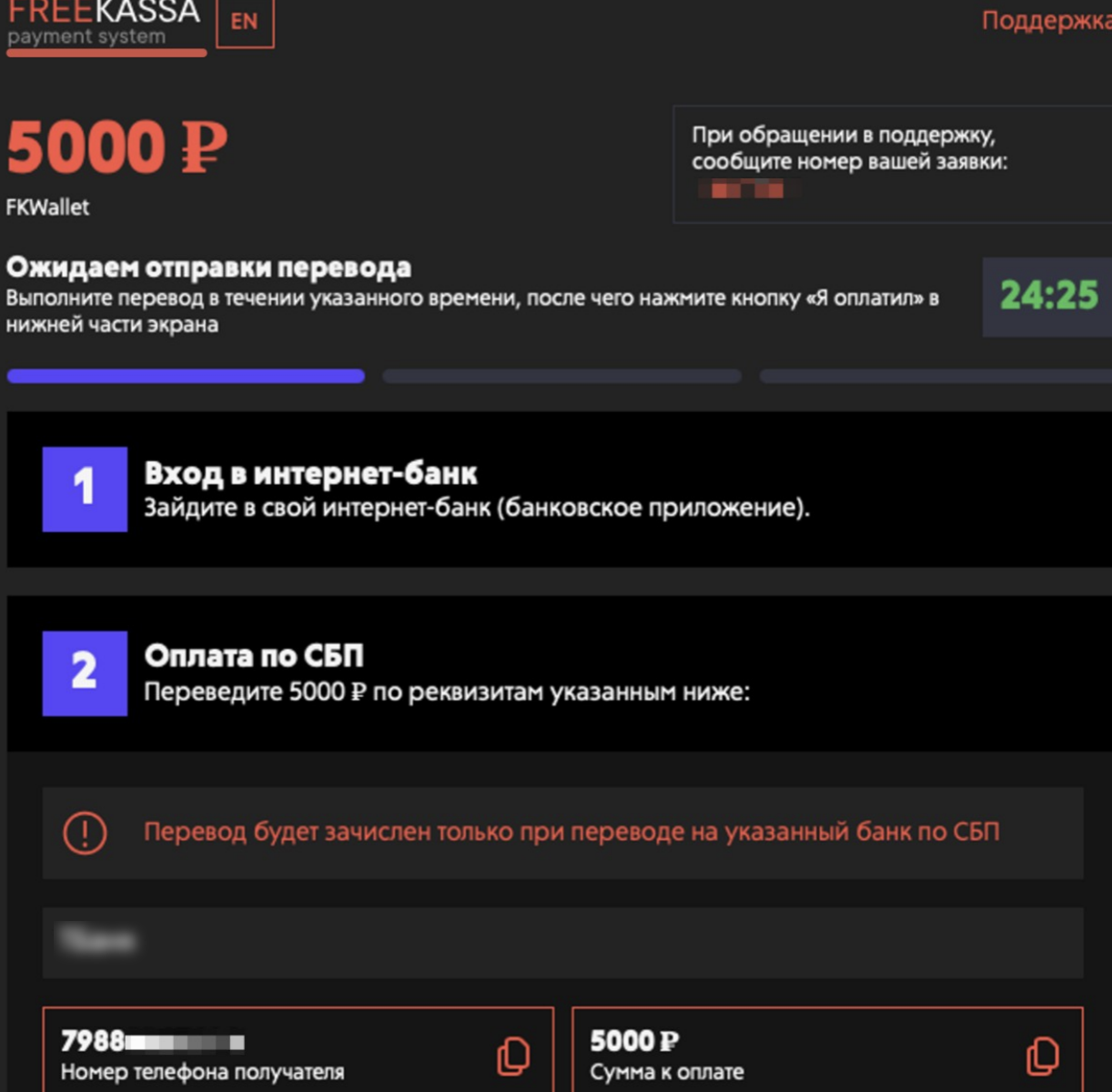
FreeKassa, along with the Piastrix service, is a service that allows you to replenish accounts in online casinos (their activities are illegal in Russia), pay for foreign services and make money transfers to almost any country in the world using bank cards of front persons — the so-called drops. FreeKassa is used in numerous gray schemes to transfer funds bypassing regulatory control. The company itself claims more than 50,000 e-commerce customers.
Blogger Alexey Baranov (HardPlay) told seven years ago that the Free Checkout and DonatePay services are interconnected. Baranov complained to the public that both platforms, according to him, were deceiving their users by stealing their funds. Among other things, he pointed out that these projects serve the interests of fraudulent case casinos (they differ from regular casinos in that items purchased in a computer game are used instead of money bets).
"During the year, my donations did not reach the amount of 6-7 thousand rubles, after which I lost the desire to donate, I'm sorry," said one of the comments under this stream.
Andrei Grekov personally replied to both Baranov (he showed screenshots of correspondence presumably with Grekov) and other users, but he used the pseudonym "Vitaly Lavrov."
The fact that "Lavrov" is Grekov can be confirmed by the results of a simple Internet search for the phone number from the advertisement, which contains the address of the mail "Zhilybli". The search returns the page "Vitaly Lavrov" in VKontakte.
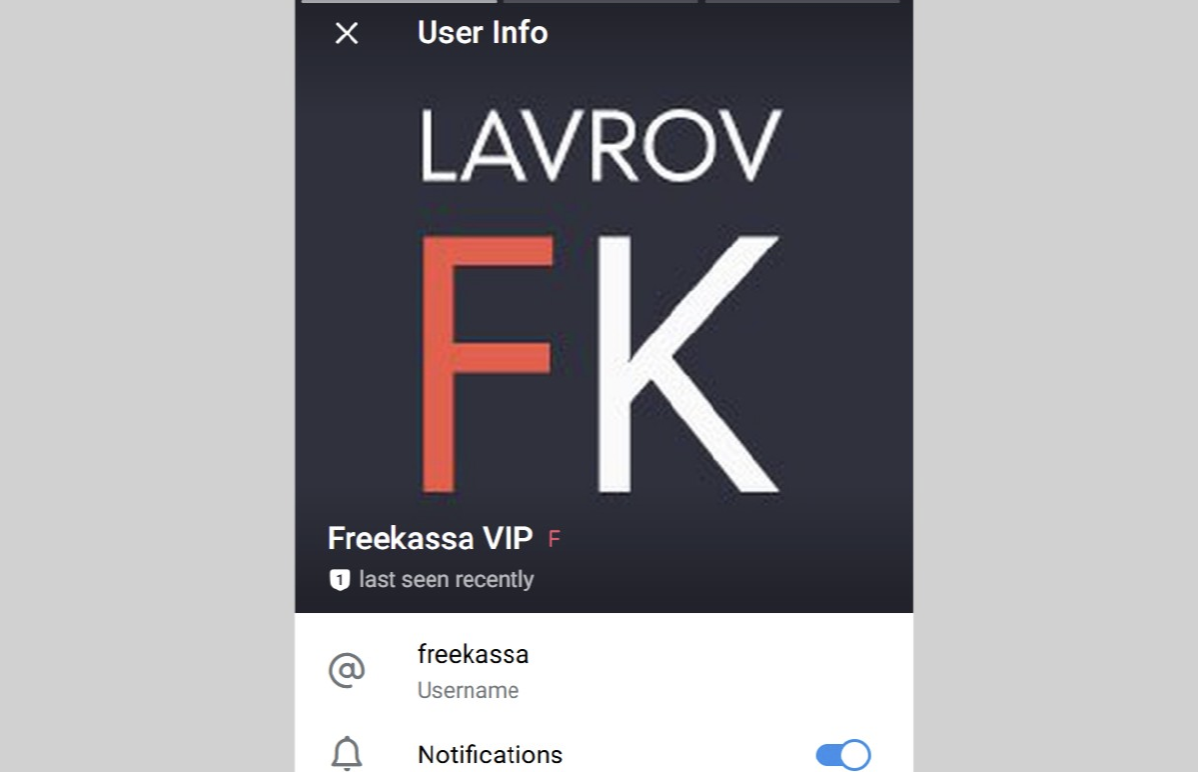
In addition, the FreeKassa Telegram account has a picture with the surname Lavrov as its avatar, the same as on the VKontakte page.
During a stream dedicated to FreeKassa, Baranov publicly appealed to the authorities to check the service and promised to assist, but there is no information about the consequences of Baranov's statements. Izvestia tried to contact the blogger, but he did not respond to calls and text messages.
Problems with the law
The FreeKassa sites on the .ru and .com domains are currently blocked by Roskomnadzor, which was confirmed to Izvestia by the agency in response to a request from the publication. They indicated that the blocking was carried out "based on the requirements of law enforcement agencies" and in the order of implementation of the law "On Information, Information Technologies and Information Protection". At the same time, Izvestia managed to access the service's website from a Russian IP address using another domain that is not listed by Roskomnadzor.

Illegal casinos would not be able to operate without financial intermediaries like FreeKassa, Piastrix and others like them, said Andrey Khodykov, Executive Director of the Center for Combating Ludomania. He explains the popularity of such illegal payment services, which primarily work with online casino customers, by the widespread use of ludomania among the population.
— Today, based on international statistics, we can say that at least 5% of Russians have signs of gambling addiction. Ludomania is a severe addictive disorder that consistently destroys a person's life: he loses motivation to work, falls out of the social environment, loses interest in development and self—realization. The massive spread of gambling addiction carries serious risks for the whole society — problem gamblers are more likely to be involved in illegal activities, and the suicide rate among addicts is 15 times higher than the average for the population, " he told Izvestia.

According to research by the National Research Center for Narcology, the majority of Russian patients with gambling disorder are men aged 30-40 years, but there is a steady increase in the involvement of women, including the elderly, Khodykov noted. At the same time, up to 40% of people suffering from ludomania commit suicide attempts.
On January 20, 2026, a working meeting of the Public Chamber was held on tools to counter the spread of illegal gambling in Russia. According to its organizer, Senator Yevgeny Masharov, in order to combat shady p2p transfers, it is necessary to debug the algorithm for blocking accounts with a high frequency of transfers - this could deprive illegal payment services and online casinos of working tools.

— Drops have from 50 to 300 operations per day. You need to look at the purpose of the payment, plus look at the conclusions, where the funds go at the end, since the drops withdraw money into cryptocurrency," said Masharov.
As State Duma Deputy Andrei Lugovoy stated on December 17, more than 2 million people are involved in dropping activities in Russia, and measures to combat this phenomenon must be comprehensive. On November 1, 2025, the Bank of Russia recommended that banks strengthen customer control in order to block dropper cards.
Переведено сервисом «Яндекс Переводчик»
