- Статьи
- Economy
- The "cushion" is safe: a way has been found to save the 16 trillion held by Russians from depreciation

The "cushion" is safe: a way has been found to save the 16 trillion held by Russians from depreciation

In Russia, it was proposed to introduce the so-called indexed ruble. The money should be divided into a means of payment (ordinary rubles) and something that performs the function of accumulation. Now people keep more than 16 trillion rubles "under their pillow". According to the idea of scientists from Moscow State University, indexed rubles should be linked to a basket of exchange-traded goods and grow in value every day as a contribution. The Central Bank replied that there is an instrument with inflation protection — special bonds. Similar models are used in other countries, such as Chile, Mexico, the United States, and the United Kingdom. But the introduction of a new instrument is fraught with costs for the issuer and the financial system.
What is an indexed ruble?
One of the ways to solve the problem of high inflation in Russia may be the introduction of an indexed ruble. This proposal was made by Academician, Director of the Moscow School of Economics Lomonosov Moscow State University Alexander Nekipelov at the RAS conference. The author believes that it is possible to "split" money into a means of payment and circulation (ordinary rubles) and those that are needed for exchange and accumulation (indexed). The latter will have a stable purchasing power and will not constantly become cheaper, like savings "under the pillow."

It makes sense to link the indexed ruble to a basket of commodities. According to Alexander Nekipelov, the Bank of Russia should regularly (preferably daily) update its quotes. According to the scientist, the Central Bank can give a guarantee to all economic agents, including foreign ones, that they will be able to freely pay for products in ordinary rubles at the current indexed quotes, as well as freely exchange them.
According to the author of the project, the new tool will help offset the risk of money depreciation, as well as increase the attractiveness of the ruble as a means of international settlements. It is assumed that the share of such a national currency in the total money supply will be 80%.

The Bank of Russia has not received such a proposal, the regulator's press service told Izvestia.
— The initiative, according to the authors, involves the introduction of a tool that protects against inflation. However, there is already a tool with similar functions — these are bonds with income indexation by inflation (OFZ-IN). If this is not enough to meet the demand of those who wish to hedge their risks from inflation, then financial institutions will offer other tools of similar functionality," the Central Bank replied.

OFZ-IN (indexed face value bonds) are government securities that protect capital from inflation. Their nominal value increases daily by the amount of official inflation (with a three-month lag). The yield consists of a fixed coupon (usually 2.5% per annum) and a nominal value.
Is it necessary to "split" the ruble
The proposed approach does not mean the introduction of a second currency, but rather a unit of account linked to an inflation indicator and issued under the control of the regulator, explained Denis Astafyev, an entrepreneur, fund manager and founder of the SharesPro fintech platform.
Similar models have already been used in other countries (Chile, Mexico, Colombia, and Uruguay) for mortgages, long-term contracts, and financial instruments to protect money from depreciation, the expert noted. For example, the Unidad de Fomento has become the dominant currency for determining the value of real estate and loans, and the exchange rate between it and the peso is constantly adjusted for inflation.
— The main costs of implementation are related not so much to technological implementation as to the redistribution of inflationary risks. If free conversion is guaranteed, then during periods of accelerating price growth, the burden inevitably falls on the issuer and the financial system as a whole," the expert warned.

With a sharp increase in inflation, the new instrument will collapse, as the Bank of Russia or the government simply will not have enough money for indexation, explained Natalia Milchakova, a leading analyst at Freedom Finance Global.
It is unlikely that the Central Bank will create some kind of alternative to the cash ruble at its own expense. The main disadvantage is the introduction of a parallel monetary system from scratch with its own scale of prices, Alexander Bakhtin, an investment strategist at Garda Capital, is convinced. It is easier and cheaper to provide citizens with tools that bring a sufficiently high return. For example, deposits, bonds. During the period of high key interest rates, they generated profits above inflation.

The creation of a parallel currency will bring additional risks, including from the point of view of public behavior and confidence in the ruble, believes Alexander Abramov, head of the Laboratory for the analysis of institutions and financial markets at the Presidential Academy. The emergence of several instruments can have a negative impact on the economy as a whole. It is unclear who will bear the risks in the event of an increase in inflation (with the introduction of the described instrument). The modern banking system is able to protect savings from price increases without introducing additional currency, the expert believes.
Any manipulation of the term "ruble" causes distrust of the general public and fear of financial losses, agreed Daria Dinets, Head of the Department of Finance, Accounting and Audit at RUDN University.

If a significant share of the money supply becomes "indexed," the Central Bank will lose part of the traditional channel of monetary policy transmission to the economy through the key rate, Finam analyst Alexander Potavin called another risk. It may also threaten to create a hole in the Central Bank's balance sheet with high inflation, and if the ruble indexation falls on the Ministry of Finance, the national debt will grow. In addition, it will require a radical change in legislation, the expert believes.
— The ruble can be the envy of any world currency — it remains the strongest among all for the second year in a row. And there is no need for "splitting", — Mikhail Zeltser, an expert on the stock market at BCS World of Investments, is convinced.
Will the indexed ruble protect against inflation
As of October 2025, the amount of ruble cash in the hands of Russians, according to the Central Bank, reached 16.4 trillion rubles. These funds are not protected from inflation in any way.
The emergence of a new instrument can really stimulate a partial return of savings to the financial system, primarily by reducing the fear of depreciation of ruble savings, Denis Astafyev believes.

— However, you should not expect an instant mass effect. Citizens' behavior will directly depend on trust in the indexing methodology, ease of use, and clarity of the rules. At the first stage, the indexed ruble is likely to be in demand in long—term contracts," the expert noted.
In fact, this is an adaptation of OFZ-IN for the mass user who does not want to explore the stock market, says Fyodor Sidorov, founder of the School of Practical Investing. The indexed ruble, if adopted— will allow you to receive a fixed premium above inflation. The current yield levels on such bonds are up to 13.3%.
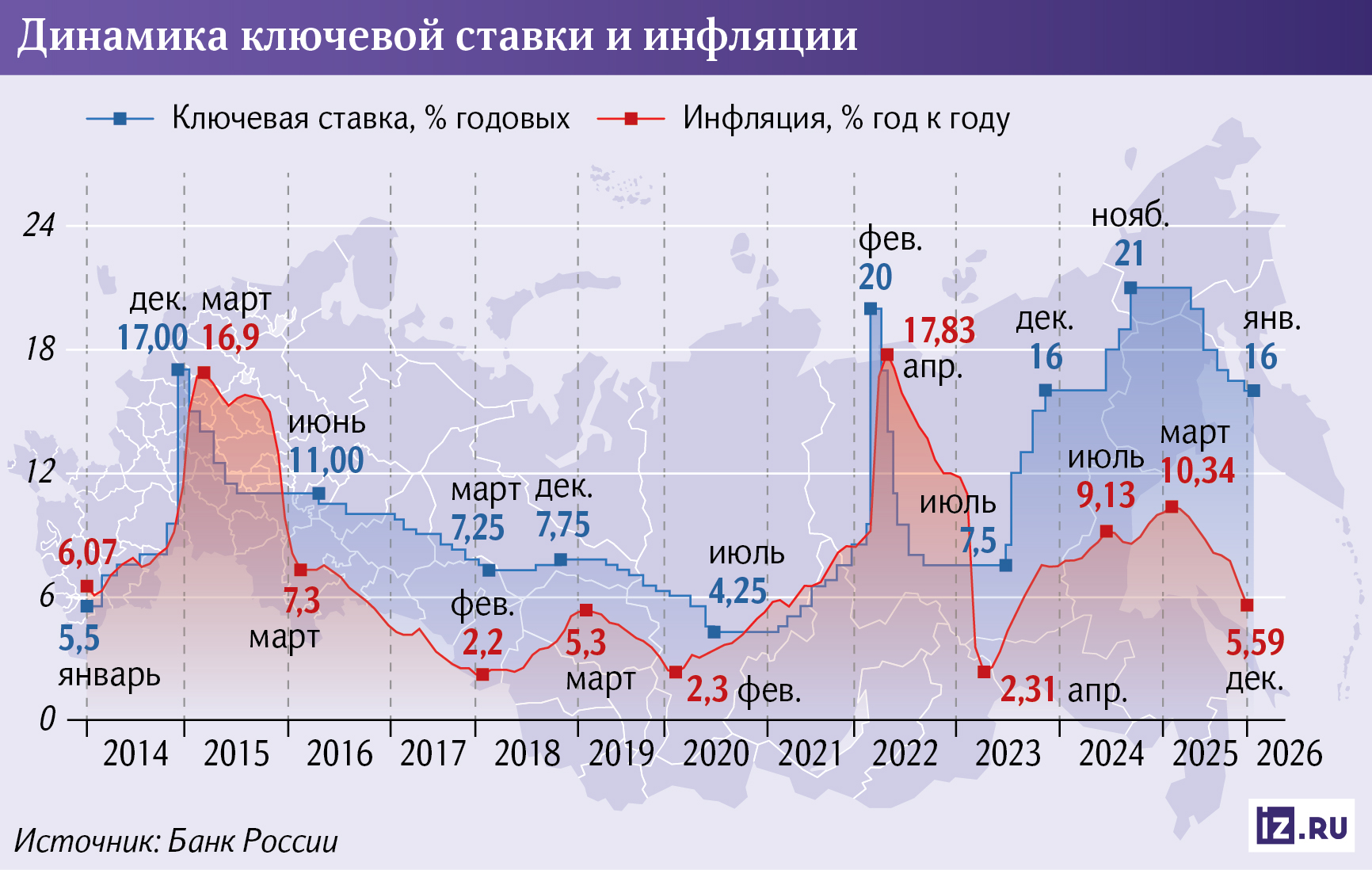
"The main difference here from deposits is automatic protection against depreciation, which does not depend on banks' decisions on interest rates," he explained.
The introduction of an indexed ruble will require significant costs for technical infrastructure and integration with the banking system. The Central Bank will need to create a mechanism for daily indexing, a system of calculations and control. Given that the digital ruble platform is already being developed, part of the infrastructure can be reused, but we are still talking about a large-scale project, concluded Fyodor Sidorov.

— Russians are very conservative and reluctant to change their money habits. I don't expect this tool to become any more widespread than national bonds, bank certificates and voluntary pension insurance did at the time," said Alexander Bakhtin.
An annual (or semi-annual) indexation of interest on ordinary ruble deposits in a bank would be more rational, Natalia Milchakova believes. According to her, it would also be much easier and cheaper for the state to popularize investments in OFZ-IN among the population.
Переведено сервисом «Яндекс Переводчик»
