- Статьи
- Society
- Accurate folk signs on February 6: what can and cannot be done on Xenia of St. Petersburg Day

Accurate folk signs on February 6: what can and cannot be done on Xenia of St. Petersburg Day

On Friday, February 6, Orthodox Christians remember Blessed Xenia of St. Petersburg, one of the most revered saints in Russia, to whom they traditionally turn with prayers for family, health and help in everyday affairs. In the national calendar, this day is associated with weather signs and rules of behavior, which, according to beliefs, help not to scare off luck and live the rest of the winter more calmly. Izvestia tells us what traditions and customs are associated with this celebration.
Who is Xenia of St. Petersburg and why is she called blessed
There is not much documentary information about Xenia's earthly life: researchers and church sources emphasize that the exact dates of her birth and death are unknown. It is known that she lived in St. Petersburg in the XVIII century, was married to a colonel and chorister of the choir (according to a number of sources — Andrei Petrov), and after the sudden death of her husband she experienced a deep turning point and chose the path of foolishness for Christ's sake.
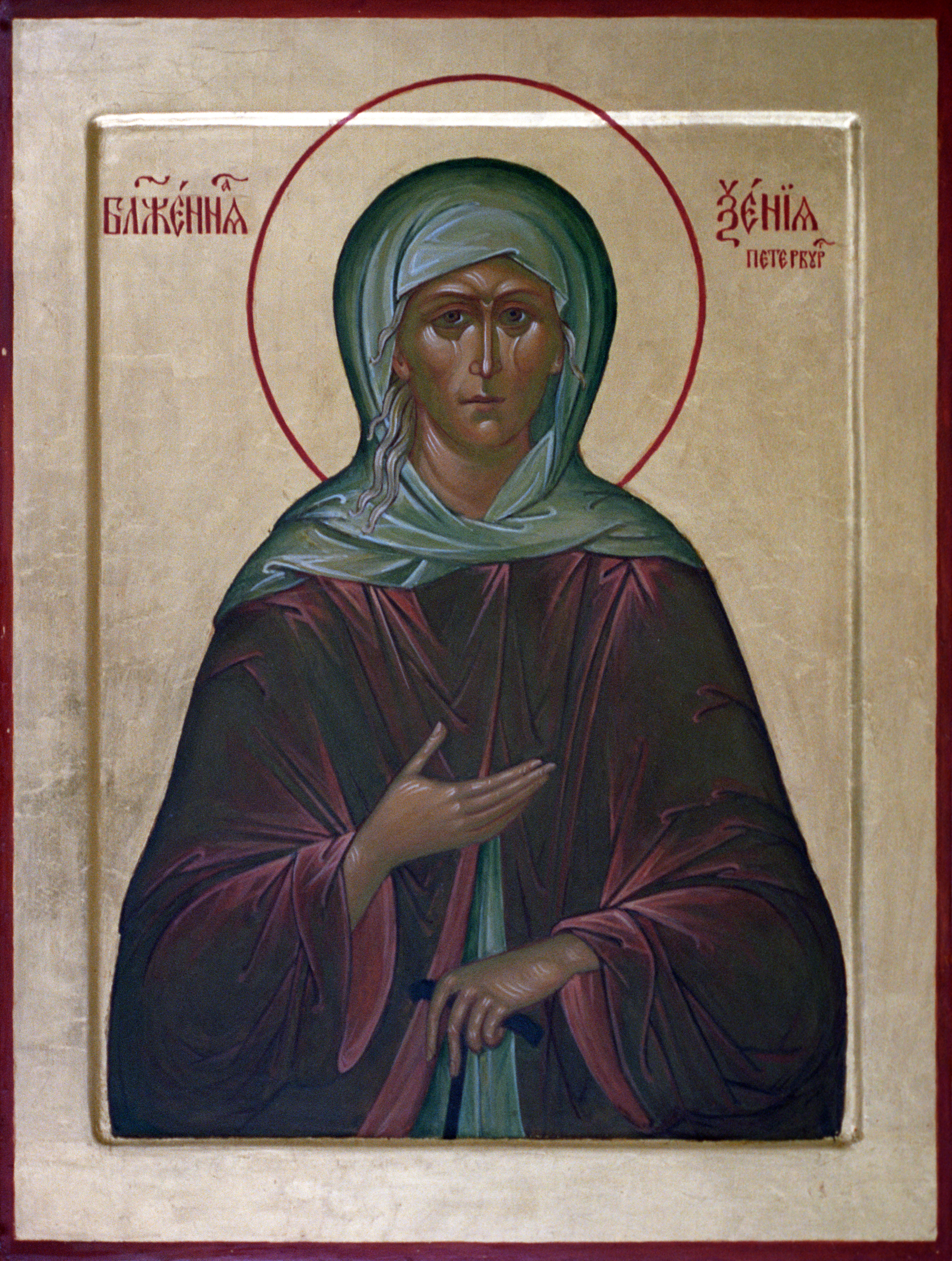
Foolishness in the Orthodox tradition is a voluntary act of self—abasement for the sake of renouncing pride and for the sake of spiritual service to people. Ksenia deliberately abandoned her usual lifestyle, property and social status, and became known in the city for wearing her husband's clothes and calling herself by his name. This act might seem strange or even frightening to contemporaries, but gradually the residents of St. Petersburg began to notice that events were taking place next to this woman, which they perceived as signs of God's help.
The death of her husband became a point of no return for Ksenia. According to church tradition, he died suddenly, without repentance or preparation, and this shocked her so much that she decided to devote her life to prayer and helping people. She distributed her possessions, gave up her comforts, and actually became a wanderer in her own city, spending her days among people and her nights in prayer. The hagiographic tradition emphasizes that Xenia's feat lasted for decades, and over time her behavior began to be understood as a special form of spiritual service.

The Church of the Smolensk Icon of the Mother of God at Smolensky Cemetery in St. Petersburg
Xenia died at the beginning of the 19th century (around 1803-1806). Her grave at the Smolensky cemetery became a place of pilgrimage. The saint was canonized by the Orthodox Church on June 6, 1988 at the Local Council. Today, she is revered as the patroness of family, marriage, and St. Petersburg.

Miracles and helping people: why Xenia of St. Petersburg fell in love with the city
Veneration of Xenia is connected not only with her personal feat, but also with the fact that the residents of St. Petersburg attributed real help to her prayers. The hagiographic tradition speaks of foresight — the ability to anticipate events, warn of danger, as well as cases of healing and "unexpected resolution" of life circumstances among those who showed mercy to her.

Separately, the legend emphasizes her secret help in the construction of the Smolensk Church: eyewitnesses said that at night someone moved bricks and materials, facilitating the work of the builders. Later, this miracle was associated with Xenia.
When is Ksenia Peterburgskaya Memorial Day?
In the Orthodox calendar, the memory of Blessed Xenia of St. Petersburg is celebrated twice: on February 6, the day when believers honor the saint and turn to her with prayers, and on June 6, the day of her glorification (canonization).

Citizens make requests to St. Xenia the Blessed at the walls of the chapel at Smolensky Cemetery in St. Petersburg
On these dates, parishioners visit churches dedicated to Xenia or pray at home. Pilgrimage to the chapel at Smolensky Cemetery in St. Petersburg, where her grave is located, is especially popular. Believers ask the saint for health, healing from diseases, a successful marriage, the birth of children, success in work and protection from adversity. Traditionally, the akathist or troparion of the saint is read. The holiday recalls the values of mercy, humility and selfless help to others, who were inspired by the life of Xenia of St. Petersburg.
Folk meaning and name of the day: why February 6 was called a Half-winter
In parallel with church commemoration, February 6 became fixed in the folk tradition as Aksinya's Day or Half-Winter. This name was associated with the feeling of a turning point in winter: it was believed that by the beginning of February, daylight was changing more noticeably, and weather signs could tell what spring and the rest of winter would be like.

In folk descriptions of the day, the economic meaning of the date was often emphasized: at Half-Winter, they tried to put the house and affairs in order so that the "half of winter" would not drag on in endless heaviness.
Weather signs on February 6
In the folk tradition, the Half-Winter drew attention to the general nature of the day. We looked separately at the behavior of the wind and how the snow falls: we tried to judge from these details whether the spring would be dry or with frequent precipitation.

It was believed that a clear sky and sun promised an early and warm spring, snowfall without wind — late but fruitful, frost on the trees promised a rich harvest of bread, and a strong wind foreshadowed a rainy summer. If the hares came close to the houses, it was perceived as a sign of severe frosts.

These observations were passed down from generation to generation and helped farmers plan their crops and farms.
What can and cannot be done on February 6
In the ecclesiastical sense, it is important to hold the saint's memorial day in such a way that it corresponds to the very idea of her feat. Usually, three directions are emphasized.
The first is prayer and attentiveness to others. If possible, believers go to church or find time for home prayer, ask for family peace, for health, for help in finding the right solution in a difficult situation.

The second is works of mercy. In the hagiographic tradition, Ksenia is perceived as a person who has given his whole life to others. Therefore, it is considered appropriate to help those who are in trouble, support the lonely, charity, as well as simple human actions — to call those who have not been remembered for a long time, to reconcile if the conflict has been dragging on for a long time.
The third is calmly putting things in order. In folk tradition, February 6 was associated with the middle of winter, when it is useful to lay out plans, put the house, finances and documents in order.

Popular prohibitions on Semi-retirement usually boiled down to household morality: not to be greedy, not to provoke quarrels, not to incite conflicts in the family, not to utter harsh words that are difficult to "bring back" later. In some regions, it was believed that stinginess and rudeness on this day respond with long troubles, while kindness and generosity, on the contrary, help to pass the rest of the winter easier.
Переведено сервисом «Яндекс Переводчик»
