I walked around the courtyard: Evgeny Pisarev staged The Tsar's Bride at the Novaya Opera
- Статьи
- Culture
- I walked around the courtyard: Evgeny Pisarev staged The Tsar's Bride at the Novaya Opera


On the day of the 80th anniversary of the birth of conductor Evgeny Kolobov, the founder of the Novaya Opera Theater, the audience was presented with a new reading of Rimsky-Korsakov's The Tsar's Bride. Evgeny Pisarev, the artistic director of the Pushkin Theater, was invited to perform, and his performances certainly become an event. Among his works are "Mazeppa" and "Adriana Lecouvreur" at the Bolshoi, the musical "Cabaret" at the Theater of Nations. Pisarev moved the large-scale Russian opera to a chamber space, where the Kremlin Wall became the main decoration. Izvestia was among the first viewers. About the director's idea — in our material.
Artistic director's dream
The first performance of the Epiphany Festival took place on a special day for the Novaya Opera. On January 19, its founder Evgeny Kolobov would have turned 80 years old. The Tsar's Bride occupied a special place in the maestro's life. His only daughter was born at the moment when he was conducting this opera. He named the heiress after the main character.
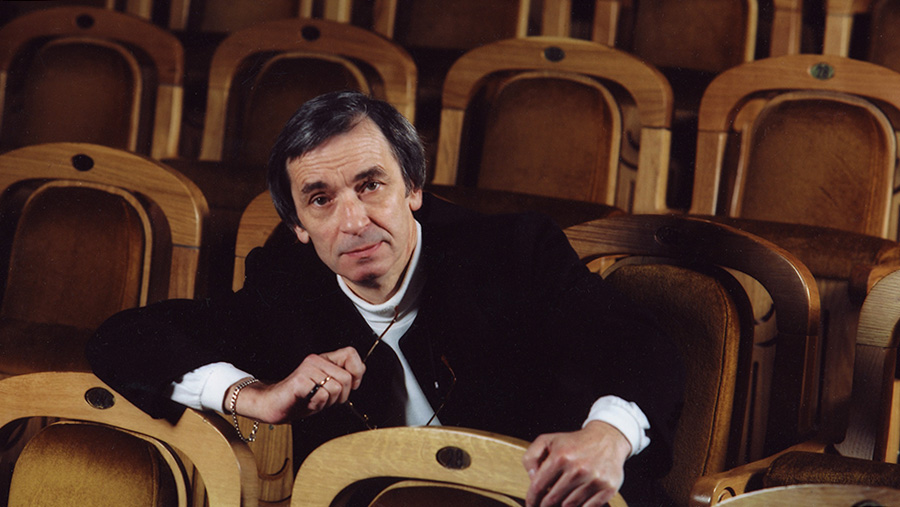
"Evgeny Vladimirovich called the girl Marfa," said Anton Hetman, director of the Novaya Opera. — He dreamed of putting Rimsky-Korsakov's "The Tsar's Bride" on the stage of his theater, but did not have time. We dedicate this performance to the memory of Evgeny Kolobov.
The conductor considered his profession to be the most difficult and tragic. He even said that if he could start living anew, he wouldn't choose her. But he devoted himself entirely to his work, because he was a knight of music. He was also a patriot who loved the country and honestly gave people his talent. The full houses in his theater are proof of this.
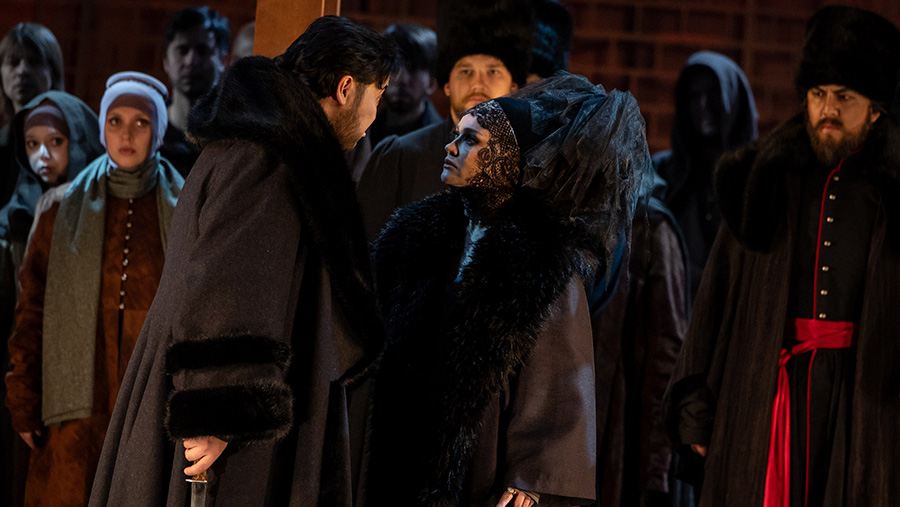
The Tsar's Bride is the ninth opera by Nikolai Rimsky-Korsakov. The libretto is based on a play by Lev Mey. This is a historical drama about the reign of Ivan the Terrible. The plot centers on the tsar's third wife, Marfa Sobakina, who died two weeks after the wedding.

Music lovers went to the premiere at the Novaya Opera with high expectations, not only to enjoy Rimsky-Korsakov's monumental work, but also because the invited director, artistic director of the Pushkin Theater Evgeny Pisarev, is a master of surprise and delight. In addition, the experts wanted to evaluate the visual side of the new version of the play. After all, some have seen the production at the Bolshoi Theater, where the teremas, cathedrals, and royal chambers created by the outstanding artist Fyodor Fedorovsky are considered classics of the "grand style."
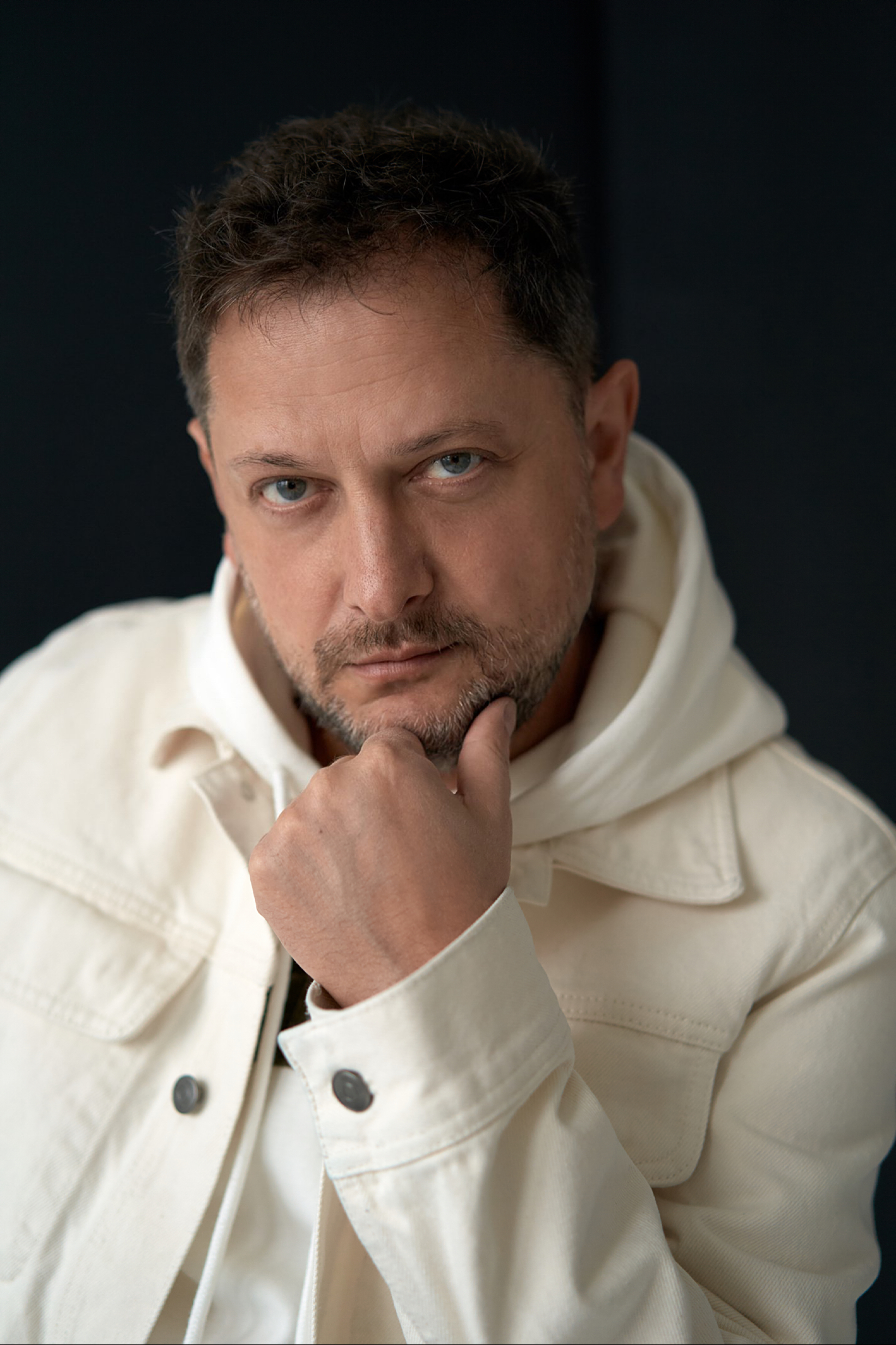
But the stage of the "New Opera" cannot compete in size with the scale of the Bolshoi. The artist Zinovy Margolin did not compete. He did not build palaces with the choir either. The design matches the chamber stage. The main decoration is the Kremlin wall and a platform with stairs leading up. An allegory of the path of the main character Marfa, the daughter of the Novgorod merchant Vasily Sobakin, who became the bride of the Russian tsar Ivan the Terrible. The orchestra was placed under the stage, thus increasing the space for the artists who performed their parts in the foreground.
Dmitry Liss, People's Artist of the Russian Federation, became the musical director and conductor of the premiere production. The artistic director of the Ural Academic Philharmonic Orchestra was specially invited from Yekaterinburg, as this city meant a lot to Evgeny Kolobov himself. There he conducted The Tsar's Bride for the first time. In the 1970s, he staged a play at the Sverdlovsk Opera and Ballet Theater, but the audience never saw it then. Kolobov dreamed of making the "Royal" in the "New Opera", but he did not manage to realize this plan either. The play appeared on the stage of the theater a few years after his death in 2003, and ran until 2023.
Historical detective story
The opera opened with the credits. Several historical facts were brought out on the black backdrop: "The marriage of Ivan the Terrible with Marfa Sobakina is shrouded in a dark mystery," "The wedding took place in the autumn of 1571. But two weeks later, the queen died," "Poisoning was named as the cause of death. There were various legends about possible killers..."
The action is further complicated, like in a detective story. It takes place in Alexandrovskaya Sloboda. According to the story, the oprichnik Grigory Gryaznoy fell deeply in love with Marfa, the daughter of the merchant Sobakin. But her father turned out to be against it — the girl was married to a young boyar Ivan Lykov, who had just returned from distant lands. Gryaznov has a plan to get rid of the groom, and he arranges a feast, where he invites the royal physician Bomelia, Malyuta Skuratov with a detachment of oprichniks, and Ivan Lykov himself. At the same time, Lyubasha, who is in love with Gryaznov, has claims against Marfa — she sees her as a separatist and a rival. Against the background of all this scandal, the tsar is looking for a wife. And it is Sobakina who will have to go to the viewing.
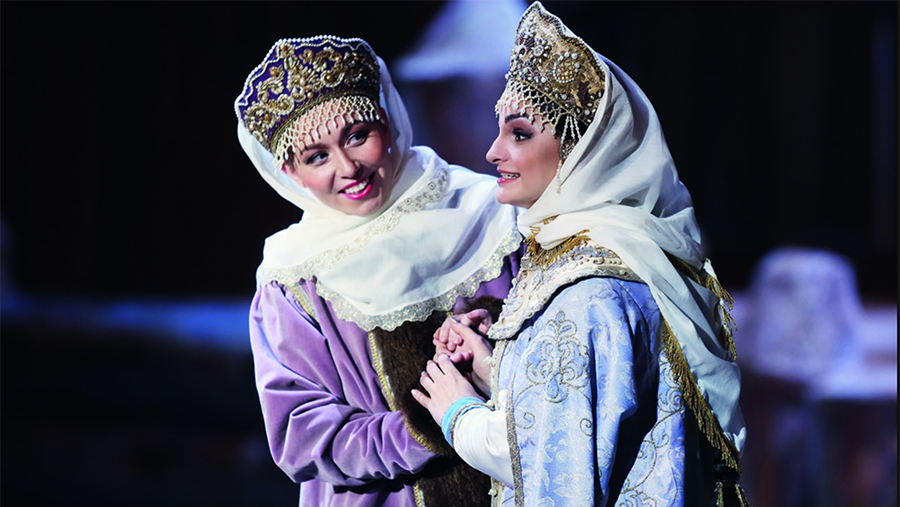
At the Bolshoi, The Tsar's Bride runs for almost four hours with two intermissions. Evgeny Pisarev made a performance with one break for the "New Opera". The director removed the scenes with the guards. The main theme was the love story of the characters.

I am Marfa Vasilyevna!
The director saw Genghis Bairov in the role of the oprichnik Grigory the Dirty. In 2024, the baritone appeared in this role in a performance by the Galina Vishnevskaya Opera Singing Center. And now the talented artist is interning at the Bolshoi Theater with Dmitry Vdovin in the Youth Opera Program. Genghis Bairov in the title male role in "The Tsar's Bride" is an accurate match for the character and a promising application.
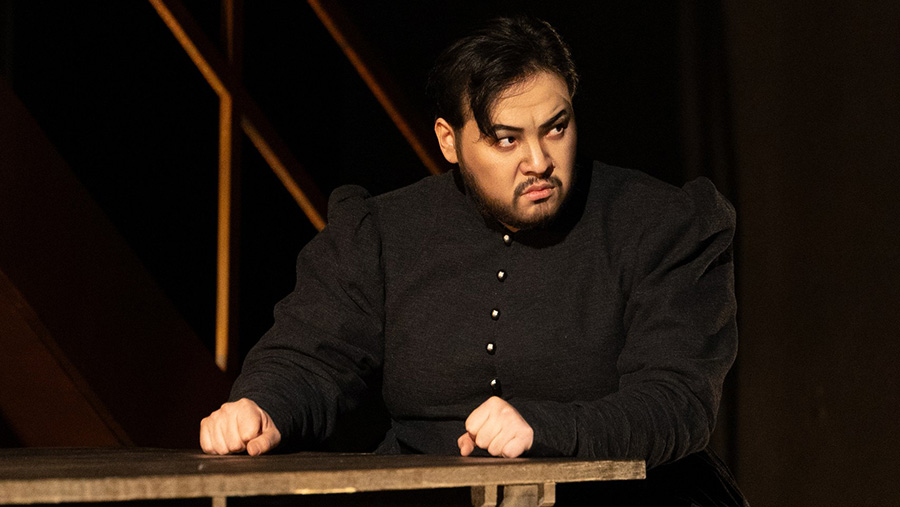
Anastasia Lepeshinskaya is the decoration of the performance. She performed the coveted part of Lyubasha for the mezzo-soprano. The role is full of drama and suffering, and you have to grow up to it. After the very first aria, "Get ready soon," shouts of "Bravo!" rang out from the audience. The long song, performed a cappella, was full of longing and pain. And in this sense, the director showed the dramatic talent of the singers and gave the audience the opportunity to feel all the suffering and tossing of the characters.
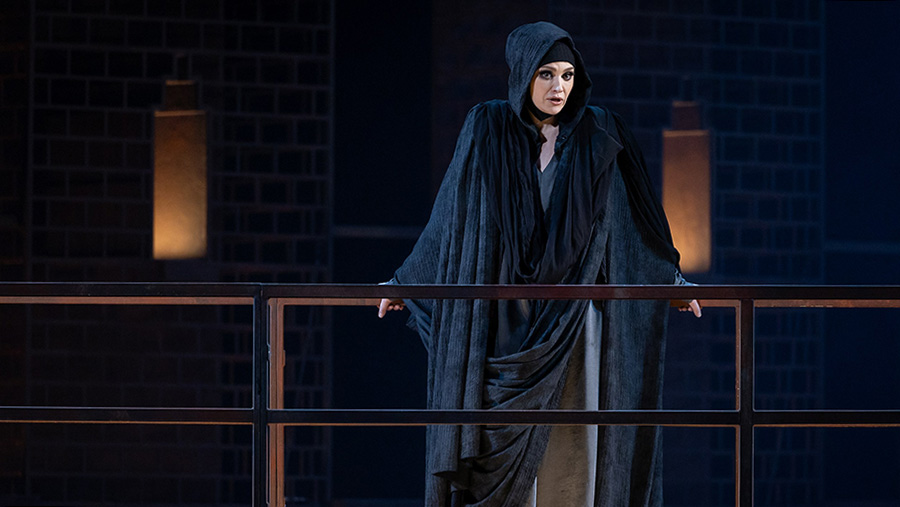
The pinnacle of vocal skill and dramatic intensity is the role of the royal bride. Soprano Maria Buinosova was invited to play the role of Marfa. Her character here does not wear the usual cocoanut. The girl doesn't even have a long braid, which Lyubasha sings about, comparing the advantages of her rival with her own. Costume designer Maria Danilova proposed an ascetic image — the head was covered with a headdress, from under which not a single hair escaped.

Symbolically, Martha was the only one of the heroes dressed in a light outfit. The costumes of the others are made in dark colors. Servants wear sheepskin coats and kubankas, referring to the times of the civil war at the beginning of the 20th century. And the guards wore black caftans with red lining. The only elegant boyar, dressed in a fur coat belted with a red sash, is Malyuta Skuratov, performed by bass Konstantin Fedotov. The image is a reflection of his aspirations and selfish interests. Marfa is a distant relative of the cruel oprichnik, and through her he wants to get closer to the king.
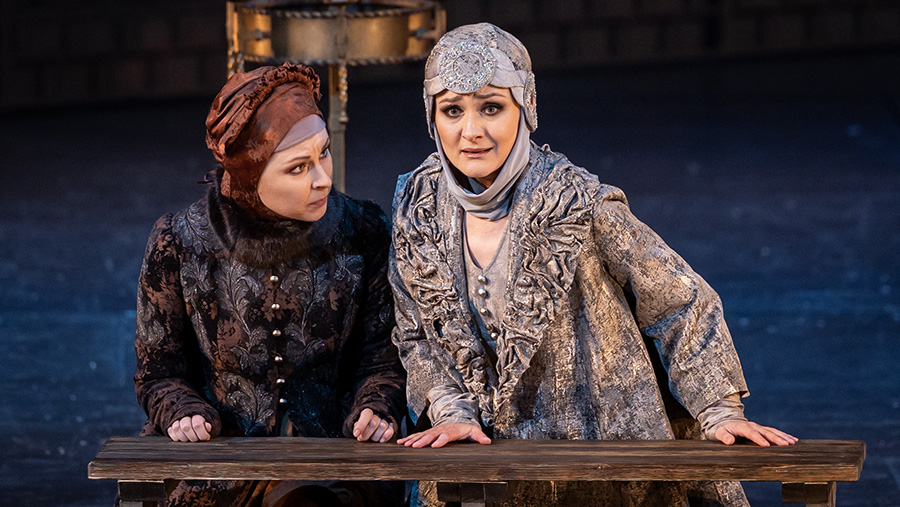
Not every performer can master these parts — Rimsky-Korsakov's music is not easy. You need to feel it, love it, and also have the experience of performing it. Alexey Neklyudov has one. The role of boyar Ivan Lykov is his now, and in the previous production of Novaya Opera.
The role of the girl's father is played by Honored Artist of Russia Vladimir Kudashev. In the finale, he watches the madness of Martha, poisoned by her enemies. The father's sufferings cannot be consoled with exhortations. Even the royal physician Bomelius, the tenor Maxim Ostroukhov, is unable to find an antidote. Late. Marfa is spinning in a death dance, throwing her arms to the sky.
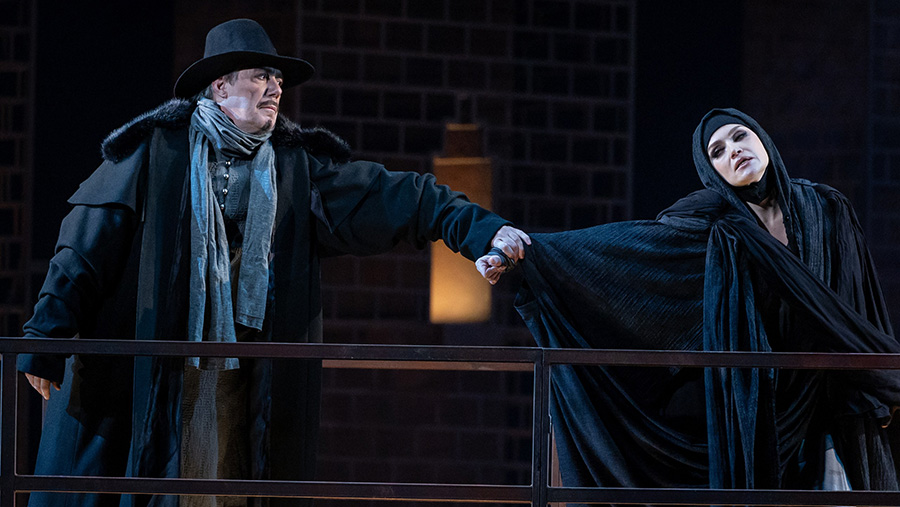
The Tsar's Bride can be seen on January 21 and 22. The Epiphany Festival program will last until February 4.
Переведено сервисом «Яндекс Переводчик»
