
There is a night haze: how Russia consolidated its position in the Caucasus

On January 30, 1801, Emperor Paul I, after much hesitation, signed a manifesto on Georgia's accession to the Russian Empire. This historic decision has changed the political situation on Russia's southern borders and in the Caucasus. Details can be found in the Izvestia article.
The Way of King Heraclius
The word "Georgia" is of Iranian origin. This is what the neighbors called this ancient people, the Georgians themselves call themselves otherwise — Kartveli, and they call their country Sakartvelo. After the invasion of the Mongols and the campaigns of Tamerlane, who ravaged the once flourishing Georgia, the kingdom languished from bloody civil strife. Sakartvelo was divided into several small states with different statuses. It was not easy for them to defend themselves from the invaders, who, as a rule, professed Islam. Imeretia, Megrelia, Guria, Svaneti, and Abkhazia were considered vassals of the Ottoman Empire, while Kartli and Kakheti fell under Persian oppression.

The inscription of Patrikia "Kartli" on the wall of the monastery of Jvari
The Georgians were looking for ways to restore a unified state. In 1586, Tsar Fyodor Ioannovich and the all-powerful boyar Boris Godunov received the Kakhetian ambassadors, who asked the Russian autocrat to take Iveria under his protection. For some time, the Russian tsars bore the title of "sovereigns of the Iberian land." But at the beginning of the 17th century, Russia was overwhelmed by internal turmoil and intervention. The treasury is empty. Moscow could not help the state, which was separated from Russia by the Caucasian Ridge. But Russia welcomed Georgian churchmen and nobles. A Georgian printing house operated in Moscow, and books and educational literature were published in the Rustaveli language. At that time, it was Belokamennaya that became the largest center of Georgian culture.
In the 18th century, two Georgian kingdoms, Kartli and Kakheti, united. Under the rule of the energetic ruler Irakli II, Georgia relied on rapprochement with Russia.
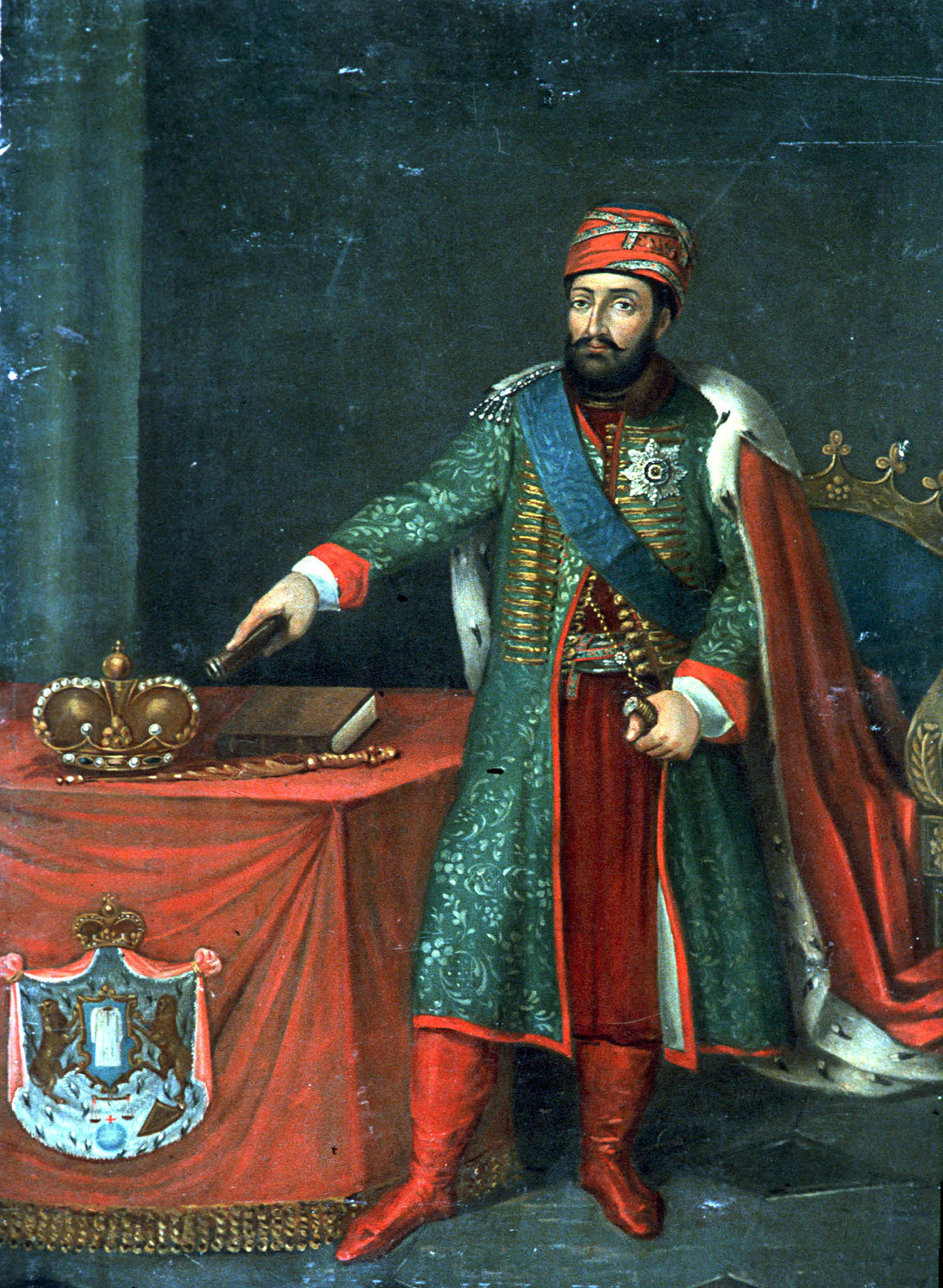
In a personal letter, he proposed to Empress Catherine the Great "to honor us now with such patronage, so that everyone could see that I am an exact subject of the Russian state and my kingdom is attached to the Russian Empire." After long negotiations, the Treaty of St. George was concluded in August 1783, according to which Russia, in exchange for Heraclius' partial renunciation of an independent foreign policy, guaranteed protection to the Georgian tsar in the event of a military attack. Two infantry battalions with artillery were deployed in Kartli-Kakheti.

"Under the protection of the Supreme Throne"
Heraclius' successor, George XII, was an even more consistent advocate of cooperation with Russia. He had to wage protracted defensive wars against the Persians and their allies. George understood that a new wave of civil strife between the Georgian princes would lead to the success of the Persian expansion. George XII appealed to Emperor Paul I with a request to accept his kingdom into the empire — "on an equal basis with other regions of Russia."
His brother Alexander held the opposite view. In his struggle for power, he relied on the support of the Iranian Shah Feth-Ali Qajar. In Georgia, his anti-Russian position was not popular: Alexander was considered a traitor to the faith and the Fatherland.
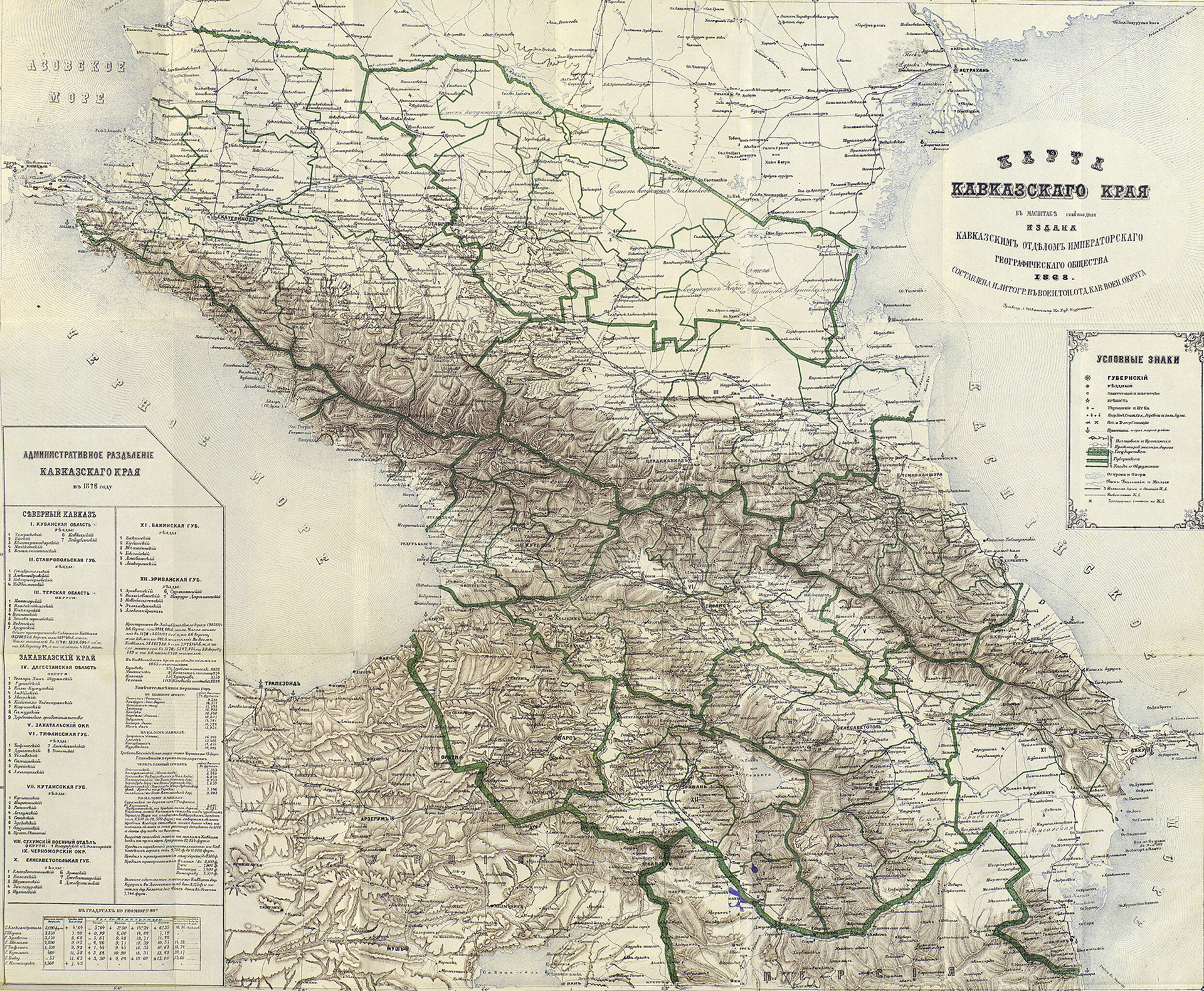
In September 1799, Tsar George XII wrote in a letter to Garsevan Chavchavadze, the Ambassador to Russia: "Grant them my entire kingdom and my possessions as a sincere and righteous sacrifice and offer it not only under the protection of the highest Russian imperial throne, but also completely leave it to their authority and care, so that from now on the kingdom of Kartlosians is considered to belong to the Russian empire with the rights enjoyed by other regions located in Russia... Not to end the royal rank in my house, but to allow me to reign inherently, as it was in the time of my ancestors."
Of course, the Russian emperor found out about it. Pavel was not in favor of expanding Russia's borders: He believed that expansion should be suspended, focusing on internal problems. He doubted whether it was worth getting so close to Georgia, whether it made sense to take responsibility for the fate of this Orthodox people.. The political situation was not conducive to isolationist sentiments. Revolutionary wars were breaking out in Europe, and Russia could not remain indifferent to them. Our troops have already fought against the French from Holland to Zurich, from Venice to Malta. At the end of 1799, Pavel abruptly changed his foreign policy course, concluding an alliance with Napoleonic France. The Indian expedition of the Russian army began.
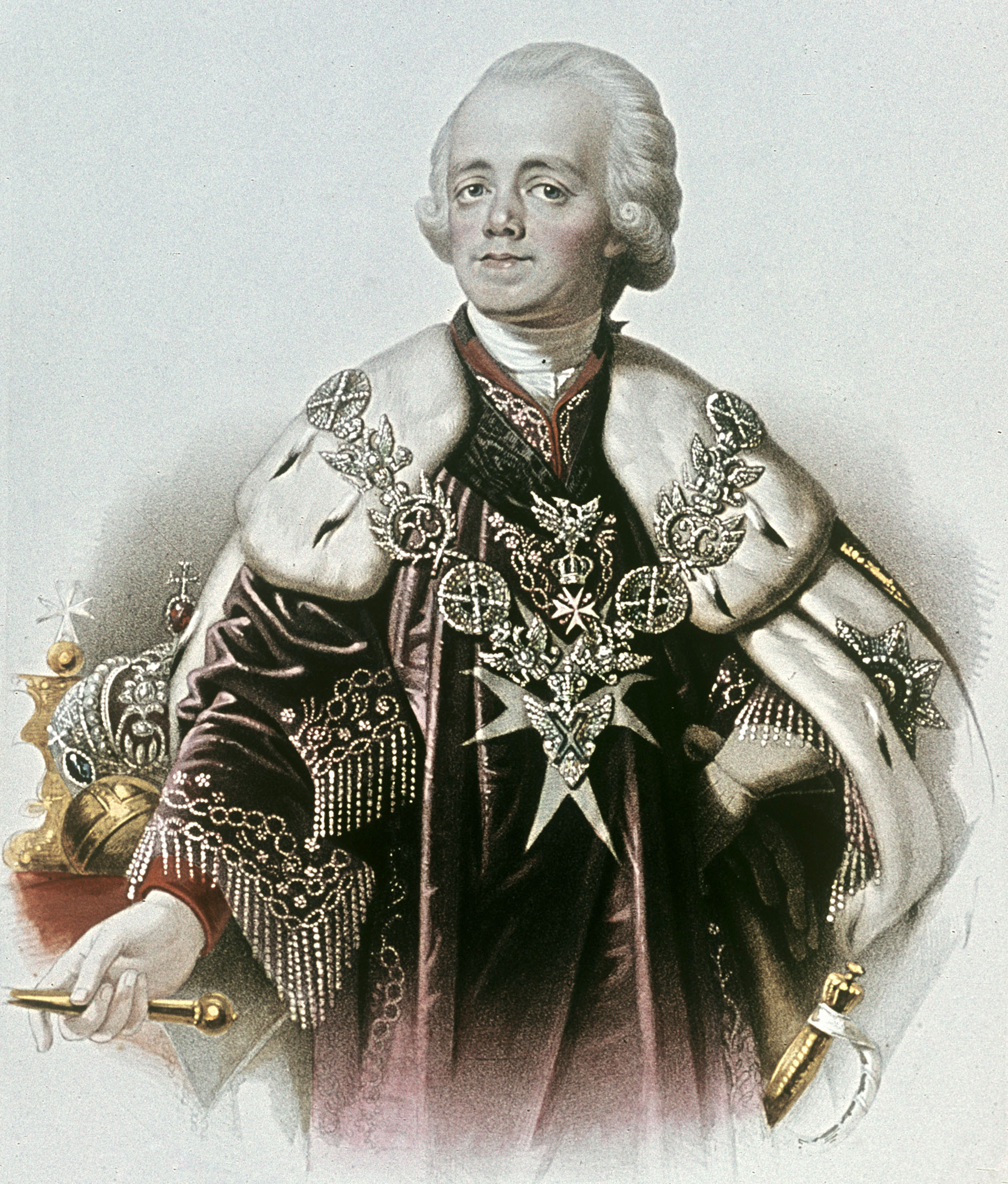
The Emperor took a closer look at the alignment of political forces in the East. Georgia could become Russia's most reliable outpost in this area... In November 1800, Pavel issued a rescript on the admission of Kartli-Kakheti to Russian citizenship. The Imperial Manifesto was promulgated on January 30, 1801. This date is considered the milestone of Georgia's accession to Russia. At that time, according to various estimates, 700-830 thousand people lived in the kingdom of George XII. This is several times less than the population of the Georgian Kingdom in the 12th century, when it occupied a much larger territory. Even by the standards of Russia at that time, whose population exceeded 30 million, this is not much. But Iberia was famous for its ancient monasteries and was the most important outpost of Christian civilization on the mountainous border of Europe and Asia.
Historical choice
Both in Tbilisi and in St. Petersburg, many understood: Our peoples have a common destiny, and we understand each other well. Only a small part of the Georgian elite focused on relations with Persia and Turkey. It is significant that upon joining the Russian Empire, the Georgian nobility was equalized with the Russian nobility.
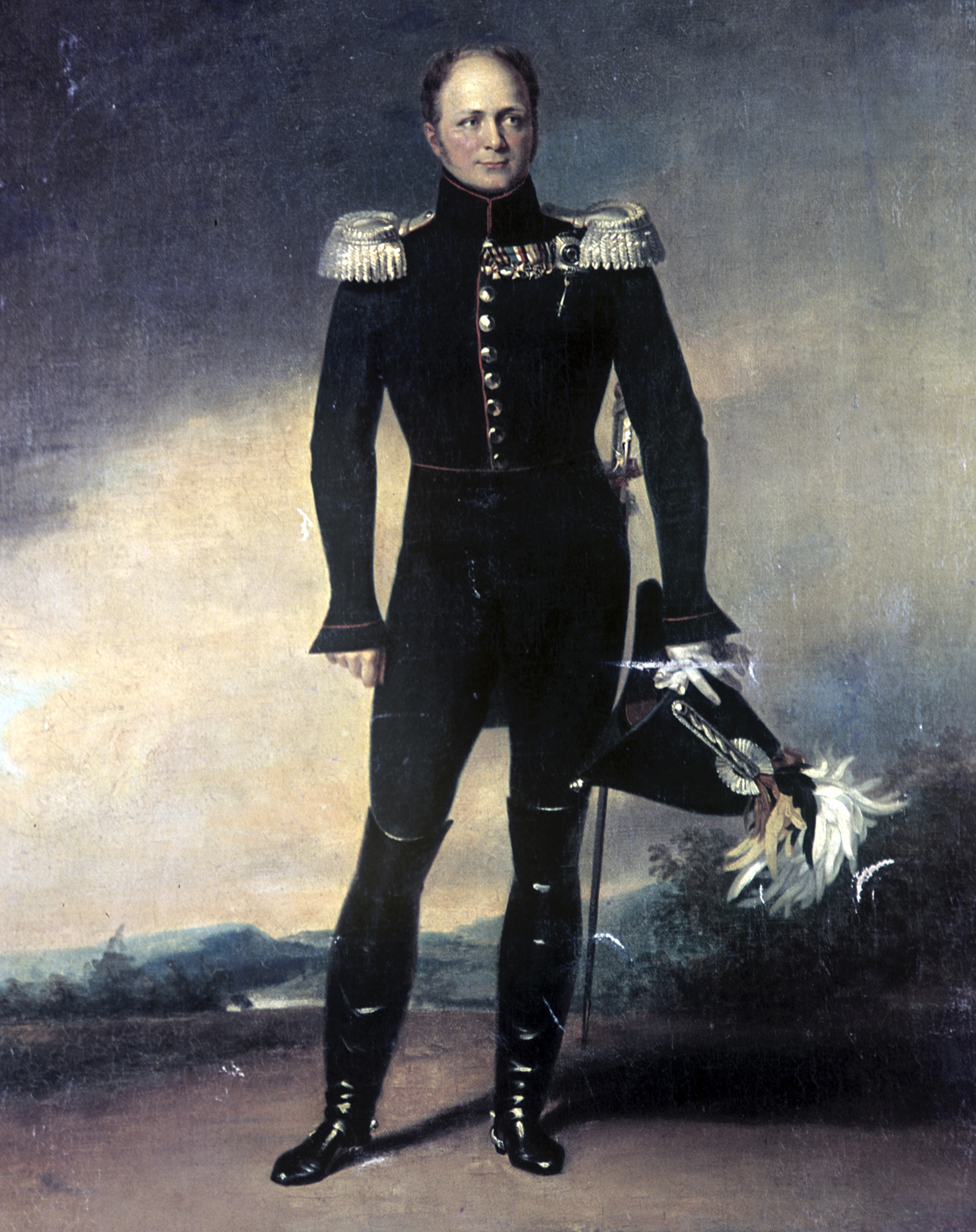
But when Paul I's successor, Alexander I, ascended the throne, he doubted the expediency of Georgia's final annexation. He understood that developing and defending a distant land, closed off from Russia by the Caucasian Ridge, was not an easy task, requiring considerable expenses. General Karl Knorring was sent to Georgia, who, after studying the situation in the Caucasus, presented a report to the young emperor, in which he reasonably advocated the annexation of Georgia. The general warned that if troops were not deployed there, there would be another offensive by the Ottomans and Persians against Russia's southern borders, the Kuban. And to help Orthodox like-minded people who have an ancient culture and, given the Black Sea ports, a strategically advantageous geographical location. Knorring's report was approved at a meeting of the State Council. In September 1801, Alexander I addressed the Georgian people with an appeal confirming the manifesto of Paul I.

Zion Cathedral in Tbilisi
In April 1802, the Georgian nobility took the oath of office to the Russian Emperor in the Tiflis Zion Cathedral. Soon, General Pavel Tsitsianov, a descendant of the Georgian princes Tsitsishvili, replaced Knorring as the Georgian commander-in-chief. Among other things, he began the reconstruction of the only road through the Daryal ridge, which was built back in the time of Catherine II. It was the only land transport artery connecting Russia with Georgia. During Tsitsianov's time, the highway received a historical name — the Georgian Military Road. But it was used not only for military, but also for trade.
In February 1806, Tsitsianov was killed directly during negotiations with Khan Hussein-Kuli of Baku. There were still many disturbances and troubles, both in Georgia and around it. But the situation calmed down from year to year, and ancient Iberia turned into a flourishing country.

A mutually beneficial alliance
Is it possible to talk about anti-Russian sentiments in Georgia? Public life is always full of contradictions, especially when it comes to coexistence within the empire. There was also a longing for the royal dynasty, which lost its powers, and for church autocephaly. In Georgia, as in other regions of Russia, there were peasant riots and a noble front.
But nobles and merchants took advantage of the opportunities of the big country, made careers and explored new trade routes. Tiflis has become one of the most picturesque and prosperous cities in Russia, and has become a real pearl of the Caucasus. The danger of attacks by Persia and Turkey has disappeared, and the raids of the dashing highlanders have stopped.

Painting by the artist Franz Roubaud "Major General Lazarev introduces the Chasseur regiment to Tiflis on November 26, 1799"
The results of this decision are also ambiguous for Russia. Georgia's annexation led to a long-running conflict in the North Caucasus. But the empire's positions on the Black Sea and on the Transcaucasian borders with Persia and Turkey were consolidated. By that time, in the main battles with the Ottomans, the Russian army had already defeated the enemy and proved its military superiority to its southern neighbor.
In the first decade of Georgia's existence as part of Russia, the empire conducted several campaigns against the Persians and Ottomans, first suppressing their attempts to advance into the territory of Iberia, and then liberating Kartli, Imereti, Armenian and Azerbaijani lands from Persian and Ottoman rule, which joined the Georgian province, which united the entire Transcaucasia, predominantly Christian. However, the Megrelian and Gurian principalities, which were small in territory and population, initially had the status of a protectorate within Russia. Georgians served valiantly in the ranks of the Russian army.
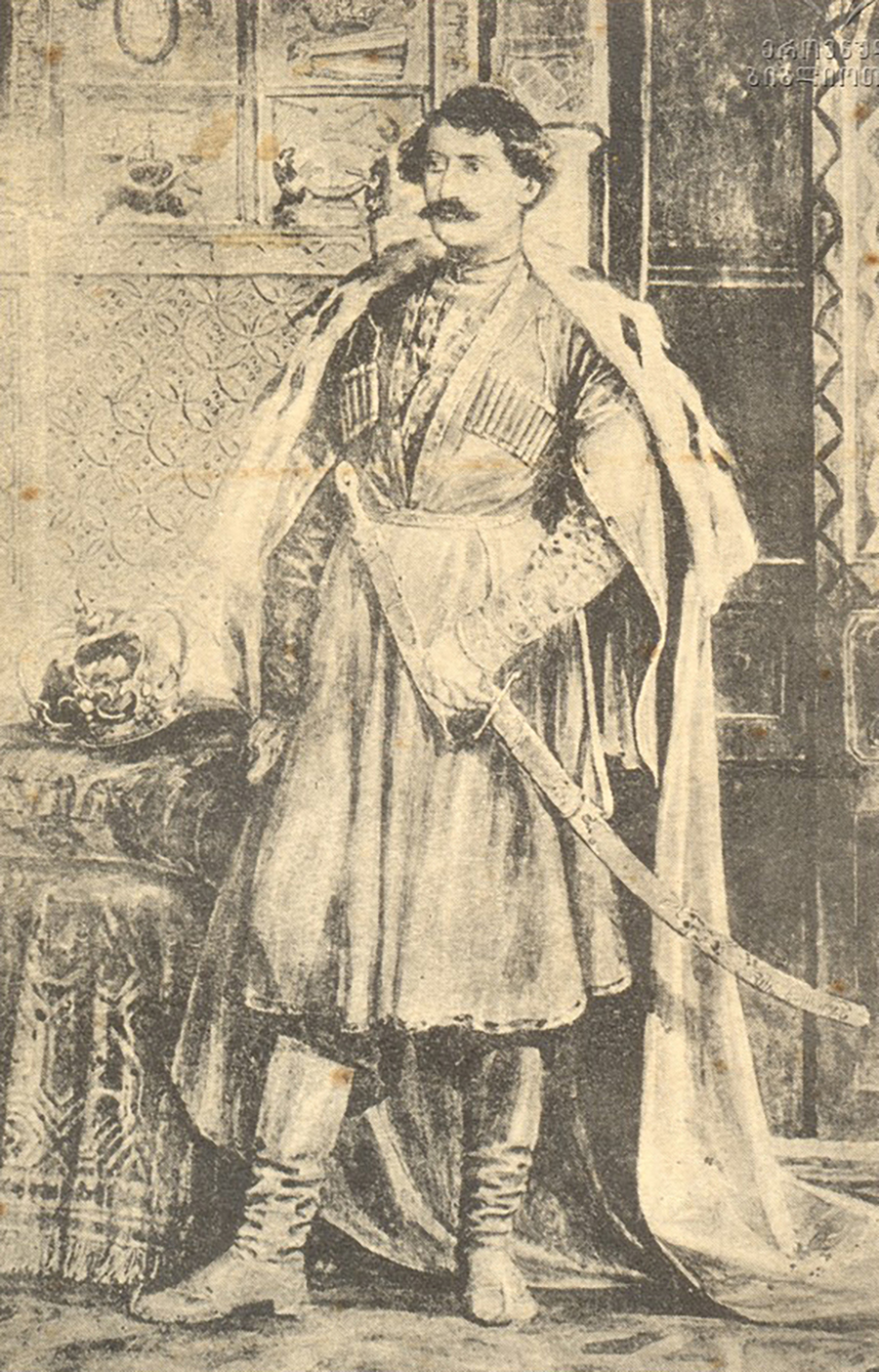
Soon other fragments of the ancient Georgian state became part of Russia. In 1804, King Solomon II of Imereti signed the Treaty of Elaznaur with St. Petersburg, according to which his small state became part of the Russian Empire. A few years later, the Abkhazians expressed a desire to join Russia. Civil strife and unrest continued in this region, but the alliance proved to be mutually beneficial for the peoples of Transcaucasia and Russia.
The author is the deputy editor—in-chief of the magazine "Historian"
Переведено сервисом «Яндекс Переводчик»
