Go to waste: AI will help clean the Arctic seas of debris


Russian scientists have developed a system for automatic detection of debris on the surface of the northern seas. The problem in the Arctic is acute, as currents bring waste from the most remote parts of the world's oceans to this area. To solve it, artificial intelligence was involved, which will analyze images from cameras installed on board ships. During the tests, the Russian development surpassed the accuracy of the best foreign analogues several times. According to experts, finding pollution sites is important for cleaning up, however, in order to turn the situation around, it is important to prevent waste from entering the ecosystem.
AI for scavenging
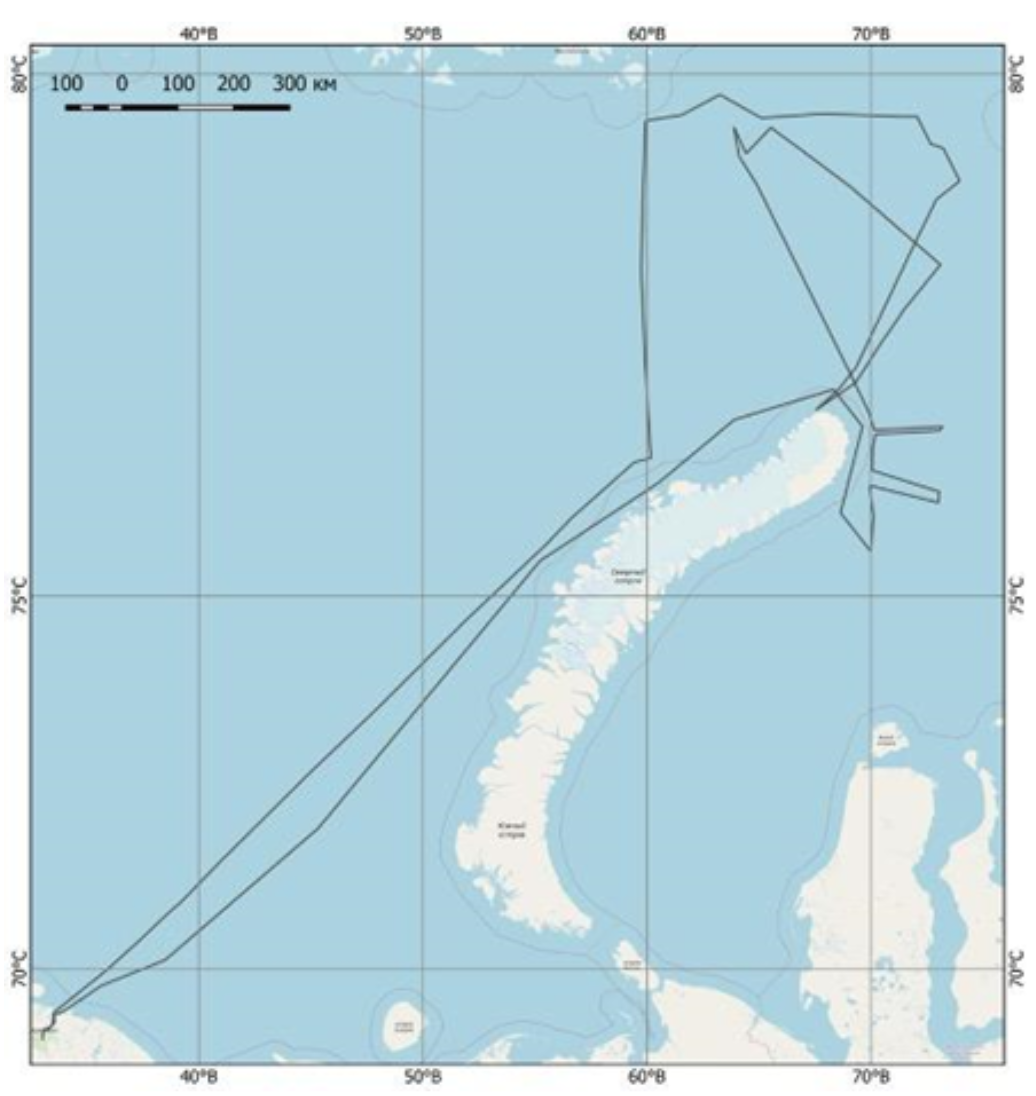
Specialists from the Moscow Institute of Physics and Technology (MIPT) and the Institute of Oceanology of the Russian Academy of Sciences have created a system based on artificial intelligence that can automatically detect floating debris and other objects on the sea surface in Arctic conditions from a ship. The development analyzes data from cameras installed on ships. Tests have shown that it is several times more accurate than the best world analogues. The invention is based on image classification methods with contrast learning and direct object detection. They were tested on a unique dataset collected during a scientific expedition in the fall of 2023.
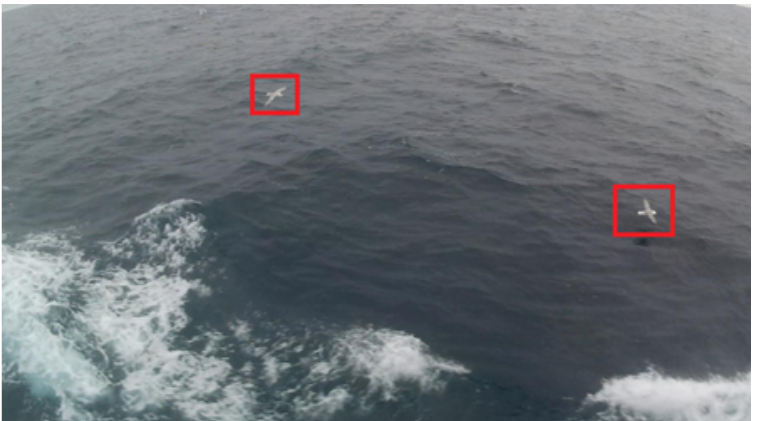
— We have processed more than 500 thousand photographs of the sea surface taken in the Barents and Kara Seas. The shooting conditions were particularly difficult: the rolling of the ship, the presence of sea foam and glare from the sun, which greatly complicate the detection of small objects on the surface of the water and shallow depths. The created system is able to identify four types of objects: marine debris, birds, glare on the water and drops on the camera lens. The development is especially relevant for the Arctic region, where pollution from insoluble anthropogenic debris (industrial, household and plastic waste) poses a growing threat to the ecosystem," said Mikhail Krinitsky, head of the Machine Learning Laboratory in Geosciences at MIPT.
Pollution from plastic and other types of garbage has become one of the main threats to the ecosystems of the entire world Ocean. Although there are few sources of garbage in the Arctic itself, sea currents bring industrial and household garbage here, primarily plastic, from Europe, Asia and America. And at low Arctic temperatures, biological and plastic waste practically does not decompose, Vladimir Pinaev, associate professor at the Department of Environmental Safety and Product Quality Management at the Patrice Lumumba Institute of Ecology at the RUDN University, explained to Izvestia.
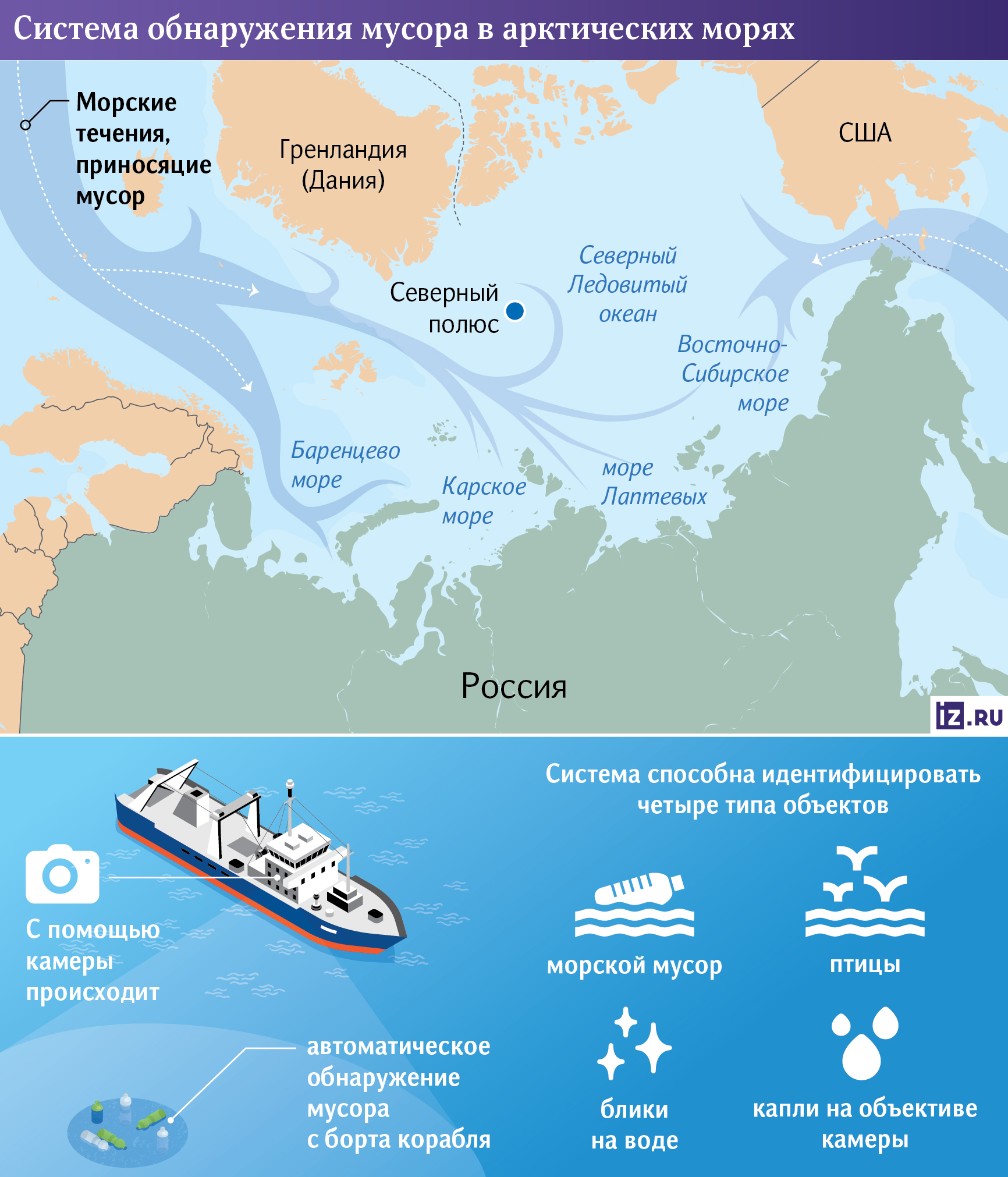 — Low temperatures contribute to the rapid decomposition of plastic into microplastics, which accumulate, penetrate into living organisms and release toxins, causing reproductive dysfunction and death of animals. The Arctic ecosystem is quite fragile in relation to the effects of pollutants, we can say that it has no immunity to anthropogenic influences. In addition, microplastics, accumulating in the ice column, changes its albedo (the ability to reflect light), which accelerates its melting, enhances the effect of global warming and climate change in general. So the garbage in the Arctic is both an indicator of the waste problem in the world and an environmental time bomb," the ecologist emphasized.

Pollution map
During the experiments, the Russian garbage detection system showed a measurement accuracy class of 0.4. For comparison, the popular YOLO algorithm created in the USA has a lower accuracy class of about 0.1.
— The low efficiency of YOLO may be due to the fact that marine debris often consists of small objects that are poorly visible against the background of waves. Garbage is still quite rare. In addition, having a small number of examples to detect is becoming a classic problem for machine learning models. Our approach of pre—selecting image fragments made it possible to better cope with this task," said Olga Belousova, a junior researcher at the MIPT Laboratory of Machine Learning in Geosciences.
To assess the properties of the system, it is important to check its operability "in the field", taking into account the difficult Arctic conditions, said Tatiana Ledashcheva, associate professor at the Department of Environmental Safety and Product Quality Management at the Patrice Lumumba Institute of Ecology of the RUDN University.
— Detecting waste and stating the fact of its existence in the water area does not automatically eliminate this waste. Collection and disposal are necessary, for which we need our own equipment and technologies. The discovered waste must be removed before it sinks or freezes into the ice and harms animals," she said.
Garbage collection in the Arctic is necessary, but it is a "treatment for symptoms." The cause of the disease is poor waste management "locally", which leads to the ingress of garbage into the seas. It is important to minimize the amount of waste, improve its separation and disposal systems, and eliminate non-recyclable packaging, the ecologist emphasized.
The development of Russian scientists is valuable, since in the northern seas it is important to distinguish garbage from ice, as well as waste frozen in ice. However, the technology needs to be applied on a large number of ships in order to have a comprehensive picture of pollution. Obtaining information about the location of garbage sources and forming a waste map based on it can help in combating their spread. But so far this work is carried out only on land, and no one systematically cleans the sea surface, said Igor Shkradyuk, coordinator of the industrial greening program at the Wildlife Conservation Center.
Переведено сервисом «Яндекс Переводчик»
