At the highest charge: the "eternal" battery will extend the life of pacemakers
- Статьи
- Science and technology
- At the highest charge: the "eternal" battery will extend the life of pacemakers


Russian scientists have developed a technology that will allow the world's most powerful disposable lithium-fluorocarbon batteries to store a quarter more energy. Such batteries can generate an electric charge for decades, so they are used to power pacemakers and spacecraft. According to experts, the technology can significantly improve the properties of modern batteries. However, the prospects for implementing the technology will depend on its cost and other economic characteristics.
The most powerful battery
The development of specialists from the Moscow Institute of Physics and Technology (MIPT) makes it possible to increase the energy intensity of the world's most powerful lithium-fluorocarbon batteries. These batteries are capable of maintaining a charge for decades, so they are most often used in various autonomous devices: cardio and neurostimulators, spacecraft and satellites operating in remote areas, sensors and UAVs. In the future, the proposed method will make it possible to store a quarter more energy in one battery than it does now.
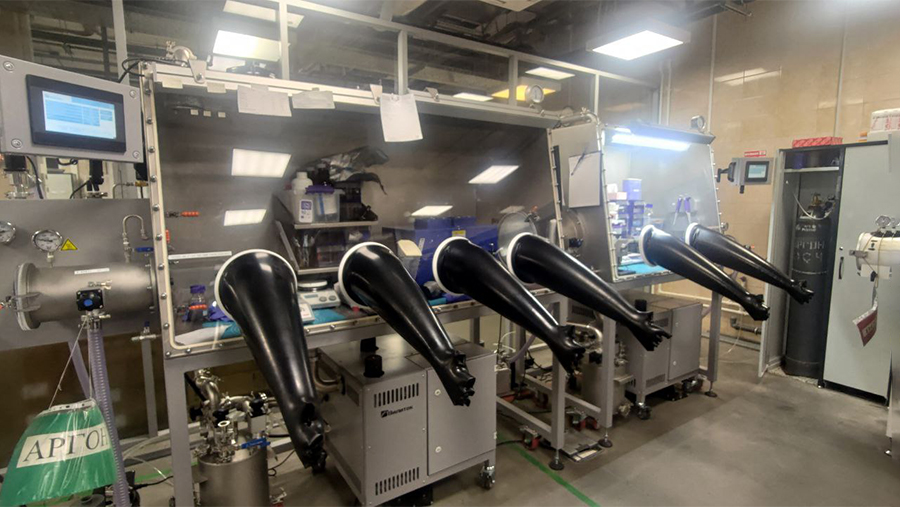
Lithium-fluorocarbon cells are superior in their properties to all other types of disposable non-rechargeable chemical power sources, the developers said. One such battery carries several times more energy than the best disposable batteries of other types, such as lithium-thionyl chloride, and surpasses even reusable lithium-ion batteries in terms of specific energy consumption. Due to the low degradation of materials, they are very stable: if you leave such a battery untouched for 10 years, it will retain almost the entire charge. In addition, it is guaranteed to work in heat, cold, and vacuum and does not require replacement for a long time.

However, such batteries also have disadvantages. During their operation, a dense layer of by-products forms on the cathode. It prevents lithium ions from moving freely, and the battery drains faster. To offset this effect, scientists have come up with a special electrolyte composition containing a sulfoxide additive. Its molecules react on the surface of the cathode, resulting in a thin layer of a substance that protects the material from degradation, through which lithium ions move.
— Imagine that lithium ions are machines, and the surface of the cathode is a refueling station. Over time, a chaotic traffic jam of debris (reaction byproducts) grows at the entrance to it, and cars waste time and effort to drive through. Our supplement acts as a traffic controller that organizes this area. It helps to form a smooth, guiding road directly to the gas station. As a result, the battery efficiency increases," explained Sofya Morozova, a leading researcher and head of the Laboratory of Ion Exchange Membrane Technologies at MIPT.
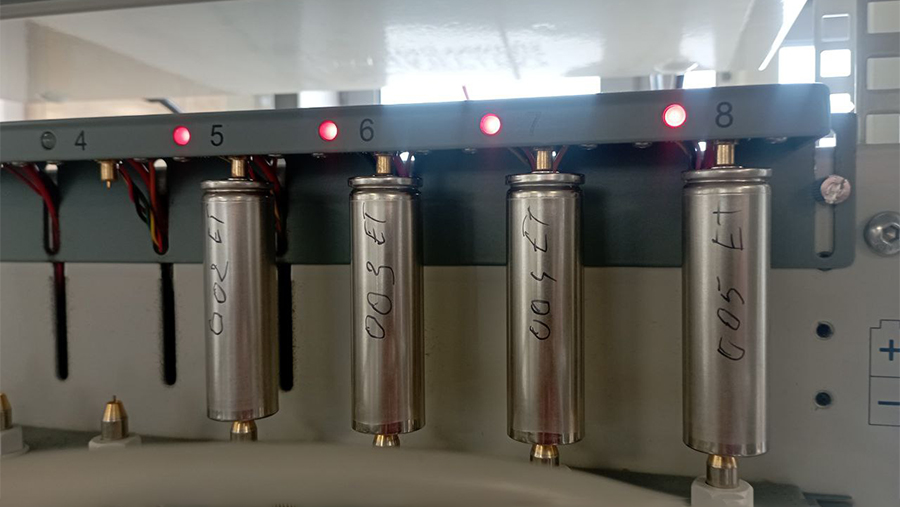
The first experiments showed that a battery with a modified electrolyte has a specific capacity of more than 3.4% higher than the standard one. Scientists have set a goal to increase it by 25%.
"These additional percentages of energy show that we have learned how to finely control the process at the electrode—electrolyte interface and are approaching the theoretical limit of the battery in small but steady steps,— added Sofya Morozova.
How will it be applied
In the laboratory, the effectiveness of the new technology has already been proven on prototypes. The next step is to optimize the compositions for different operating temperature conditions (from -60 °C to +60 °C), increase efficiency and implement the technology in real devices using the example of UAVs.

— Fluorocarbon current sources, which have a very high theoretical specific energy intensity, are important for industries where the requirements for autonomy, reliability and operation in extreme conditions are crucial. The use of such power sources is promising for various medical implants (for example, pacemakers) with a long service life, as well as for military equipment and emergency systems where self—discharge and dependence on temperature fluctuations are unacceptable," said the head of the Competence Center for New and Mobile Energy Sources Technologies at the Federal Research Center for Chemical Physics and Medical Chemistry of the Russian Academy of Sciences (PHC PHF and MH RAS) Alexey Levchenko.
So far, the proposed technology is far from practical application and is at the laboratory stage, said Mikhail Pugach, head of the development of industrial energy storage systems at Skoltech. Lithium-fluorocarbon batteries do have a large capacity. However, even batteries modified using the new method will be subject to all the restrictions typical for lithium sources. First of all, this is low temperature stability, as they can become very hot during operation.
According to the head of the Sales department at GetPwr, an Aeronet market expert Meruzhan Petrosyan's NTI, a key aspect of the technology is a real increase in battery efficiency. If the effectiveness of the technology is confirmed experimentally and it can be stably reproduced, this will certainly be a step forward.
— There is currently not enough data on the results of tests on real devices. I would like to understand how technology affects cycling, degradation over time, and battery behavior during long-term operation, and not just on individual laboratory measurements. Final conclusions are possible only after practical tests, and not at the level of statements," the expert said.
The prospect of technology implementation will be directly influenced by its economic characteristics. If it can be scaled without a sharp rise in price, it can really occupy its niche due to reliability and durability, the specialist added.
The development was created within the framework of the federal project "Advanced technologies for unmanned aircraft systems".
Переведено сервисом «Яндекс Переводчик»
