Lightning strike: how UAVs hit targets in Dnipropetrovsk region


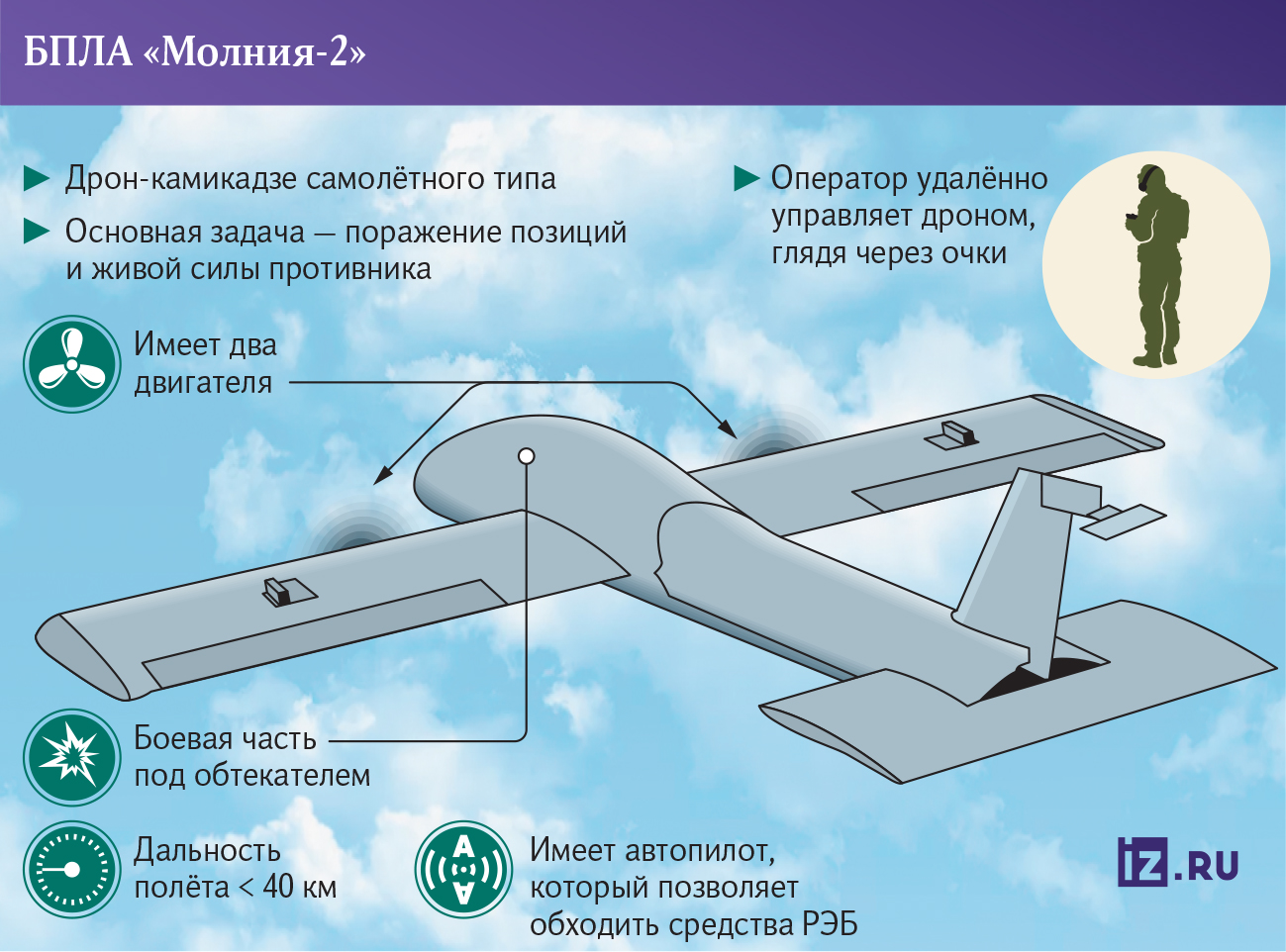
The Molniya-2 aircraft-type UAVs are becoming one of the most important means of destruction on the line of combat contact in the SVO zone. They provided the Russian troops with an advantage in the air in the recent battles for Krasnoarmeysk. Their peculiarity is that they can work even in bad weather, with low clouds, fog, when enemy vehicles practically do not fly. An analogue of the "Lightning" could not be created either in Ukraine or in other countries, although there were many such attempts. Izvestia saw how the fighters of a separate reconnaissance battalion of the Center group of forces were preparing their UAVs for work and attacking enemy positions in the Dnipropetrovsk region.
How to prepare for combat use of "Lightning-2"
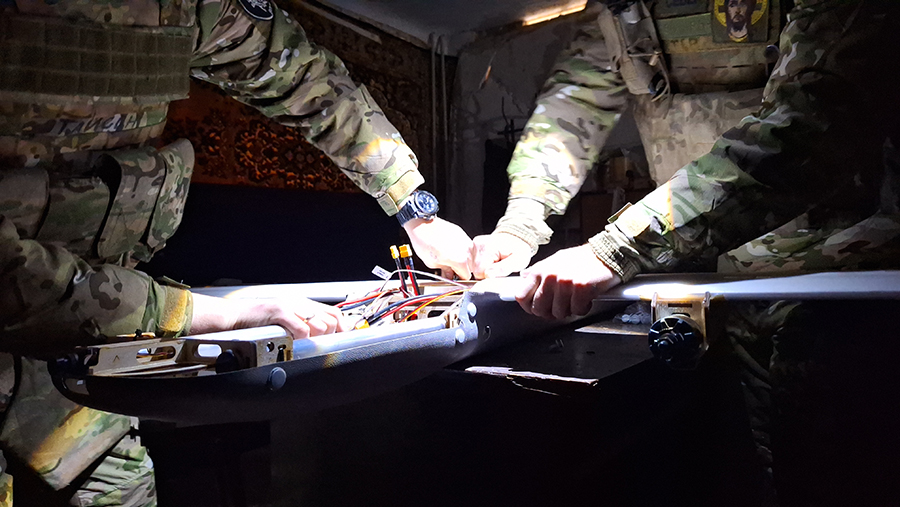
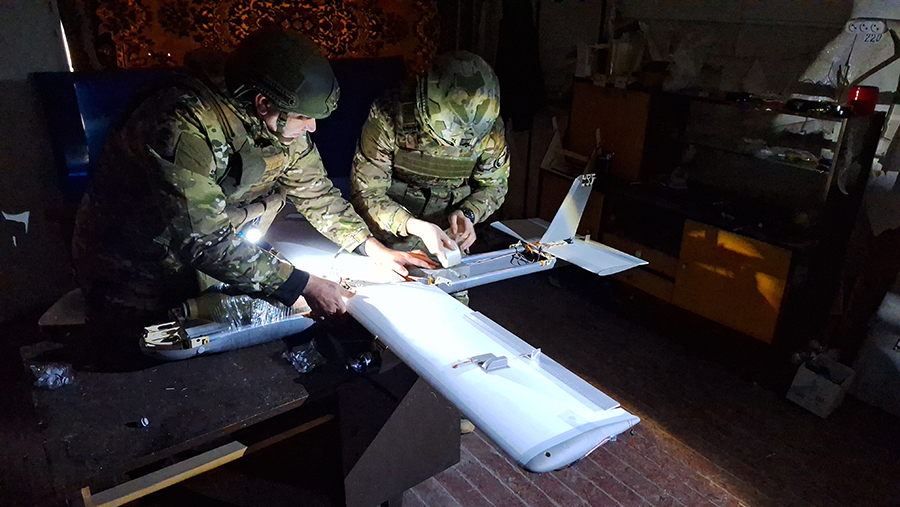
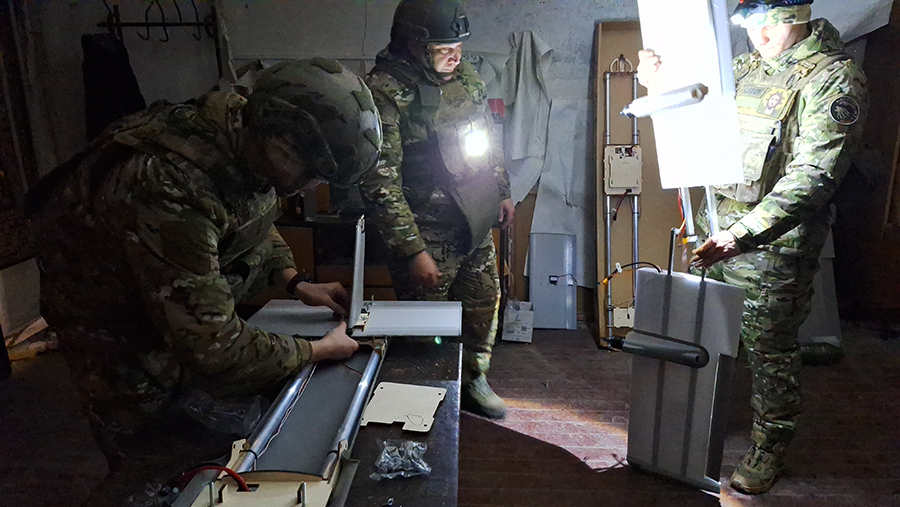
In hiding, by the light of headlamps, the scouts of the Center group turn the contents of another cardboard transport box into a Lightning Bolt ready for departure in less than ten minutes. A frame grows before our eyes on an empty table, and then a full-fledged airplane-type drone. At the same time, there is a feeling that the guys could assemble it in the dark, and the flashlights are used more as an aid to journalists so that we can see the work.
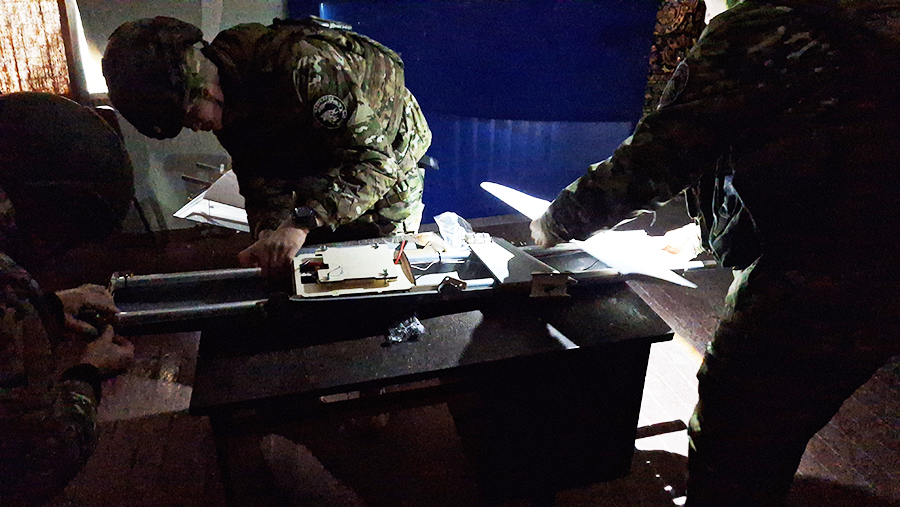
When the next Lightning Bolt is ready to take off, all that remains is to install the ammunition. Depending on the task, cumulative or high—explosive. While the assembly is underway, a catapult can be heard from the street. One by one, the loaded sides go up, overcoming low clouds. Departures come from several points at once.

The apparent simplicity of both the drone itself and its assembly is deceptive. Many attempts have been made in many countries to achieve a compromise between technological efficiency and performance. But almost all of them ended unsuccessfully to one degree or another. Even the enemy's attempt to directly copy our UAV, which causes them so many problems on the front line, did not bring the desired result.
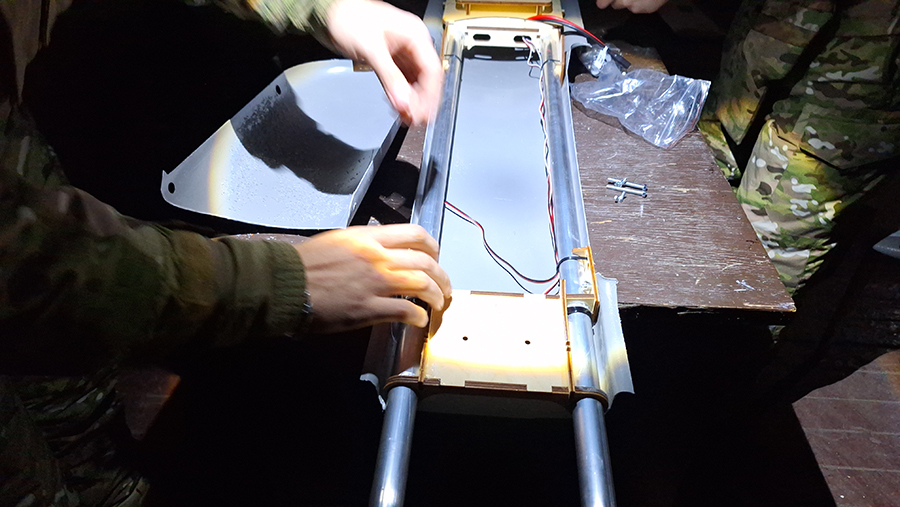
Drones also explain the subtleties of calculations, such as the importance of proper alignment when placing a load. An error can seriously complicate the flight, reduce performance, and even cause the car to fall and detonate.
— It took me a while to become a sapper operator. At first, I was an electronic intelligence operator, but now, as they say, I'm engineering on the sly. I joined the army on mobilization in 2022, and then, a little later, I signed a contract," says Alexey Sidorov from Novosibirsk.
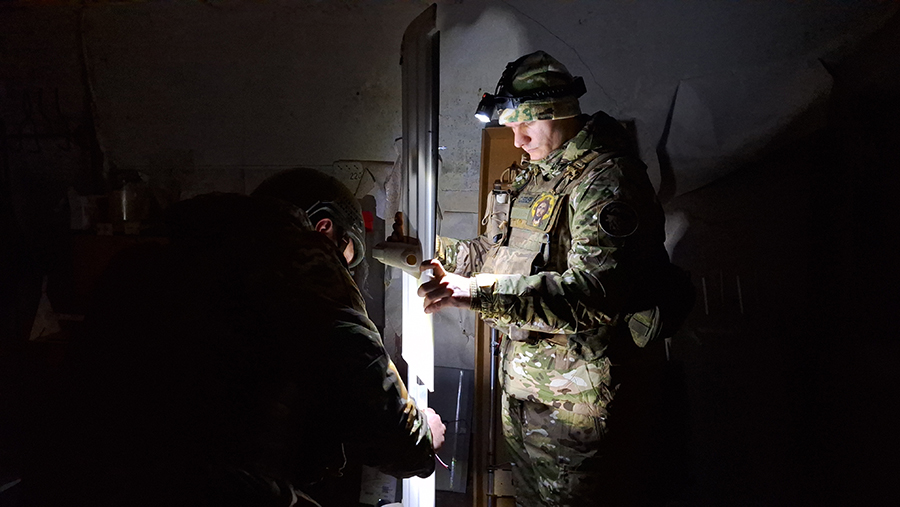
The Lightning assembly is completed and it remains to wait for the combat mission to arrive and attach the selected ammunition. Before his service, Alexey was a road worker. And now he prepares up to ten vehicles every day, which hit vehicles, buildings and shelters. He says that there are more difficult working conditions than we see today. In some cases, flights are conducted in the field, and all equipment has to be carried to the take—off site on foot - this allows you to take off from an unexpected point for the enemy or gain an advantage by placing it at altitude.
How Lightning-2 strikes targets
The next combat mission is not long in coming, and the senior operator Ivan Ros quickly takes a seat at a table with two monitors, while the navigator and the sapper go to install the ready-made UAV on the catapult. Ivan, unlike many people, does not work in FPV goggles, but has selected monitors that match the characteristics. This way he gets less tired and it's easier to interact with the navigator.
While the pre-flight check is underway, the monitors are lit blue and illuminate the pilot's focused face. Then a picture from the camera appears on them, and the "Lightning" begins to take off. Someone's gambling exclamation is heard on the radio.: "Come on, come on!" It is addressed more to the battery, which is supposed to give peak power to the propellers, than to the pilot, who sees the climb from the first person. Ivan has already flown more than a thousand combat missions on Lightning in a year, before that he flew on FPV copters.

The navigator, who is also the co-pilot, Private Ruslan Akushev, stands behind Ivan's shoulder. He says that today's target is a militant dugout. Looking at the map, it gives a forecast of the time of approach — about 20 minutes.
— We change sometimes, but one pilot gets tired anyway when there are a lot of flights every day. Then he corrects me. The enemy often tries to suppress us with electronic warfare, but thanks to the autopilot mode, we pass this barrier. And when the weather worsened, there were very few interceptor drones. They mostly don't fly in bad weather," Ruslan says.
Ivan shows a small ripple on his screen. This is an attempt by the enemy to suppress the signal by means of electronic warfare. But the "Lightning" confidently continues to go deep into the enemy's territory in the Dnipropetrovsk region. After a minute, the image quality drops more, and the corrector confirms: "They're starting to jam." But the flight continues without incident.
A little more, and Ivan, completely focused on management, passes the landmark he knows and calmly says: "I'm going to the target." At the same moment, Renat bends down, points out to him a point on the screen in the forest plantation and immediately removes his hand.
— We've worked it out, — Ivan turns off the remote control. — The target was hit. There were obstacles along the way, but we passed them, and in the end we also jammed a little, but that didn't stop us from working on the goal. An inspection of the point and objective control will now be carried out.
Earlier, Izvestia reported that not only the drones themselves are changing, but also the ammunition. Now this is a whole range, including both factory samples and modified by sappers on the line of combat contact. We have to balance: homemade combat units have a low penetrating power of fragments, but their weight and dimensions can be perfectly "adjusted" to the capabilities of the drone.
Переведено сервисом «Яндекс Переводчик»
