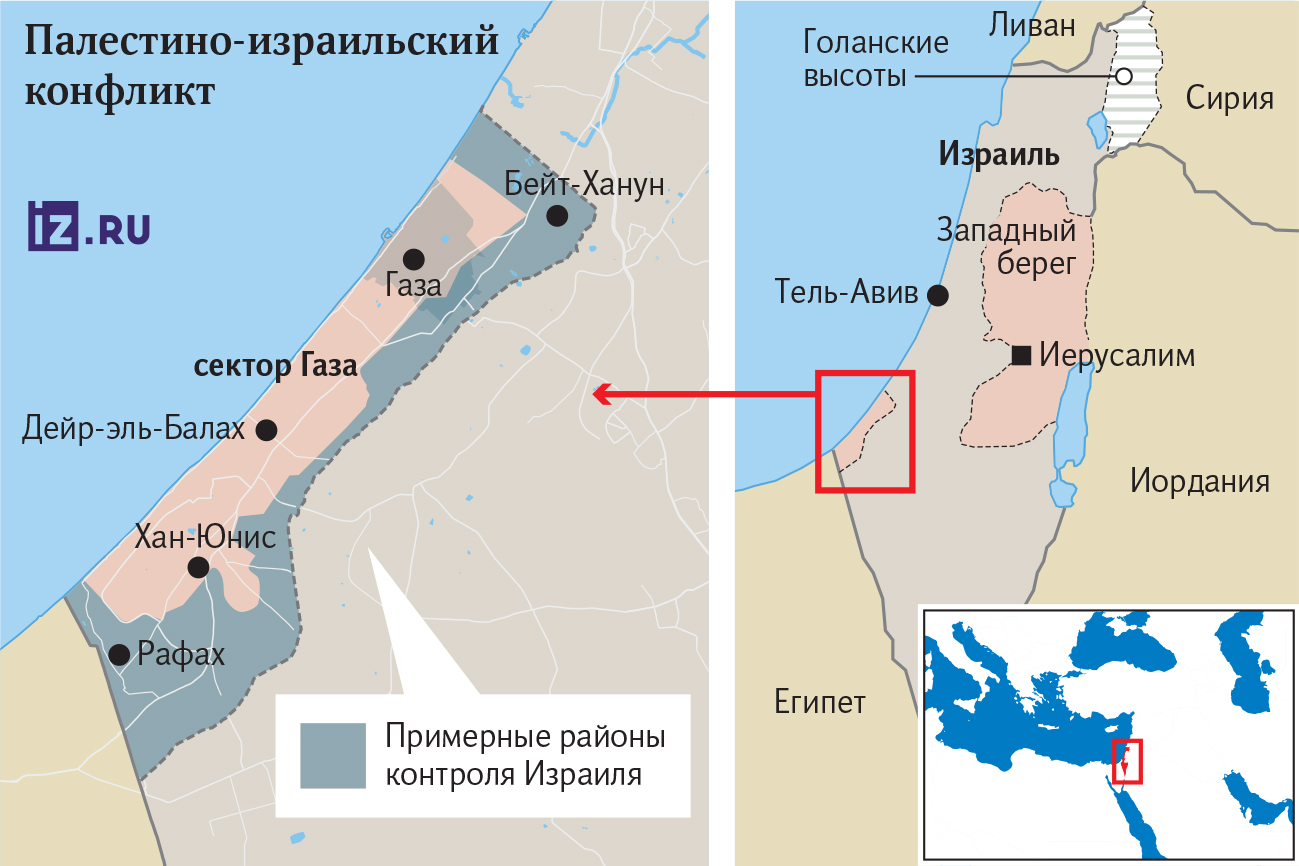
One step ahead: Israel has increased its control zone in the Gaza Strip to 58%


Israel has expanded control in the Gaza Strip to 58% of the territory, which is exacerbating the humanitarian crisis: hundreds of thousands of Palestinians live in worn-out tents and suffer from a lack of clean water, Fatah movement spokesman Munzir al-Hayek told Izvestia. Speaking about the future of the exclave, Fatah does not oppose the participation of Hamas in the selection of candidates for the Gaza governance committee. At the same time, negotiations on the second phase of the deal, involving the deployment of international forces, have reached an impasse: Hamas has not yet returned the remains of two hostages, and Israel continues to strike Gaza.
The water in the Gas is polluted
Israel has expanded its control zone in the Gaza Strip to 58% of the territory, going beyond the so-called yellow Line. This was reported to Izvestia by Munzir al-Hayek, a representative of the Fatah movement in the Gaza Strip.
— This means further compression of the space where approximately 2.4 million Palestinians live. These are areas that are already cut off, and such a step has a very negative impact. This is a real disaster, because crowding people in such a limited area will lead to a humanitarian and sanitary disaster," Munzir al-Hayek is convinced.
A significant number of Gazans continue to live in tents, many of which have been in use for more than a year and cannot withstand the weather conditions. They have long since fallen into disrepair, the Fatah representative said. Meanwhile, the lack of clean water and the spread of insects pose a threat of a large-scale humanitarian catastrophe.
— The water in the Gas is polluted. Sewage, rainwater and sewage mix in the tent areas, all this flows inside, insects and mosquitoes spread," al-Hayek said, stressing that such conditions have a serious impact on human health.
Meanwhile, the situation around Gaza remains uncertain. The truce brokered by the United States, which has been in effect since October 10, has been repeatedly violated, and Israeli strikes on the sector continued. Israel says it is responding to attacks on its forces at the perimeter, but Hamas denies responsibility for the attacks. Earlier, in accordance with the agreement, Israeli troops withdrew from the central regions of Gaza to the "yellow Line", retaining about 53% of the strip's territory under their control.

According to the Palestinian side, the management of Gaza after the end of the war should move away from Hamas to a committee of technocrats, not affiliated with any political force. Discussions around the formation of the committee are underway between the Palestinian factions in Egypt. At the same time, Fatah is not against the participation of Hamas in the selection of candidates.
— We want a government committee headed by a minister from the central government in Ramallah. His task is to ensure geographical connectivity between the West Bank and the Gaza Strip," al-Hayek said.
He also expressed regret that Israel was preventing the return of the PA to the strip by imposing additional conditions and demands on the Palestinian authorities.
— The authorities have already carried out significant reforms in their structures, but some of those demanded by Israel are harmful to Palestinian interests, such as changing curricula. We need to update textbooks, not change their content to meet other people's requirements," he said.
Debris removal can take 22 years.
Meanwhile, the first phase of the Gas deal is nearing completion. Hamas is gradually handing over to Israel the bodies of hostages who died in captivity. According to reports, the remains of two abductees are still being held in the sector. Earlier, as part of the ceasefire agreement, the movement released 20 hostages — these were all the survivors. After that, the Palestinian side returned the bodies of 26 victims, who were identified by the Israeli authorities.
Against this background, the Asharq al-Awsat newspaper reported that a number of Hamas leaders allegedly submitted an internal document proposing the creation of a "political party similar to existing political forces" in order to participate in political, economic and social life. The sources of the publication emphasize that the initiative should mean a gradual transition to political action and "allows the Palestinians to adhere to their fundamental principles in the light of the new reality emerging after the end of the war in Gaza."
Roman Yanushevsky, editor-in-chief of the website of the 9th Israeli TV channel, noted that, in his assessment, Hamas expects to hold the bodies of Israelis. According to his estimates, by handing over all the surviving hostages and most of the bodies, the movement hopes to gain time and avoid talking about the fate of the others, as well as trying to ensure that it is not disarmed.
"The movement does not realize that delaying the return of all the bodies, constant provocations and refusal to disarm are perceived as violations that may soon exhaust the patience of the Trump administration and lead to the United States giving Israel the green light to complete what has begun — the cleansing of the territories controlled by Hamas," he told Izvestia.
In parallel, the assessment of the extent of the destruction continues. According to the coordinator of the UNCTAD program, Mutasim Elagra, it can take up to 10 years to clear the territory of Gaza of unexploded ordnance, and up to 22 years to dismantle the rubble. He noted that ensuring the safety of such work by itself can take years: "It will require great efforts from the international community."

Reports of difficulties in implementing the agreements create additional tension. The Washington Post writes that Donald Trump's plan to deploy international forces is facing serious problems: the lack of agreement from countries to send contingents, the risks of clashes and uncertainty about the timing.
The lack of progress in the second phase of the agreement is not related to the actions of the Palestinian resistance, the expert believes. In his opinion, the Trump administration is giving Israel the "green light" to continue strikes in the region. He noted that the Prime Minister of this country, Benjamin Netanyahu, does not want to enter into negotiations on the second phase, as this contradicts his goals. In addition, in an interview with Izvestia, Hani Salah added that the inability to form an international force is also slowing down the process: most of the countries approached refuse to send troops to Gaza, and this initiative has reached an impasse.
The Israeli media, in turn, report on possible plans to relocate Gazans and discuss options for expanding IDF operations.
Against this background, Qatar and Egypt are trying to maintain diplomatic channels and prevent the final breakdown of the agreements. Doha stresses the need to move to the second phase of the plan, which should ensure a sustainable ceasefire and create conditions for the reconstruction of the Gaza Strip.
Переведено сервисом «Яндекс Переводчик»
