Rejuvenating bull's-eye: horse umbilical cord stem cells to be used against aging
- Статьи
- Science and technology
- Rejuvenating bull's-eye: horse umbilical cord stem cells to be used against aging


Young scientists are researching a line of skin products from horse umbilical cord stem cells. According to the developers, they activate the natural processes of skin repair, increase its moisture content by more than 50%, and also reduce the depth of wrinkles and the severity of inflammation by 30%. However, experts emphasize that there is not enough data yet to speak confidently about effectiveness and safety. It is necessary to confirm the absence of viruses and factors dangerous to humans that can cause malignant cell degeneration. For more information about innovations in cosmetology— see the Izvestia article.
What is cellular reprogramming?
A Russian startup, which includes students from the Faculty of Biomedical Physics at MIPT, has developed a line of anti-aging skin products based on cellular reprogramming technology. It makes it possible to obtain exosomes (extracellular vesicles that are secreted by practically all types of cells and carry certain information) from horse umbilical cord stem cells with increased biological activity. They activate the natural processes of skin repair and regeneration. They also moisturize the skin by more than 50%, reduce the depth of wrinkles and the severity of inflammation by 30%. This was reported in the press service of the Platform of the National Technology Initiative (NTI).

— Exosomes from mesenchymal stem cells of the horse umbilical cord have a strong regenerative and anti-inflammatory effect. They repair the skin and fight aging at the cellular level. In addition, unlike plants, horses are close to humans, so the exosomes in the products effectively penetrate human skin cells and activate the synthesis of collagen, elastin and hyaluronic acid due to their biological cargo," said Anastasia Igolinskaya, the startup's leader.
The product line under development consists of creams, serums, masks, and patches. According to the authors of the project, these funds are highly effective, and the result of their use can last for 6-12 months. For comparison, the effectiveness of existing analogues is estimated at 1-3 and 3-6 months, the developers note. The prototype is currently undergoing stability and security testing.
— We have a global goal — to create a product capable of rejuvenating the human body for several years. We are already at the stage of developing cellular reprogramming technology (the process by which one type of cell transforms into another) to create exosomes with enhanced regenerative potential. We have the first results in vitro (in the laboratory)," added the author of the project.
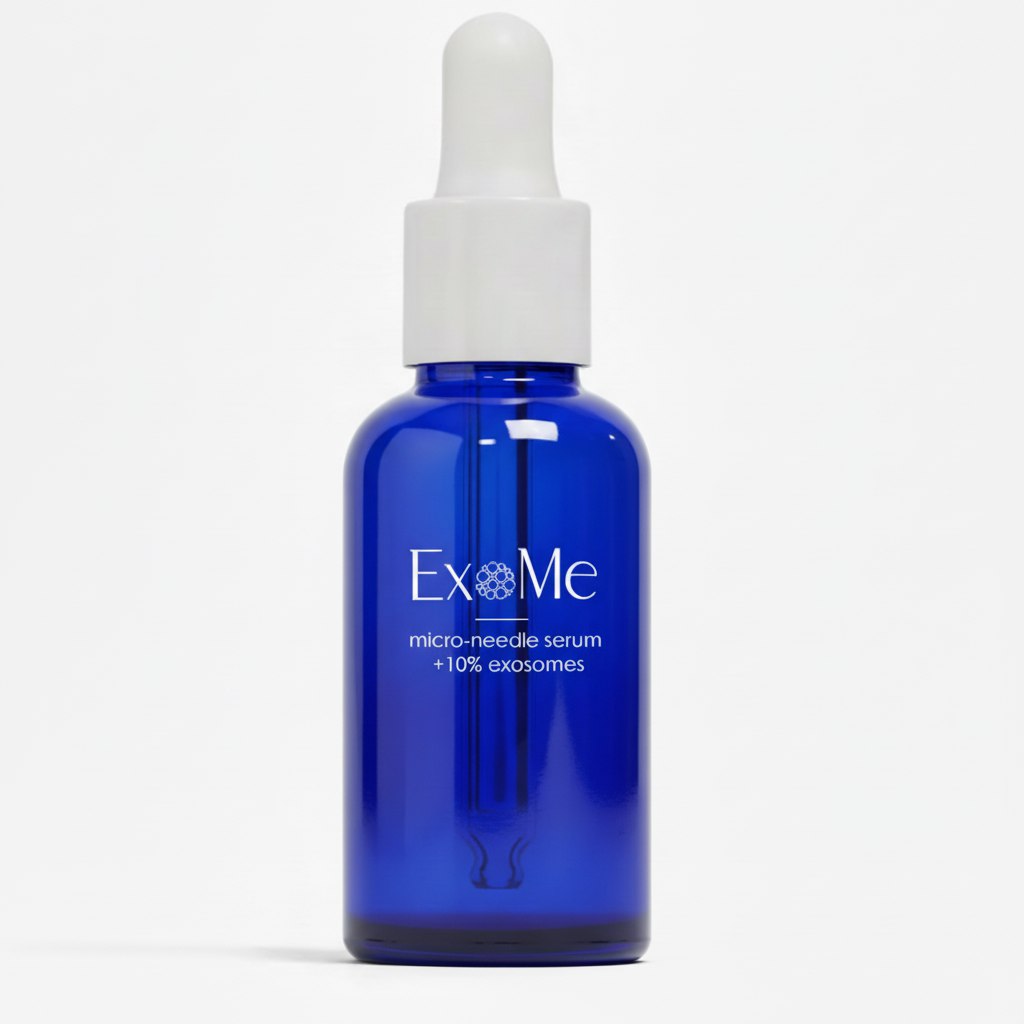
According to the developers, the trend for exosomes in cosmetics came from Asia. For example, the South Korean company ExoCoBio makes ASCE+ exosomes from plants (Damask rose), they became the founders of the trend. Then Calecim Professional appeared, which produces an air-conditioned environment with exosomes from the umbilical cord of red red deer.

Is a cream made from horse umbilical cord cells effective?
The use of exosomes and new approaches of regenerative medicine is one of the most promising and modern trends in cosmetology. Previously, various plant extracts, algae, and so on were used, but today technologies have stepped forward and scientists have begun to explore the possibility of using various biomaterials, new technologies for cellular reprogramming, and the use of animal stem cells, Antonina Arsenyeva, head of the Department of Dermatovenerology and Cosmetology at the Samara State Medical University, market expert at NTI Helsnet, told Izvestia.
Exosomes have significant therapeutic potential, including in cosmetology, so interest in their study is growing rapidly. At the same time, new sources are needed to obtain them, Sergey Sedykh, Candidate of Biological Sciences, senior lecturer at the Institute of Medicine and Medical Technologies at NSU, told Izvestia.
"When compared with other animals, a horse is a more successful source of biomaterial than, for example, a cow, due to prion diseases that were common among cattle in Europe in the late 1990s," he said.
However, it is not very clear where the authors of the project plan to take a sufficient number of umbilical cords of a horse, the specialist noted. Deep scientific research is also required to confirm the anti-aging properties and other possible beneficial effects. In addition, it is necessary to confirm the safety of the product, the absence of viruses in it that are dangerous to humans, and factors that can lead to malignant degeneration, the expert noted.
Due to the fact that such therapy is still a developing field of cosmetology, exosomes of plant, animal and human origin are on the market, Maria Titova, cosmetologist, dermatologist, and leading specialist of the Semeynaya clinic network, told Izvestia. However, the effectiveness claimed by the developers and a number of other claims require verification.
— A comparative study of allogeneic (canine) and xenogenic (human) exosomes for the treatment of atopic dermatitis in dogs showed that both types improved skin condition, however, the effectiveness of therapy may significantly depend on the source of cells, methods of isolation and composition. In addition, the use of exosomes of animal origin carries risks of immunogenicity and allergic reactions," she noted.
The main obstacle to the introduction of these technologies into routine practice is the lack of standardized methods for the production of exosome isolation.
"The International Society of Extracellular Vesicles (ISEV) has published recommendations defining minimum requirements for batches of drugs with exosomes, but the decision to comply with these parameters remains voluntary, hence the main problems for developing a standard for products with exosomes: variability between batches and the difficulty of determining the purity of the drug," the expert said.

The use of exosomes is a very promising technology, but there are limitations. The bottom line is that they are different, and you need to be sure of their composition, it is difficult to ensure their storage, not to mention the fact that you first need to collect them, then save them, then transfer them, said Mikhail Bolkov, a researcher at the Institute for the Study of Aging of the Russian National Research Scientific Center for National Research and National Research
— In the natural environment, exosomes are destroyed very quickly, so they need to be stored at very low temperatures. And when we transfer them to cosmetology, we must be sure that it is not only the filler of the ointment or solution, but that there is an active substance left. Now modern technologies for their storage and conservation are gradually emerging. But it is necessary to check their effectiveness in the final product, which is always different from the experience outside the body. It is also necessary to carefully check the toxic and side effects and their safety. What if we stimulate some side effects with this cream? This is a big question," the specialist said.
He stressed that when buying such cosmetics in stores and marketplaces, it is not always possible to be sure of their composition. So far, this is a new and developing technology, and perhaps marketing, rather than exosomes themselves, is more effective there.
The development participates in the acceleration program of the federal project "Platform of University Technological Entrepreneurship (PUTP)" (FP "Technologies"), the operator of the acceleration programs of the project is the National Technology Initiative (NTI).
Переведено сервисом «Яндекс Переводчик»
