- Статьи
- Science and technology
- Fruits of ponds: toxic strains of cyanobacteria found in Moscow reservoirs

Fruits of ponds: toxic strains of cyanobacteria found in Moscow reservoirs

Scientists have identified strains of cyanobacterium Microcystis aeruginosa in Moscow reservoirs that synthesize toxic compounds that are dangerous to the liver. The massive proliferation of these microorganisms — the so—called water bloom - leads to the accumulation of toxins in reservoirs, which can pose a threat to animal and human health. The data obtained indicate the need for regular monitoring of the number of these microbes, as well as regular aeration of reservoirs, experts said. How cyanobacteria can enter the body and what measures will allow them to get rid of them — in the Izvestia material.
What are the dangers of cyanobacteria?
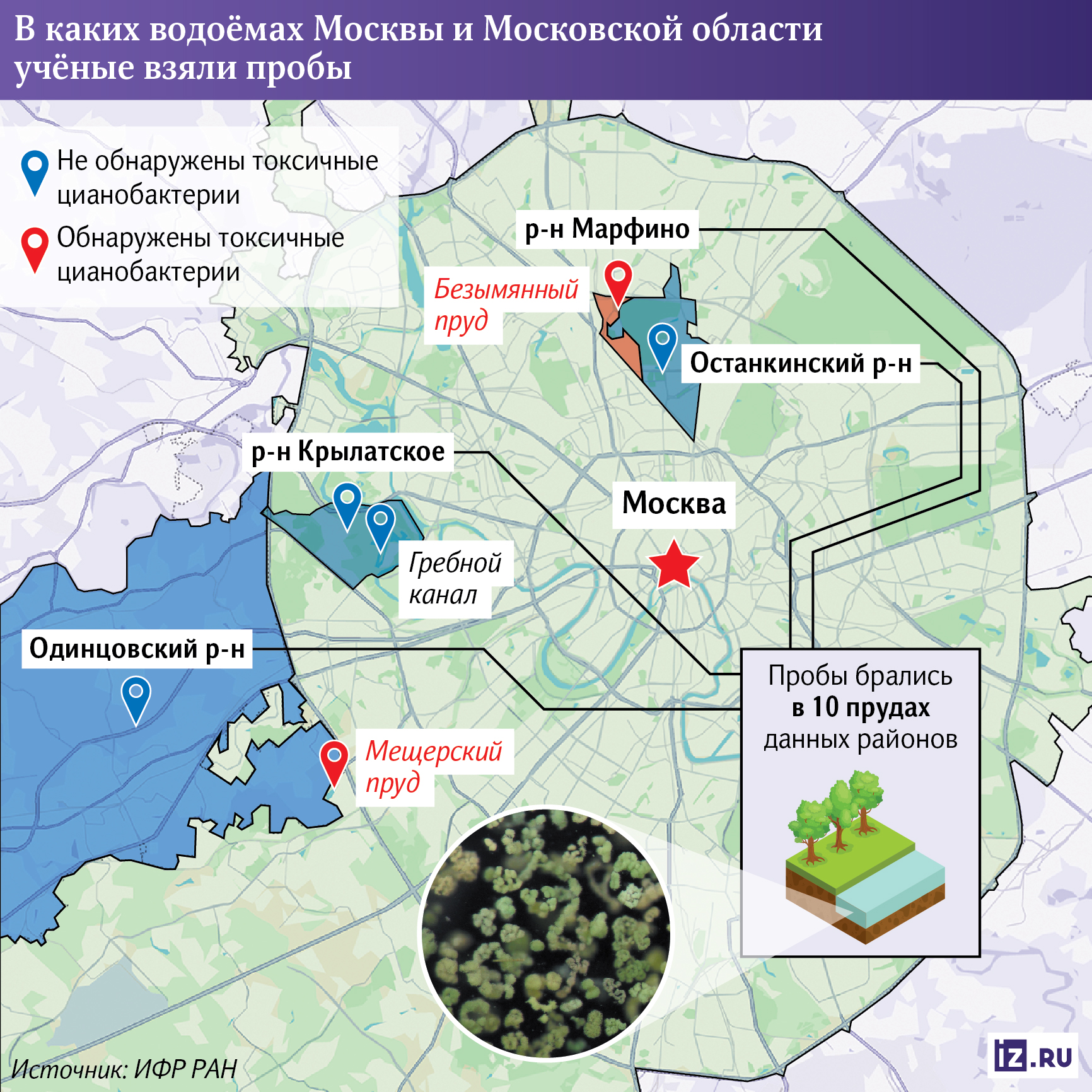
Scientists from the Timiryazev Institute of Plant Physiology of the Russian Academy of Sciences have studied the ability of cyanobacteria living in Moscow's reservoirs to produce toxins. The authors took samples of water and bottom sediments from 12 urban reservoirs: the Moskva River, the Rowing Canal in the Krylatskoye area and 10 ponds in the Krylatskoye, Marfino, Odintsovo and Ostankinsky districts. Residents actively use some of the reservoirs for recreation, for example, fishing or boating during the season.
In total, scientists have isolated 20 strains of cyanobacteria belonging to the genera Dolichospermum, Aphanizomenon, Anabaena, Woronichinia, Argonema and Microcystis. The authors assessed whether they have genes involved in the synthesis of toxins. After that, high-performance liquid chromatography (high-resolution mass spectrometry) was used to confirm the content of hazardous substances, an approach that allows detecting the presence of microcystins and determining their structural variants.
— In most studies conducted in our country, the presence of cyanotoxin synthesis genes and the content of these substances were determined in the mixed biomass of cyanobacteria collected from natural samples. Our approach differs in that we work with strains, which allows us to accurately identify a specific producer of toxins. For each strain, we get nucleotide sequences — a kind of molecular "barcode". In the future, it will be possible to accurately assess the development and spread of toxic species using modern methods of high—throughput sequencing and metabarcoding," Elena Kezlya, senior researcher at the Laboratory of Molecular Systematics of Aquatic Plants at the Timiryazev Institute of Biological Sciences of the Russian Academy of Sciences, told Izvestia.
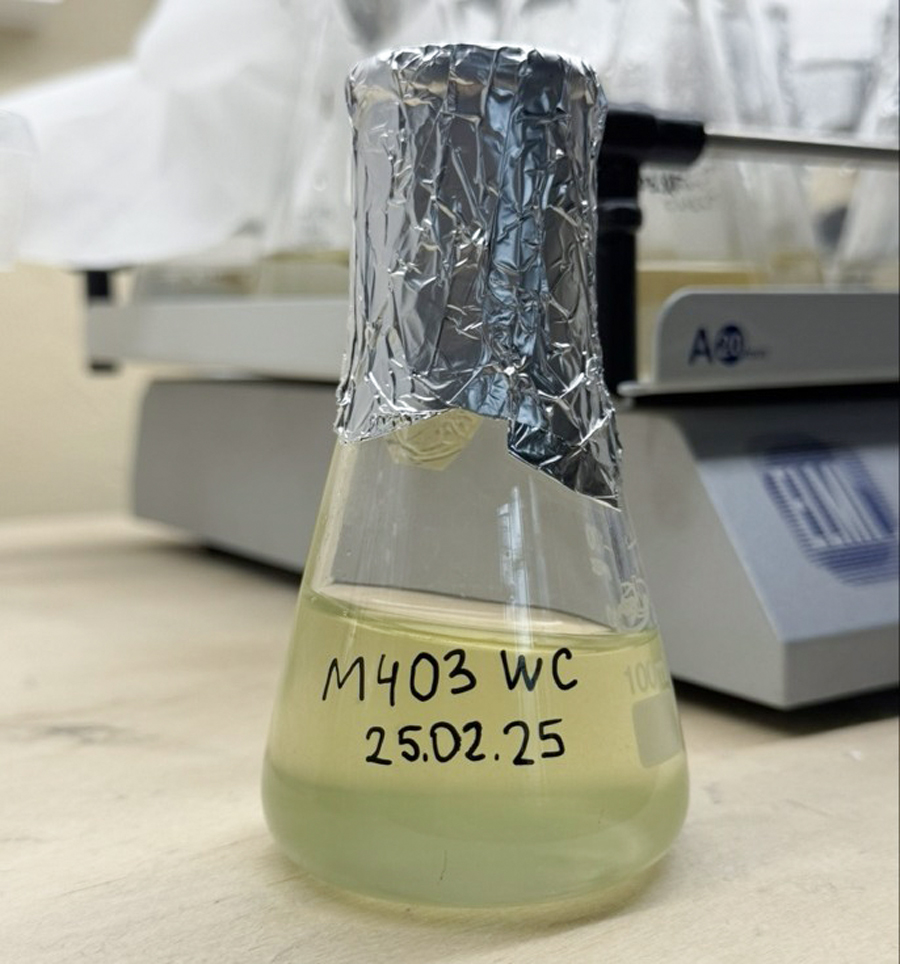
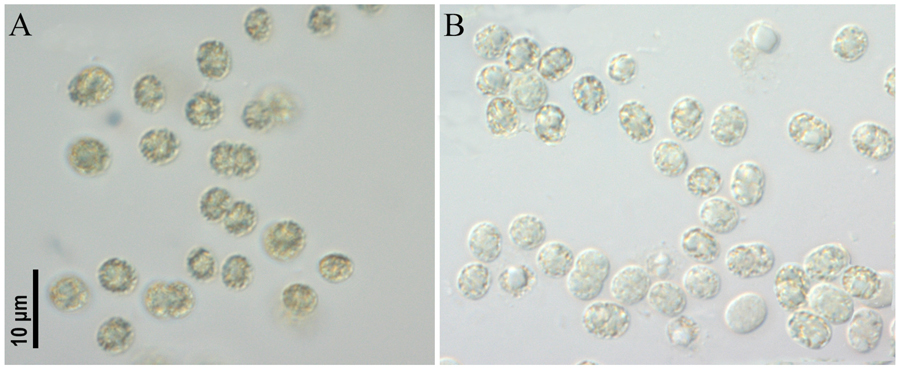
The analysis showed that two strains of cyanobacterium Microcystis aeruginosa (CBMC403m and CBMC523m) synthesize microcystins, hepatotoxins that disrupt the functioning of liver cells in animals and humans. At the same time, 20-28% of the total amount of these compounds is microcystine-leucine-arginine, one of the most toxic substances in the microcystine family. In high concentrations, it causes liver damage, but with a small number of cyanobacteria producing it in water (in the absence of mass reproduction) it does not affect human health.
Cyanobacteria— bacteria capable of photosynthesis, inhabit most of the world's reservoirs and serve as food for small crustaceans and fish, as well as a source of oxygen. Under certain conditions, such as prolonged heat and an excess of nutrients in the water, these microorganisms can multiply massively and cause water blooms. At the same time, some cyanobacteria produce compounds toxic to fish, birds and mammals — cyanotoxins. Once in the body, these substances can affect the nervous system, liver, skin and other organs. Therefore, blooms of toxin-producing species must be monitored, especially in recreational reservoirs. However, there is still insufficient data on how widespread toxic and potentially toxic cyanobacteria are in Russian reservoirs, including those located in large cities.
How to get rid of dangerous cyanobacteria
Scientists noted that one of the toxic strains of Microcystis aeruginosa (CBMC523m) was isolated from the Meshchersky pond, which is actively used by residents of the metropolis for swimming in the summer. These toxic microorganisms were also found in the plankton of an unnamed pond in the Marfino neighborhood. However, this does not mean that there are no such bacteria in other reservoirs, they were simply found in specific samples, the scientists noted. In general, toxic cyanobacteria may be widespread in Moscow reservoirs, but further research is needed, the scientists noted.

Meshchersky beach on Meshchersky pond during sampling
— Under normal conditions, these microorganisms do not pose any threat, but in the case of mass reproduction they may pose some danger to human health. Therefore, the results obtained in our study will serve as the basis for the development of an effective monitoring system that will quickly and accurately detect toxin-producing cyanobacteria in water. In the future, we plan to evaluate the diversity of cyanobacteria and the spread of toxic and potentially toxic species in the reservoirs of the city of Moscow using metabarcoding. And all the molecular "barcodes" obtained during this stage of work will become the basis for decoding this data," added Elena Kezlya.

Microcystins, or cyanotoxins, are primarily poisons for the liver. When ingested with water, they can cause nausea, vomiting, abdominal pain, weakness, and sometimes fever. With severe or prolonged exposure, cases of severe organ damage have been described, Albert Rizvanov, head of the Personalized Medicine Center of Excellence at the Institute of Fundamental Medicine and Biology at Kazan Federal University, told Izvestia. When bathing in a "blooming" pond, skin rashes, itching, redness of the eyes, cough and irritation of the mucous membranes are not uncommon — this is also a reaction to toxins and fragments of cyanobacterial cells.

Study of morphology and photofixation of Microcystis aeruginosa strains using a light microscope
Microcystins can accumulate in fish and pass through it to humans. Most toxins accumulate in the liver and internal organs, less in the muscles (fillets). The main risk occurs with regular consumption of fish from highly blooming reservoirs and when eating liver, intestines, heads or small fish entirely. If only fillets from controlled reservoirs are rarely consumed, the health risk is considered low. It is important to understand that cooking and frying microcystines practically do not destroy, that is, "boiling means neutralizing" in this case does not work, he said.
According to the expert, cyanobacteria "love" warm, stagnant and fertilizer—rich water, so the main thing is not to turn ponds into "fertilizer soup." To do this, it is necessary to introduce strict control over the discharge of untreated wastewater, reduction of fertilizer intake from the shores, aeration and circulation of water, as well as regular monitoring of its quality and toxin content.
For the most part, cyanobacteria are useful pond dwellers, because they are engaged in photosynthesis, they synthesize oxygen, and no one will poison them for sure, said Andrey Pozdnyakov, an infectious disease specialist at Invitro. However, some of them can actually form chemical compounds, a large concentration of which can have a toxic effect on human and animal organisms.

Project executor, Elina Mironova, a graduate student at the Faculty of Biology of Lomonosov Moscow State University, during her work
Cytotoxins are a combination of two amino acids that can serve as a hepatotoxic poison. Human infection is accompanied by signs of severe hepatitis: intoxication syndrome, jaundice, discoloration of urine and feces. In severe cases, impaired consciousness may occur, and there may also be marked changes in blood tests," he said.
According to the expert, restrictive tactics should be applied: if there is a blooming pond, then bathing and the use of this water in everyday life should be limited.

The study involved employees of the Moscow State University named after M.V. Lomonosov University (Moscow), St. Petersburg Federal Research Center of the Russian Academy of Sciences (St. Petersburg), St. Petersburg State University (St. Petersburg) and the G.N. Scriabin Institute of Biochemistry and Physiology of Microorganisms of the Russian Academy of Sciences (Pushchino).
The results of the study, supported by a grant from the Russian Science Foundation (RSF), are published in the journal Toxins.
Переведено сервисом «Яндекс Переводчик»
