
Autumn colors: what new sets have appeared in the capital's restaurants

The autumn season in the capital's restaurants turned out to be extremely generous with gastronomic sets. Someone decided to experiment with the menu of a real coronation dinner, someone collected ancient legends in a plate, and someone tried to reveal the "soul" of their kitchen. The brightest and most interesting chef's statements are in the Izvestia material.
Legends with taste
Vitaly Saveliev, the chef of the Twins Garden restaurant, confidently paves his own way to the heart of Russian cuisine. His new set "Legends of Ancient Cities" is an imaginary gastronomic journey through ten small towns within the historical borders of Northeastern Russia, built on a combination of regional and local products, modern techniques, pre-revolutionary recipes, as well as a variety of tales and legends.
In no case is this about any kind of gastroconstruction. Recipes and legends for Savelyev are just an excuse to reflect on how you can experiment with taste, texture and serving, paying homage to tradition, but still remaining completely in the present day.

Gus-Khrustalny Course
For example, the Crystal Goose is represented by a crispy buckwheat tube with tomato marmalade, mushroom sour cream and a slice of dried goose instead of salt. Borisoglebsk — a salty-spicy porridge made from fermented wheat with nuts and cranberry raisins, and also a spoonful of vanilla ice cream to set off the delicate coffee taste of heavily toasted cereals.

The Borisoglebsk course
Moore is embodied in the form of a miniature roll. The choice is quite expected, because it is believed that this type of bread product was invented in this city. In Murom, it was often stuffed with smoked bacon, but Savelyev chose sour cream with black caviar, and serves it with a rich cancer soup. Rybinsk continues the fish theme. The dish is made from different parts of sterlet. Not only fillets were used, but also visigues and milks.
The transition to the meat part of the set is marked by wheat curdled milk with blueberries and jam from cones. According to Saveliev, Bogolyubovo is the closest in spirit to such a position.

Seth "Uglich"
The veal tongue is responsible for the Uglich, which languishes for three days to produce dense, juicy and pale pink meat. It is served with tiny potato pancakes, and seasoned with a thick sauce of horseradish root and black garlic. Tutaev is "assembled" on a plate of delicate slices of Romanov sheep broth, onion marmalade, fresh adjika and parsley juice. And Myshkin is an airy rowan sorbet with rowan distillate in a thin cheese crust. It is served as a piece of cheese in a... mousetrap. It looks impressive.

The Tutaev Set
In general, the boss has done a lot of work on visualization. In addition to the mousetrap, we especially note the cherry basket of duck paste with a crispy crust of pumpkin seeds (Yuriev-Polsky) and a generous scattering of desserts from turnip, beetroot and carrot steaks to pickled cucumbers in honey (Alexandrov).

The season in miniature
The chef of the Grand Cru restaurant, David Emmerle, presented an updated version of his traditional seasonal Pepite set. Its gastronomic component changes every three months, but the form of presentation remains unchanged. The set is served in a special three-tiered dish made of Limoges porcelain, visually resembling a faceted diamond, and includes three serves.
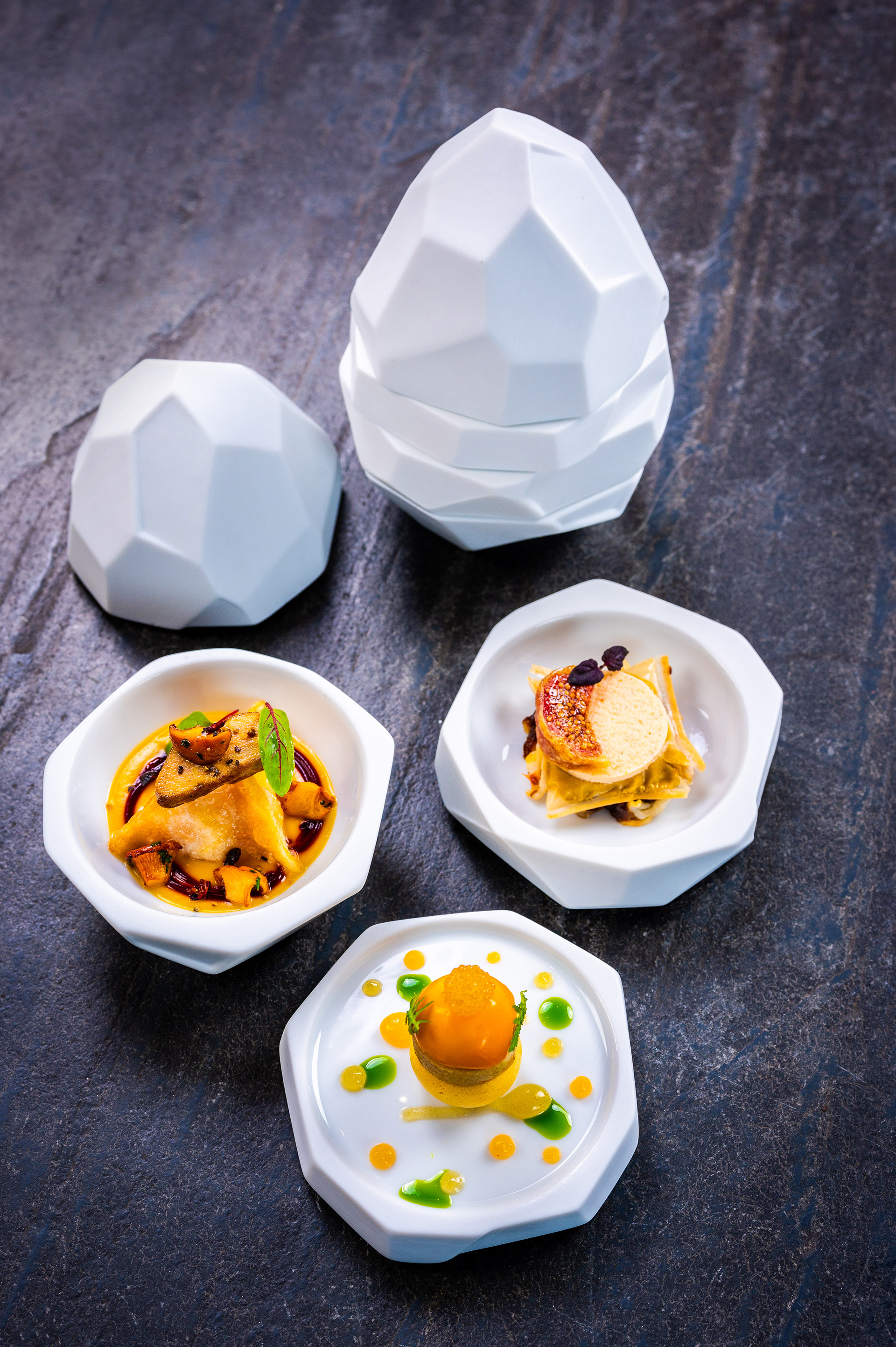
This time Emmerle focused on crab and foie gras. In the first appetizer, the main characters are combined with pumpkin meringue and pike caviar. In the second — with caramelized figs, onion confit and remoulade. And in the third — hot one — they are presented in the form of a wonton with pumpkin puree and mascarpone, complemented with cranberry jelly and garnished with a spinach leaf.
In each serving, Emmerle achieves the perfect balance of taste — without pronounced dominants, but with a subtle play of semitones, nuances and shades.
The Coronation Experiment
First, there are several types of soups, then cold appetizers, then hot and cold again. This particular order of serving dishes was widespread in pre-revolutionary Russia, including at state dinners with the participation of the Emperor. This is evidenced by the numerous menus that have survived to this day, often decorated with great ceremony, and by the best Russian artists.
Vlad Piskunov, the brand chef of the Matryoshka restaurant, chose one of them, but the most famous, compiled in the spring of 1883 on the occasion of the coronation of Alexander III, and presented his version of what such a gala dinner might look like today. The result was a fascinating journey into the history of Russian culture, not only gastronomic. At the same time, Piskunov does not tire of emphasizing that he is not a reenactor, but works with historical material based on modern realities.
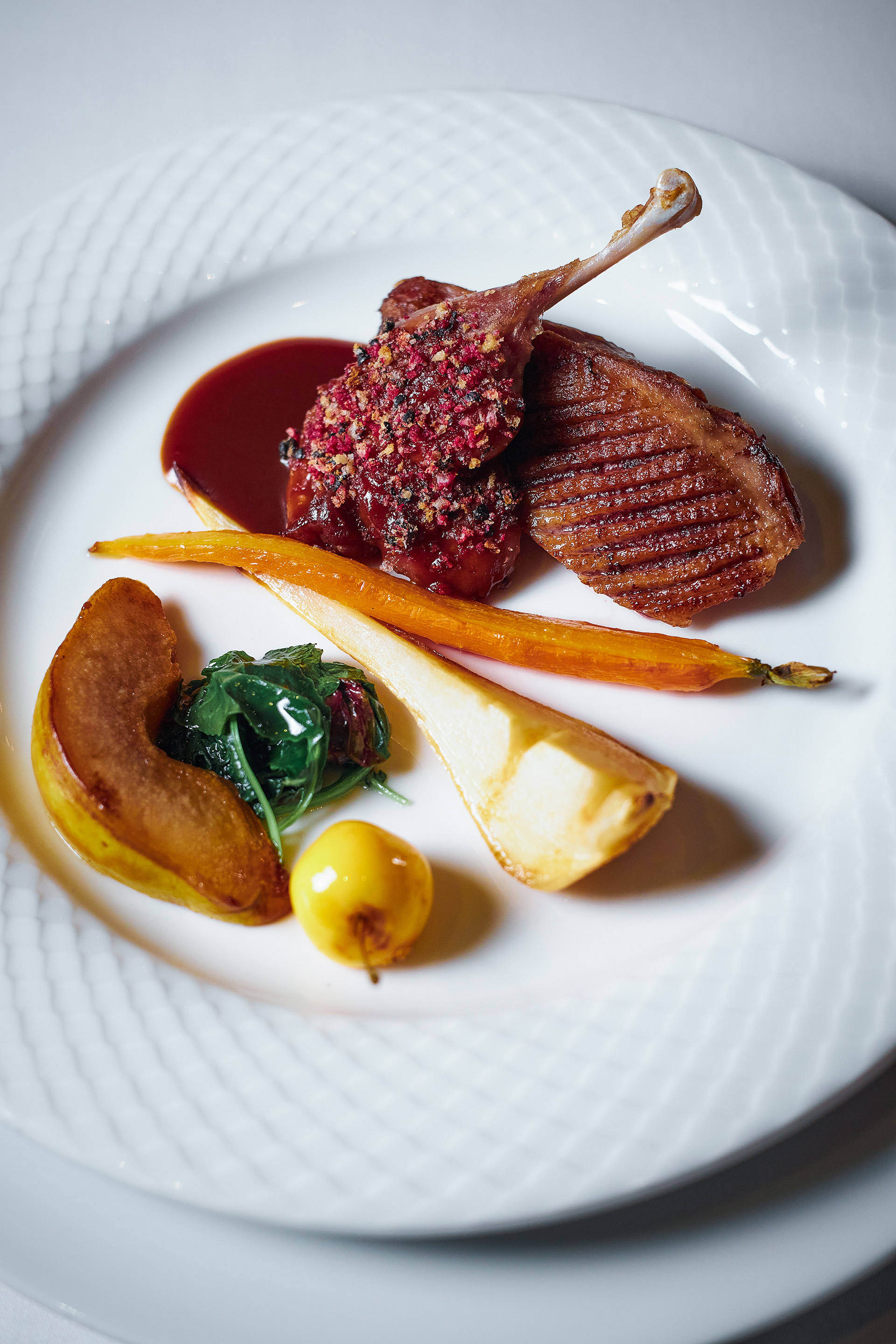
The set consists of 10 serves — in full accordance with the original menu. It begins with mashed mushroom soup and rooster broth with roots, which is served with tiny pies with cabbage, liver and pickles. This is followed by a series of cold and hot appetizers: sterlet with burbot liver and lightly salted cucumber, boiled beef and quail with grated peas. Then it's the turn of roast mallard meat and cold crayfish with flour and chamomile jelly.

Sterlet with cucumbers
The original version of the salad is served before the desserts, since this position is not specified in any way in the menu. Piskunov made a dish with Kamchatka crab, kohlrabi, celery, pear, grapes and yogurt. And this next cold turned out to be surprisingly perhaps the most striking, original and textured in the whole set.

Cold from crayfish
The meal ends with a hot pineapple pie and oregano ice cream and apple paste stuffed with cottage cheese and nuts.
A reason to get acquainted
Usually, a set is thought of as a conceptually designed series of serves, united by a common idea and seasoned with appropriate storytelling. Such a set exists in parallel with the a la carte menu and is a kind of calling card of the chef, a space of his creative freedom and demonstrates his capabilities and ambitions. As for the guests, this is a story for those who are interested in a new gastronomic experience, for those who come to the restaurant primarily for strong emotions and vivid impressions.
The Maya restaurant in the capital decided to take a different path. Chef Tom Halpin came up with a set introduction called The Soul of Maya, collecting several items from the menu that allow you to get the most complete picture of the cuisine of the institution as a whole — Latin American in its core, juicy, bright, temperamental and even dumb wild. At the same time, there is no storytelling. Tom is sure that food can speak for itself.

It all starts with a course of cold appetizers, where there is a place for Peruvian salad with mango, papaya, tomato and ponzu, guacamole with matcha salsa and tortilla from the oven, dorado ceviche with ahi amarilo pepper and potato chips in the form of the finest chips, as well as ricotta with baked grapes and generous truffle petals.

Chicken hearts, celery, garlic chips
As a hot snack, Halpin suggests eating chicken hearts with garlic chips and celery. The dish is served on a skewer, as if hinting that it has just been removed from the heat (actually not).

Trout on a birch log with coconut and pepper sauce
But trout fillets are really cooked on a birch log in a wood-burning oven, and then they are brought out to the guests on it, carefully peeled and served with a slightly burnt lettuce leaf.

Beef rib, oyster mushrooms, young peas
Next comes the turn of the most tender beef rib with oyster mushrooms, chermoula and parmesan. And at the end, baked pineapple with creme brulee and pineapple salsa and branded candies with salted caramel follow.
By the way, a set is served for at least two people. That's right, too, after all, delicious food is not only a reliable way to satisfy physical hunger, but also a great reason to have a good conversation.

Northern influence
Björn restaurant of Northern cuisine can be safely called the leader of the Moscow gastroscene in terms of the number of sets launched during the year. The memories of a set of rare hyper-seasonal products that quickly flashed by earlier this month, including dishes of purple cabernet corn, mizuna cabbage, miniature padron peppers, deer tongue and wild boar tenderloin, have not yet been erased from my memory. And now brand chef Andrey Fedoseev and chef Vladimir Molchanov have presented a new set for the Scandinavian cuisine festival Not only Cod, which started on November 10. Recognized masters of new nordic cuisine have created five courses, focusing on seasonality, locality and the pure taste of the products used.

Mountain ash with chestnut chips, malt cream and skir cheese
The set opens with a light starter of fermented apples and chestnut chips with malt mousse, which gives the dish intoxicating notes and Icelandic skeer cheese. The acidic binding part in the dish was a compote of mountain ash boiled with wine and spices. The next snack symbolizes the transition to winter preparations, so it is based on fermented, salted and dried root vegetables, supplemented with halibut caviar with shavings of bottarga from it and a dressing of whey with horseradish.
The first hot dish is a tender fillet of baked wild sturgeon, previously smoked on alder chips. Jerusalem artichoke chips are served as a side dish for fish, which is also used in the sauce for the dish. This is followed by a boar rib, stewed at low temperatures, making the wild meat exceptionally soft and juicy. The deep taste of the game is delicately set off by a crispy salad of fermented celery root, nasturtium fruits used instead of capers, and a sauce based on red onions, grapes and port wine. For dessert, there is a cream of hedgehog mushroom with caramelized black chanterelles, with a sauce of blueberries, pralines with hazelnuts and jelly based on kombucha from birch sap, which the entire restaurant team collects every spring.

Hedgehog cream with blueberry sauce and jelly based on birch juice kombucha
The festival items are available in the restaurant until the end of this month, and on December 1, guests will be offered a new concept set in which all dishes, drinks and their serving will be aged in white.
Переведено сервисом «Яндекс Переводчик»
