- Статьи
- Science and technology
- Telu — time: fragments of a meteorite that flew over Moscow began to be sold online

Telu — time: fragments of a meteorite that flew over Moscow began to be sold online

The fragments of the celestial body found under Okulovka represent a stone chondrite with a small metal content, scientists who will analyze the samples told Izvestia. This is the most common subgroup of meteorites that have ever fallen to Earth. Earlier, GEOHI RAS clarified that the first samples of the substance were collected after the flight of a bright bolide over the Tver and Novgorod regions on October 27. As Izvestia found out, ads for the sale of fragments of a celestial body have already begun to appear on the Internet, but doctors do not recommend carrying the found stones home — they may contain dangerous substances. For more information about the find, the possible risk to humans, and the legal aspects of meteorite trading— see the Izvestia article.
What is the Moscow meteorite?
Employees of the Ural Federal University spent a week at the site of the discovery of the Moscow meteorite, as it is informally called, and are now returning to Yekaterinburg. The search took place near Okulovka in the Novgorod region. As Viktor Grokhovsky, chief researcher at the URFU Extra Terra Consortium laboratory, who participated in the study of the "heavenly brother" from Chelyabinsk, told Izvestia, a fragment of a meteorite was found during the search. Now the fragment is being taken to the laboratory for detailed analysis.
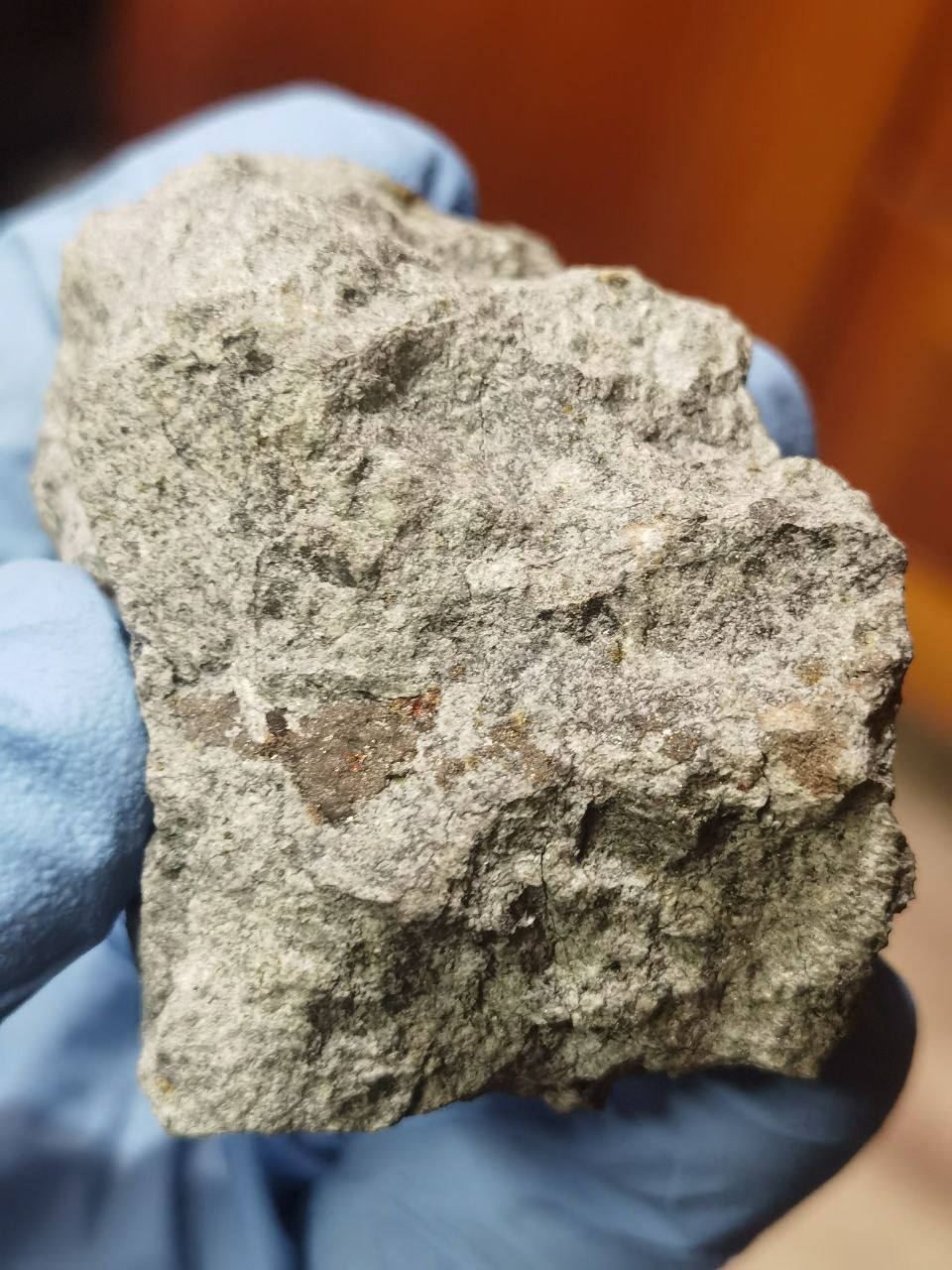
— The only way to detect a meteorite is visually. The area of dispersion is very extensive — about 100 km of swamps and forests, which makes the work extremely difficult. There are reports of new finds, but their search will not be completed so quickly. This is a stone meteorite: after falling, it looks like a baked potato — black crust on the outside, white inside," he explained to Izvestia.

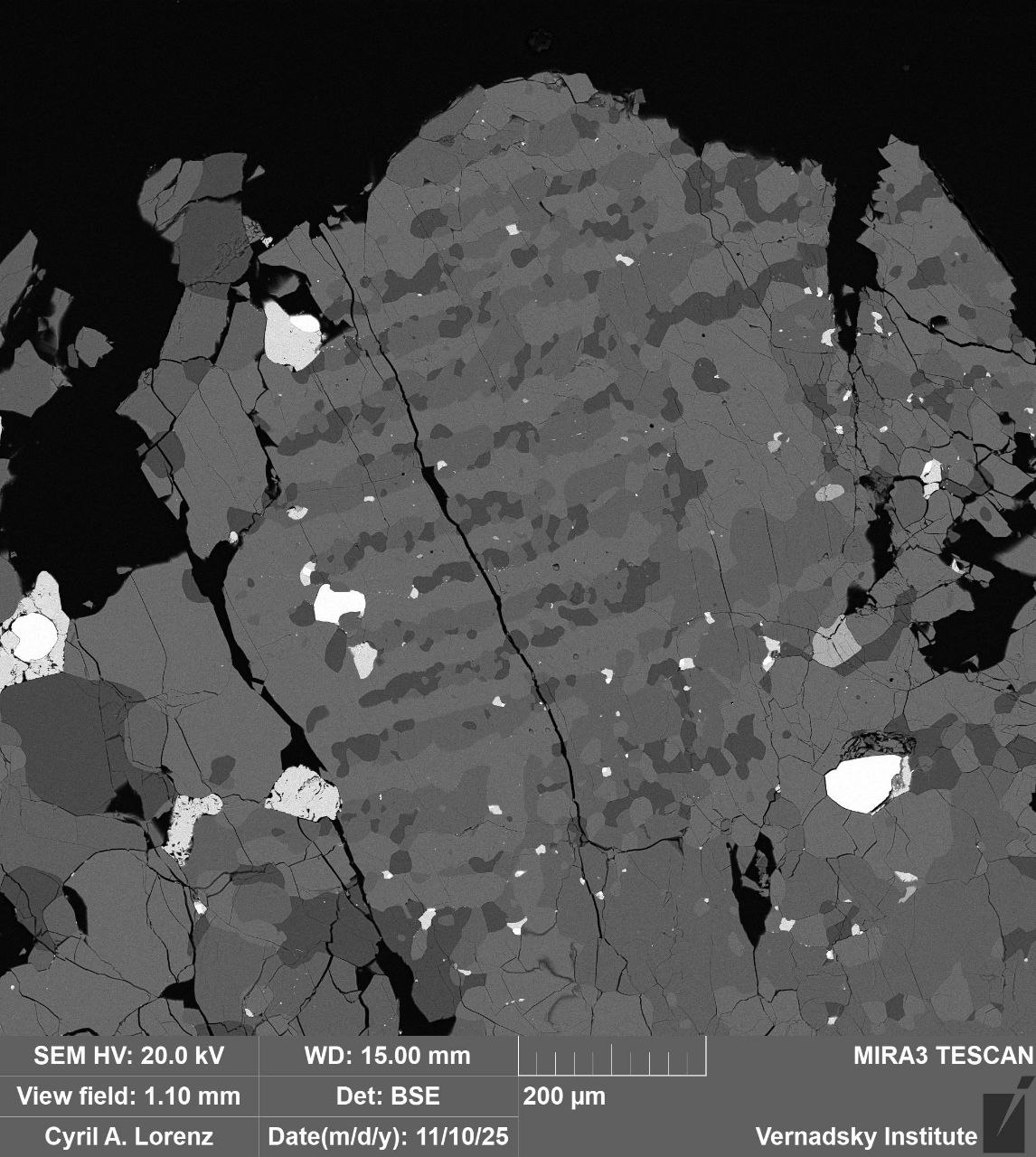
On November 10, the Vernadsky Institute of Geochemistry and Analytical Chemistry of the Russian Academy of Sciences (GEOHI RAS) announced in its Telegram channel that scientists had discovered fragments of a meteorite that flew in the sky over the Moscow, Tver and Novgorod regions on October 27. According to the preliminary assessment of scientists, the object has a natural origin and belongs to stone meteorites — ordinary chondrites of the LL6 group. The institute's press service confirmed this information to Izvestia and reported that research on the meteorite is ongoing.

It can be argued that the find is of extraterrestrial origin based on external signs, Viktor Grokhovsky told Izvestia.
— It can be seen from the stone that it has been lying on the ground for only a few days, as they rust over time. We have already analyzed it and determined the type — an ordinary chondrite with a low metal content," the scientist said.
Chondrites are the most common subgroup of meteorites. They account for 92.3% of all stone meteorites that have fallen to Earth, and 85.7% of the total number of all registered fireballs.
In the course of further research, experts plan to study in detail the structure of the meteorite — fresh fragments do not often get to them. The metal component of the fragment is of particular interest, as it can provide information about space processes, the expert explained.
Meteorite Hunters
In order for the find to be officially considered a meteorite, it will have to be registered, Viktor Grokhovsky emphasized. According to him, there are probably other fragments in the scattering area, but they will be difficult to find in a large area. There are cases when scientists buy them from "hunters" for celestial bodies, but reliable confirmation (certificate) is needed that this is part of an extraterrestrial object.
Meanwhile, advertisements for the sale of meteorite fragments are appearing on the Internet. Sellers admit that the pieces they found may be fragments of the very car that flew over the Ground. So, a woman under the nickname Viola posted an advertisement on one of the online platforms for the sale of a small fragment visually resembling a meteorite.
"I will sell a stone that looks like a meteorite. No chemical analysis was performed, the metal detector behaves strangely, the detector of abnormal zones detects some kind of radiation, slightly magnetically. The drill does not take, the grinding wheel is polished to a shine, it is difficult to cut with a grinder, there is a trace from the cutter, it does not take either," the product description says.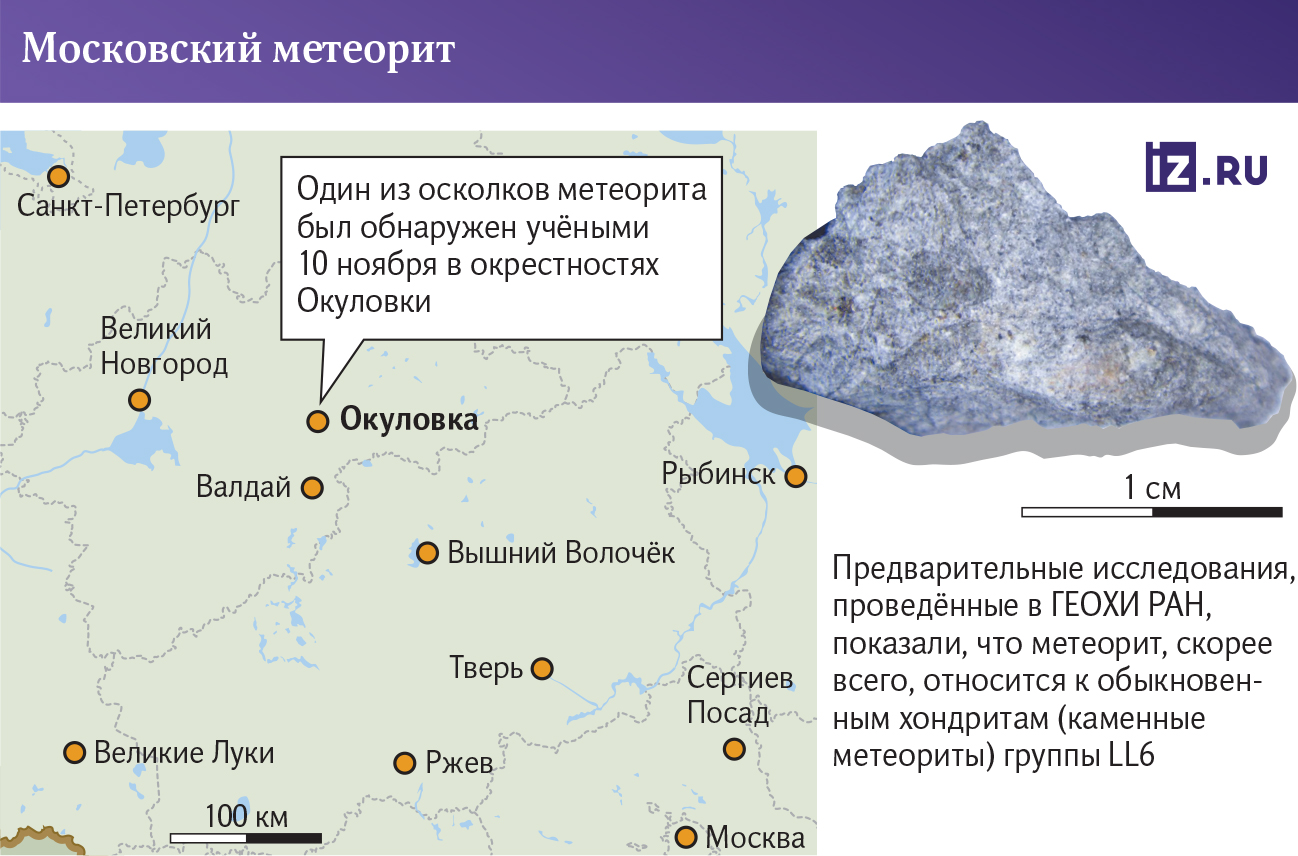
Alexander from Balashikha, Moscow region, is also sure that a fragment of a meteorite fell on the roof of his cottage.
"A piece of a meteorite, stone-metal in appearance, shimmering, fell on the roof of a cottage in the town of Klin. I woke up early in the morning to the sound of an impact, I didn't betray the significance, after I learned from the news about the meteorite fall. I don't think the crow threw it to me. I'll sell to the highest bidder, like an auction," he wrote in the ad.
However, meteorite hunter Alexey Krivenko told Izvestia that it is very difficult to find a freshly fallen bolide, and it is often impossible to confirm the authenticity of the fragments, and even having a certificate cannot serve as a guarantee.
How safe and legal is it to search for meteorites?
Doctors warn that it can be dangerous to keep fragments of a celestial body at home and even take them with your bare hands.
— There may be harmful toxic substances on their surface. They may even be radioactive," said Albert Rizvanov, head of the Center for Excellence "Personalized Medicine" at Kazan (Volga Region) Federal University.
As for viruses and bacteria, they are not contained on the surface of fallen celestial bodies, since, passing through the atmosphere, they heat up to such an extent that living organisms are unable to survive in such conditions.
The legal status of meteorites in Russian legislation has not yet been determined, explained Sofya Lukinova, head of the Legal Department of VMT Consult. Much depends on the location of the fragments and the legal approach to their appropriation.

— Firstly, the discovered meteorite falls under the category of "gifts of the forest", similar to mushrooms, berries or medicinal herbs. It follows that the finder has the right to dispose of the fragments at his discretion. There are no prohibitions on trading meteorites in the Civil Code, so the sale and purchase of their fragments is not prohibited," she told Izvestia.

At the same time, the lawyer added that a meteorite lying in the ground can be equated to a treasure trove, especially if it contains precious metals. Then there is an obligation to transfer it to the state with subsequent compensation.
— If a meteorite falls on a mineral deposit, it will acquire the status of state property and you need to contact the licensing authority. If a piece of a celestial body falls into your garden, there is no such obligation," said Sofya Lukinova.
As for ecology, large meteorites, such as the Tunguska meteorite, have a significant impact on the environment, but the number of such celestial bodies is extremely small.
— Possible harm to humans and the environment depends on the speed of the meteorite. The fall of even a small object at great speed leads to the release of enormous energy — in fact, to an explosion," said Tatiana Ledashcheva, associate professor at the Department of Environmental Safety and Product Quality Management at the Patrice Lumumba Institute of Ecology at the Rudn University.
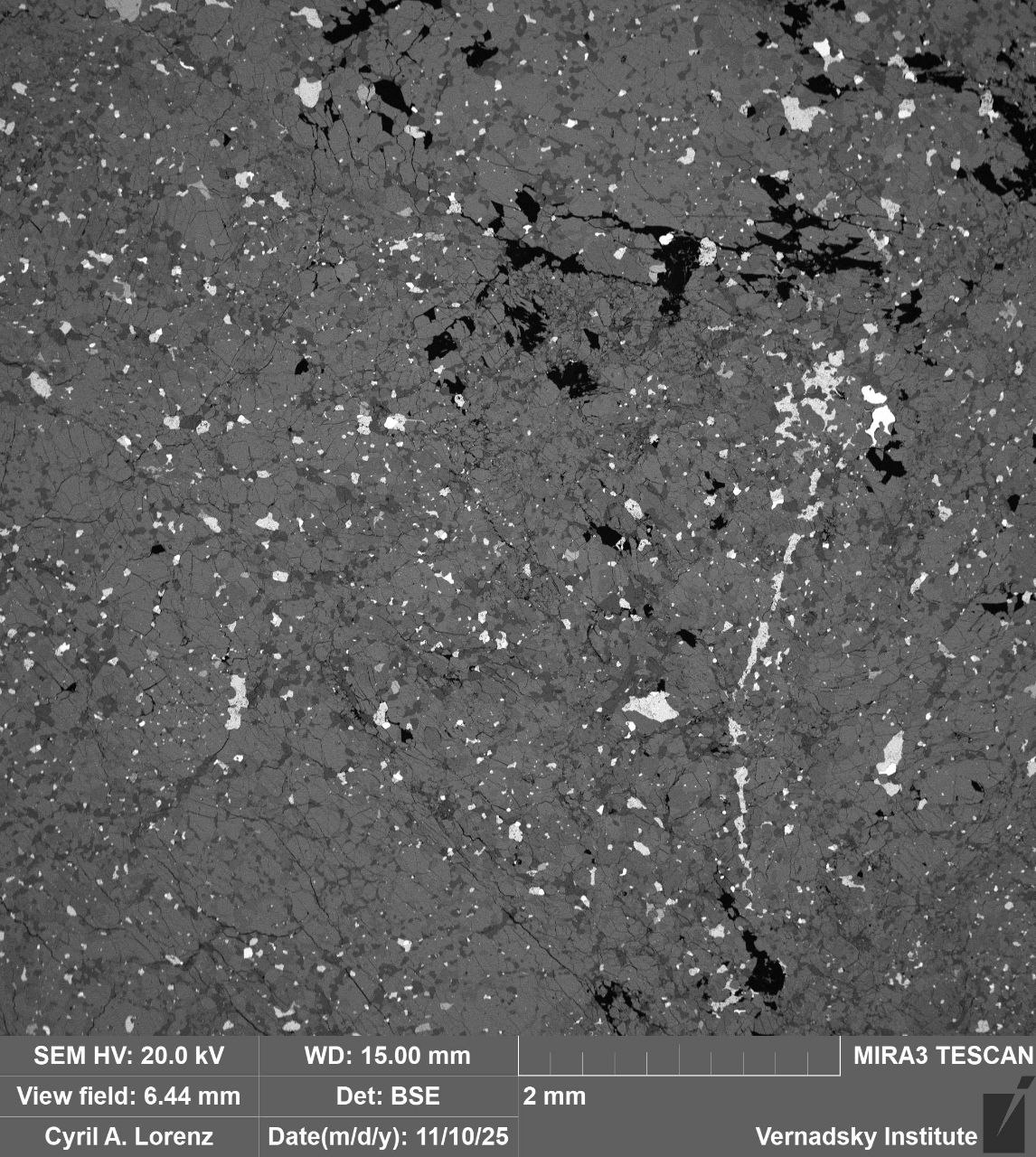
The first results of the analysis of the celestial body are being prepared to be announced next week, the press service of GEOHI RAS reported. In addition to this institute and URFU, the fragments went to the Museum of the History of the Universe in Dedovsk, Moscow region.
Maria Nedyuk, Denis Gritsenko, Yana Sturma and Kristina Surmava worked on the material.
Переведено сервисом «Яндекс Переводчик»
