
Bomb threats: US nuclear tests will trigger a chain reaction in the world

The United States will trigger a chain reaction around the world if it resumes nuclear tests, Konstantin Kosachev, Deputy chairman of the Federation Council, told Izvestia. According to him, other countries will not just watch Washington violate the Comprehensive Nuclear-Test-Ban Treaty (CTBT). However, experts admit that Trump may simply be bluffing in order to further begin the process of nuclear disarmament. Nevertheless, Vladimir Putin instructed specific agencies to study the possibility of a mirror response in the event of a nuclear test by the United States. Whether the world is witnessing a new arms race is in the Izvestia article.
Trump's intention to conduct nuclear tests
The nuclear powers of the world will not watch as the United States violates international agreements with nuclear tests, Konstantin Kosachev told Izvestia.
— If the Americans take this step, they will, as they say, start a chain reaction not only in terms of their own nuclear tests. Because other nuclear powers that are committed to their obligations under the CTBT, and among them, of course, Russia, are definitely not going to be the first to violate these obligations. But in the same way, they will not be the last to observe how the United States of America is doing it alone," stressed the Deputy Chairman of the Federation Council of the Russian Federation.

At the same time, Russia has no plans to speak at the UN Security Council on the resumption of nuclear tests in the United States, Dmitry Polyansky, First Deputy Permanent Representative of the Russian Federation to the United Nations, told Izvestia.
"It is important to begin by clarifying through bilateral channels what Donald Trump meant," the diplomat stressed.
The United States conducting tests of such weapons in a non-restrictive manner will be perceived by other nuclear powers as an escalation and will force them to conduct similar tests, which will thoroughly bury the CTBT and intensify the arms race, added Tigran Meloyan, an analyst at the HSE Center for Mediterranean Studies. This would definitely entail the modernization of nuclear weapons and could affect the global nonproliferation regime. In this regard, the responsibility for the future of international security now lies entirely with Washington, from whose actions all other nuclear powers will be based, the expert said.

Donald Trump wrote on the TruthSocial social network that he had ordered the US Department of War to begin nuclear tests. The president published a similar message earlier, but this time he provided his post with a video clip. The American leader named some other countries that allegedly conduct tests as the reason. However, there were no clarifications in this regard.

Donald Trump
At the same time, Trump had previously claimed that Russia, China, Pakistan and other countries were allegedly conducting secret underground tests. According to Vasily Klimov, a researcher at the E.M. Primakov IMEMO Center for International Security of the Russian Academy of Sciences, it is impossible to hide such a fact.
"All over the world, various types of monitoring stations are functioning properly, about 330 units that monitor any fluctuations in the seas, on the earth's crust, even sounds that human hearing cannot perceive," the expert emphasized.
The world's reaction to Trump's statements
Russian President Vladimir Putin has already instructed the Foreign Ministry, the Ministry of Defense and the special services to develop proposals on the possibility of preparing nuclear weapons tests. Vladimir Putin stressed that the Russian Federation strictly adheres to its obligations under the CTBT. If other nuclear powers conduct such tests, Russia will have to take adequate retaliatory actions.
According to the press secretary of the Russian president, there was no official reaction from Washington to Vladimir Putin's words. Dmitry Peskov added that many Western media outlets do not shy away from distorting the words of the Russian leader. The spokesman called on the NATO countries to listen to what Vladimir Putin said at the Security Council.

Vladimir Putin holds an operational meeting with permanent members of the Russian Security Council
Russian Defense Minister Andrei Belousov said at the meeting that it would be advisable to begin preparations for full-scale nuclear tests. According to him, Washington is actively building up strategic offensive weapons. A possible US withdrawal from the moratorium could potentially destroy the system of global strategic stability.
Chinese Foreign Ministry spokesman Guo Jiakun earlier noted that Beijing is counting on the good faith of the United States in complying with the CTBT and the moratorium on nuclear tests. China also called on the United States to take concrete steps towards nuclear disarmament and non-proliferation to ensure global balance and stability.

Iran also reacted to Trump's remarks. Just three months ago, the United States attacked the republic's nuclear facilities, saying that Tehran should not possess weapons of mass destruction, despite the development of a peaceful atom. In early November, Foreign Minister Abbas Araqchi called the American president a "nuclear bully" who openly violates international law. The minister stressed that Trump is once again testing atomic weapons, at the same time demonizing Iran's peaceful nuclear program and threatening new attacks on the country's facilities.

The European Union called on all nuclear powers to prevent a new arms race. The representative of the European Commission, Anwar al-Anuni, said at a briefing in Brussels: a nuclear war cannot be won by either side, and therefore everything must be done to prevent it from starting.
Why has Trump tightened the tone of his remarks
If the United States does conduct a nuclear test, it is a step towards escalation, to which other countries, including the Russian Federation, will react in a similar way, Konstantin Sukhoverkhov, program manager at the Russian International Affairs Council, told Izvestia. Trump's statements are aimed at an internal and, above all, an external audience. This can be considered an attempt to demonstrate the military power of the United States to the main competitors in the international arena, the expert added.
At the same time, there is an opinion that Washington is trying to encourage other countries, primarily the Russian Federation and China, to nuclear disarmament in this way. But this point of view has one drawback: Moscow has repeatedly called for a reduction in nuclear arsenals, and recently even offered to comply with restrictions in the field of strategic offensive arms even after the expiration of the START Treaty in February 2026.

According to Yegor Toropov, an analyst at the Higher School of Economics, Trump's statement on the possibility of resuming nuclear tests demonstrates the immutability of the American leader's negotiating strategy and tactics: alternating aggravation and warming of rhetorical diplomacy towards Russia — without subsequent sanctions and military escalations.

"Russia, in the context of the US rhetorical pressure to intensify dialogue processes, is in a precision monthly pendulum of aggravation and warming of the US position," he said.
Donald Trump, by tightening his rhetoric against the Russian Federation, is forced to meet the prevailing anti-Russian sentiments among senators. Thus, he prevents the adoption of new sanctions restrictions against Moscow, which has long been desired by the bipartisan super majority of senators. In case of dissatisfaction with the intensity of Trump's anti-Russian rhetoric, senators will be able to adopt new sanctions restrictions against the will of the American leader, guaranteed to overcome the president's potential veto on the relevant bill by a bipartisan super majority, the expert concluded.
Nuclear weapons volumes in the USA and Russia
Meanwhile, Trump insists that the United States ranks first in terms of nuclear weapons, and this is supposedly his merit. Next, according to him, is Russia, followed by China. According to Vasily Klimov, the statement of the American leader is populism without support from real data.
According to the Stockholm Peace Research Institute, Russia is ahead of the United States in terms of the number of nuclear missiles: more than 5,400 nuclear warheads are the world's largest arsenal. In turn, the United States has more than 5,1 thousand warheads. China's nuclear arsenal has about 600 warheads, and their number is growing rapidly.

"Maybe Trump was referring to the qualitative component, but even here Russia has advantages," Klimov stressed.
In particular, the Russian Federation tested the Burevestnik cruise missile, the Avangard missile system, and the Poseidon unmanned underwater vehicle. The United States is next in line with the Columbia submarines to replace the Ohio, and the new Raider B—21 heavy bombers. But even so, the United States is lagging behind Russia in quality, the expert noted.
According to Tigran Meloyan, Trump could have realized the obvious lag in the modernization of the nuclear triad after the Russian tests of the latest weapons, which was the reason for such loud and ambiguous statements.

American scholar Malek Dudakov confirmed that the United States is losing the race, so Trump makes ambiguous statements, but in fact, he is bluffing, because the United States cannot even keep up with China.
"China has the potential to create its own new nuclear warheads, the Americans have not had such a potential for a long time," Dudakov stressed.

According to him, the United States needs hundreds of billions of dollars to modernize its nuclear triad. Renewal programs, in turn, face budget problems, and deadlines are shifting.
Tigran Meloyan added: Washington's harsh reaction may be caused by China's active development of its nuclear triad, which demonstrated its latest missiles during the 80th anniversary of Victory Day parade.
There is no official confirmation of the start of testing in the United States yet. Moreover, there are contradictory statements about whether they will be. Energy Minister Chris Wright said that nuclear tests are not planned in the country. According to him, the United States will carry out "non-critical explosions": fissile material is removed from the munition, and a nuclear chain reaction does not occur. Such tests fully comply with the CTBT.
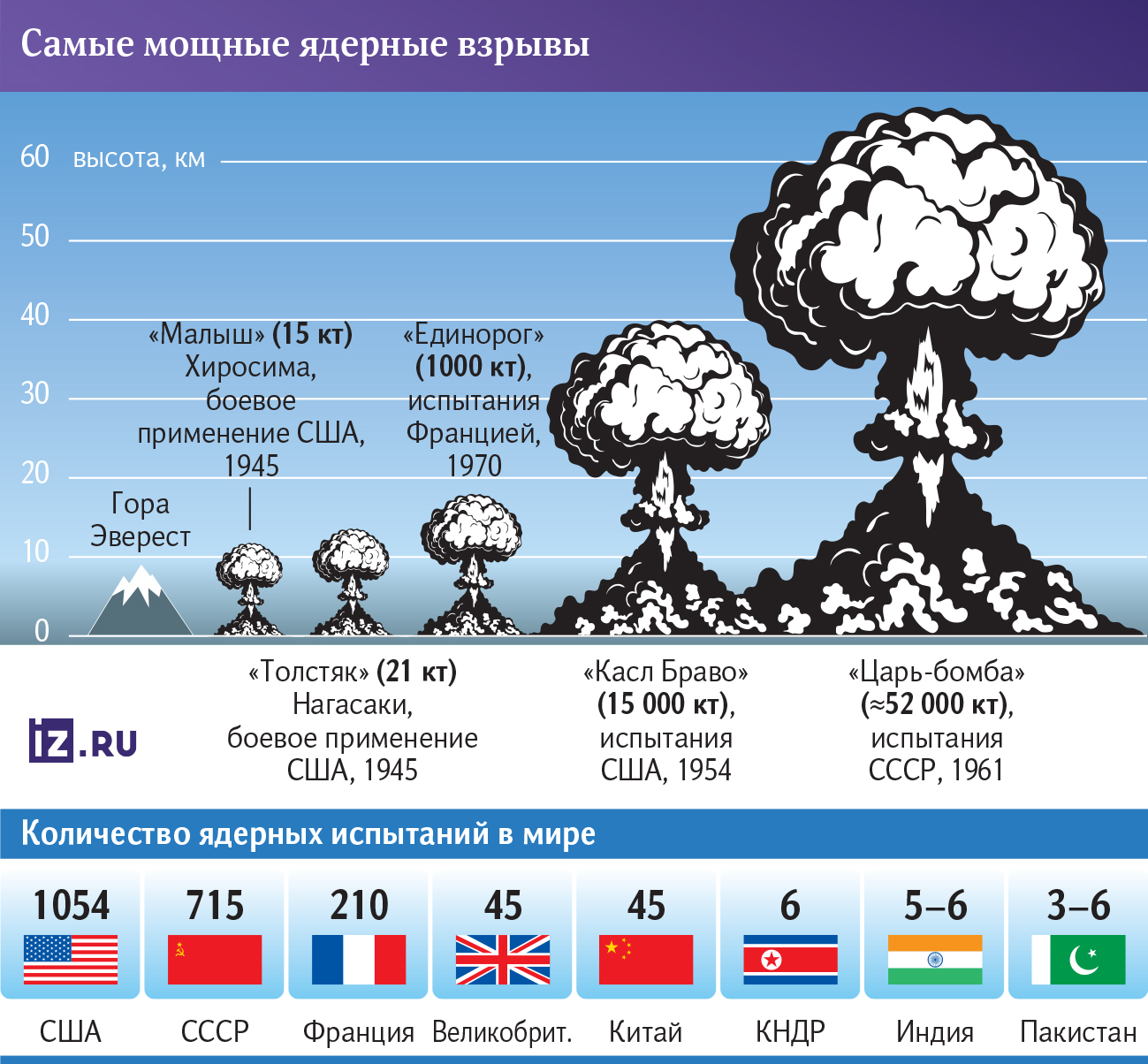
The document prohibits all nuclear explosions for military or peaceful purposes. Any country can join the treaty on a voluntary basis. The CTBT was adopted at the UN General Assembly on September 10, 1996. Russia signed the document in 1996, and ratified it in 2000, but withdrew its signature in 2023 due to the fact that the document never entered into force, including because of the United States.
To launch it, 44 States designated in the annex to the treaty must join the CTBT. However, it still obliges to follow the principles of the document because of the Vienna Convention on the Law of Treaties. If a country has signed a document, it must refrain from actions that would deprive the treaty of its purpose even before its entry into force. In addition, nuclear-armed countries are deterred from testing by unilateral moratoriums they have imposed.
Переведено сервисом «Яндекс Переводчик»
