Forces of thought: bio-ecological settlements, "atomic batteries" and high-speed highways will appear in the Russian Federation
- Статьи
- Science and technology
- Forces of thought: bio-ecological settlements, "atomic batteries" and high-speed highways will appear in the Russian Federation


Scientists from the Kurchatov Institute Research Center have proposed a bio-ecological settlement project for the North with a high level of comfort. Their energy supply will be carried out using an "atomic battery", a low—power nuclear power plant based on nuclear technologies used in space. This was stated by the president of the National Research Center Mikhail Kovalchuk. At the same time, the country is making a breakthrough by building a high-speed highway between Moscow and St. Petersburg, said Deputy Prime Minister Vitaly Saveliev. At the same time, according to Dmitry Pyshny, Deputy Head of the Ministry of Education and Science, genetic technologies are opening up new horizons in medicine and agriculture. About the breakthrough directions of Russian science and technology, which were presented at the educational marathon "Knowledge.Science", — in the material of "Izvestia".
What space technologies will come to the Russian North
The Kurchatov Institute has developed a bio-ecological settlement project for remote areas, primarily the northern territories, with a high level of comfort. It is based on nuclear technologies that have been used for space for several decades. This is a so—called "atomic battery" - that is, a compact low-power nuclear power plant. There is also a project to use it in the Selena project to explore the moon. About this at the educational marathon "Knowledge.Science," said Mikhail Kovalchuk, President of the Kurchatov Institute Research Center.
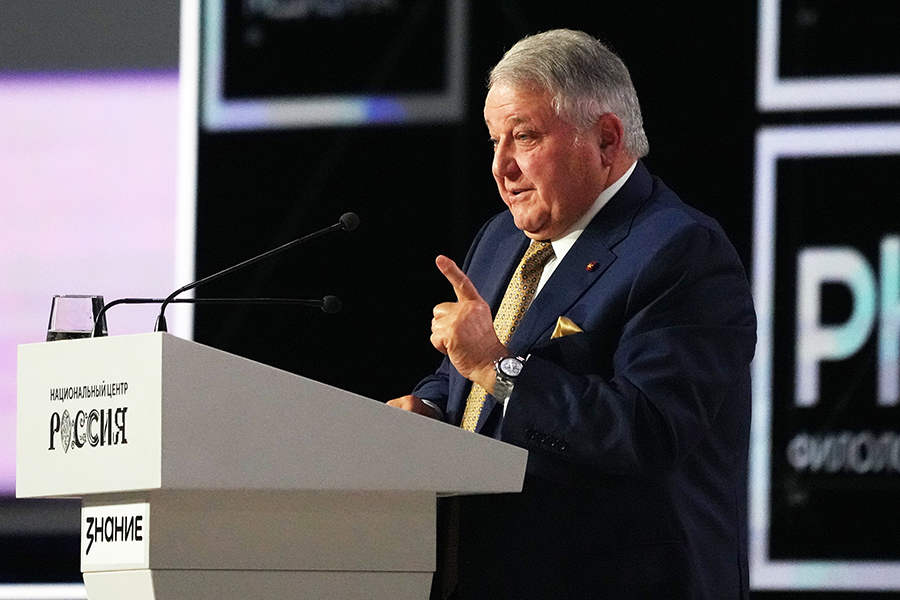
The event was held at the Rossiya National Center on October 30-31. It brought together more than 5,000 schoolchildren, students and young professionals from different regions of the country, who became winners of the All-Russian Olympiads.
— The principle of space nuclear power is relatively simple. It is necessary to convert the thermal energy of the reactor into electricity by means of thermoelectric or thermionic converters. Back in 1964, the Kurchatov Institute created the world's first installation of its kind. It was named "Chamomile". We are the only country that has used nuclear power plants in space for decades," Mikhail Kovalchuk said.
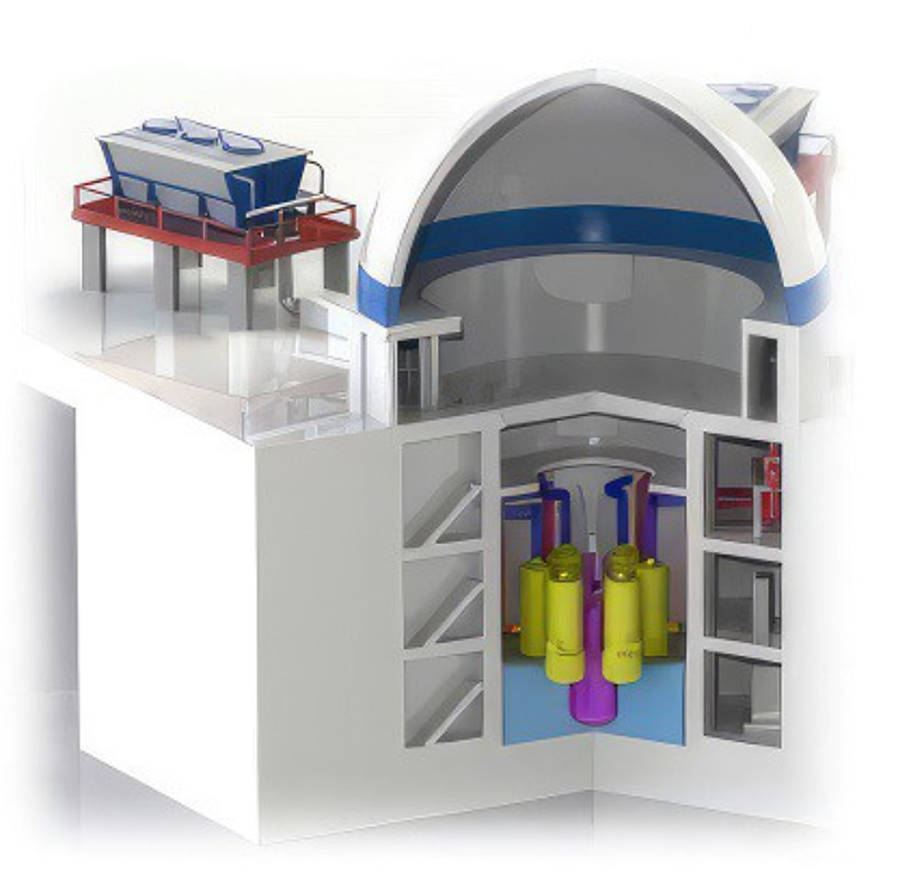
At the same time, such projects have an earthly application. In particular, scientists at the Kurchatov Institute have developed the Elena low-power nuclear power plant, which is designed to operate on Earth. It is a "battery pack" — an installation with no moving parts that can operate for 40 years offline, he added.
According to Mikhail Kovalchuk, such small nuclear power plants, among others, pave the way for the creation of bio-ecological settlements in the most remote areas of our country. In addition, modern technologies and broadband satellite Internet, which is being developed in Russia, will ensure a high level of quality of life in these villages.
"Such bio—ecological settlements will help to develop vast territories and diverse resources of our country," said the President of the National Research Center.
He stressed that historically, materials science and energy are fundamental areas of world and Russian science that determine the technological level of the country. At the same time, the scientist noted, against the background of a new stage in the development of automation, today called artificial intelligence, the education of educated, thinking, creative people who are able to invent and create fundamentally new things is of particular importance — the basis of our future achievements.

What breakthrough technologies are being created in Russia
Deputy Prime Minister Vitaly Saveliev spoke about promising modes of transport in Russia. In particular, he devoted a significant part of his report to the construction of a 679 km long high-speed railway line between Moscow and St. Petersburg. It will pass through six Russian regions and reduce the travel time between the two capitals to 2 hours and 15 minutes.
— This project is changing the way we think about transport in Russia. The line is based on a seamless concrete slab that can withstand harsh Russian conditions, including extreme temperature changes, and will last at least half a century. Such a track is necessary for trains that will reach a cruising speed of 360 km/h. The length of bridges, overpasses and other artificial structures exceeds 180 km," he said.

The Deputy Prime Minister clarified: according to forecasts, the passenger traffic of the high-speed highway will amount to at least 23 million people per year. New eight-car trains of domestic production will run on the line, which will be equipped with seamless Internet, a biometric boarding system for fast loading and unloading of passengers, and robotic service. Deliveries of the first trains of this type are planned to begin in 2028.
Among other topics, the educational marathon discussed the methods of gene editing that are being developed in Russia. Dmitry Pyshny, Deputy Minister of Science and Higher Education, addressed these issues.
In particular, according to him, DNA sequencing technologies have revolutionized various fields of science. For example, it helped to understand how small errors in DNA cause diseases, which, in turn, allowed us to create accurate diagnostic tools, for example, for PCR tests.
Nanobiotechnology was also born on this basis, the deputy head of the department noted. In particular, it is now possible to assemble various materials from DNA molecules, as from a construction kit. For example, researchers, by creating certain conditions, "force" them to assemble into tiny "boxes" in which they "pack drugs for targeted delivery directly into diseased cells.
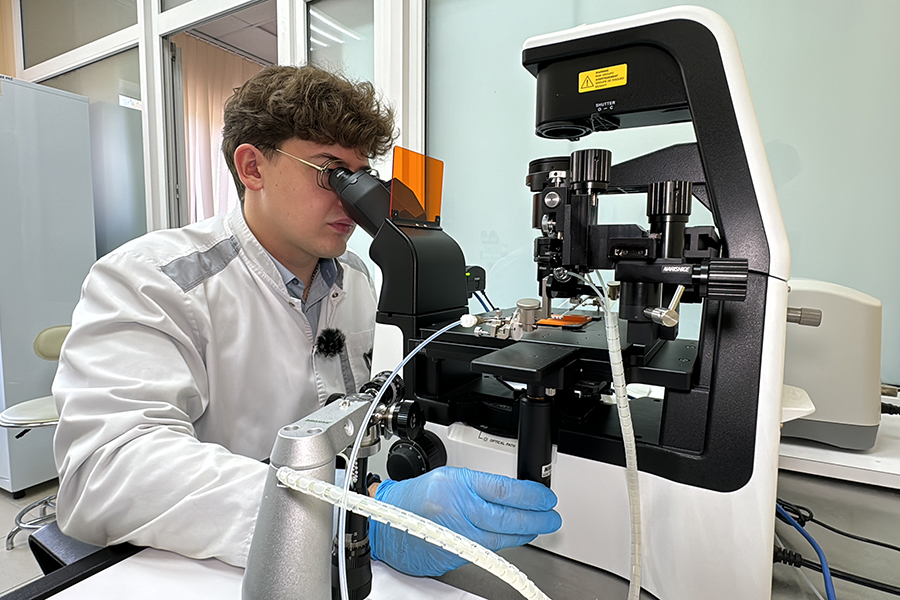
— Realizing the enormous potential of these technologies, our state has made their development one of its priorities. The relevant presidential decree approved the program for the development of genetic technologies, which covers four key areas: medical technology, industrial microbiology, biosafety and agriculture, — said Dmitry Pyshny.
As part of this program, world-class genomic centers have been created, research teams are being supported, and national bioresource collections are being formed to preserve genetic diversity, he added. Among the results that the implementation of these programs has already brought are new immunobiological drugs, record yields and other properties of wheat varieties.
Переведено сервисом «Яндекс Переводчик»
