Without unnecessary seams: the new material will increase the survivability of heat-resistant parts by 25 times
- Статьи
- Science and technology
- Without unnecessary seams: the new material will increase the survivability of heat-resistant parts by 25 times


Russian and Chinese scientists have found a way to increase the durability of niobium alloy parts by 25 times. They have created a heavy-duty coating that has the effect of "self-healing" defects. The development eliminates the vulnerability of metals to oxidation under high heat. The new material increases the resistance of products to wear and extreme temperatures. The developers used recycled industrial waste as the starting material — the heating elements of silite furnaces, the most popular thermal installations in the world.
How to protect niobium alloys from destruction
Scientists from the University of MISIS, in collaboration with colleagues from China, have created a protective coating that increases the wear resistance of niobium alloy products by 25 times. The Ministry of Education and Science of the Russian Federation told Izvestia about this. Also, parts treated with the proposed composition are many times better able to withstand ultra-high temperatures.
"We have created a coating on niobium alloy substrates that prevents oxygen atoms from penetrating deep into the material. This prevents oxidation at high temperatures and further destruction," said Evgeny Levashov, Head of the Department of Powder Metallurgy and Functional Coatings, Director of the MISIS—ISMAN Scientific and Educational Center for Self-Propagating High-Temperature Synthesis, Corresponding Member of the Russian Academy of Sciences.
He explained that niobium alloys are valued in industry for their ability to withstand extreme operating conditions such as aggressive environments, high pressures and severe thermal stress. For example, they are used in critical components in gas turbine engines, in oil pumping equipment, in molten metal tanks, in electric capacitors, as well as in individual spacecraft structural elements.
However, these materials also have weaknesses. In particular, when they are strongly heated in an oxidizing environment (for example, in the presence of oxygen), they quickly deteriorate and collapse. Therefore, to make the parts more durable, scientists have created a special protective compound. As a reagent, the developers used a mixture based on a chemical compound of molybdenum and silicon, which was applied to a niobium substrate by spark plasma sintering, a technique for processing materials using direct current.
— During sintering, a strong diffusion zone is formed between the coating and the substrate. In it, the atoms of the substrate are mixed with the atoms of the applied coating. This area allows us to achieve record heat resistance and resistance to cyclic thermal loads," explained Philip Kiryukhantsev—Korneev, co-author of the scientific paper, professor of the Department of PMiFP, head of the laboratory "In situ Diagnostics of Structural Transformations" at the NUC SHS.
A new method of industrial waste disposal
Moreover, as the researchers noted, due to the formation of a layered structure, the new coating has the effect of self-healing defects. This is achieved by the formation of a liquid or plastic phase during the oxidation of the material, which flows into the cracks and fills them.
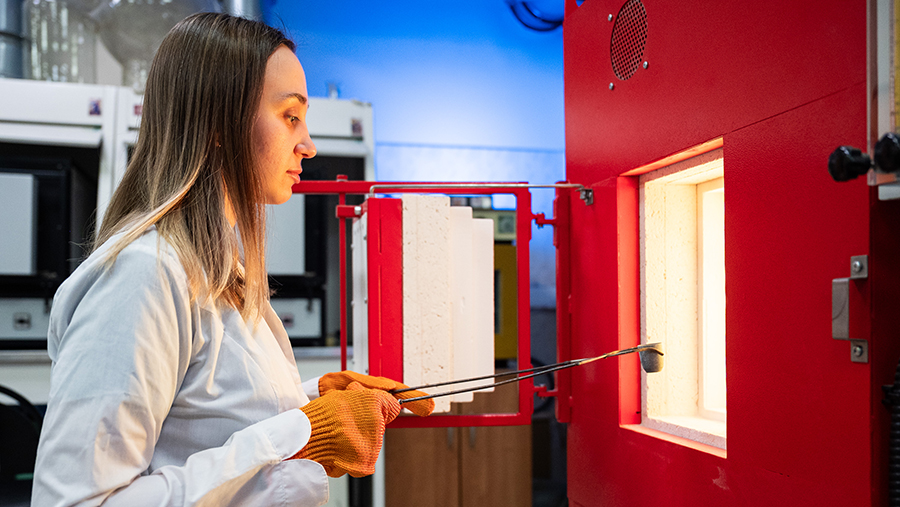
— When heated and cooled, the metal expands and contracts more strongly than the ceramic coating. Cracks may appear in the coating due to this difference. To solve this problem, components are added to the material that form borosilicate glass at operating temperatures. It provides a self-healing effect. It has unique natural properties: when heated too much, it becomes fluid, fills in defects and seals them securely,— explained Evgeny Levashov.
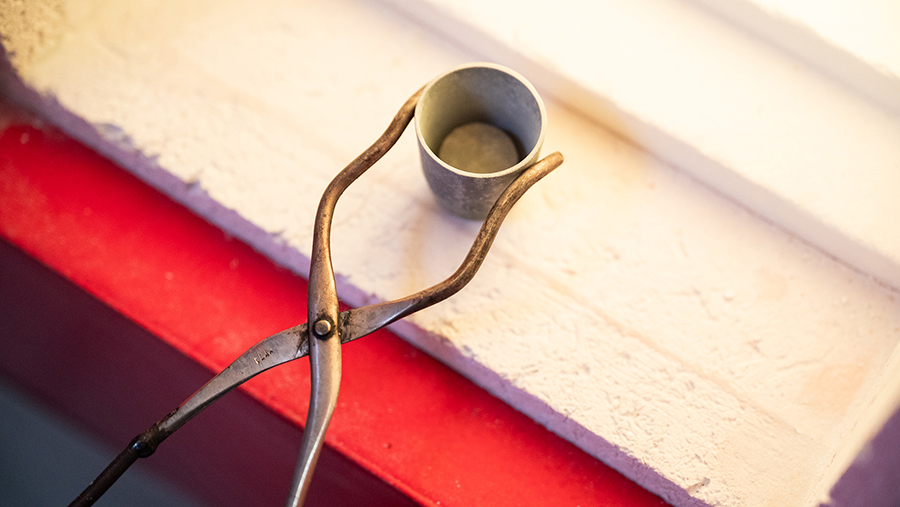
She added that the developers used spent silite heaters as raw materials to produce the powder. These heat sources are made of molybdenum disilicide. They are considered the most popular working elements for industrial furnaces.
According to experts, such devices occupy about 60% of the global heating market. Therefore, the importance of the proposed technology lies in the creation of a new method of industrial waste disposal.
— Materials that are capable of adaptation and functional response to external factors are currently becoming a reference point for metallurgy and materials science. Modern developments in this field include, for example, shape memory alloys, thermally responsive compounds, magnetically sensitive alloys, self—healing composites, and others," Rafail Apakashev, Professor of the Department of Chemistry at Ural State Mining University, told Izvestia.
Russian research institutes and scientific and production associations are actively using smart materials, introducing them into space and airborne aircraft, he noted. The presented solution may be in demand, for example, in the nuclear power industry to create protection for the shells of fuel elements, pipelines and components of cooling systems of nuclear reactors. In space technology, it is used in the manufacture of leading edges of aircraft, ship fairings, and satellite antennas.
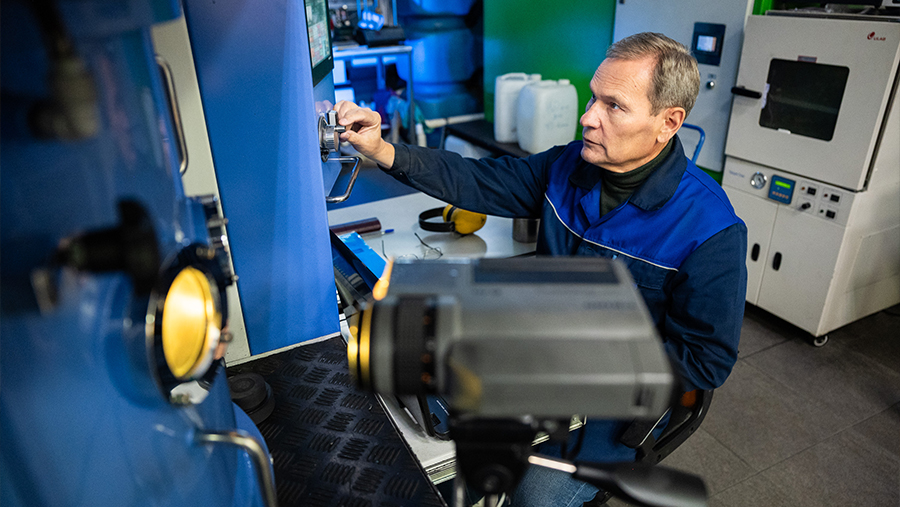
The disadvantages of the development include the complexity of the production organization due to the use of specialized equipment, the need for special surface preparation before application, and others, the expert added.
— Previously, we created materials of general, universal use. And now — with a clear understanding of the operating conditions in which they will work. Therefore, it is correct to replace the definition of "smart" with "functional," says Tatiana Ilinkova, PhD, Professor of the Department of Materials Science, Welding and Industrial Safety at Kazan National Research Technical University named after A.N. Tupolev — KAI.
According to her, niobium alloys are themselves refractory and, accordingly, heat—resistant and heat-resistant alloys. The melting point of niobium is 2468 °C. Therefore, if you also need to apply protective coatings on them, it means that they will be used in some unique types of equipment. Such materials will be useful, in particular, for modern military equipment.
— The resource of improving the operational properties of already known materials is currently largely exhausted. Further development is possible through the search for original (smart) solutions. The presented "self—healing" coatings can be in demand in mechanical engineering and power engineering, in products designed to operate at high temperatures in an aggressive environment," commented Stepan Stepanov, Associate Professor of the Department of Heat Treatment and Metal Physics at Ural Federal University.
However, such a responsible purpose of the products will require lengthy procedures for certifying the coating properties and testing them in real conditions, he added.
— The unique protective coatings of the new generation developed by scientists have proved to be exceptionally durable — their hardness reaches 15-16 GPa, and their resistance to wear is ten times higher than that of base metals. When tested at 1200 °C, the materials retained their integrity, whereas conventional alloys quickly deteriorate under such conditions," said Igor Karpov, Associate Professor, Head of the UNESCO Department of New Materials and Technologies and the Basic Department of Solid State Physics and Nanotechnology at Siberian Federal University.
According to him, due to the "self-healing" effect, parts processed by the proposed method can not only resist oxidation and friction, but also recover, which prolongs their service life. The research opens the way to the creation of smart materials that can work for years even in the harshest conditions.
Переведено сервисом «Яндекс Переводчик»
