- Статьи
- Science and technology
- Cancer in the environment: new drug will hit tumor cells on two fronts

Cancer in the environment: new drug will hit tumor cells on two fronts

Scientists have developed a drug that simultaneously binds to tumor cell proteins and receptors on the surface of blood vessels that feed neoplasms. In experiments on mice, the compound under study suppressed tumor growth by about 70%, and also reduced the number of blood vessels around them by 40%. The resulting drug, which differs from analogues in its dual activity, will potentially find application in clinical oncological practice. For more information about the development, see the Izvestia article.
An oncopreparation with double activity
Researchers from Lomonosov Moscow State University and the Institute of Bioorganic Chemistry named after Academicians M.M. Shemyakin and Yu.A. Ovchinnikov of the Russian Academy of Sciences (Moscow) and colleagues have developed a hybrid protein that simultaneously exhibits anti-oncogenic, or suppressing the development of neoplasms, and antitumor (destroying cancer cells) activity. The combined molecule is a modified protein based on the natural cytokine TRAIL. The authors additionally added peptides capable of binding to proteins present on the surface of both malignant cells and tumor vessels.

Anna Yagolovich, an employee of the Lomonosov Moscow State University and the SSC IBH RAS, and Irina Druzhkova, an employee of the Research Institute of Electrical Engineering and BMT of PIMU, at a joint work
As the scientists explained, the development of the tumor is accompanied by angiogenesis — the formation of new blood vessels that feed the neoplasm cells. Drugs that interfere with this process have already been approved for the treatment of many diseases, such as metastatic renal cell carcinoma and metastatic breast cancer. However, as a result of antiangiogenic therapy, the blood supply to the tumor is mainly suppressed, and the neoplasm cells do not die. At the same time, there is often a lack of oxygen in the area of action — hypoxia — and inflammation, which increase resistance to chemotherapy. Therefore, scientists are striving to develop drugs that simultaneously affect malignant cells and blood vessels.

In the new work, the researchers have established how the hybrid protein works. Using molecular modeling, the authors recreated its three-dimensional structure and showed that it stably contacts target receptors on the surface of vascular and tumor cells. Thus, the components of the protein have not lost the properties of their predecessors.
They also established how the drug affects the growth of the two most malignant cell lines — glioblastoma (brain tumor) and pancreatic cancer — as well as vascular cell culture. The hybrid protein triggered programmed death in both lines and suppressed vascular cell division.
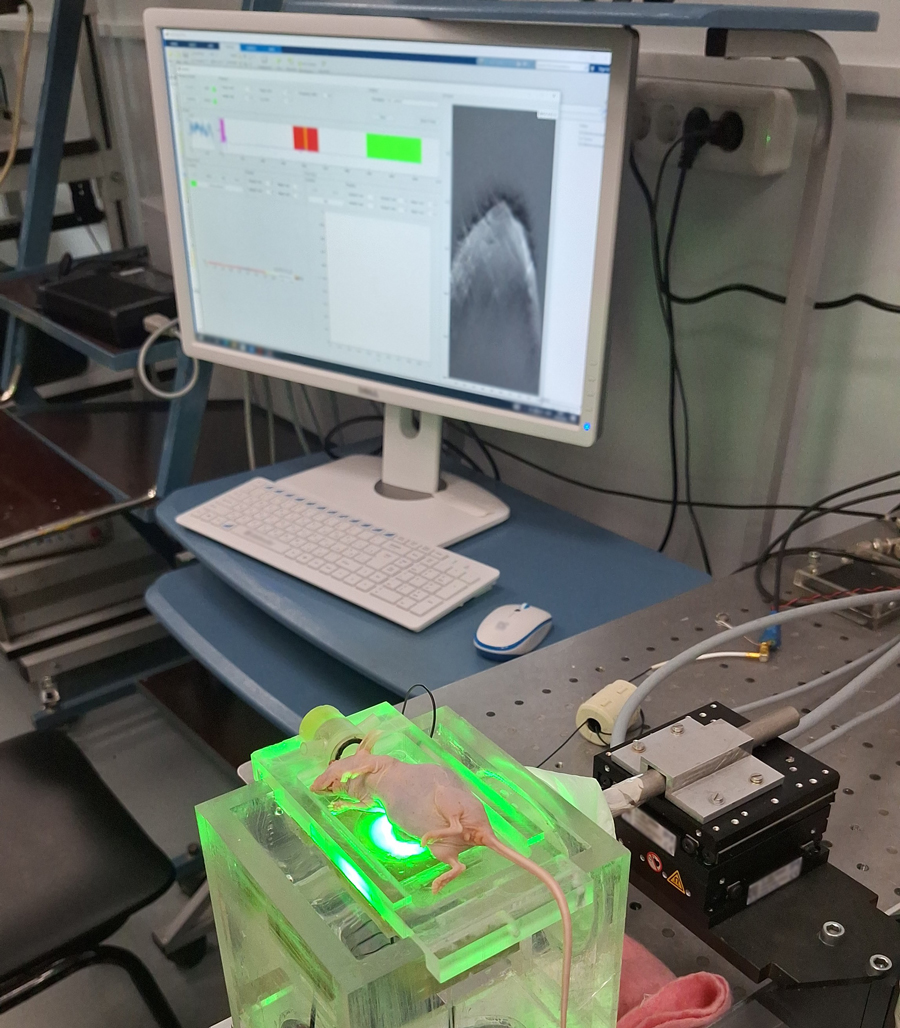
After testing on cells, the scientists subcutaneously injected glioblastoma and pancreatic cancer cells into mice to test the activity of the combined molecule in a living organism. The compound suppressed the growth of neoplasms by 74% in the case of glioblastoma and by 69% in the case of pancreatic cancer. Similar indicators for the initial molecule without peptides were 45% and 51%, respectively. At the same time, the studied proteins did not cause side effects in mice.
— Our results indicate that in the future, the developed protein may become an effective drug for the treatment of tumors with a dense vascular network. Compared with other compounds, our drug had a complex effect on several different targets of malignant cells and blood vessels, thereby increasing the effectiveness of treatment. In the future, we plan to move to the preclinical testing stage," Anna Yagolovich, PhD, Assistant Professor at the Department of Bioengineering at the Lomonosov Moscow State University Faculty of Biology, senior researcher at the Laboratory of Protein Engineering at the Shemyakin and Ovchinnikov Institute of Bioorganic Chemistry of the Russian Academy of Sciences, told Izvestia.

A trend in cancer therapy
In addition, using optical angiography, an approach for visualizing the vascular network of a tumor, the authors were convinced that the hybrid protein reduced blood supply. Thus, the proportion of blood vessels decreased by about 40% compared with the indicators in animals that did not receive treatment.
Thus, the researchers confirmed the dual activity of the protein they developed. The resulting drug has the potential to find clinical use in antitumor therapy.

Irina Druzhkova, Head of the Laboratory of Molecular Biotechnologies at the Research Institute of EO and BMT of PIMU, works with model animals
So far, not a single drug has been registered in the world that can induce programmed cell death (apoptosis) and simultaneously suppress the growth of blood vessels around a neoplasm, Philip Maksimov, head of the laboratory of structural and functional research of innovative antitumor drugs at MIPT, told Izvestia.
— This is very important because a tumor, like any other tissue, needs nutrients and oxygen. The uniqueness of this drug is that it can also cause cell death at the same time, and this is a trend in modern cancer therapy," said the scientist.
The created hybrid protein resembles a "body with two palms": one binds to receptors on the surface of tumor cells, the other binds to receptors of the vascular endothelium feeding the neoplasm, molecular biologist Arina Kholkina compared.

— Such two-way interaction simultaneously triggers the death of malignant cells and reduces the growth of the vascular network, breaking the stable communication between them. In experiments on mice, the growth of aggressive brain tumors and pancreatic cancer decreased by about 70%, which makes this approach a promising area of combination therapy," the specialist said.

The development can solve one of the key problems of modern cancer therapy — the limited effectiveness of antiangiogenic drugs that block the blood supply to the tumor, but do not cause the death of its cells. As a result, it may temporarily "starve", but it does not collapse. The dual mechanism of action — apoptosis plus angiogenesis suppression — can provide a more comprehensive and sustained antitumor effect, said Andrey Burkov, Director of Strategic Marketing and Product Portfolio Development at R-Pharm.
— Such developments form the basis for a new generation of biotechnological drugs in oncology — drugs capable of initiating tumor death at the cellular level. This area certainly has the potential to transform approaches to the treatment of aggressive solid neoplasms, including glioblastoma and pancreatic cancer. The main challenges to be solved are related to the pharmacokinetics of protein molecules, the risk of immunogenicity, and the variability of receptor expression in different types of tumors," he said.

The study involved employees of the Volga Research Medical University (Nizhny Novgorod), the A.V. Institute of Applied Physics. Gaponova-Grekhova RAS (Nizhny Novgorod), the National Medical Research Center for Radiology of the Ministry of Health of the Russian Federation (Moscow), the University of Zurich (Switzerland) and the Swiss Higher Technical School of Zurich.
The results of the study, supported by a grant from the Russian Science Foundation (RSF), are published in the Journal of Translational Medicine.
Переведено сервисом «Яндекс Переводчик»
