Locally and globally: how to get land in Moscow for one ruble a year


Can renting land in the Russian capital cost one ruble per year if you are going to implement a business project on the selected site? Do not rush to answer negatively, because Moscow, as you know, is a city of opportunities. And there is an updated mechanism for large-scale investment projects, which allows businesses to lease land for one ruble per year. Now investors can bid for a selected land plot, for which the parameters of the future project have been agreed in advance, which greatly speeds up the business launch process and removes bureaucratic barriers. In addition, the capital has a program of preferential loans to enterprises and a system for working with offset contracts that oblige the state to buy products after investments in production. Due to this, the index of industrial production of manufacturing industries has almost tripled over the past five years. Izvestia understood how this is changing the prospects of Moscow industry.
What business support measures have been implemented in Moscow
In Moscow, businesses can obtain land plots for the construction of new production facilities at a discounted rate of one ruble per year, Izvestia found out. A support measure called "Large-scale Investment Projects" (MaIP) is operating in the capital, which effectively helps enterprises localize production in the city, the Moscow Department of Investment and Industrial Policy said.
The rate of one ruble per year looks symbolic, but the city benefits from future taxes, jobs, and economic activity. This approach makes it possible to put vacant land into circulation and increase the investment attractiveness of the capital.
In 2024, the Moscow authorities updated the IPM mechanism, allowing for preferential land leases to be issued immediately after bidding, which greatly simplified the procedure. Previously, to lease a site for the construction of a plant, it was required to develop a project, confirm the amount of investment, and the contract took about nine months to complete. Now it is enough to choose a plot on the Moscow investment portal, participate in the auction and, if successful, sign an agreement, after which the land can be rented at a rate of one ruble per year. The main parameters (area, industries and types of permitted use) are defined in advance, which makes it possible to proceed immediately to design and construction. The time required to complete construction and installation work has also been significantly reduced, by an average of 40%.
Moscow's manufacturing enterprises actively use debt financing when forming capital expenditures, said Yulia Tsertseil, Associate Professor of the Department of Finance for Sustainable Development at Plekhanov Russian University of Economics. In the computer, electronics, and optics industries, about 60% of companies borrow up to 30% of their capital, and about 20% borrow up to 100%. The rest are evenly distributed: up to 70, 50 and 40% of borrowed funds are held by 15% of companies in each group. Reducing the cost of servicing such loans allows companies to reduce overall costs and increase competitiveness.

Currently, about 100 large-scale investment projects have been approved and are being implemented in the capital, which together will create about 60 thousand jobs. All projects are at different stages, from site preparation to active construction.
As part of the MaIP program, a cable complex is being built in the Metrogorodok area (VAO) on a 3.4—hectare site: the investor, NPP Spetskabel, will invest at least 5 billion rubles, the complex area will amount to 32.9 thousand square meters, and more than 300 jobs will be created at the enterprise. In the Nizhny Novgorod region, the Moscow Endocrine Plant is building a full-cycle pharmaceutical complex with an area of more than 4.1 thousand square meters, having invested at least 1.1 billion rubles in the project; more than 260 jobs will be created here.
Major investors remain the main participants in the program, as the IAP program assumes serious capital investments and long deadlines. However, the new conditions make the mechanism more transparent and can also attract medium-sized businesses if they are ready for large-scale projects.
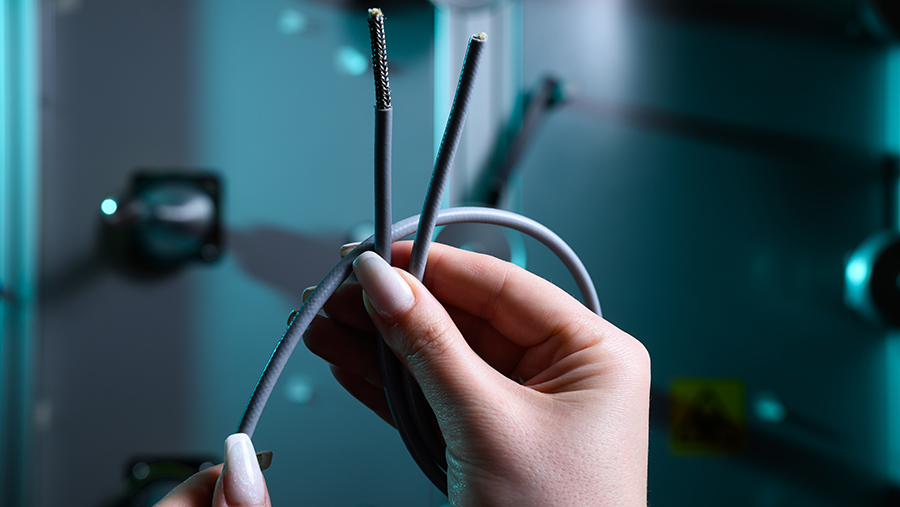
"With the support of the city authorities, we have already upgraded one of our existing workshops and started producing new specialized optical cables. In addition, the city's assistance in the construction of the new Spetskabel cable plant in Moscow, which will cover an area of 33,000 square meters and create 260 new jobs, will significantly strengthen our production facilities," said Sergey Lobanov, Vice President of the Spetskabel Group of companies.
Moscow programs are designed not only for large businesses. Medium-sized business projects in these areas have the same chances as those of large companies. In addition, the simplification of procedures is specifically designed to make the program convenient and accessible to companies without a large staff.
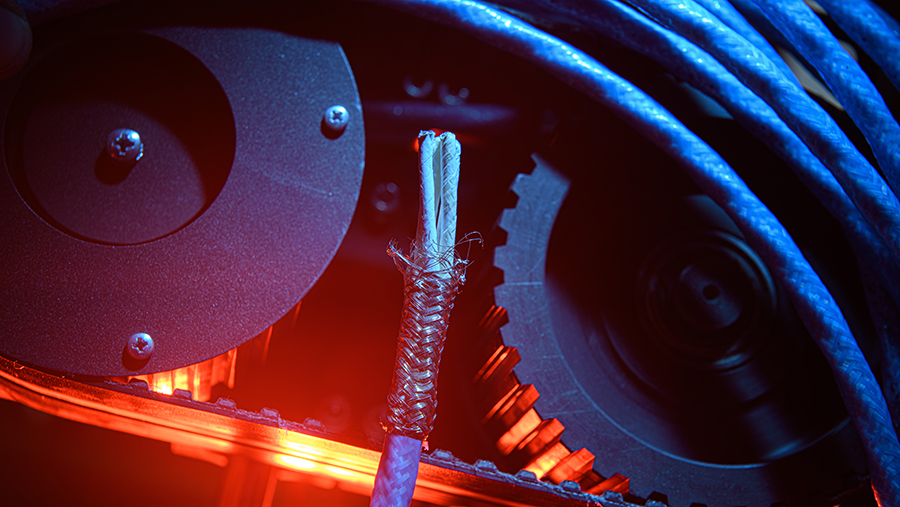
The IAPM mechanism is expected to increase the number of investors and launch new projects in key industries for the city, the Moscow Department of Investment and Industrial Policy said.
"The program's potential is confirmed by the dynamics: in 2024, manufacturing enterprises in the capital increased output by 17.8%. The main goals are to speed up approvals and simplify administrative procedures as much as possible so that businesses can start construction and production faster. MaIP allows us to develop industries that directly affect the quality of life of Muscovites, including the food, construction and light industries," said Anatoly Garbuzov, Minister of the Moscow Government and Head of the Department of Investment and Industrial Policy.
What other support measures are in place in Moscow
"Regional business support measures may be more effective than federal ones. Their main advantages are taking into account local specifics, understanding the needs of the region, as well as greater efficiency in decision—making and a flexible approach," said Vasily Kutyin, Director of Analytics at Ingo Bank.
The Moscow authorities also provide preferential investment loans to businesses, the Department of Investment and Industrial Policy of the city of Moscow clarified. The loan amount can reach 5 billion rubles, and the support period is up to five years, while the Moscow Fund for Industry and Entrepreneurship Support compensates for 50% of the key rate of the Bank of Russia.
In the first eight months of 2025, the rate of attracting investments into industry with the support of the fund increased by more than 40% compared to the same period last year. Thanks to preferential investment loans, all industries are developing in the city, including pharmaceuticals, microelectronics, photonics and quantum technologies, projects for the production of unmanned aerial vehicles and other industrial areas are being implemented.
The Plasma-Next company, which operates in the Technopolis Moscow special economic zone, has received an investment loan of 5 billion rubles. She will invest this money in the construction of a large modern plant with an area of more than 43 thousand square meters at the Alabushevo site of the Technopolis Moscow special economic zone, where they will produce medicines from blood plasma.
Another example of successful investment activity is demonstrated by S.P.Gelpik, one of the leading manufacturers of equipment for X-ray diagnostics. For the construction of an industrial complex in the south-west of the capital, the company has attracted investment loans totaling 2.4 billion rubles. The new facility will expand production facilities and introduce modern technologies in the field of medical equipment.

"Moscow's support measures — a program of large—scale investment projects and preferential loans - have proven their effectiveness using our example. The lease of land for 1 ruble per year allowed S.P.Gelpik to significantly reduce initial costs and redirect the released funds to the construction of a modern production complex equipped with advanced technological equipment. Our project within the framework of the IAP not only lays the foundation for the growth of Moscow's industry, but also works directly to achieve national priorities. This is a clear example of an effective public-private partnership that provides a powerful impetus for the development of high—tech business and strengthens Russia's independence in a strategically important area — the production of medical X-ray diagnostic equipment," said Vladimir Avramov, CEO of S.P.Gelpik.
Ilkon, a furniture manufacturing company that is part of the Felix Group, has taken out a loan of 300 million rubles to implement a major project in Moscow. A new production building with an area of over 13,000 square meters has been built in the east of the city. Office furniture, as well as furniture for homes, schools and hotels will be produced there. Thanks to this, the company will be able to increase production and offer more different products. The new complex will help develop the furniture industry in Moscow and create additional jobs.
"Thanks to the support of the Department of Innovation and Industrial Policy, we have the opportunity to grow. MaIP provides a reliable basis for the development of production in the capital. Participation in this program gives businesses confidence that the project will be successfully implemented, and for the city it means new jobs and new taxes, infrastructure development," says Andrey Mikhailov, CEO of Felix.
The Moscow-based Ripe Fruits company has received about 3 billion rubles to create a production facility where fruits and berries will ripen in natural conditions, almost like in nature. Thanks to the support of the city, the company has purchased 72 units of special equipment and opened about 400 new jobs. Now the capital will be able to receive delicious and high-quality fruits grown with care for freshness all year round.
Since 2022, the fund has helped companies raise over 260 billion rubles. It is planned that by 2030 the volume of concessional investment loans will almost triple, the Department of Investment and Industrial Policy of the city of Moscow noted.
In addition, the capital holds a leading position in the use of offset contracts, 35 such agreements have already been concluded. Offsets cover almost all industries — pharmaceuticals, medical device manufacturing, dairy products, elevator and transport equipment, electric vehicles, light industry, as well as products for landscaping, housing and communal services and road construction.
An offset contract is an agreement under which a supplier undertakes to establish production of goods in a region in exchange for a guarantee of the supply of these goods. An example is a dairy kitchen for children and expectant/nursing mothers in Moscow (the authorities invest in the production of dairy products in order to guarantee their purchase).
Offsets guarantee the supplier stable demand for years to come, which reduces the risks of investing in local production. For the city, this means the development of technological competencies, job creation and sustainable utilization of enterprises. It also reduces marketing and distribution costs, which has a positive effect on business development.
For example, the Biocad company produces drugs for the treatment of oncological and autoimmune diseases under an offset contract. The Technopolis Moscow special economic zone is home to a full-cycle production facility, including the company's own production of pharmaceutical substances. As part of the offset contract, the company has been supplying medicines to Moscow hospitals and polyclinics since 2021.
Alexey Torgov, Vice President of Corporate Relations and Communications at BIOCAD, noted that Moscow's investment climate has remained one of the most attractive in the country for many years. Since 2021, the BIOCAD production complex has produced 5 million packages of medicines for the treatment of oncological and autoimmune diseases.
"The city provides a comprehensive system of business support measures, offering investors ample opportunities for development within the framework of public-private partnership. A striking example of this is the first offset contract in Russia, which was concluded between a biotech company and the Moscow government in 2017. Our company has invested more than 8.2 billion rubles and built a modern pharmaceutical production complex in Zelenograd. During the implementation of the project, we laid the foundation for the future development of the enterprise in order to be able to provide medicines not only to residents of Moscow, but also to the whole of Russia," said the representative of BIOCAD.
Since 2022, the Lianozovsky and Tsaritsinsky dairies have supplied Moscow dairy kitchens with more than 150 thousand tons of products for children and their mothers under an offset contract. Such a contract helped to provide the city with local products and to establish the production of powdered milk mixtures, which previously had to be bought in other regions and in Belarus. At the same time, the plants underwent major modernization.
In 2025, Moscow signed three similar contracts for the supply of equipment for urban transport. For example, we have agreed with the company "Banking and Financial Systems" to produce about 2 thousand vending machines for the sale of travel tickets. Their production is organized on the territory of the Technopolis Moscow special economic zone in Rudnevo. Thanks to these contracts, the new ticket machines will become better and more convenient, and passengers will be able to buy tickets faster.
According to Artem Zhilonov, CEO of Banking and Financial Systems, the key advantages of the new devices for the subway are a high level of localization of production, modern industrial design of its own design, functionality, compactness and durability. They are as convenient as possible in terms of use by passengers and in terms of maintenance by metro employees.
Together, the programs form a flexible package of incentives, said economist Andrei Barkhota. The combination of cheap land lease, concessional loans and guaranteed demand through offsets reduces investor risks and increases the predictability of investment returns. For large companies, this is an argument in favor of expanding production sites, and for the city, it is a factor in the influx of capital and technology.

Why is it important for Moscow to develop industry
In the period from 2019 to 2024, the index of industrial production of manufacturing industries in the capital increased almost 3 times, which is 5.7 times higher than the same indicator in Russia. The capital has become a dynamically developing industrial region, according to the Department of Investment and Industrial Policy of the city of Moscow.
Almost 4,600 enterprises operate in the industrial sector of the capital. "This is the most important sector of the urban economy, employing more than 755,000 Muscovites. About 150 new high—tech companies are opening annually and hundreds of thousands of squares of sought-after production areas are being built," Moscow Mayor Sergei Sobyanin said in his channel on the MAX messenger.
The growth potential of high-tech industries and the strategy for attracting investments in the city's industrial infrastructure were discussed on October 8 at the first Moscow Investment and Industrial Forum. The event at the Pechatniki site of the Technopolis Moscow special economic zone brought together key players in the industrial sector: representatives of the authorities, development institutions and major enterprises.
As Anatoly Garbuzov, Minister of the Moscow Government and Head of the Investment and Industrial Policy Department, noted at the forum's plenary session, the city must strive for technological leadership and become the world's first in high-tech industries. "For this purpose, our clusters are developing, which we are doing together with the Ministry of Industry and Trade of the Russian Federation, various associations and associations. It is important for us to reduce the cost of final products and increase value added, increase the average wage of workers at factories. According to the industrial development strategy until 2030, over the next five years, Moscow's share in the GVA of Russian industry will increase from 18 to 22%," the minister explained.
The support of entrepreneurs in Moscow is much higher than in other regions of Russia, Andrey Barkhota is sure. For example, preferential land lease for industrial facilities has practically no analogues. This helps businesses save on costs, increase production faster, and budget losses from low rent are offset by rising demand and taxes.
— Moscow's business support measures are potentially very effective, as they work precisely. This is especially true for land and infrastructure — access to scarce and expensive resources in Moscow is extremely important for investors," concluded Oleg Abelev, Head of the analytical department at the Rikom—Trust investment company.
Ultimately, regional business support measures can play no less a role than federal ones.
Federal programs usually set the general framework and funding, but it is the regional tools that make it possible to adapt more quickly to specific business needs. Competition for investors is high in Moscow, so city benefits can in some cases be even more effective than national initiatives.
Industrial development remains critically important for the sustainability of the urban economy, concluded Vladimir Chernov, analyst at Freedom Finance Global. The real sector forms a significant tax base, provides jobs and stimulates the growth of related industries, from logistics and transport to science and education. The presence of modern production within the city reduces dependence on external supplies, strengthens economic security and makes the capital less vulnerable to global crises.
Переведено сервисом «Яндекс Переводчик»
