CITO has released a unique cleft insole for prosthetics of the foot


The Center for Innovations in Traumatology and Orthopedics (CITO) of Rostec State Corporation has developed a unique split insole used for prosthetics after partial amputation of the foot, the press service told Izvestia on October 7.
It is noted that the design of such a prosthesis makes it possible to use the mobility of the remaining ankle joint and restore a high level of motor activity to the patient. The product is a patented author's solution and will be presented to the general public for the first time at the BIOPROM-2025 forum, which takes place in Gelendzhik from October 6-7.
The split insole was developed in the Laboratory of Innovative Prosthetics and Orthotics at CITO under the supervision of Levon Kirakozov. The innovative split insole solution, unlike foreign monolithic analogues, allows the prosthesis to use the mobility of the patient's remaining ankle joint. The branched design of the insole helps to return energy back to the prosthetic system during movement.
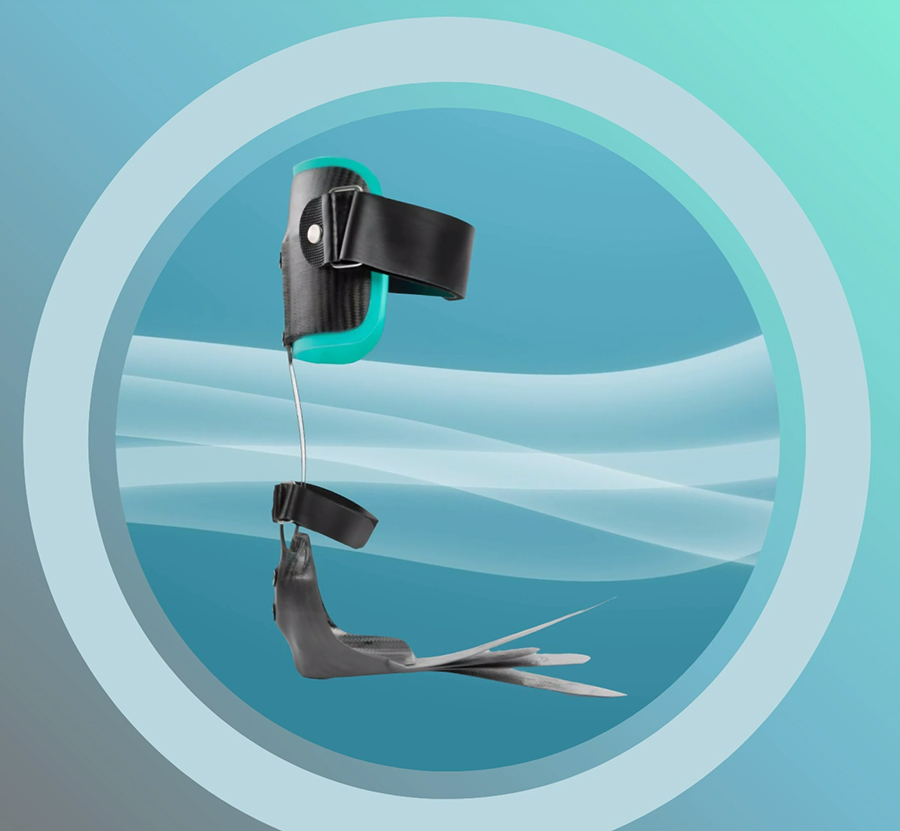
"This development opens up a fundamentally new approach to the rehabilitation of patients with partial foot loss, restoring the patient's high level of motor activity. At the moment, we have manufactured more than 100 such prostheses, and thanks to them, patients have been able to return to their usual lifestyle," said Victor Spector, CEO of CITO.
Prosthetics for partial amputation of the foot is considered one of the most difficult. The CITO solution is comprehensive and takes into account an individual approach: the author's development of the cleft insole is used in more than eight types of prosthetic feet, the design of which depends on the level of amputation, the condition of the ankle joint and the supporting skin on the stump. In addition to the split insole, such prostheses use an individual removable stump protector made of HTV silicone of different stiffness to increase stability and comfort. It increases the support area, protecting locally problematic skin areas. This allows you to precisely distribute the pressure and provides a gentle physiological roll when walking.

Earlier, on September 4, Veronika Skvortsova, head of the Federal Medical and Biological Agency (FMBA), told Izvestia that Russian scientists were developing augmented reality technologies and biocompatible microelectrodes to create prosthetics.
All important news is on the Izvestia channel in the MAX messenger.
Переведено сервисом «Яндекс Переводчик»
