- Статьи
- Economy
- Running for cryptography: the Central Bank will launch large-scale checks of virtual assets

Running for cryptography: the Central Bank will launch large-scale checks of virtual assets

In early 2026, the Bank of Russia is planning a comprehensive survey of investments in cryptocurrencies and the volume of loans to companies operating in this field. The regulator's decision reflects the increasing attention to the risks and opportunities of digital financial assets, which already affect not only global markets, but also the Russian economy. In addition, the Central Bank plans to examine individuals' investments in digital financial assets, the profitability of which is linked to the value of the cryptocurrency. Details can be found in the Izvestia article.
Survey of investments and loans in cryptocurrencies: what is the Central Bank planning
The Bank of Russia plans to conduct a survey of investments in cryptocurrencies and lending to crypto companies in the first two months of 2026. The goal is to assess the volume of investments of supervised organizations in cryptocurrencies, including for the purpose of hedging risks, as well as the volume of loans to crypto companies as of January 1, 2026.
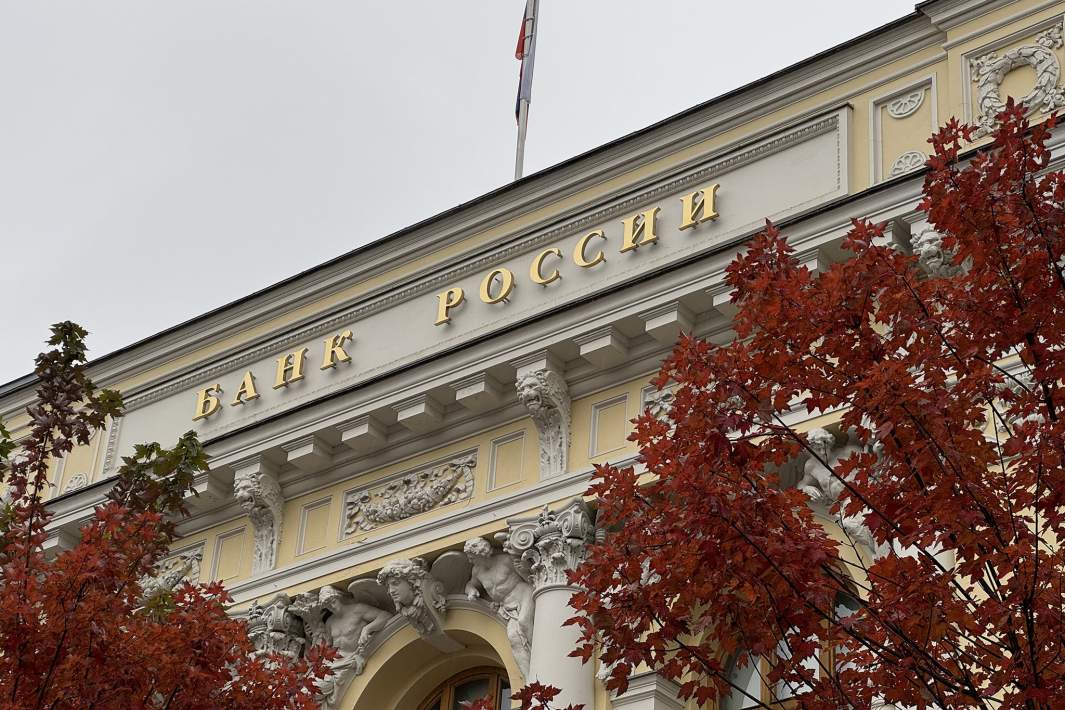
Risk hedging is a way to protect investments by reducing the likelihood of losses through transactions that compensate for the losses of the main investment.
Also, as is known from the published materials of the Central Bank, by the end of 2025, the regulator plans to examine individual investments in digital financial assets (CFAs) with returns related to the cryptocurrency exchange rate. They want to make reporting on this data monthly, with information provided no later than the 10th business day of the following month.
The upcoming transition to more detailed monitoring of the crypto market indicates the increasing attention of the regulator to the systemic risks associated with digital assets. As the press service of Rosfinmonitoring clarified to Izvestia, in 2024 cryptocurrencies were called one of the key threats in criminal settlements or in the legalization of criminally obtained income.
Experts agree that the high volatility of cryptocurrencies can pose serious threats to the financial stability of banks and the protection of depositors. At the same time, the lack of official statistics in Russia leads to the formation of a so—called gray zone, an area in which hidden debts and credit obligations remain outside the control of regulators.
To date, there is no official data available to assess the real scale of lending to crypto companies in Russia, explains Stanislav Komissarov, lawyer and partner of Smart Consulting LLC, member of the AIUR.
— This creates the basis for the formation of a gray area. According to a report by the Bank for International Settlements, the situation is exacerbated by volatility, frequent bankruptcies, and anonymity, which creates a high—risk and opaque lending environment.

Ruslan Permyakov, Deputy director of the NTI Competence Center for Technology of trusted interaction at TUSUR (Tomsk State University of Control Systems and Radio Electronics), supports this view.
The expert believes that banks' investments in crypto assets and loans issued to crypto companies can cause a chain of defaults with a sharp drop in the market, exacerbating problems with defaults.
— Financial transactions with cryptocurrencies carry high risks for the banking system and customers in some cases. Their volatility and legal extraterritoriality pose a threat both to individual banks and to public confidence in the financial system, the expert emphasizes.
Izvestia sent inquiries to the Central Bank, the Ministry of Finance, the National Research Institute of Physics and Technology, the Government's Analytical Center, and the Ministry of Economic Development.

Hedging or circumvention of the rules?
Experts assess the use of cryptocurrencies as a risk hedging tool ambiguously. Some see this as an innovative solution in the face of sanctions and currency restrictions, while others see possible attempts to circumvent regulatory requirements.
"In countries with high inflation and restrictions on capital movement, businesses and citizens use bitcoin and stablecoins to save money and move assets abroad," says Alexey Mikhailov, associate professor at the Department of Financial Technologies at the Financial University. — Institutional investors include a small percentage of crypto assets in their portfolios, suggesting that they can behave independently in times of crisis, but in practice this correlation is often disrupted.

Olga Zakharova, Director of PLAN B's Legal Department, considers hedging as an important factor in increasing financial market stability.
— Hedging crypto risks will allow you to open a position that compensates for the risks of the market at the expense of its participants. However, the lack of a legal framework and clear rules of regulation still significantly complicates the situation," the expert explains.
KKMP advisor Vadim Nikitin draws attention to the limited potential of cryptocurrencies as a classic hedging tool due to their high volatility.
"Cryptocurrencies can hardly perform the function of protecting against risks, rather it is a speculative tool," he is sure.
The scale of lending and possible "dark zones"
It is extremely difficult to determine the actual size of loans granted to crypto companies due to the lack of transparency.
— Russian legislation does not provide for other legal players, except for officially registered miners and participants in the experimental legal regime, — says Olga Zakharova.

Vladimir Vinogradov, CEO of Pro-Vision Communications, adds that the size of such loans can reach several billion rubles. With a sharp drop in the crypto market, many of these obligations may become unsecured, which could lead to system failures, he believes.
— The volume of the global crypto market now accounts for about 2% of all financial assets, — Alexey Mikhailov estimates. — At this level of risks, there are no serious threats to the Russian economy yet, but the situation requires constant monitoring.

Control over individual investments
The regulator pays special attention to monitoring citizens' investments in digital financial assets, the profitability of which is associated with cryptocurrencies. This will allow for a more accurate assessment of investment risks for the public and highlight measures to protect depositors.
"The regulator is trying to understand how Russians are involved in digital finance, as well as how much money goes into cryptocurrency and through which channels," explains Alexey Mikhailov. — This will help prevent systemic risks and collapses that may affect financial stability.

The Bank of Russia, together with the government, is developing new legal regimes for transactions with cryptocurrencies, recalls Kirill Karpov, senior lecturer at the Moscow State Law Institute's Department of Financial Law.
"The information obtained during the survey will be used to refine the concept of market regulation and legalization in order to generate tax revenue," he explains.
Inna Neminuschaya, Senior Associate at ALUMNI Partners, is confident that monitoring individual investments will help reduce abuse and increase financial protection.
"Studying investments will allow us to identify potential loss risks and prepare regulatory measures to protect the interests of investors and ensure the stability of the financial sector," the expert explains.
Towards regulatory perspectives and sustainability
At the global level, regulators are increasingly implementing regulations that limit risks from crypto assets, which also affects Russian policy.
— Regulators usually set a limit on investments in cryptocurrencies of no more than 1-2% of banks' capital. This reduces systemic risks and contributes to a smoother integration of innovations into the traditional financial system," notes Vadim Nikitin.

The Bank of Russia has already recommended that credit institutions conservatively assess risks and set limits, says Antonina Levashenko, head of the Gaidar Institute's Best International Practices Analysis Laboratory. Asset quality, reliability and liquidity remain key, she added.

Innovative approaches such as supervisory stress testing, which will become mandatory starting in 2028, are aimed at strengthening banking stability.
— It is important for banks to have a reserve of capital to withstand the blows of market stresses, — says Olga Zakharova. Stress tests will help identify vulnerabilities and encourage the accumulation of sufficient reserves.
Переведено сервисом «Яндекс Переводчик»
