"There are applications from 19 countries to change their status or join the SCO"


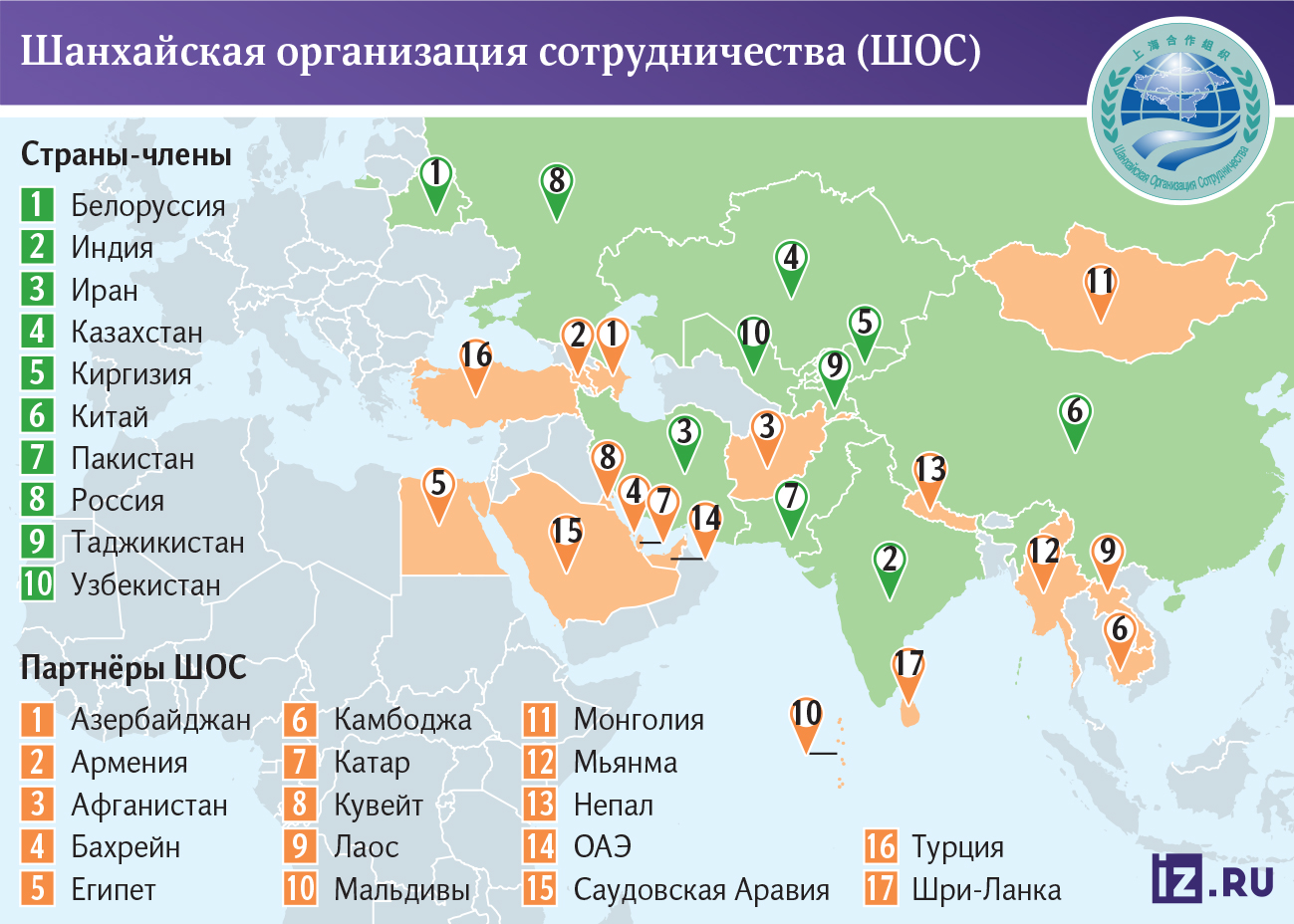
19 countries have applied to join the Shanghai Cooperation Organization or change their status, SCO Secretary General Nurlan Yermekbayev said in an interview with Izvestia. The organization is open to expansion, he stressed. So far, cooperation between existing members and partners is deepening: in particular, it is planned to simplify trips to the countries of the association for certain categories of citizens, including organized tour groups. Belarus' initiative to create an Inter-exchange Union is being worked out. This will help to stabilize prices in the SCO countries' markets and increase trade turnover. About the SCO Development Bank, the unified payment system and other new initiatives of the organization — in an exclusive interview with Nurlan Yermekbayev to Izvestia.
"Our goal is to make the SCO an even more influential association"
— Since January 1, 2025, you have assumed the post of Secretary General of the SCO. What areas of the organization's work do you intend to develop as a priority?
— For 24 years, the SCO has been developing on the basis of the "Shanghai spirit", making an increasing contribution to strengthening peace, security, stability in the Eurasian region and to the formation of a global multipolar world order.
On the eve of its anniversary (in 2026, the SCO turns 25 years old. — Izvestia) the organization is entering the next stage of development, taking into account modern realities. As the SCO Secretary General, I and the secretariat team are making efforts to increase the degree of implementation of the initiatives and proposals of the leaders, to facilitate the implementation of decisions of the heads of line ministries and departments, ensuring their focus on concrete results.
Our common goal, defined by the heads of the SCO member States, is to make the organization an even more effective and influential international association in order to promote peace and sustainable development, as well as bring tangible benefits to the peoples of our countries.
— How is it planned to deepen military cooperation within the organization?
— It is important to note that the SCO is not a defense bloc, its structure does not have any attributes of military alliances, for example, supranational command bodies, united military contingents, etc. The organization's charter documents lack the principle of collective security and mutual obligations for joint defense.
At the same time, the joint anti-terrorist exercises "Peaceful Mission" are being conducted, which have proven to be an effective mechanism for combat coordination and verification of the compatibility of military units in the fight against international terrorist groups. Officers are being exchanged, and cooperation in the field of military medicine is developing. The possibility of concluding an agreement between the SCO member states on confidence—building measures in the military field is being discussed.
It is important to note that in the Tianjin Declaration of September 1, 2025, the leaders of the SCO member states expressed their readiness to develop effective cooperation between the defense departments in the interests of maintaining peace, security and stability in the region and beyond. This sets the tone for all our work in this strategic area.
In addition, the SCO regularly hosts meetings of the secretaries of the Security Councils and meetings of defense ministers. The previous such events were held in June 2025 under the chairmanship of the Chinese side.
"We don't use terms like 'blocking'
— Is it possible to expand the organization to the level of full membership, for example, in the next three years? Are there any obstacles from the member countries? According to media reports, India blocked Azerbaijan's bid, and Pakistan blocked Armenia's. Does this mean that the doors for Baku and Yerevan will remain closed?
— The SCO is open to dialogue, contacts and interaction in various forms with partner states, and in case of consensus between them, it is ready to accept into its ranks countries that share the goals, objectives and principles of the SCO Charter. This is stated, in particular, in the statement of the Council of Heads of State on the principles of good-neighborliness, trust and partnership adopted in Astana in 2024. Thus, the granting of Laos the status of the SCO's 15th dialogue partner during the Tianjin Summit reaffirmed the SCO's principle of openness, laid down in the Charter.
We don't use terms like "blocking". Any decision is the result of discussion, consideration, and consensus. Many issues require some time to coordinate and resolve. At the same time, the doors of the organization remain open to anyone whose activities do not contradict its principles and interests.
— Vladimir Putin said that over 10 new applications from different countries for joining as a partner are currently being considered. Which of them are the closest to a positive solution? What does combining categories of observers and partners mean in practice?
— The current SCO observer and dialogue partner statuses are essentially similar. Currently, the "basket" contains applications from 19 countries to change their status or join the organization in one capacity or another, be it a member State, partner or observer. Despite the fact that the SCO community already consists of 27 states, this indicates the high attractiveness of the organization and the harmony of its goals and objectives with the interests of many in the world.
At the summit in Tianjin, our leaders decided to introduce a single status — the SCO partner. Thus, comprehensive work is required to amend the SCO Charter and other legal documents, as well as to update memoranda with partner countries.
— As far as we know, the SCO member states maintain cooperation with the Afghan authorities on a bilateral basis. What conditions must Kabul fulfill in order to become a full member of the organization?
— The consolidated position of the SCO member states on Afghanistan is reflected in the Tianjin Declaration of the Council of Heads of State. Thus, the leaders, reaffirming their commitment to the establishment of Afghanistan as an independent, neutral and peaceful State free from terrorism, war and drugs, expressed their readiness to support the efforts of the international community to ensure peace and development in this country. The formation of an inclusive Government with broad participation of representatives of all ethnic and political groups of Afghan society is the only way to achieve lasting peace and stability in this country.
The Afghan agenda is in the focus of the SCO. The organization's member States have initiated and are actively participating in the work of multilateral platforms where this issue is discussed. These are, in particular, the Dushanbe process on counterterrorism, the Moscow format of consultations, the Termez Dialogue, and the regional format on Afghanistan with the participation of India, Pakistan, Iran, and China. In addition, the United Nations Regional Center for Sustainable Development Goals for Central Asia and Afghanistan has been established in Almaty.
On September 11-12, substantial consultations of the Member States on the Afghan issue took place in Dushanbe. The participants confirmed their commitment to keep this issue in focus.
"The share of transactions in national currencies between the SCO countries is steadily growing"
— Following the results of the summit in Tianjin, the member states agreed to establish the SCO Development Bank. How will it function?
— The topic of creating an SCO financial institution to support project activities has been discussed for a long time. The understanding of the need to launch it has matured over the years. Various proposals and initiatives were considered. An important step in this direction was the consolidation in the Declaration of the Tianjin Summit of the agreement of the leaders of the interested member states on the establishment of the SCO Development Bank and the intensification of consultations on its functioning. Now the parties will have to discuss the whole range of issues related to the creation of this structure, including its goals, work rules, and so on.
— There is an opinion that the expansion of the practice of using national currencies in mutual settlements will be a stimulating factor in the development of trade and investment cooperation in the SCO. Is the share of such calculations growing? Has a final decision been made to create a unified system for payments in national currencies?
— Work in this area is being carried out in accordance with the Roadmap for a gradual increase in the share of national currencies in the mutual settlements of the SCO member states, approved at the Samarkand Summit in 2022.
National currencies are increasingly being used in mutual trade settlements between the organization's countries. The share of transactions in national currencies between the SCO countries is steadily growing.
Within the SCO, some member countries have indeed initiated the creation of their own payment and settlement infrastructure. Consultations on this topic are ongoing.
— The idea of Belarus to create an Inter-exchange Union of the SCO is being considered. What will it give to the organization's member countries and has this initiative already been agreed upon?
— The Belarusian side proposed this initiative in 2024. The idea is very interesting, since a unified approach by the member States in the field of organized exchange trading in goods and financial instruments could help stabilize prices in the markets of the organization's countries, increase trade turnover, and ensure fair pricing for goods and services.
We are currently consolidating the positions of all Member States on this initiative and plan to organize an expert meeting of the competent authorities for a substantive discussion. In general, Member States regularly make interesting proposals in this area. We are working to ensure that all of them are carefully studied, after which appropriate decisions will follow.
"The final goal may be the SCO agreement on visa facilitation"
— Are negotiations underway within the SCO on the introduction of a mutual visa—free regime for citizens of all SCO member states?
— To date, there are no collective negotiations on a single visa-free regime for citizens of all SCO countries, since each state independently forms a visa policy based on national interests. At the same time, many Member States have bilateral agreements on visa-free travel, which are successfully operating.
In addition, the organization is working to simplify travel for certain categories of citizens: holders of diplomatic and official passports, organized tourist groups, as well as through the introduction of electronic visas. Let me remind you that at the meeting of the heads of the tourism administrations of the SCO member states in Qingdao, China, on July 7, 2025, they noted the importance of the practical implementation of the SCO Joint Action Plan in the Field of tourism for the period 2024-2025. It was adopted during last year's profile meeting in Almaty on May 24, 2024.
We believe it is right to gradually transfer such efforts to a multilateral level. The ultimate goal may be the signing of a comprehensive SCO agreement on visa facilitation. This would be a significant achievement for the organization, strengthen people-to-people contacts, promote tourism growth, and demonstrate the practical benefits of cooperation.
— You mentioned that the SCO and the CSTO continue to work on updating the legal framework to increase practical impact. Is it possible for the two organizations to work together to resolve international conflicts?
— On September 3, 2025, the SCO Secretariat in Beijing hosted a regular meeting of the SCO–CSTO–CIS senior administrative officials, which resulted in the adoption of a Roadmap for the development of cooperation between the three organizations. It involves holding a large number of joint events.
At the same time, it should be understood that, unlike the CSTO, the SCO is not built on the principle of collective security. In our organization, joint statements remain the main means of responding to important international events and situations that endanger peace and security. They can be initiated by the heads and Ministers of Foreign Affairs of any of the member states, as well as by the SCO Secretary General. We intend to further develop partnerships with the CSTO in accordance with the charters of the organizations.
— The idea of creating a Large Eurasian Partnership (BEP) with the participation of the SCO, EAEU and ASEAN countries remains on the global agenda. Is it being discussed by the SCO countries? Are there any preliminary agreements with the EAEU and ASEAN?
— The idea of creating a Large Eurasian Partnership is in the discussion field of the SCO member states. At the final stage of coordination, an action Plan is being prepared with the EAEU, and consultations are underway with ASEAN. We also plan to hold a discussion of the BEP at the level of analytical centers of our organizations, so that the recommendations of experts could contribute to the practical implementation of the idea.
Переведено сервисом «Яндекс Переводчик»
