- Статьи
- Local news
- The Day of the Georgian Icon of the Most Holy Theotokos: what the miraculous image is asking for

The Day of the Georgian Icon of the Most Holy Theotokos: what the miraculous image is asking for

Every year on September 4, Eastern Rite Christians celebrate the Day of the Georgian Icon of the Blessed Virgin Mary, one of the most revered shrines. There are many legends about miraculous phenomena and healings associated with the image, copies of it are kept in many temples and monasteries. In 2025, the event falls on a Thursday. The history of the holiday and strict prohibitions are in the material of Izvestia.
The Day of the Georgian Icon of the Blessed Virgin Mary: the history of the holiday
According to legend, the icon's origin is connected with Georgia. After the conquest of the country by Shah Abbas in 1622, the shrine was taken to Persia. Three years later, in 1625, it was acquired by Stefan Lazarev, the clerk of the Yaroslavl merchant Grigory Lytkin. Returning to Yaroslavl in 1629, Lazarev handed over the image to his master, and Lytkin sent the icon to the Chernogorsky (Krasnogorsky) monastery on the Pinega River in the Arkhangelsk Region. There, the merchant built a temple and provided it with utensils and books.
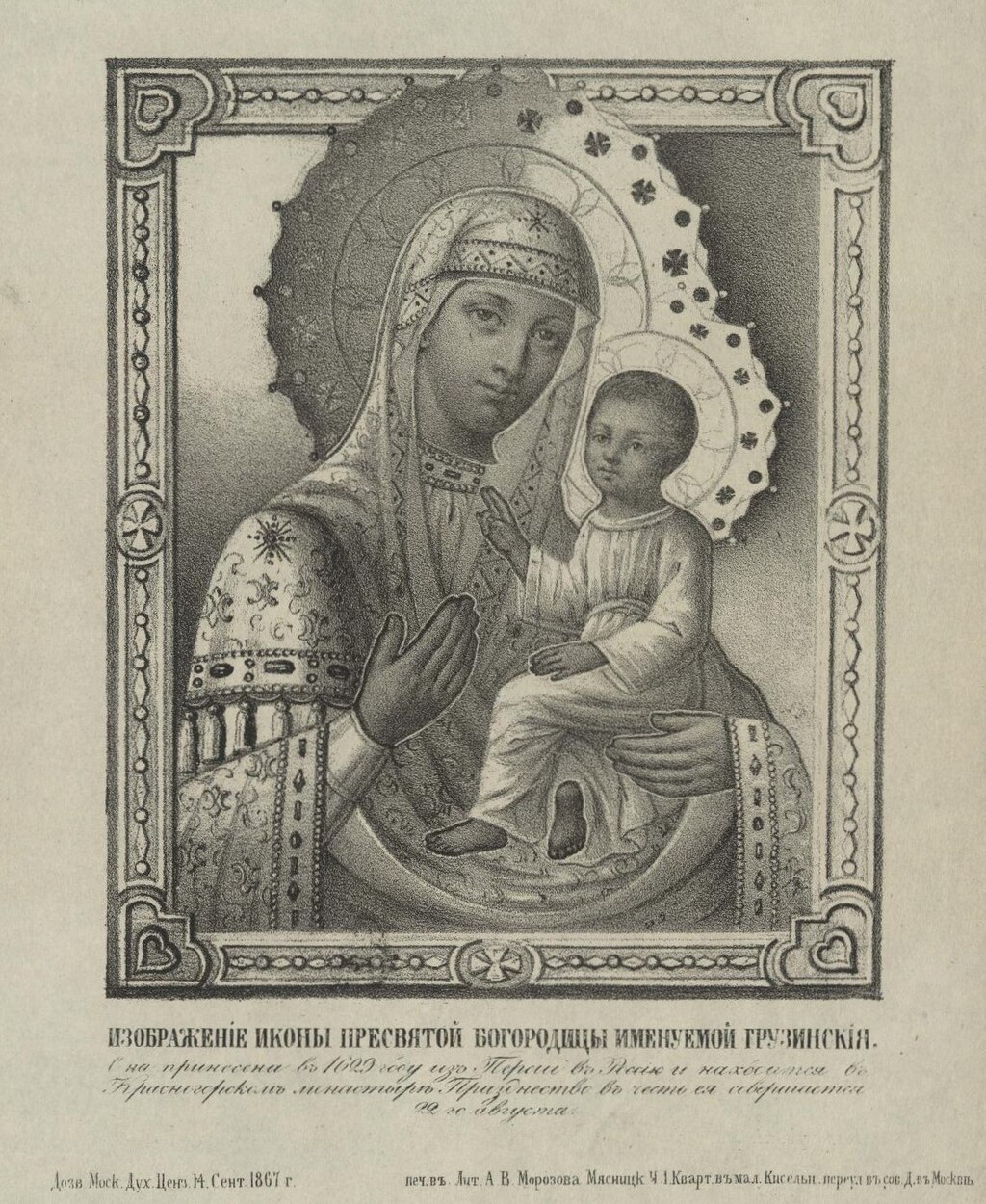
With the appearance of the image, numerous testimonies of miracles began in the monastery. In 1654, the icon was brought to Moscow, probably for renovation and the creation of a new salary. At that time, the plague was raging in the capital, and healing cases were associated with the image. In particular, silversmith Gavriil Evdokimov, in gratitude for his son's recovery, ordered a list of the Georgian icon for the Holy Trinity Church in Nikitniki. This list is attributed to the brush of Simon Ushakov.
In 1658, by decree of Tsar Alexei Mikhailovich and Patriarch Nikon, an annual celebration was established in the monastery on August 22 in memory of the appearance of the icon. And in 1698, a new royal decree followed — to bring the shrine to Arkhangelsk every year for the "sanctification of the city and the people who cherished the mercy of God and the intercession of the Mother of God." Over time, the image was also taken to Vologda, Veliky Ustyug, Pereslavl-Zalessky, Moscow, and even Siberia.
In 1707, Kirill Ulanov, an iconographer at the Armory, created an accurate measuring list of the Georgian icon. In the lower part, he left an inscription confirming that the image was written with the "measure and outline" of the original from the Montenegrin monastery. The icon housed four reliquaries. Later, several more lists were created from it, and some of them also became revered as miraculous.

After the closure of the Krasnogorsk Monastery in 1920-1922, the shrine disappeared. It was mentioned again in 1946, when the monastery resumed its work. Bishop Leonty (Smirnov) of Arkhangelsk informed the Moscow Patriarchate that the Georgian icon participated in the procession in Arkhangelsk. The further fate of the image remains unknown.
The day of September 4 is set in memory of the Georgian icon as a separate church holiday. Solemn divine services and prayer services are held in churches on this day, and believers turn to the Mother of God with prayers for intercession, protection of the family, and the gift of health and peace.

Day of the Georgian Icon of the Blessed Virgin Mary: what not to do
The main content of the feast on September 4 is divine services and worship of the miraculous image. On this day, prayer services are held in churches in front of the lists of the Iveron Icon, believers come to pray for the protection of the family, healing from diseases and well-being in business. The holiday is of particular importance in those regions where the lists of the Iveron Icon are kept — a larger number of pilgrims usually gather there.
In the folk tradition, September 4 was also associated with household and ritual practices. It was believed that this day was suitable for cleaning the house and family: they put things in order, changed the bed linen, got rid of unnecessary things. It was often associated with bathing rituals — steaming was perceived as a way to wash away illnesses and bad thoughts, and herbs were used in steam rooms for healing.

There were also unwritten rules among the peasants: on a holiday, they tried not to quarrel or hold grudges, avoided large purchases and new business that could "not be beneficial." At the same time, kind deeds, assistance to neighbors and general household care were welcomed.
Individual traditions could vary by region: some paid attention to modesty in dress and behavior, others to ceremonial treats or meetings with relatives. It is important to note that all these regulations related to folk customs rather than to church regulations, and were part of everyday culture.
In addition to the Day of the Georgian Icon on September 4, other saints are remembered in the Orthodox calendar. This created a special "multi-holiday" character of the date, when several customs could be combined in folk traditions at once.

The Day of the Georgian Icon of the Blessed Virgin Mary: folk signs
This day in Russia was also treated as an important point of observation of nature. Weather signs on September 4 helped farmers judge the upcoming harvest and winter. It was believed that a clear starry sky promised a rich harvest, and the early crowing of the rooster foreshadowed the imminent warming.
If thick frost fell at night, weather changes were expected: in some regions this was interpreted as a harbinger of rains, in others as a sign of clear days. Clouds moving rapidly from the south were considered a sign of bad weather.

According to popular observations, on September 4, it was possible to guess about the future season. So, a rainy autumn was predicted on a foggy morning, and a dry and sunny day was associated with a long warm season. In some villages, the onion harvest was also monitored: if the husk was thin, the winter was expected to be mild, if thick— frosty.
Significant attention was also paid to the behavior of animals: restless birds or frisky foals were considered a sign of an imminent change in the weather. The appearance of mushrooms in the forest in early September predicted a long autumn.
These signs were practical in nature and helped the peasants to better prepare for agricultural work and winter supplies.
Переведено сервисом «Яндекс Переводчик»
