Strong steering wheel: how cars from parking lots become military vehicles


The roads of the front line have long been filled with various types of converted civilian vehicles — from ordinary cars and small cargo vans with minimal modifications to homemade pickups and buggies, in which you do not immediately recognize the original model. Today, a common standard has already been formed for trimming passenger cars and preparing vehicles for combat operations. Izvestia learned from the 5th Repair Battalion of the 51st Guards Army of the Southern Military District how confiscated cars from Russian parking lots turn into frontline transporters.
How civilian transport is being converted for military needs
In today's front—end auto tuning, the main task is to ensure that the car leaves quickly. Size and speed alone have ceased to be protection, UAVs are watched from above, and there is no hiding from them from the terrain, and kamikaze drones, even with combat load, are able to catch up with any type of ground transport. First of all, most of the cars lose their doors before entering the roads 10-20 km from the front line — this detail is considered superfluous.
— The car is lightened, unnecessary and superfluous is removed. Doors are not needed, you can quickly jump in and out here. It is convenient to put a stretcher with a wounded man in the back, quickly load and carry him out. We have the same standard, but we take into account the wishes of the departments. Someone needs to do it purely for evacuation, someone needs to do it more universally: mount it for electronic warfare, mount it for a machine gun, cover it with an anti—drone net," Oleg, the platoon commander of the special works repair battalion, shows a ready-made pickup truck based on Zhiguli classics.
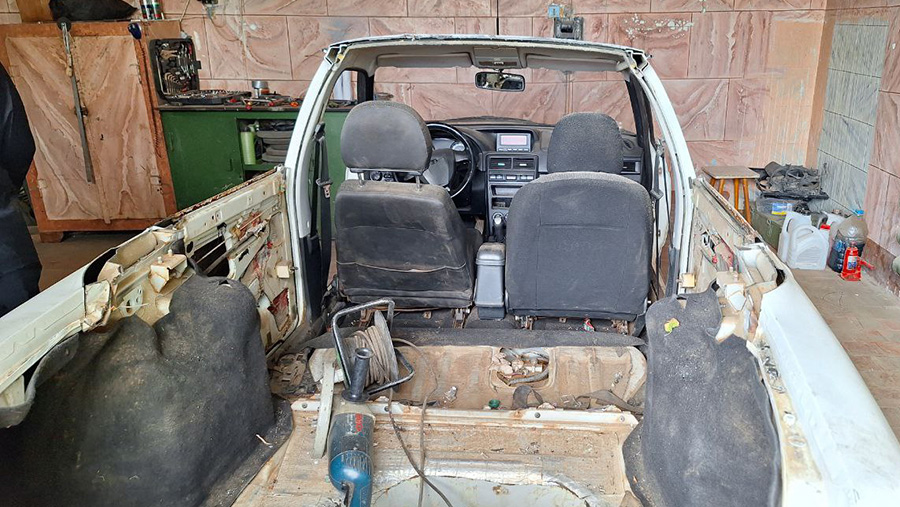
Cars enter the repair battalions from the penal parking lots of the regions — for example, this battalion receives a confiscation from the Federal Property Management Agency from the Volgograd and Rostov regions. The conversion standard includes turning the car into an open pickup truck: the front doors are removed, the rear doors are cut off and the lower part is welded to the body, the roof is completely removed, after which the resulting truck receives a tubular metal frame for rigidity.

Vladimir, the senior master of rembat, also talks about the difference in modifications for the units. He lists things that are relatively small but important to the user, such as bumpers, folding sides of the body, and additional walls behind the driver's seat.
— I have already sawed more than 15 cars. In addition to the jihad, he also made trailers from cars with the engine inoperable. Everything is done in one day from morning to evening: the first half of the day is removing excess and trimming the body, and the second half of the day is welding work to strengthen the body," says Vladimir. The department already does the painting of the converted cars, if it deems it necessary.
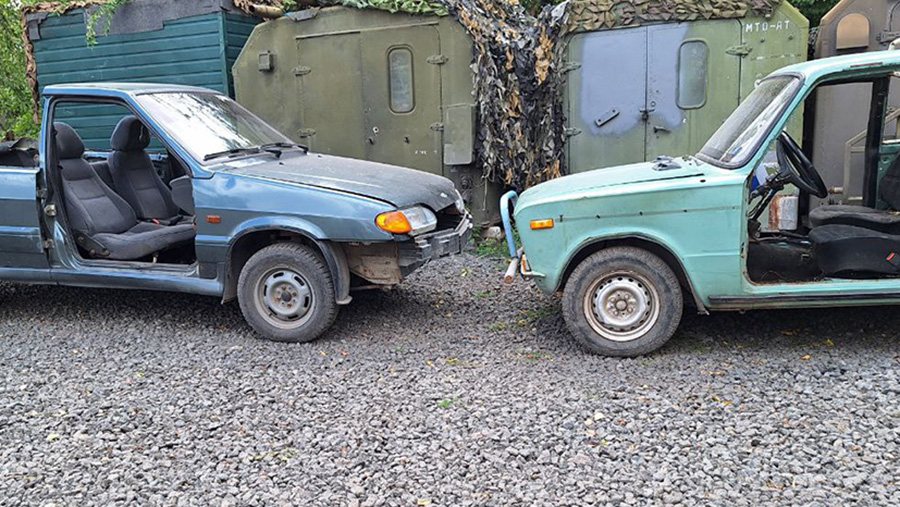
The massive use of confiscated cars and motorcycles transferred to the army makes it possible to quickly make up for losses in equipment while constantly moving under the threat of UAVs. Today, in the area of a special military operation, transport becomes expendable in many areas, and in case of damage or breakdown, it is often impossible to evacuate it. And given the new threats and the lack of the ability to use high—capacity cargo platforms and the constant growth of the lifting shoulder, it is small vehicles of all types that bear a heavy burden.
How civilian transport was used during the fighting in Donbas
The massive use of passenger cars at the front in Donbass began in 2014. On the one hand, the militia lacked military equipment. On the other hand, the fighting took place in an urbanized area with links to asphalt and dirt roads. In summer, on hard clay soils, such cars could quickly pass off the roads.
The old Soviet cars quickly took on not only a significant part of the tasks of transporting supplies and personnel to positions. With the seats removed, they were used to evacuate the wounded. And the installation of weapons allowed them to be used in rapid fire raids. Small, low cars were easier to hide from direct fire behind hills and collapsing roads, and the speed on a dry road made it possible to move quickly enough, avoiding return fire. This is how various mini "gun trucks" appeared, which were given the colloquial names "cars" or "jihad mobiles".
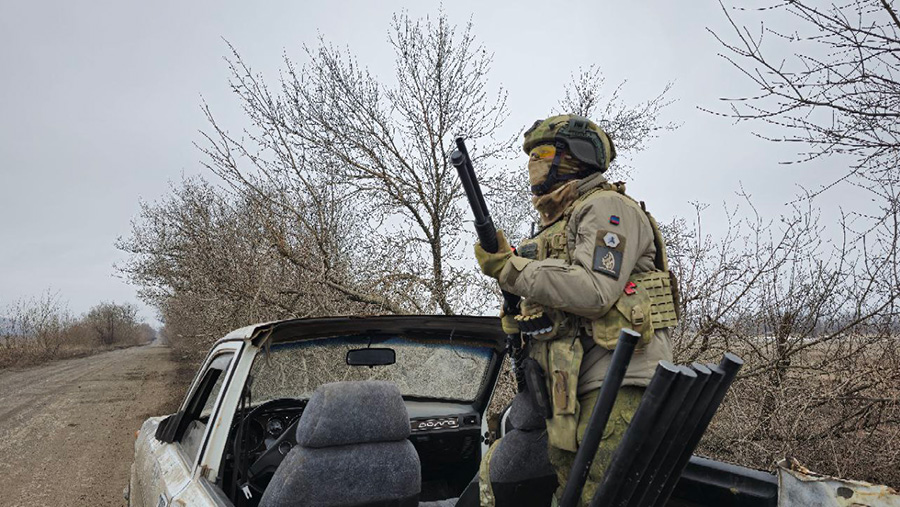
Gan-trak is a common name for a motor vehicle with an improvised weapon system. It appeared during the Vietnam War, when American support units began to install weapons on their trucks. There is also a widespread term in the world of the 80s "technica" to refer to armed pickups. After the widespread use of such machines in conflicts in Muslim regions, terms related to regional specifics began to be used.

One of the characteristic samples encountered by the author during his service in the DPR NM was made on the basis of a Tavria pickup truck. An arrow with an automatic grenade launcher mounted on a makeshift frame and a large supply of ammunition were placed in the back. To reduce the size, the shooter worked from the seat. The car was used for a stealthy and rapid fire raid, moving at speed in fields or ruins of one-story houses. After the destruction of the Tavria by the enemy, the base of the car was changed to a classic Lada, and then to a Moskvich.
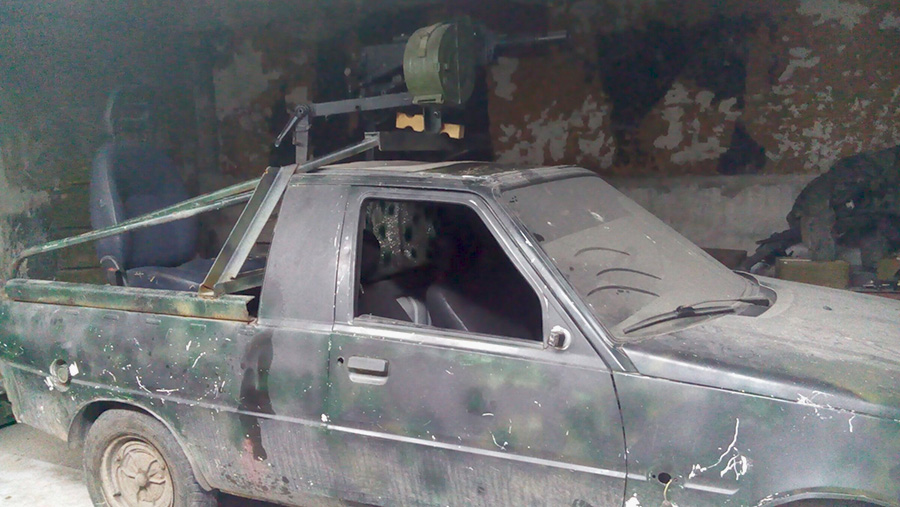
The mass mobilization in the DPR and the formation of rifle units on civilian vehicles with a small number of heavy infantry weapons at the beginning of the special military operation brought the massive construction of gantries to a new level. Mobilized jeeps, minibuses, trucks, and construction equipment underwent artisanal upgrades to transport personnel and install weapons and improve performance. At this stage, trucks were often additionally covered with homemade armor, trying to protect them from shrapnel.
Переведено сервисом «Яндекс Переводчик»
