Dig into the team: half a million Russians suffered from tick bites in 2025


In Russia, almost 500,000 people have suffered from tick bites, Rospotrebnadzor told Izvestia on the eve of the end of the arthropod activity season. This number is higher than last year, when about 430,000 victims were registered. From June to August, ticks have already bitten more than 260 thousand people. Borreliosis, anaplasmosis, ehrlichiosis, and tick-borne encephalitis virus were most often detected in arthropods tested. The information about which regions have the highest tick activity is available in the Izvestia article.
How has the dynamics of requests changed?
Since the beginning of the tick activity season in April 2025, more than 490 thousand people have applied to hospitals with complaints of bites, Rospotrebnadzor told Izvestia. From June to August, the number of such requests amounted to more than 266 thousand.
The largest number of cases of tick bites was registered in the Sverdlovsk, Kemerovo, Kirov, Chelyabinsk and Tomsk regions, as well as in the Perm Territory and Udmurtia.
For example, since the beginning of the season, 28 thousand victims have been recorded in the Sverdlovsk region.
"This is 5% higher than the same period in 2024 and 10% lower than the long—term average," the regional Rospotrebnadzor said.
In the Kemerovo region, as of August 7, more than 24.7 thousand complaints were registered due to tick bites.
Since the beginning of the season, more than 26,000 people have applied to medical organizations in the Perm Region, and more than 4,000 of these appeals are related to arthropod attacks on children. Since the beginning of 2025, almost 18 thousand cases of tick bites have been registered in Udmurtia, of which more than 3.6 thousand are minors.
In the Kirov region, which has been identified by Rospotrebnadzor as the one with the highest number of bites, local authorities have reported a decrease in arthropod activity since early July.
"During the week, 2,069 people, including 258 children, applied to the medical organizations of the region for tick sucking," the website of the regional department of the Department of July 3 says.
In 2024, as of August 30, according to Rospotrebnadzor, more than 429 thousand people applied to medical organizations due to tick bites.
What diseases did the ticks carry?
Ticks carry encephalitis, Lyme disease (borreliosis), anaplasmosis and ehrlichiosis, Rospotrebnadzor recalled.
"Tick-borne encephalitis can be prevented by vaccination. In 2025, more than 3.6 million Russians were vaccinated against it. More than 60% of all reported cases of the disease are recorded in the Urals and Siberia," the ministry added.
Vaccines have not yet been developed for the prevention of Lyme disease, anaplasmosis and ehrlichiosis, they said. According to Rospotrebnadzor, the excess of the incidence of Lyme disease has been recorded in Russia since 2024.
At that time, according to the Invitro laboratory, every fourth tick brought there was a carrier of this disease. From January to August 10, 2025, borreliosis was detected in 19% of ticks, anaplasmosis in 3%, ehrlichiosis in 1%, and tick—borne encephalitis virus was detected in 62 arthropods, the Hemotest laboratory told Izvestia.
For example, in the Chelyabinsk region, according to the results of studies of ticks delivered by the population in 2025, 0.85% of arthropods turned out to be carriers of pathogens of encephalitis, 26.6% of borreliosis, 2.9% of ehrlichiosis, and 1.5% of anaplasmosis.
In Udmurtia, out of almost 14 thousand ticks studied, 156 were carriers of encephalitis pathogens, more than 4.5 thousand out of 12.3 thousand were carriers of borreliosis. In addition, out of 11.6 thousand laboratory-tested ticks, 113 turned out to be carriers of anaplasmosis, 652 of ehrlichiosis. Since the beginning of the season, 27.1 thousand ticks have been studied in the laboratories of the Center for Hygiene and Epidemiology in the Sverdlovsk Region and medical organizations, of which 42.7% were carriers of Lyme disease, 3.2% of ehrlichiosis, 1.17% of anaplasmosis and 1.18% of tick—borne encephalitis.
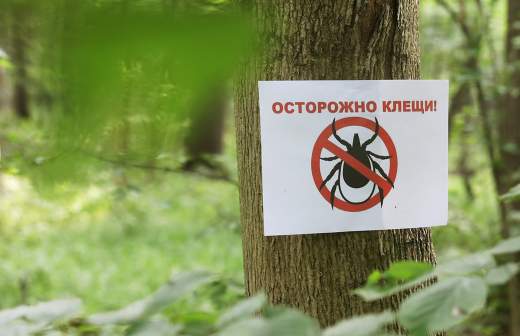
Encephalitis is still the most dangerous infection carried by ticks, Vera Serezhina, an infectious disease specialist at the LabQuest medical company, tells Izvestia. In severe cases, it can cause permanent damage to the nervous system and death. Borreliosis (Lyme disease), anaplasmosis, ehrlichiosis and tularemia are also a serious threat. Infections are especially severe with combined infection, when one tick transmits several pathogens at once.
Encephalitic ticks are most often found in the Urals, the Far East, and Eastern and Western Siberia. At the same time, there are endemic regions in central Russia — these are the Ivanovo, Yaroslavl and Kostroma regions. The appearance of the disease has already been predicted in Moscow and the Moscow region — according to scientists, this can happen within one to two years due to the migration of animals and arachnids.
In Russia, the incidence of tick-borne borreliosis is becoming more frequent, Andrei Pozdnyakov, an infectious disease specialist at Invitro-Siberia, told Izvestia. The specialist recalled that there are three stages of the disease: acute, subacute and chronic.
— The classic symptoms of acute tick—borne borreliosis are fever of varying degrees of intensity, ring-shaped erythema (the appearance of an irregular spot with a clearing in the center around the tick bite site. — "Izvestia") and enlarged lymph nodes, — said the doctor.
Anaplasmosis is a fairly rare disease that is transmitted through insect bites, but not from person to person, Andrei Pozdnyakov recalled. Mild forms of the disease, according to him, are disguised as a respiratory infection, and it is quite difficult to track it.
"As a rule, with mild anaplasmosis, it resolves on its own," he added.
Moderate to severe forms, according to the expert, are accompanied by fever, severe muscle and joint pain, vomiting and diarrhea may occur. There will also be characteristic changes in the general blood test, most often leukopenia (a decrease in the number of white blood cells in the blood) or pancytopenia (a decrease in the number of all three main types of blood cells).
Severe forms of anaplasmosis can be fatal, but this is very rare, Andrey Pozdnyakov emphasized. Ehrlichiosis in Russia is also rare and occurs mainly in rural areas, added Ekaterina Lishova, a doctor. According to her, the disease is also treated with antibiotics, and the mortality rate is low.
How to protect yourself from tick bites
In addition to undergoing mandatory vaccination against tick-borne encephalitis, Rospotrebnadzor recommended wearing closed and light-colored clothing when visiting the forest, treating it with acaricidal agents and carefully examining yourself and pets after nature walks.
The department called the treatment of territories with special means the main measure for the prevention of all other diseases transmitted by ticks and noted that, as of August 13, more than 270 thousand hectares had been treated, of which over 60 thousand hectares were in the territories of children's health organizations.
If a tick is found, it must be pulled out in rubber gloves or through a plastic bag, and it is also advisable to lubricate it with an oily liquid, said therapist Vladislav Zhemchugov.
"Ticks breathe through their skin, and this fluid blocks their ability to breathe, and they pull out their proboscis on their own," he explained.

The expert also reminded that it is impossible to pull out or unscrew the tick, as part of it may remain in the skin, which will lead to a large suppuration.
At the same time, the therapist of the Miracle Doctor clinic, Viktor Lishin, on the contrary, did not recommend using oil, nail polish or burning it with a match.
"Under the influence of aggressive stimuli, the tick begins to suffocate and can release a large amount of infected fluid into the wound," the expert emphasized.
It is necessary to pull out the tick carefully, without squeezing, with tweezers, a strong thread or a lasso handle, Viktor Lishin added.
Andrey Pozdnyakov stressed that the extracted tick must be taken to the laboratory for analysis. According to him, this measure, if the analysis shows the presence of pathogens of encephalitis, borreliosis, ehrlichiosis or anaplasmosis, will allow timely initiation of treatment and avoid the development of complications or death.
Переведено сервисом «Яндекс Переводчик»
