- Статьи
- Science and technology
- Addition bodies: DNA origami will detect viruses using a regular phone

Addition bodies: DNA origami will detect viruses using a regular phone

The first experimental DNA origami laboratory has started operating in Russia. This is a technique in which molecules with genetic information are used as a material to create nanostructures of any shape and purpose. With its help, scientists plan to create sensors for detecting viruses using a simple mobile phone, as well as elements of a photonic computer, molecular nanorobots, and more. Experts are looking for a mechanism that will allow building molecules on chips with nanometer precision, which could be a revolution in microelectronics. According to experts, DNA origami is still far from practical implementation, but work on it has already begun.
The first DNA Origami laboratory
The DNA origami laboratory has started working at the Skoltech Engineering Physics Center. This is the first experimental scientific unit in Russia that is purposefully engaged in a new field of nanotechnology. It allows you to use DNA not only as a carrier of genetic information, but also as a building material for creating miniature structures of various shapes and purposes. The scientists plan to develop miniature sensors, elements of quantum computers, make surfaces with the properties of chameleon skin, molecular robots and much more.

— Our laboratory is multidisciplinary. We work at the intersection of physics, biophysics, engineering, optics, photonics and molecular biology. Our main idea is to use DNA molecules to create ultra—miniature devices on a chip that can control light. One of our unique challenges is to learn how to precisely place DNA structures on a surface with nanometer precision. Individual molecules need to be precisely "glued" to the right place on the chip in order to create controllable materials that will react to light, change shape, or transmit signals in the right way," said Irina Martynenko, head of the DNA origami laboratory.

Thus, meta-surfaces will be developed to replace traditional optics in the form of very thin, precise and compact lens analogues. Based on them, for example, it is possible to create a biochip with a size of 1 cm2 for detecting single biomolecules. This will be a device on which you can place a saliva sample, take a picture of it on a regular phone and find out what viruses it contains.

The DNA origami technique has been known in the world for more than 20 years, but in Russia the first experimental studies are just beginning. Russian specialists have been trained by one of the pioneers of this field, Professor Tim Lidl from the University of Munich.
— We do all the experiments with our own hands. We have already fully mastered the production of DNA origami, and we do not depend on foreign suppliers: we purchase all the necessary materials from Russian companies," said Irina Martynenko.
Scientists also plan to adopt natural mechanisms by studying the natural processes of molecular self-assembly. For example, in photosynthetic plant complexes, the molecules are aligned with nanometric precision, although the total surface area of the leaves of a single tree can reach tens or even hundreds of square meters. If it is possible to reproduce this principle, it will be possible to create chips on which millions of molecules will occupy strictly designated positions.
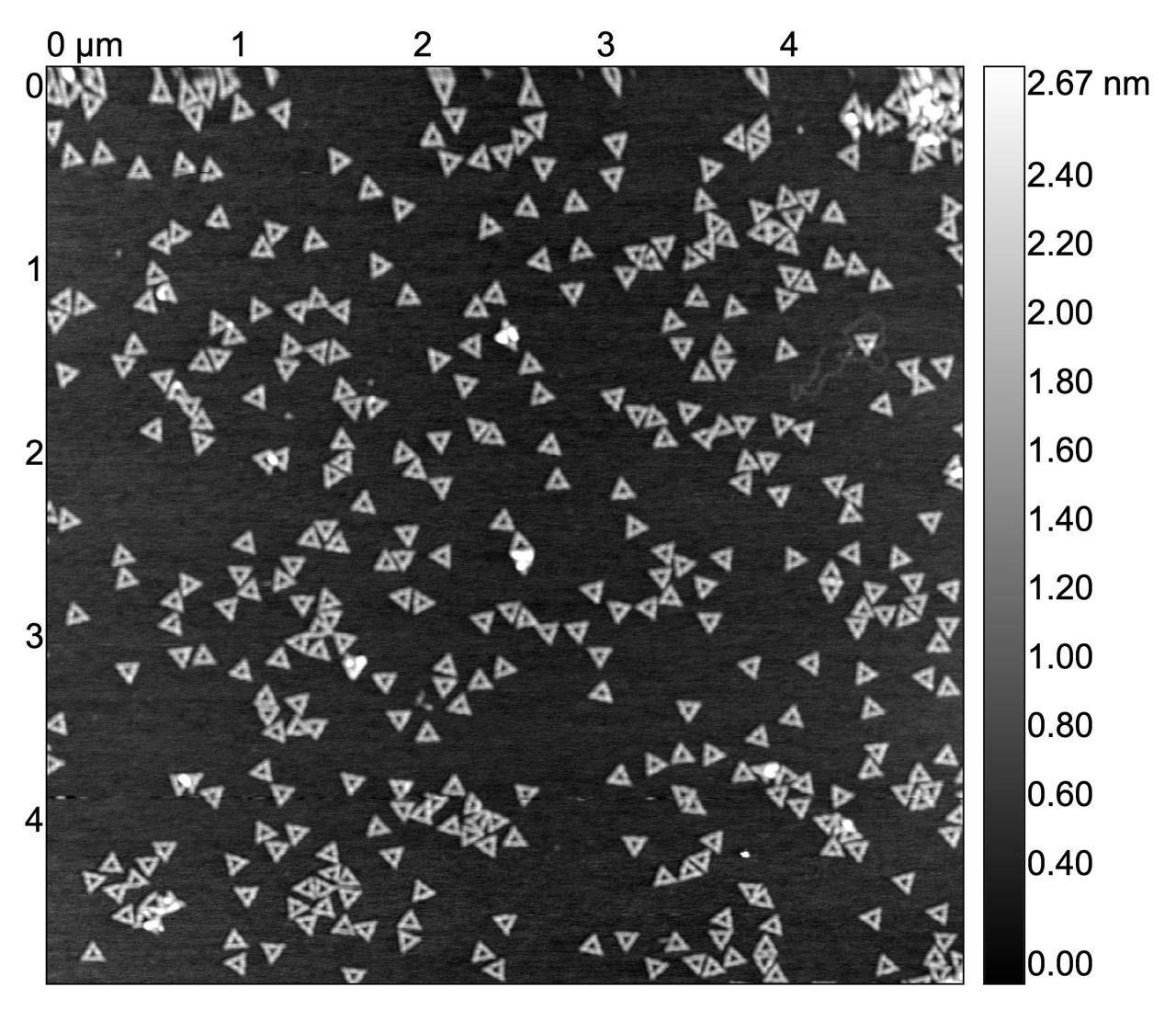
In addition to optical technologies, scientists plan to produce molecular nanorobots for medicine. These will be either miniature drug deliverers directly to the diseased cell, or elements of artificial cells. Experts are also going to create three-dimensional structures up to a cubic centimeter in size, assembled from thousands of DNA elements.

Application in medicine and microelectronics
DNA origami is a self-assembly process in which a long DNA strand can form arbitrary two—dimensional or three-dimensional structures. They can have a predefined geometric shape with nanometer precision, which makes them extremely attractive for nanofabrication, which is necessary for the production of modern electronics, photonic circuits and an optical computer, explained Professor Ivan Iorsh, chief researcher at the Physics Faculty of ITMO University.
— Now the technology of creating components for optical computers in the laboratory is similar to the technology of creating chips. Semiconductor substrates are first irradiated with ultraviolet or electron beam, and then the necessary elements are etched from the substrate material. At the same time, their smoothness is critically important. And DNA origami offers an alternative approach - structures "self—assemble" from long DNA strands. In the first experiments, it was shown that in this way it is possible to obtain very high—quality structures with nanometer smooth interfaces much easier," he told Izvestia.
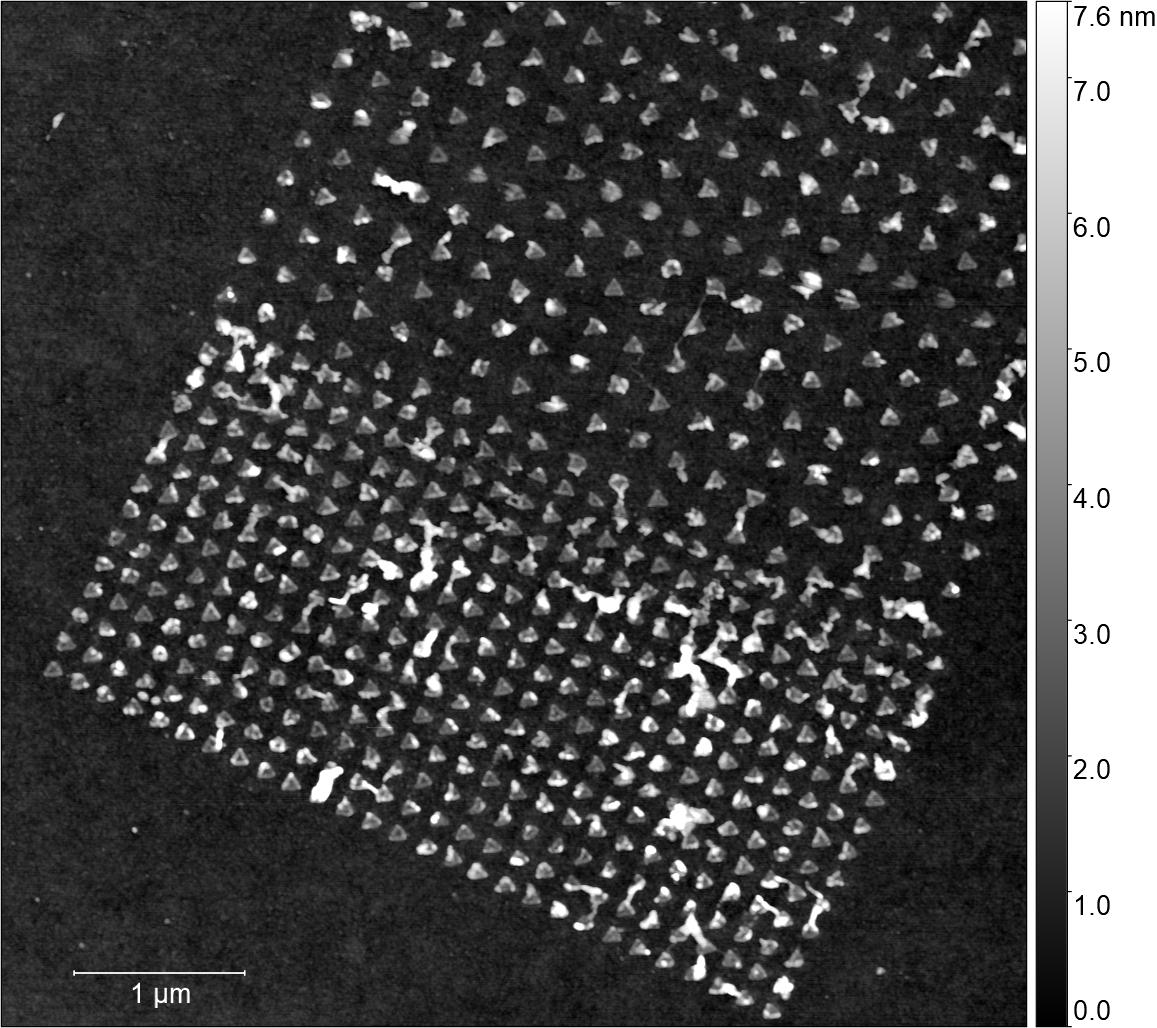
This technology is a novelty for Russia. Its development in our country can simplify the manufacture of nanophotonic integrated circuits and, as a result, bring the spread of optical computers closer.
— There are two key areas of application of DC origami. The first is application in medicine and biology. The material itself is organic to humans, does not cause rejection and resistance in difficult environments. Based on it, targeted drug delivery systems can be made directly into tumor cells. Threefold is nanoelectronics: the creation of small and durable integrated circuits, nanowires and other elements," said Stanislav Stragnov, head of the Laboratory for the Analysis of Public health indicators and digitalization of healthcare at MIPT.
According to the expert, although the technology is still far from widespread industrial adoption, it cannot be called laboratory fun, as use cases in various practical fields of activity are already being worked out.
Переведено сервисом «Яндекс Переводчик»
