The spirits of creativity: The exhibition festival ended with a shaman in a yurt


A yurt with a shaman flaming, drawings of forest grass and leaves, a columbarium of Soviet artifacts from flea markets and photos printed on plush from a smartphone. The AZ/ART Center for Contemporary Art is opening the final exhibition of its Algorithms of Cognition festival, which has become a kind of art series: every summer month, the museum creates a new exhibition. Izvestia visited all three and was among the first to evaluate the project as a whole.
An accident or not
At the opening of the final episode, the curator of the cycle, Alexander Dashevsky, urged not to look for connections between the works of artists. They say that their neighborhood turns out to be accidental. This is, of course, cunning and modesty, because if we are talking about randomness here, then rather as a conscious concept. The interaction of works (or their series) is sometimes really not obvious, but the more you think about it, the more clearly you understand: that's the beauty.
Back in the very first exhibition of Algorithms of Cognition, which started in June, Valery Grikovsky's Minus Museum project featured countless cells with a variety of objects, be they minerals, insects or just dust pellets. Meaningless individually and unrelated to each other, they all combined to form the collection of a mad scientist systematizer, and this was seen as a naive and therefore especially charming attempt to streamline a world that was by definition absurd.
But how is this not a metaphor reflecting the entire AZ/ART summer cycle? Occupying the halls of the 17th-century historical chambers on Maroseika with eccentric, strange, and sometimes incomprehensible (at least to the general public) projects by contemporary artists, Dashevsky, like that collector, tries to see beauty not even in combinations of the incongruous (although this is curious), but in the very principle of carefully collecting various art fragments of modernity.
We went out into the field
If at first, in June, the strategy of this "collecting" remained a mystery (what do the media artist Platon Infante and the aforementioned Grikovsky have in common? Between the Dagestani landscapes of Apandi Magomedov and the bizarre costumes of the group "Flowers of Jonjoli"?), then by the end it began to clear up. Conventionally, it can be defined as "survival recipes". Ways to find harmony in such a disharmonious world.
For example, the Coniferous art group goes out into nature every May and does not barbecue there, but creative meditations: for example, it creates large graphic works by applying ink to paper using grass and twigs. You look from afar, and it seems like you're looking at another variation on Jackson Pollock. If you look closely, you will suddenly notice a real birch leaf or a blade of grass in the abstract splashes and streaks, which by chance and without any effort of the authors have become part of the art. By the way, again, randomness as a principle.
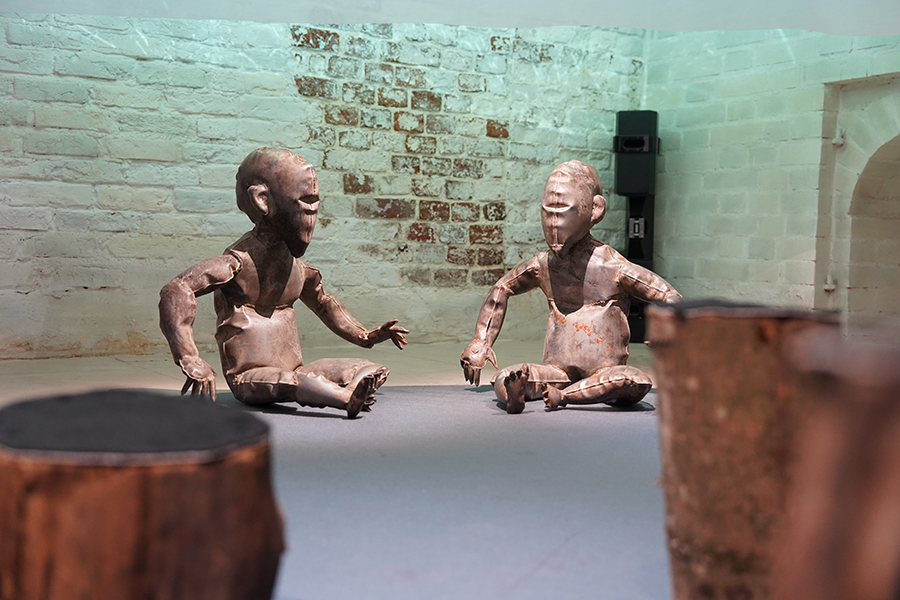
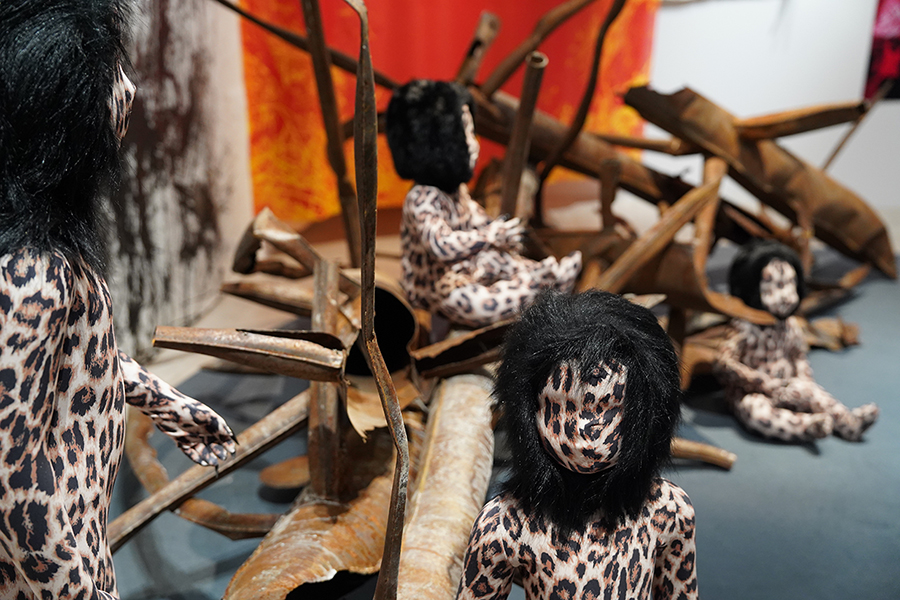
Conifers create fallen trees out of metal and place toy tiger cubs on them (apparently, hello to Shishkin and his bears); they also build stumps out of plastic. I just want to sit down on them to watch a video documenting all these oddities — there was a place for a projector and other multimedia things in a magical forest.
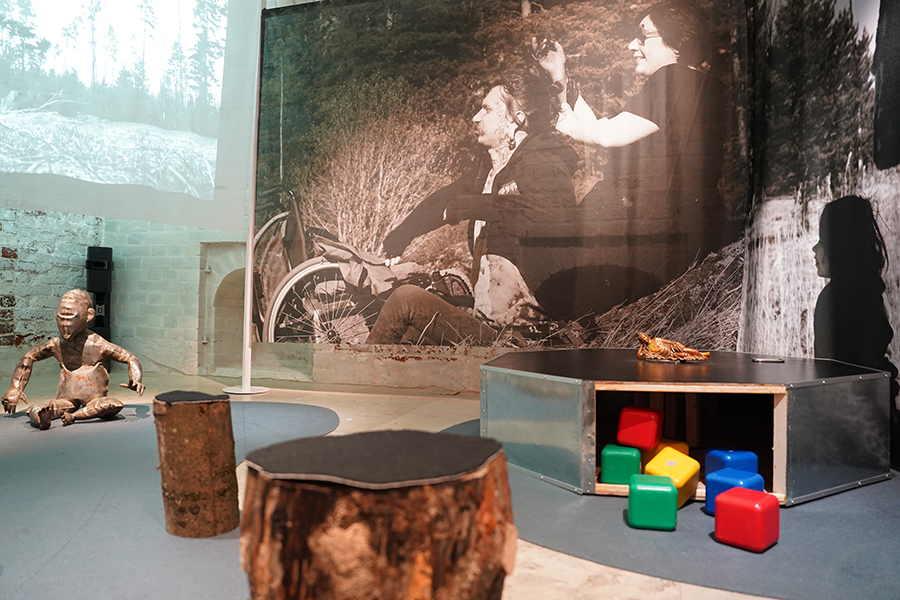
One thing is confusing: all these ironic tricks on the natural theme persistently do not add up to a single statement and, in addition, can cause accusations of second-handness. But the artists, with the assistance of the curator, famously disarm the critic. "The band members are fully aware of how trampled the path leading out of town is. However, they are not at all embarrassed by the difficult path: they have no innovation, no competition, no continuation of tradition in the subject," the description says. Instead of a message, the absence of one is suggested. Instead of a result with a claim to be a masterpiece — (self)an ironic reflection of the process.
From the yurt to the cemetery
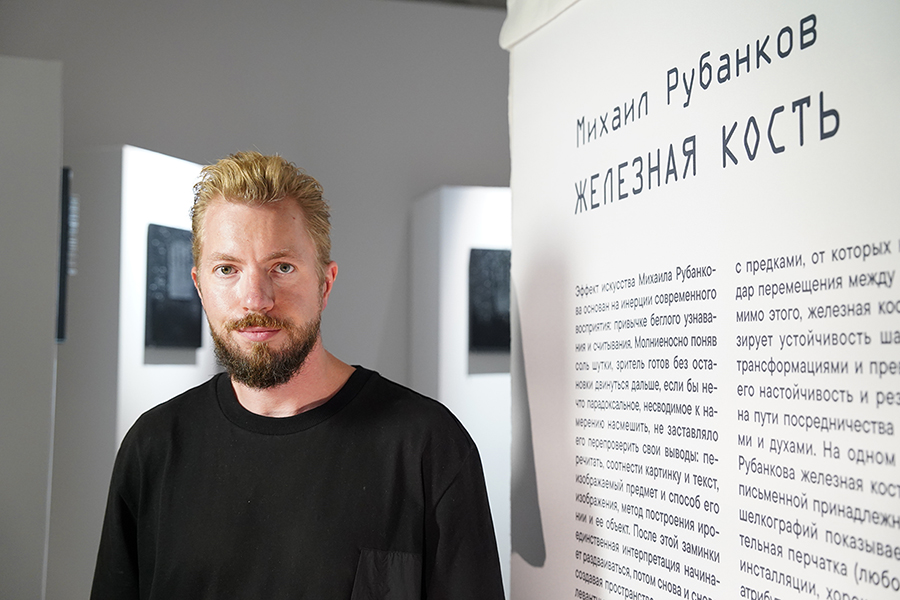
If the Conifers seek salvation in nature, then Mikhail Rubankov seeks salvation in esotericism and ancient beliefs. He built a yurt in the center of his hall. In it, you can listen to a shaman — not the one who is Russian, but a completely authentic one, recorded by the artist on video during the sacrifice. The screen, which in this case turns out to be a portal, is surrounded by strange, deliberately inappropriate objects like a synthesizer, toys or playful handwritten posters. But the viewer is free to complete the associative series himself, perceiving it as artifacts from the spirit world or bridges from the traditional to the modern.
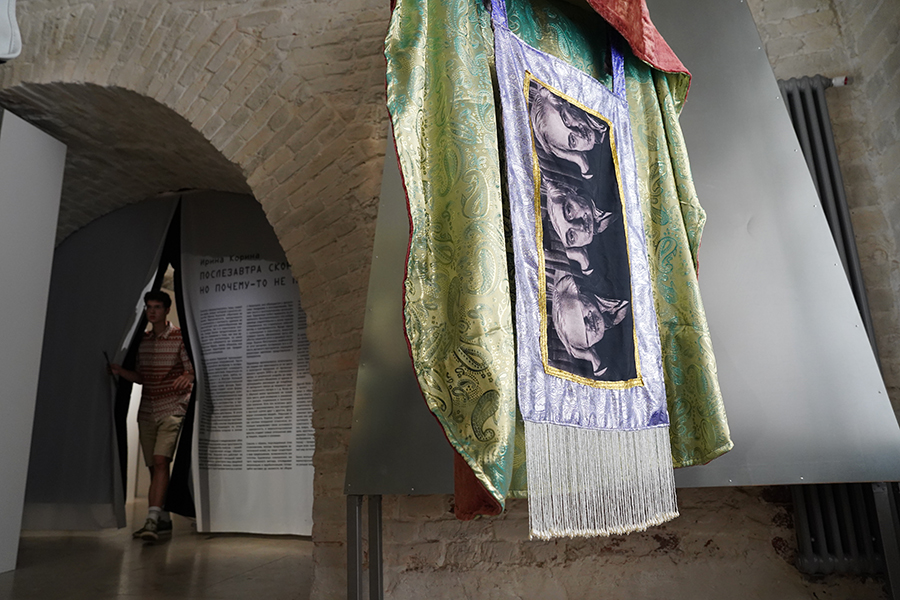
The journey ends (or begins — you can view the projects in any order) with an installation room by Irina Korina, perhaps the most famous artist of the entire exhibition festival. A participant in the Venice Biennale, one of the masters of Russian art decided to reflect on the subject of burial — but she did it in such a way as to remove all the tragedy and gloom from it, replacing them with lyrical contemplation, absurdism and nostalgia. Iron bars reminiscent of cemetery fences are topped with a plush portrait of psychologist Lev Vygotsky, and a marble tombstone turns into a cozy blanket in a peeling crib.
Strictly speaking, funeral motives are not noticed at all at first. But you can see the signs of the Soviet past in everything — all these carpets, sideboards, and unsightly but cozy figurines (for example, eagles glowing in the dark, which stood in many apartments a few decades ago and fascinated the Octobrists and pioneers with their green glow). By collecting artifacts at flea markets and then redesigning them, supplementing them with completely foreign elements, images, and prints based on her own iPhone photos, Corina builds a dream space that, like those of the Conifers, stubbornly resists straightforward interpretation.
But this is also a kind of recipe. Do not think too much, otherwise thoughts of death are inevitable. You just have to live, carrying with you through life the baggage of dear feelings, memories, emotions from the past. It's also a collection, isn't it?
Переведено сервисом «Яндекс Переводчик»
