
Wings of Russia: how did our country get an air fleet

Today is the Day of the Russian Air Fleet. A holiday with a vivid history, in which romance is intertwined with technological progress. Izvestia recalled how our country became a great aviation power.
How the holiday was born
On December 1, 1918, the Central Aerohydrodynamic Institute (TsAGI) was established in the Country of the Soviets, a scientific center to which we owe the best achievements of aircraft construction. Aviation design bureaus appeared, headed by Andrei Tupolev, Nikolai Polikarpov, Dmitry Grigorovich, Konstantin Kalinin. Tupolev became one of the world's leading aircraft manufacturers for many decades. The first Russian all-metal ANT-2 aircraft took off on May 26, 1924. ANT is Andrey Nikolaevich Tupolev.

The first Soviet all-metal ANT-2 aircraft designed by Andrey Tupolev
In 1923, a joint-stock company of the Russian air fleet called Dobrolet was established, which was renamed Aeroflot a few years later. At the same time, the first regular domestic airline in our country, Moscow – Nizhny Novgorod, was launched. Even then, the Red Army and civil aviation pilots celebrated their holiday in August. In 1933, the Day of the Air Fleet of the USSR, or Aviation Day, began to be celebrated on August 18.

On August 18, 1933, tens of thousands of Muscovites gathered at the Frunze Central Airfield on Khodynka Field. It was then that the tradition of spectacular displays of aviation achievements began. "The siren is blaring alarmingly. Its sounds come from the factory buildings that have grown up on the edge of the airfield. This is a mock-up of a large factory. High-speed bombers accompanied by fighters are rushing here. Defense fighters take off towards us. A salvo of anti-aircraft guns and bomb explosions recreate the spectacle of real military action. The load of bombs falls exactly on target and blows up the factory buildings. Anti-aircraft batteries are silenced by fighter strikes." Since 1934, such celebrations have been held annually at the Tushino airfield. As a rule, heads of state gathered at its stands, Solemn events were held in the Aviator Park in Leningrad, and in hundreds of military units throughout the country... Everyone was delighted with the performance of the aerobatic team, which was called the "Red Five" — they showed unique figures in the sky on five I-16 aircraft painted in the colors of the USSR national flag. The national championships in aeroplane, helicopter, gliding and parachuting were traditionally held during the August holidays.

I-16 at the airfield
Since 1971, the holiday has been celebrated on the third Sunday of August. After all, it is more expedient to hold air parades that gather tens of thousands of people on weekends. They have been held on Sundays before, and they did not always coincide with August 18. The tradition of Sunday aviation holidays continues in our time.
A time of records and victories
In 1927, on a sports plane created by the young designer Alexander Yakovlev, for the first time in the USSR, it was possible to break the world record for the flight range from Sevastopol to Moscow — 1,420 km. Aviation became the love of the whole country, which believed in technological progress and was proud of its falcons.
Exploits and bright achievements paved the way for serial aircraft manufacturing, and air travel became more and more clearly part of everyday life every year. In 1929, about 40% of domestic aircraft were on our lines, but by 1935 the air fleet had become completely Soviet. Talents paved the way for affordable and mass aviation, both civil and military. Vladimir Kokkinaki, twice Hero of the Soviet Union, was a unique pilot. Since 1935, he broke ten official world altitude and speed records, was a test pilot of the IL-28 jet bomber, and made a non-stop flight from Moscow to Miskow Island (USA).

Preparation of the IL-28 bomber for flight
Grigory Bakhchivandzhi, a pilot of unsurpassed bravery, fought at the front and conducted breakthrough experimental flights in the rear. He tested the first jet-powered aircraft and looked into the future of aviation. On March 27, 1943, while testing the Bi-3 monoplane, the pilot died. "Without Grigory Bakhchivandzhi's flight, maybe April 12, 1961, would not have happened," Yuri Gagarin said. The pilots who aspired to go "faster, higher, further" were pioneers, they strode into the unknown, "they made a fairy tale come true." Valery Chkalov and Mikhail Gromov, pilots who flew transatlantic flights to the United States, became the symbols of Russian aviation. On domestic machines!
During the Great Patriotic War, Red pilots flew more than three million combat missions and destroyed 57,000 enemy aircraft. And Soviet factories supplied more than 125,000 combat vehicles to the front. Soviet pilots won the battle against the Luftwaffe aces, gaining air supremacy after the Battle of Kursk. Among the Victory aircraft, we will name just a few. In the first weeks of the war, IL-4 bombers bombed Berlin and other German cities.
Alexey Maresyev and Ivan Kozhedub fought on the La-7 fighter. The maneuverable and tenacious machine, created by designer Semyon Lavochkin and his students, terrified the Nazi vultures.
The most massive combat aircraft in history was the "flying tank", the IL-2 attack aircraft.
The calling to fly
The profession of a pilot is a special one. This is not a place of service, not a trade, but a way of life. Airplanes are lifted into the sky only by those who have dreamed of heights since childhood and have managed to realize their dream. The real heroes of the air fleet are test pilots. "When a soldier at the front performs a combat mission, he also risks his life. Isn't fighting for a high—speed car capable of protecting many thousands of lives worth the risk?" said Valery Chkalov. He did not change his principle and died while testing the Polikarpov I-180 fighter.
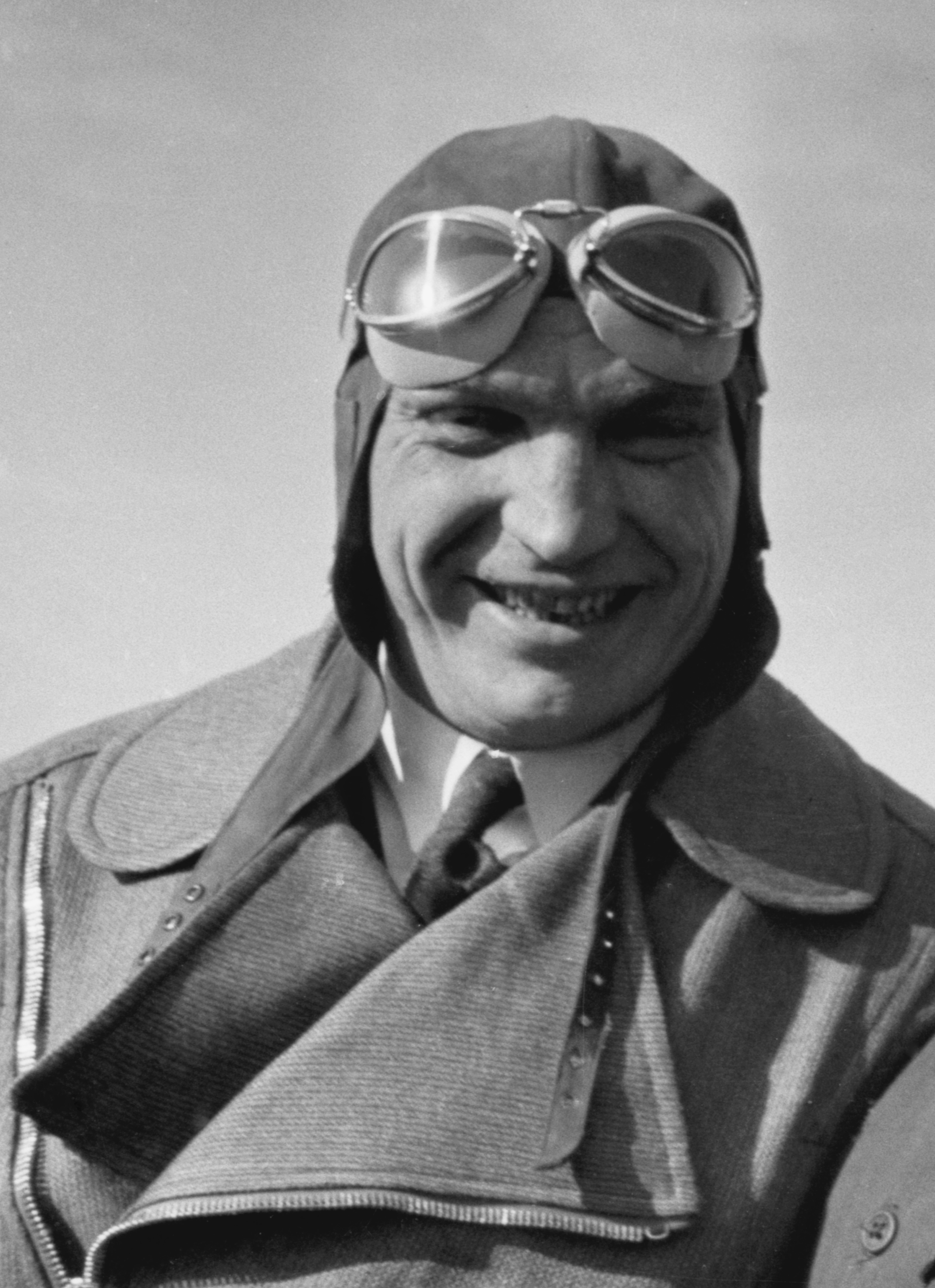
The standard of fearlessness was test pilot Sergey Anokhin. Having survived several crashes in the sky, he miraculously saved his life, but remained injured and lost an eye. And he became a "flight dad" for many of our astronauts, passing on his experience to them. "This man combines two completely polar, opposite psychological properties — courage and modesty. Imagine a pilot who accomplished a feat and stayed alive... This is a man's rebirth! They ask him, "Sergei, how are you?" "It's okay, it's okay." Everyone who saw him at that moment was smitten by his sweet, naive manner of response. His bravery just seems like some kind of naive child's play. This is an example of a true ideal hero. This is my idol!" said the great pilot Gromov, who was generally stingy with praise.
And how tragic and majestic is the fate of Alexander Fedotov. Hero of the Soviet Union, Aviation Major General, Lenin Prize winner, multiple world record holder... The list of his well-deserved regalia is impressive. Many colleagues recognize him as the best test pilot of the twentieth century. He died on April 4, 1984, in a test flight on a MiG-31, when he was no longer a young man. "A pilot can't help but fly."
At the age of 80, Colonel-General of Aviation Vasily Reshetnikov, one of the great bomber pilots of the Great Patriotic War, and after the war, the world record holder in flight range, lifted the plane into the sky. He won the star of the Hero of the Soviet Union during the Battle of Stalingrad. And he passed away in March 2023, rooting for our aviation until his last days, especially for the long—range aviation, to which he devoted his whole life.
Speed time
In 1950, the Soviet test pilot, Lieutenant Colonel, Hero of the Soviet Union Ivan Ivashchenko was the first in our country to reach the speed of sound in horizontal flight, piloting the experimental aircraft SI-1, which later became the legendary serial jet fighter MiG-17. A new era has begun in aviation.

Since 1956, Aeroflot has had Tu-104 jet airliners. For two years, this aircraft was the only jetliner in service in the world (the world's first jet passenger aircraft, the British De Havilland Comet, was temporarily withdrawn from flights due to revealed design flaws, and the American Boeing 707 entered service only at the end of 1958).
By 1980, Aeroflot regularly flew to 85 countries in Europe, Asia, America and Africa, becoming the world's first airline to carry more than 100 million passengers in a year. Today, the Russian civil aviation is adequately overcoming the difficulties associated with achieving technological sovereignty and replenishing its fleet with new domestic airliners.
A footprint in the sky
Today, the holiday remains one of the most beloved in the country. Millions of people are waiting for performances by the heirs of the "Red Five" — the Russian Knights aerobatics group. These are aces from the 1st Aviation Squadron of the 234th Guards Proskurovsky Mixed Aviation Regiment, which is based in Kubinka. No one in the world performs aerobatics on heavy fighters, only this magnificent six. They are tracing the word "Russia" in the sky, and these turns will be the best congratulations on the flight holiday for us.
The author is the deputy editor—in-chief of the magazine "Historian"
Переведено сервисом «Яндекс Переводчик»
