- Статьи
- Science and technology
- Revenue dump: diamond mining waste will purify water 5 times cheaper than analogues

Revenue dump: diamond mining waste will purify water 5 times cheaper than analogues

Russian scientists have developed a technology for processing saponite, a mineral that accumulates as waste during diamond mining, into useful resources. It can be used to produce organomineral clay, which is suitable for various tasks. Its cost is 2-5 times lower than that of existing analogues. In particular, as a modifying additive, it can improve the properties of plastic products, adhesives, and drilling fluids. One of the promising applications is trapping heavy metals in the soil along highways or around production facilities that pollute the environment. A patent of the Russian Federation was obtained for the development. The introduction of the technology will help to reclaim natural areas in mining areas, experts believe.
How to use diamond production waste
Scientists at the St. Petersburg Mining University of Empress Catherine II have developed a new way to use saponite, a product that remains in large quantities as waste during diamond mining. Based on it, experts have proposed to produce a composition in the form of organomineral clay, which can be used for a wide range of applications. A patent of the Russian Federation was obtained for the development.
According to the scientists, the technology is based on the mixing of saponite with ammonium salt, an organic substance that is a type of surfactant.
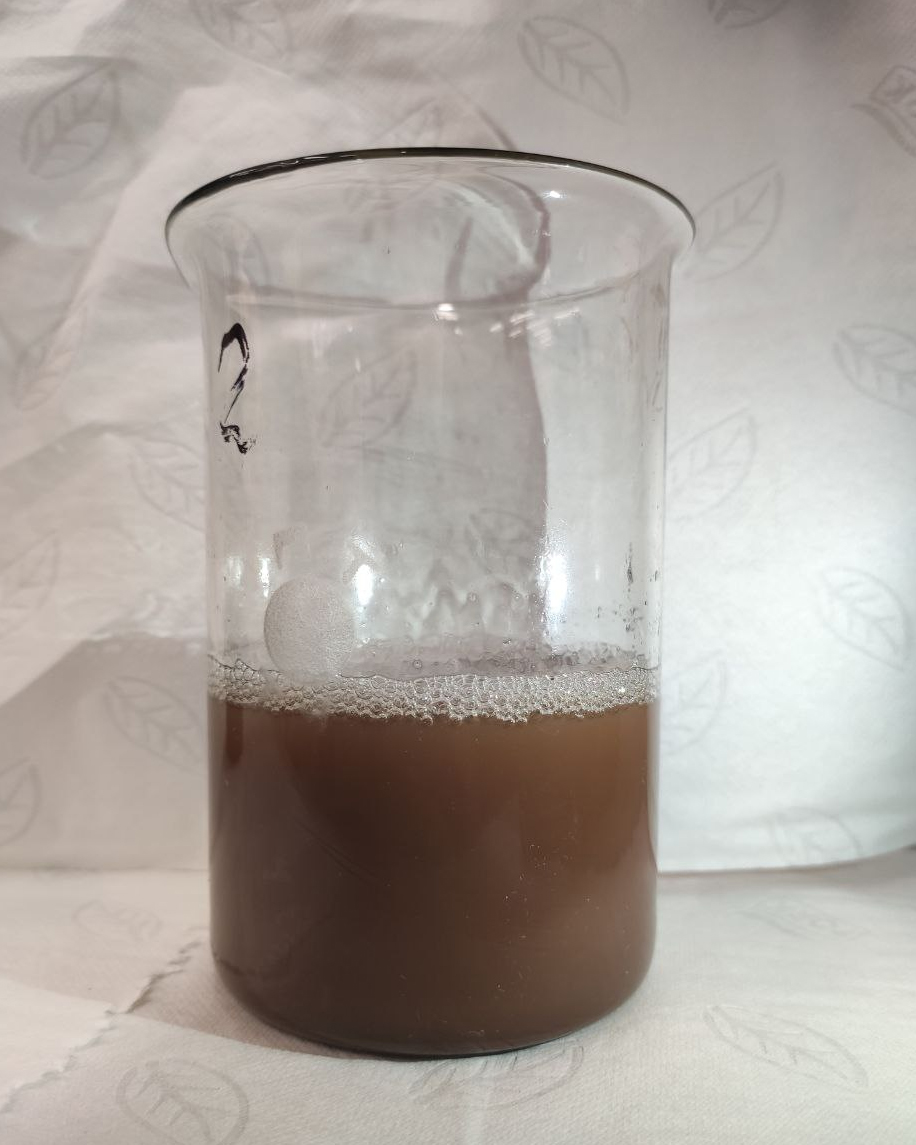
— Saponite contains metal ions (sodium, calcium and magnesium), which can be replaced by other elements or organic compounds during mixing. Depending on this, the material acquires new qualities," Olga Zubkova, a technology developer and senior researcher at the Scientific Center for Problems of Processing Mineral and Man—Made Resources at St. Petersburg Mining University, told Izvestia.
According to her, the resulting material can also be used as a trap for heavy metals. For example, a layer of modified saponite, deposited near polluting industries or highways, will prevent the spread of heavy metals in the soil. Another useful use of it is the inclusion of antimicrobial coatings. In the textile industry, the powder produced from improved saponite can be effectively used as an antistatic agent for fabrics.

In addition, it can be added to drilling fluids to make them more stable and thicker. Or in glue to enhance the binding properties. In the production of plastics, a new additive will increase their resistance to high temperatures and make the products themselves more durable. As part of different mixtures and suspensions, it will not allow them to delaminate during storage.
How to get the material for wastewater treatment
One of the ways to use saponite-based organomineral clay was tested at one of the Russian diamond deposits, where about 30 million tons of waste were accumulated, Olga Zubkova explained. Together with specialists from St. Petersburg State University, a technology for processing saponite sludge into a sorbent for wastewater treatment from heavy metal particles was developed.

— As part of this task, a technical description of the project and its economic justification have been prepared. Given the almost zero cost of raw materials, the price of the sorbent will be 10-15 thousand rubles per ton, which is 2-5 times cheaper than analogues. At the outlet, the manufacturers will receive pellets up to 1.5 cm in size, which are convenient for filling stock pipes and channels. The material has been tested in laboratory conditions. The efficiency of copper ion capture by granules was 94%," said Daniil Akulov, team leader of the Environmental Committee of St. Petersburg State University.
According to him, the project received the first prize at the international scientific and practical forum "Earthlings" in June 2025. The award of 1 million rubles will be used to purchase machinery and equipment.
— Mining and processing of minerals is one of the major sources of waste. Although they do not always belong to a high class of danger. The possibilities of their reuse have been studied for a long time. For example, saponites and bentonites can be used in the production of building materials such as cement, ceramics, and bricks. There are ideas to use them as mineral additives," Svetlana Didukh—Shadrina, Doctor of Chemical Sciences, Professor of the Department of Organic and Inorganic Chemistry at Siberian Federal University, explained to Izvestia.
The main issue is the economics of the process: the introduction of recycling technologies is often more expensive than burial. For example, it is possible to extract rare earth elements from LED lamps, but it is not profitable yet. Without a well-thought-out system and government support, many projects remain at the theoretical level, she added.

In addition, when using saponite as a sorbent, the question arises what to do next with the contaminated metal. It is necessary to find a simple and inexpensive way to extract heavy metals from it, the expert believes.
— The annual extraction of minerals in the world exceeds 150 billion tons, and only 10% is converted into final products, the remaining 90% is waste, which is stored and causes serious damage to the environment. Russia has accumulated about 100 billion tons of this man-made mineral and generates more than 7 billion tons of waste annually. At the same time, only 1-2% of them are processed," explained Rafail Apakashev, Professor of the Department of Chemistry at Ural State Mining University.

As Kirill Akhtyamovich, a senior researcher at Ural Federal University, noted, landfills and tailings ponds occupy large territories and create serious environmental problems, including water and air pollution. To solve them, measures are needed at the level of the state and large corporations. At the same time, Russia is creating effective technologies for recycling waste that are quoted abroad.
—Obtaining useful products from diamond mining waste is an important area that contributes to the involvement of secondary resources in economic turnover and environmental improvement," said Ruslan Dimukhamedov, Chairman of the Association of Producers and Consumers of Rare and Rare Earth Metals. — However, the capacity of this market is incomparably small compared to the accumulated and annually generated new waste.

According to him, this does not detract from the value of the technologies presented, but highlights the limitations that define the boundaries of their application to solve the problem of waste in general. The proposed solutions are just one of the elements of a comprehensive mining waste management strategy.
Переведено сервисом «Яндекс Переводчик»
