Trump is threatening Canada for its intention to recognize Palestine. What the media is writing
- Новости
- World
- Trump is threatening Canada for its intention to recognize Palestine. What the media is writing

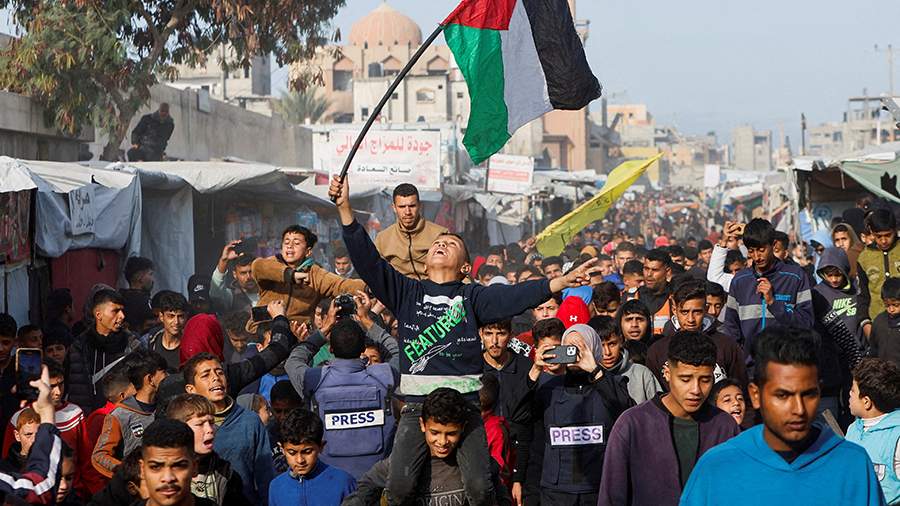
Canada will announce recognition of Palestinian independence during the September meeting of the UN General Assembly, followed by Malta's decision. In response, US President Donald Trump threatened Ottawa with a breakdown of the trade agreement and sent his special representative Steve Witkoff to Israel for negotiations. What the media write about the crisis in the Gaza Strip is in the Izvestia digest.
The Washington Post: Canada announces recognition of the State of Palestine
Canada has become another country and the third major ally of the United States in a week after France and Britain, which declared its readiness to recognize a Palestinian state amid growing outrage over the rapidly deteriorating humanitarian situation in the Gaza Strip. Prime Minister Mark Carney has said Canada is ready to recognize the Palestinian Authority's independence at the annual UN General Assembly in September if the Palestinian Authority agrees to certain democratic reforms, including elections in 2026.
The Washington Post
He said that the President of the Palestinian Authority, Mahmoud Abbas, promised to do so during a "long and decisive" telephone conversation on Wednesday. The humanitarian crisis in Gaza is "intolerable," Carney said after a meeting of his cabinet. "Canada condemns the fact that the Israeli Government has allowed such a deterioration of the situation in Gaza."
Canada's decision was made against the backdrop of a three-day conference at UN headquarters, organized jointly by France and Saudi Arabia, which called on all Member states that have not yet recognized the State of Palestine to commit themselves to doing so by September 5, on the eve of the General Assembly, unless a long list of conditions is met. many of which are directed against Israel.
The New York Times: Trump threatened Canada for recognizing Palestine
US President Donald Trump said on the morning of July 31 that it would be "very difficult" for him to conclude a trade agreement with Canada after Carney announced his intention to recognize Palestine as a state. This was another threat from Trump against an ally on the eve of the deadline for the introduction of duties.
The New York Times
The President has set an August 1 deadline for completing negotiations on trade agreements with his administration. Otherwise, according to him, duties of up to 50% will be imposed on the goods they supply to the United States. Starting Friday, exports from Canada, the United States' second-largest trading partner, will be subject to a 35 percent duty.
His recent threat to pull out of trade talks with Cambodia and Thailand appears to have contributed to the rapid conclusion of a ceasefire agreement after five days of conflict between the countries. Later, Trump announced that he would impose a 25 percent tariff on Indian goods, referring to purchases of Indian oil and military equipment from Russia. Earlier this year, he threatened Canada with the imposition of duties if the country does not take measures to limit the illicit trafficking of fentanyl across the border with the United States, the volume of which is minimal.
Associated Press: Malta recognizes Palestine in September
Malta's Prime Minister Robert Abela announced his country's decision, a former British colony, to recognize a Palestinian state, saying it was part of the country's efforts "to achieve lasting peace in the Middle East." The Mediterranean island nation and a member of the European Union will join more than 145 countries, including more than a dozen European countries that have recognized the State of Palestine.
Associated Press
Christopher Kutahar, Permanent Secretary of the Maltese Foreign Ministry, earlier made a statement on behalf of his country at a meeting of the UN General Assembly dedicated to a two-state solution to the conflict <...>. Kutahar stated that Malta has long supported the self-determination of the Palestinian people, and "as responsible actors, we are obliged to work on translating the concept of a two-State solution from theory into practice."
Israel's Ambassador to the United Nations, Danny Danon, sharply criticized the 125 countries participating in the conference and the new recognition of the Palestinian state. Kutakhar replied that "recognition is not just symbolic, it is a concrete step towards achieving a just and lasting peace." Official recognition from Malta will be formalized in September.
NBC News: Trump's special envoy to visit Israel to resolve crisis
Trump's Special Envoy, Steve Witkoff, will travel to Israel on July 31 to address the humanitarian crisis in the Gaza Strip. Previously, he oversaw negotiations to resolve Israel's conflict with Hamas in the enclave, and now he will meet with officials, although it is unclear who will participate in these negotiations. This week, Trump stressed that his government can significantly expand access to food for Gazans.
NBC News
Many Democrats and some Republicans are calling on the Trump administration to take additional measures to expand food aid to Gaza, increase pressure on the Israeli government and resume efforts to achieve a ceasefire in the region. Negotiations to reach an agreement collapsed last week, with Witkoff withdrawing his negotiating team from Doha after saying that Hamas' latest response to the agreement "demonstrates a lack of desire to achieve a cease-fire in Gaza."
Trump mentioned the idea of the United States creating "food centers" in the Gaza Strip, which, according to him, will be done "together with several very good people" where "people will be able to enter" and there will be "no borders." Prime Minister Benjamin Netanyahu said that Israel will cooperate with international agencies, as well as with the United States and European countries, to ensure the flow of large amounts of humanitarian aid to the Gaza Strip.

Politico: Merz is under pressure because of Gaza and Israel
With the impending famine in the Gaza Strip, German Chancellor Friedrich Merz is facing pressure to withdraw his strong support for Israel and allow Brussels to punish the government of Benjamin Netanyahu. This week, the European Commission proposed suspending parts of the EU-Israel Association Agreement, warning that the Israeli government had provoked a "humanitarian catastrophe" that threatens "virtually the entire population of Gaza."
Politico
More and more EU countries are advocating such a move, but Germany has so far refused to approve the proposal, which would be a clear departure from its traditionally unwavering support for Israel. Diplomats from many EU countries have privately expressed their displeasure with Berlin after Merz said he would like to see how the situation on the ground develops in the coming days.
Internally, Merc is also facing increasing pressure. The Social Democratic Party of Germany, which is part of the coalition, as well as part of the opposition, began to doubt Israel's continued support. The diplomatic situation is rapidly changing, and observers believe that Germany may change its position in the coming hours or days.
Переведено сервисом «Яндекс Переводчик»
