Computer control systems using glance will become more accurate

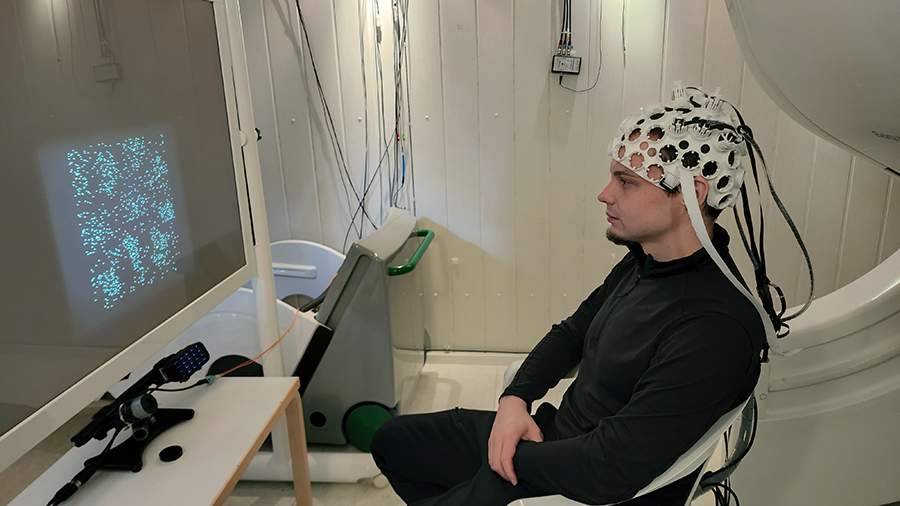
Russian researchers were the first in the world to study the neural mechanisms of intentional gaze retention that can be used to control a computer. To do this, the subjects played a specially designed EyeLines game in which the user must move objects with the help of a glance and create combinations of them. During this process, the experts recorded the magnetoencephalograms of the participants in the experiment.

In parallel with the recording, the scientists recorded the eye movements of the players. It turned out that intentional gaze delays are associated with sequentially developing processes in the brain.
"We managed to get an idea of what processes in the human brain make it possible to arbitrarily hold one's gaze in order to use it to control electronic devices. Technologies for computer control by gaze were previously developed without relying on knowledge of the physiological mechanisms that make gaze retention possible," said a leading researcher at the Scientific and Educational Center for Neurocognitive Research (MEG Center) Sergey Shishkin, Moscow State Psychological and Pedagogical University.
The project was carried out by specialists from Moscow State Psychological and Pedagogical University, Lomonosov Moscow State University and the Higher School of Economics with the support of the Russian Science Foundation.
Read more in the exclusive Izvestia article:
With a wave of eyes: computer control systems will become more accurate with a glance
Переведено сервисом «Яндекс Переводчик»
